War is Over!

We all know and love the famous Christmas song from John Lennon and Yoko Ono, this book takes the song and gives a background story that kids can relate to. In War is Over! the reader follows a carrier pigeon named Julia as she relays messages for a chess game between two soldiers on opposite sides of a war. (The book uses green coats and red coats, not specific countries fighting). As you’re reading the story, the lyrics from the song are intertwined with the text and stand out with larger font and bold print.

Readers will get to know the two soldiers through their chase game and Julia carrying their moves/messages back and forth. By the time the two must fight, the reader, and the characters, have empathy for eachother. I can envision using this book to talk about finding commonalities among your outward differences, or working with kids to understand empathy and how its so important in our world. I also really enjoy that Julia the carrier pigeon plays such an important part of the story, moving the plot forward. Students may never have heard of carrier pigeons before and this is an easy and fun way visualise their roles.

This book is a great conversation starter for kids K-3. Use it in a social emotional lesson, or a friendship lesson and guide your readers through their conversation – a perfect jumping off point.
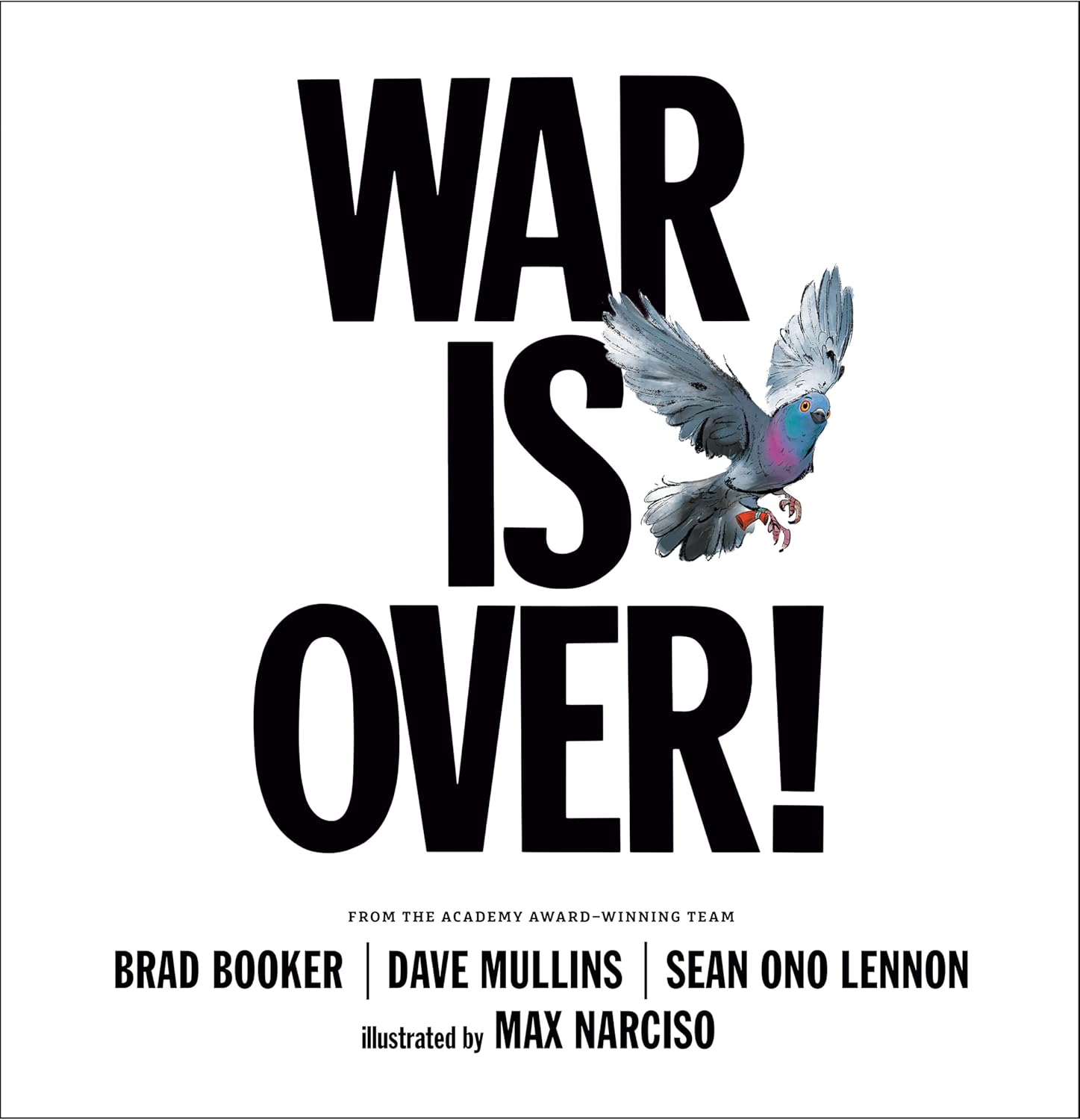
cover of the book War is Over! with black text on white cover and Julia the carrier pigeon flying.

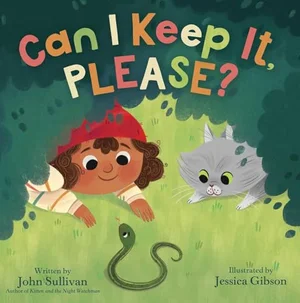
Can I Keep It, PLEASE? by John Sullivan

Evie and her pet cat, Sasha, are on the way to the pet parade. While at the parade, Evie decides that her pet is boring. She sets off to persuade her parents to let her get a more exciting pet. When she finds a snake in her backyard, her parents let her keep it. But a snake for a pet was not what Evie was expecting. And as she learns about her snake, she learns that maybe not all animals are meant to be pets.

Inspired by the author’s childhood of catching a wild garter snake and keeping it as a pet. He notes that there are now laws in some states to protect wild snakes and it is better to get a snake from a reputable source.

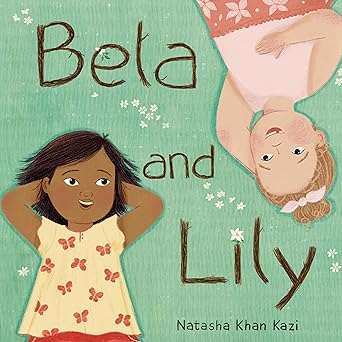
Bela and Lily by Natasha Khan Kazi

A young girl moves to the United States from Bangladesh. She does not know many English words and this makes it hard to make friends. She meets Lily and they start to play together. Even though they don’t speak the same language, they become friends.

Based on the author’s own experience of moving to the United States at five and not speaking English.

The back matter gives an author’s note and some games that can be played without words. The end papers include pictures with words in English and Bengali.

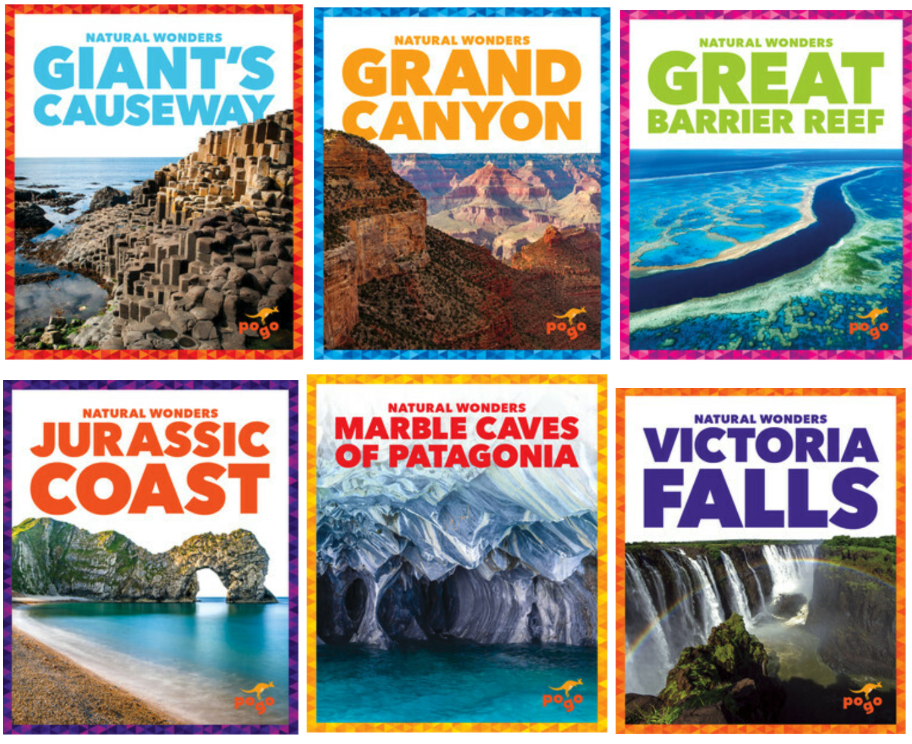
Natural Wonders

By Katie Chanez

This non-fiction series is one that will expose readers to a variety of natural wonders of the world. While some like the Grand Canyon and the Great Barrier Reef are more familiar, others are not. This series has many benefits. There are suggestions for parents/teachers on how one can read or support reading at the beginning of the book. They explain the science behind the creation of these wonders and also include any legends that local cultures may have about them. Where they are in the world is shown on clear maps that are understandable. There are questions throughout the books as well, encouraging more thought and curiosity to look further into the subjects. At the end of each book there is a glossary and index as well as quick facts and tools. There is also a “To Learn More” area giving online resources at an appropriate reading level to look into these unique areas of our world.

I would recommend these books for elementary library. They have stunning images, interesting maps and charts and encourage interest and further learning.

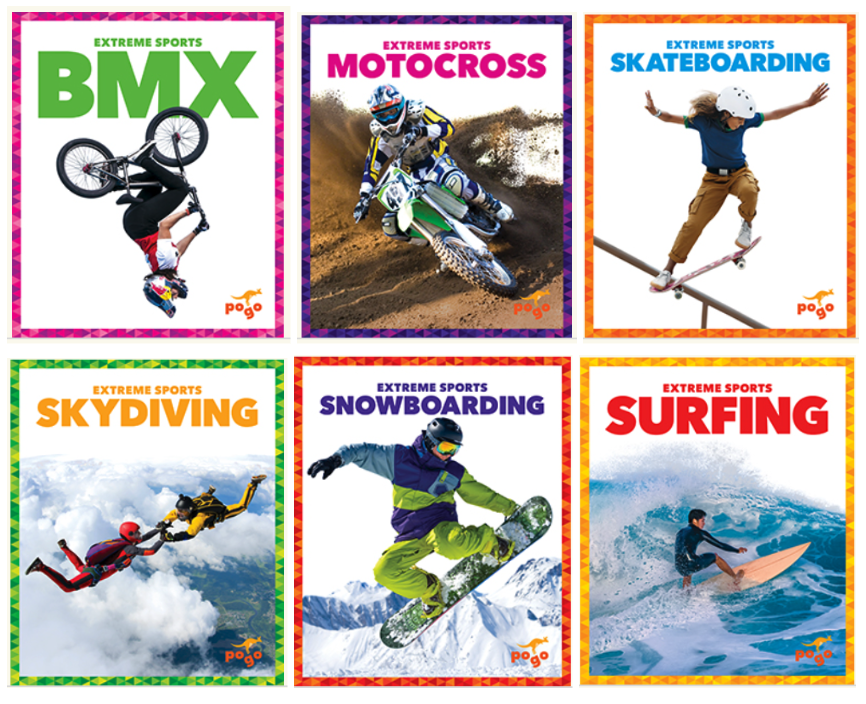
Extreme Sports Series

By Tracy Vonder Brink

Every library can use more books about sports and this set is full of unique activities that may be harder to find at a reading level for emerging readers. The photographs are appealing and vibrant and thus lower level readers will also improve their reading level with these titles. Each book is organized the same way with beginning chapters explaining different ways athletes do the sport and what equipment they use. Chapters also explain parts of the equipment and how one stays safe doing the activity. What makes these books more interesting is that there are scientific explanations on how one does the activity successfully including the use of: physics, gravity, absorbing of energy, momentum, etc. The final pages of the book also have a glossary and an index but in every book there is a science activity that can be easily done to better explain the science of the sport.

I would particularly recommend these for intermediate/elementary level but they could also become very popular at the lower middle school level as well.

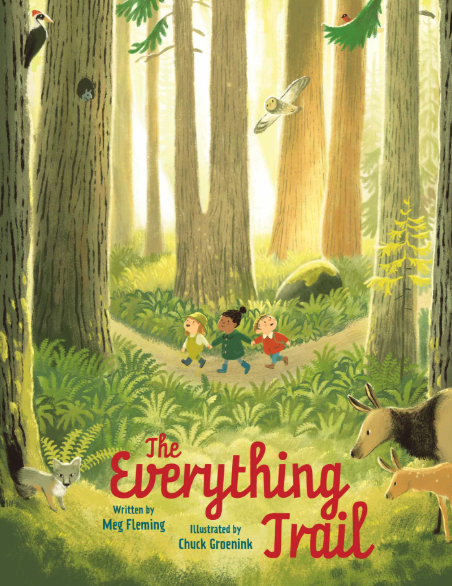
The Everything Trail

Meg Fleming – Author, Chuck Groenink – Illustrator

What a wonderful addition this book would be for a Pacific Northwest library! While the author is from the San Francisco Bay area, the illustrations will remind any reader of traveling through a forest on the way to an ocean shore. It follows a small group of kids walking on a path from the top of a mountain/hill to the view of the water and then back through tall trees. This book needs to be turned vertically to read and allows for a different view of the trail as it is tall and not wide. Each page has four lines that rhyme and thus will be fun for an adult to read to younger kids.

I highly recommend this book for us libraries in Western Washington. Readers will feel and understand the love of the forest after seeing this book. It will encourage all to go out and enjoy a hike!

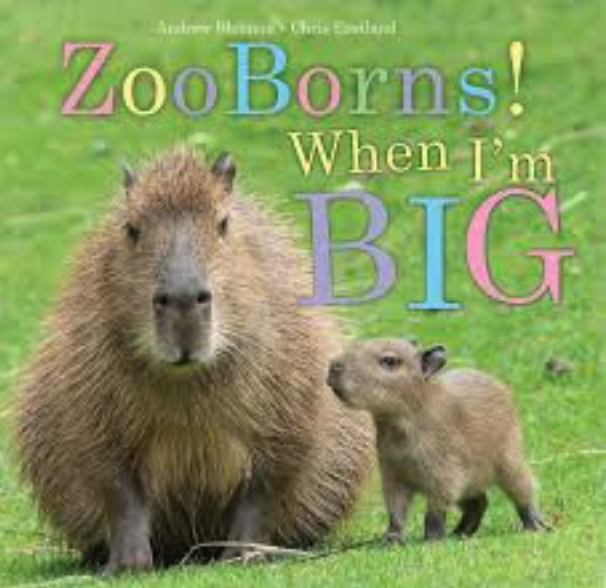
Zoo Borns! When I’m Big

Andrew Bleiman – Author, Chris Eastland – Illustrator

This non-fiction picture book will be popular with all who truly adore animals. It is very accessible for many as there are few words on each page. The photography on each page is stunning with the image of a baby animal first, then the adult on the turned page. From lion to echidna, red panda to clouded leopard readers will smile as the learn more about diverse animals who are being saved in our zoos.

I would recommend this title for elementary libraries where animal books are popular. While this book has an introduction from a veterinarian at the Nashville Zoo and short details, descriptions and conservation status information in the back, it is more for enjoyment and general knowledge building and not for extensive research.

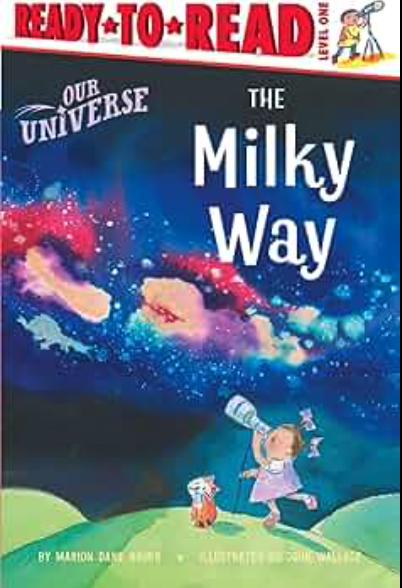
Our Universe: The Milky Way

Marion Dane Bauer – Author, John Wallace – Illustrator

This non-fiction book in the Ready to Read Series (Level One) is well written for primary level students with a love of outer space or in the process of learning about our galaxy. It is clear with few words on each page. While the images are not photographic they are clear and helpful in explaining our place in the Milky Way as well as in comparing size of the Milky Way with other things like our country, planet and solar system within it. There are also explanations of other things in the galaxy such as: asteroids, black holes, comets and nebulae.

I would recommend this book for any library in which you have requests for books about outer space from classroom teachers and for libraries that can use more current books about this topic. Like many other Ready to Read books, this one is easy for students to pick up and understand and will allow for kids to stretch their reading comprehension. It also contains a Glossary at the beginning as well as some interesting facts at the end of the book.

Dragon vs. Unicorn: Friends or Frenemies?

Dragon vs. Unicorn: Friends or Frenemies? written by PJ Hoover draws readers in from the get go. I can envision many kids I would put this in the hands of – great for a reluctant reader, great for dragon and unicorn kids, and great for kids who love choose your own adventure style books. Lisa Wiley did an excellent job on the illustrations to this book and they add so much life to the characters. The panels are easy to follow to kids who may be new to graphic novel style books.

Dragon and Unicorn are best friends, but very different. This book teaches us that we can be friends despite our differences but we’ll probably need tools for empathy, listening, and problem solving along the way. This is where I love the illustrations – the characters emotions! Their eyebrows, nose crinkles, and gestures add so much to the feelings that best friends go through. As the reader follows these two along their adventures, the reader gets to make decisions that will side with one friend or the other and then see how that works out for them. When you get to the end of your story, you’re invited to go back to the first decision making page turn and try the alternate route. I love this! If you were reading it as a social story with a student, the invitation to go back and see how the other choice would have affected the friends is perfect for conversations. I also hope it adds incentive for the solo reader to go back and try again. There are three short stories in this book.

If you have students who love cute unicorns, who love tidy dragons, who love friendship stories where its not always perfect, then this book would be a good fit for your space.

The publisher has this book tagged under cooperation, empathy, honesty, and teamwork – this book has plenty of examples for each of those social skills.

cover of the book dragon vs. unicorn

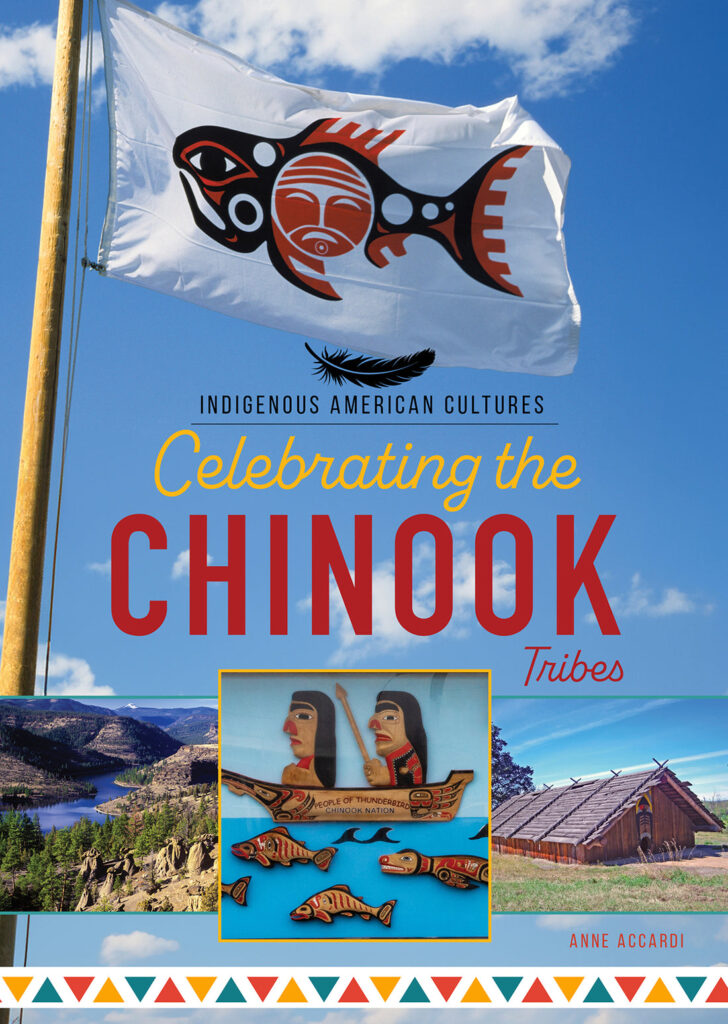
Celebrating the Chinook

Celebrating the Chinook Tribes by Anne Accardi is part of a Mitchell Lane series highlighting Indigenous American Cultures. This series is geared towards elementary with a reading level of grade 3 and 4 (sited on the Mitchell Lane website), with full color pictures. This book is 32 pages long.

This book includes not only a table of contents, but also headings, bolded words, glossary, index, further reading, and websites to explore on the internet.

I was really impressed with this book and how it presented the people of Chinook tribe (whose lands are close to where I currently teach) and the history in our area. I appreciated that the text also mentioned that people with Chinook ancestry can live all across the nation, not just where their people lived since time immemorial. In this book you’ll find each chapter focuses on a part of the Chinook tribes traditions including present and past tribal lands, celebrations, and language.

Although this book does a good job of bridging the time before colonisers entered their land, to famous people enrolled in the Chinook tribes, I did notice that there was no language stating the tribe had been residing in the Pacific Northwest since time immemorial (a phrase that is used in our indigenous education throughout the PNW). I would have also preferred the term colonizers to settlers that the book highlights on page 8. I think the definition in the glossary would also match the word colonizer better than settler.

The author, Anne Accardi, has a biography in the back and it does not say she is affiliated with any tribe herself. Although I think the book is well done, as a librarian, I would prefer to by books about indigenous tribes by people who are members or affiliated with the tribe. I understand this is not always possible, yet.

This series also includes a cut out in the beginning (before the Table of Contents) that gives a parent or caregiver tips for reading non-fiction with their reader, and for encouraging them to read more nonfiction. This is always helpful as many guardians would like help knowing what to ask, what text features are called in non-fiction and how to encourage their young readers.

I found this book well done, even though I think there are improvements that could be made. If you need to update your books highlighting indigenous cultures, I would definitely take a look at this series. There are six books in the series so far. Each book is available in hardcover, paperback and as an ebook.

If you need to update your books on indigenous tribes, I recommend looking to see if this book would fit into your library collection.

cover of the book Celebrating the Chinook Tribes by Anne Accardi