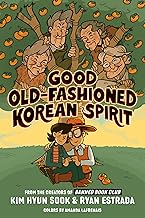
Taehee and her college friends all have secret lives from their parents and grandparents – Korean families with different generational expectations of their children. They all get tricked into going to Taehee’s grandmother’s farm for Daeboreum, the first full moon of the year. Taehee had overheard her grandmother and her friends discuss spooky plans for the celebration and Taehee is hoping for her friends’ help in surviving the overnight stay at the farm that her parents are requiring that she attend. Along the way, the kids and the grannies all get what they need in surprising ways. The reader learns a bit of history of Korea, a bit of tradition and how modern generations are finding their way through all of it.
The characters are a bit older than my middle school readers since they are in college, but the book is otherwise perfect for middle school audiences. I liked the bright bold illustrations, with muted ones indicating historical events.This multi-cultural, multi-generational book should be a hit with graphic novel lovers.
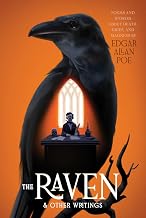
A beautiful new printing of the stories and poems by Edgar Allan Poe. I found my old favorites and a few that I had never read before. I had never read “Manuscript Found in a Bottle”, the opening tale and enjoyed discovering something “new” by Poe. I found all my old favorites with “The Cask of Amontillado”, “The Tell- Tale Heart” among others. The same was true in the poetry section. My favorite of “Annabel Lee” was at the end of this section of the book, while ones I had never read before, like “Al Aaraaf” opened this part of the book. And, of course, it includes The Raven! A collection by Poe would nevermore be complete without it.
If you’re looking to replace an old, sad copy of Poe’s works, this book has an appealing cover and a comprehensive list of his works. It is not noted with definitions or translations,so readers should know it’s in Poe’s original language. It looks like part of a series of classic reprintings including Dr. Jekyll and Mr. Hyde, Dracula, Frankenstein, The Legend of Sleepy Hollow, and The Phantom of the Opera.
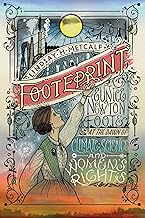
Written in a variety of verse forms, this is an interesting biography of the mother of climate science who was overshadowed in the history of science by men who claimed their spots after her, but in her limelight. Eunice Newton Foote was a scientist, inventor, mother, and political activist in a time when women rarely got to claim their acknowledgements. This verse biography spans her lifetime from 1819 to her death in 1888. It covers women’s role in science education, membership in scientific organizations, the history of early patents (& who was allowed to claim them), women’s civil rights, the Civil war and the subsequent Reconstruction era. The book ends with one final poem about 2010 when a retired petroleum geologist comes upon an old book with her paper on climate science from 1856, predating the one by John Tyndall in 1859.
I learned a lot of history in this book, including the life of one pretty amazing woman. I enjoyed they variety of poetic forms. Most are free verse, but some are long, some short, some are more concrete in form. I hope this fascinating book finds readers who will enjoy it as much as I did!
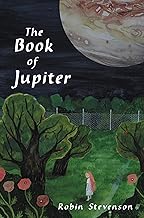
I read this book in approximately four hours. It was very hard to put down. The story follows Ara, a girl who is growing up in a cult, and her older brother Leo, who has just enough memories of the outside to start to question everything that they have been made to believe in Jupiter Station— the neopagan, planet worshiping cult they have been brought to.
It’s really hard to talk about this book without revealing too many spoilers, but I found it very hard to put this book down because I was so invested in the characters uncovering the truth of their situation. As a reader, you very quickly understand that they are in a cult, and it is so jarring to be reading from their point of view as they navigate the world beyond what they have been made to believe it is.
And at a very slim 200 pages, I think that this would be a great book for any reader, but especially reluctant readers. Short chapters keep it engaging.
There are moments in the book where characters reflect upon real world cults, which introduces a little bit of history, which I appreciated.
Honestly, the only thing I did not like about this book was the cover. It makes the book seem like more of a tragedy or an emotional book rather than an extremely high stakes suspenseful book.
Reviewed by Komachin Middle School Staff, D. Moulton
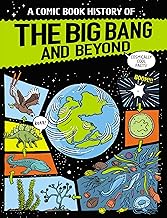
A bright, bold graphic non-fiction title that starts with the Earth and then zooms back in time to the start of the universe as we understand it. Each section then focuses on how the solar system and the earth have changed over the eons of their lifetimes. I found the graphics and the clear time markers helpful in placing each mind bogglingly-long chunks of time in their place in the larger timeline. Not only is space vast, but so is time. Hard for a mere human brain to take it all in. The way this book is organized helps. Besides a table of content at the beginning, the book includes a glossary and an index for easy reference at the end. I think space science enthusiasts will really enjoy this book.
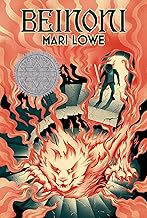
In this fantasy novel by Mari Lowe, a Jewish boy named Ezra learns he is the Nivchar, or chosen one, who is destined to battle a dangerous fiery creature called the gurya during his bar mitzvah. If he wins, the world remains in a peaceful “Beinoni time,” free from war and suffering. But as strange events begin happening and the balance of the world starts falling apart, Ezra realizes something is wrong. Along with new friends, he uncovers secrets and conspiracies that challenge everything he has been taught about destiny, courage, and justice. The book is a little slow when it starts but is truly inspiring. The book is told with a first person narrator. This seems to either irritate readers or helps pull them in, depending on the reader. I did not mind it! For students willing to stick with the opening world building, it will be an enjoyable read. The book includes a glossary at the end of Jewish terminology that the reader might not be familiar with. It helps to add meaning to a book with a Jewish cultural background.
Reviewed by parent volunteer, Esperanza B.D. for Komachin Middle School
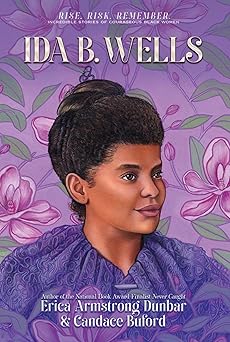
The autobiography tells the story of Ida B. Wells’s life as a fearless Black journalist, educator, and civil rights activist who fought against racism and lynching in the United States. She was born into slavery in Mississippi and became a teacher, she later became a newspaper writer who exposed racial violence and injustice. After the lynching of three Black businessmen in Memphis, she elevate a powerful anti-lynching campaign, risking her life to speak the truth. The book highlights her courage, investigative journalism, advocacy for women’s rights, and lifelong crusade for equality and justice. This was a very readable non-fiction – informative and flowed well. If you’re looking for a good, diverse biography, this is recommended.
The book includes a book written by Ida B. Wells in 1892, Southern Horrors Lynch Laws in all its phases. This was included after the book written about her by Erica Armstrong Dunbar & Candace Buford and adds to the page count, but more importantly, to the authenticity of getting to hear from Miss Wells herself.
Reviewed by parent volunteer, Esperanza B.-D. for Komachin Middle School Library
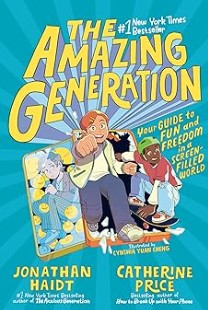
A combo book with a graphic novel spread throughout showing one school year and 6 middle school students. Three become very addicted to their phones and all the features that become time sucks. The other 3 either have old flip phones or phones without apps. You see a contrasting year where the ones NOT addicted to their phones actually get better at friendships, activities and life. The 3 addicted become more & more lonely and isolated until they make some changes by the following summer. The sections of the fictional story are separated by lots of non-fiction graphic information about the dangers of becoming addicted to technology and the benefits of finding balance. I was blown away by the chart on page 71 about how much of your life you ”lose” based on how many hours a day you get sucked into screentime. Just 4 hours a day of “time-suck” on a screen is as much as 2 whole months of your life. Yikes! The book is for teens, but it sure made me reflective of my own use. The book is filled with suggestions of how to make choices that enhance one’s life, instead of wasting it in a false sense of reality. I liked the bio. blurbs of older teens who reflected on their younger selves use of technology and how they use it now. It helps readers understand what real friendship, real freedom, and real fun looks like vs. the imitation that is often used in a manipulative way online. I read this wondering if it would feel too “preachy” or super anti-tech, but it didn’t really feel that way. It was empowering to the “rebels” who were able to make different choices with their tech so they could still be authentic in their day-to-day interactions.This felt like an important book for middle school students to pick up and read. I think the graphic-novel feel to it will help pull students in. Hopefully the message will resonate with them and empower them to make choices to better themselves. The book includes 4 specific steps a reader can take to become a rebel, notes and sources, a Learn more section, and an index at the end of the book.
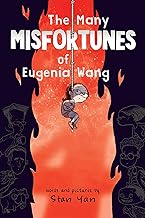
Eugenia Wang, who loves art, decides to draw a comic, although her mom doesn’t want her to. However, whenever Eugenia sleeps, or even looks at the comic, she has a mysterious dream about a fire in her house. Her best friend, Keisha, decides to help her understand her dream. Eugenia’s birthday, which is on April 4, is an unlucky number. Will she be able to figure out what her dream is telling her? This book is perfect for someone who loves comedy and mystery. The art style adds so much to it, as well as the smaller details of the plot, which adds a more relatable scenario. The comedy details made me smile, and the mystery parts made me think. The use of comedy adds so much to the characters and plot. People will feel that they can relate more to the characters with the moments of comedy because it uses things that most people do in everyday life. I liked the book a lot, since I like mystery and comedy. Some of my friends, who also like similar genres would like it since they have a good sense of humor and like to figure things out, either in books or even real life. Overall, this book is very entertaining. I’d give it a 4 out of 5 stars. (I dropped a star just because it wasn’t my usual type, not because I didn’t like it.)
Reviewed by Lily I., 8th grader at Komachin Middle School
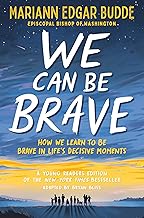
Mariann Edgar Budde is an incredible person with an inspirational story to share with the world. Her journey to becoming an Episcopal Bishop is beautifully intertwined with God´s love to help her. She found God in her life as an independent junior in high school living on her own with major changes and decisions in her life. She writes about how God helped her overcome and find stability in life, and a community in New Jersey when she had none. She shares stories, scriptures, books, and metaphors at each turn in her life, she shows that in everything there are signs of God. After moving to New Jersey, she moved to Minnesota and then Washington DC. All of the moves for church, she became bishop eventually, and gave many sermons. Some of the sermons she gave were criticized and when she made mistakes, she always made it right. Mariann shows that, like all people, she makes many mistakes too, and that without God she might have crashed her own ship. She writes about how stepping up to the plate and swinging is better than never stepping up at all. After all, you do miss 100% of the swings you never make. Mariann teaches children how to push past fear and make courageous choices. By combining personal stories, scripture, and tales from pop culture, the book encourages young readers to recognize that bravery is a lifelong journey practiced in everyday moments.
This book is strong and inspiring with many relatable stories about Mariann´s life, and her journey to the Episcopal Diocese of Washington. It´s a book everyone will need in their life at some point with its punchy prose. Mariann Edgar Budde wrote this book with a strong female lead, based off of her famous sermon called a House Built on Rock. She made this book after her sermon got famous. Her sermon was standing up to President Donald Trump after he claimed to be Christian. It is a highly spiritual book about the Episcopal church. She mentions her family life and journey on the path of becoming the Washington DC Episcopal church bishop. It is political, spiritual, and inspiring. It mentions a bit about her view and the church´s view on LGBTQ+ rights and political views. It follows her path and how others have affected it such as family, co-workers, members of her church, political people, other bishops, and God’s role in her life.
I liked how inspiring We Can Be Brave is and how much it shows that God can help you in your life when times are tough or when life is challenging. I feel that God gave me this book to read at this time in my life for a reason. With change in life, it can be good to have the reminder to think in a divine perspective.
I did not like how there was not super clear points or break of section, while the book was good and was divided into chapters, it was hard to get into the book and then find a good stopping part. It was harder to get through or into than other non-fiction books that I have read. It was inspiring and punchy along with precise language.
Overall, I’d give this book a 4 out of 5 stars. Book includes bibliographic notes at the end.
Reviewed by 7th grader, Eliza B. from Komachin Middle School