War is Over!

We all know and love the famous Christmas song from John Lennon and Yoko Ono, this book takes the song and gives a background story that kids can relate to. In War is Over! the reader follows a carrier pigeon named Julia as she relays messages for a chess game between two soldiers on opposite sides of a war. (The book uses green coats and red coats, not specific countries fighting). As you’re reading the story, the lyrics from the song are intertwined with the text and stand out with larger font and bold print.

Readers will get to know the two soldiers through their chase game and Julia carrying their moves/messages back and forth. By the time the two must fight, the reader, and the characters, have empathy for eachother. I can envision using this book to talk about finding commonalities among your outward differences, or working with kids to understand empathy and how its so important in our world. I also really enjoy that Julia the carrier pigeon plays such an important part of the story, moving the plot forward. Students may never have heard of carrier pigeons before and this is an easy and fun way visualise their roles.

This book is a great conversation starter for kids K-3. Use it in a social emotional lesson, or a friendship lesson and guide your readers through their conversation – a perfect jumping off point.
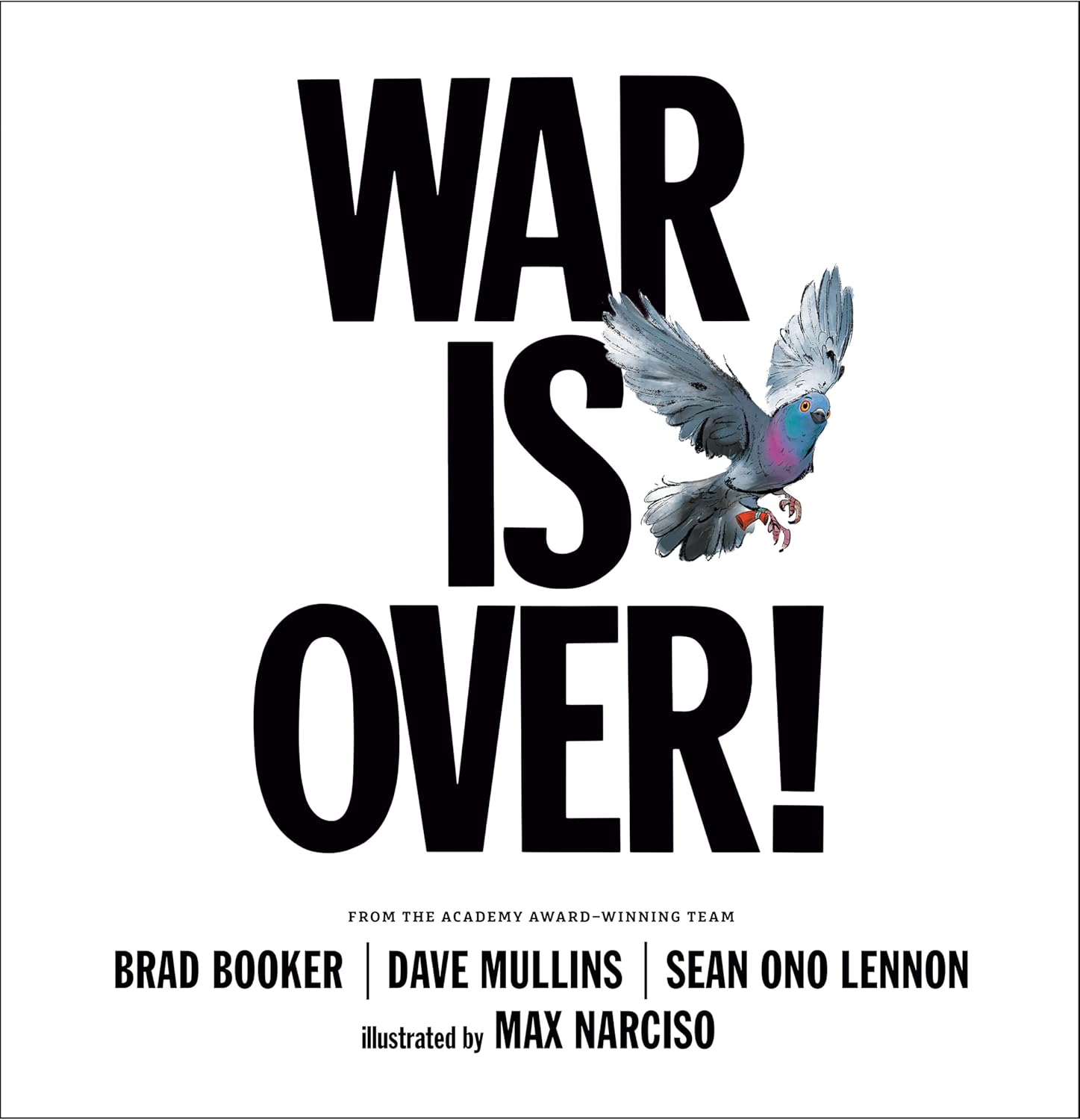
cover of the book War is Over! with black text on white cover and Julia the carrier pigeon flying.

On Thin Ice

By Jessica Kim

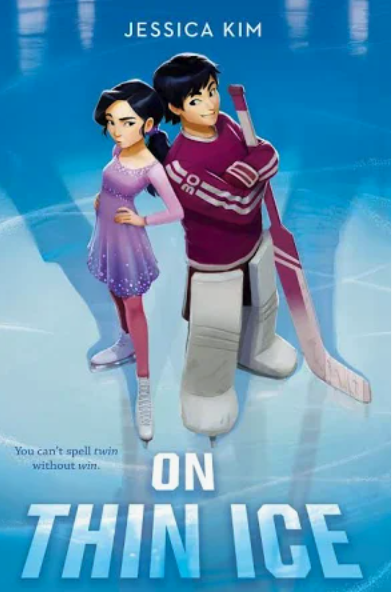
Twins, Phoebe and Dexter, are fierce competitors on the ice. When Phoebe’s partner is injured and Dex is cut from the star hockey team neither knows what to do. Dexter agrees to pair up with his sister so she can still compete but is there enough time for him to learn the routine? Let alone be successful? While these two and their mother are still reeling from their dad’s death from cancer, they have become further apart from each other and their friends. Will they reconnect? Will their mother be okay? This middle grade fiction will be enjoyed by many who are interested in sports, school stories as well as family tales.

I would strongly recommend this book for upper elementary and middle school. There is a light crush in this book as Phoebe gets to know her brother’s replacement on the team but nothing that would be concerning for younger readers.

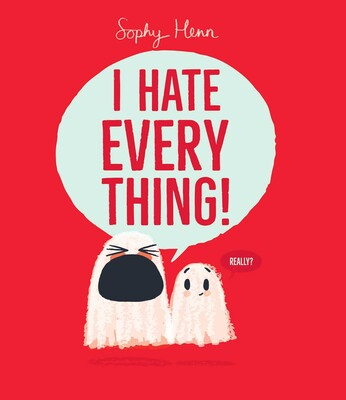
I Hate Everything by Sophy Henn

Ghost declares, “I HATE EVERYTHING! His ghost friend listens and asks him if he hates sweets, dressing up, and cakes. Ghost does not. Through his friend listening ghost realizes maybe he doesn’t hate everything.

The illustrations feature adorable, expressive ghosts and vivid pictures on bright backgrounds. A great story for dealing with a bad day and strong emotions.

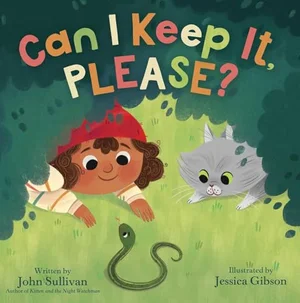
Can I Keep It, PLEASE? by John Sullivan

Evie and her pet cat, Sasha, are on the way to the pet parade. While at the parade, Evie decides that her pet is boring. She sets off to persuade her parents to let her get a more exciting pet. When she finds a snake in her backyard, her parents let her keep it. But a snake for a pet was not what Evie was expecting. And as she learns about her snake, she learns that maybe not all animals are meant to be pets.

Inspired by the author’s childhood of catching a wild garter snake and keeping it as a pet. He notes that there are now laws in some states to protect wild snakes and it is better to get a snake from a reputable source.

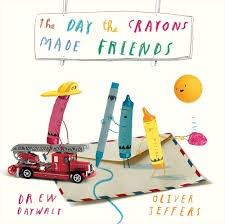
The Day the Crayons Made Friends by Drew Daywalt

Another book in the Crayon series by Drew Daywalt. Duncan’s crayons have disappeared again. This time the crayons have set out to make friends. White crayon no longer feels invisible since meeting the chess set and filling in as the missing queen. Blue crayon’s problem of being short is solved when they find a doll who’d lost a head and they team up. Each crayon’s story is told as a letter from that crayon.

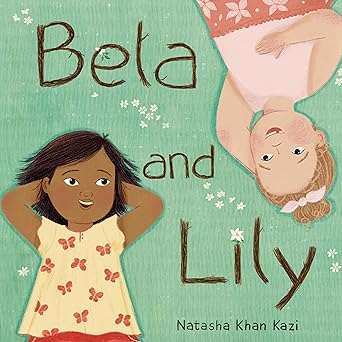
Bela and Lily by Natasha Khan Kazi

A young girl moves to the United States from Bangladesh. She does not know many English words and this makes it hard to make friends. She meets Lily and they start to play together. Even though they don’t speak the same language, they become friends.

Based on the author’s own experience of moving to the United States at five and not speaking English.

The back matter gives an author’s note and some games that can be played without words. The end papers include pictures with words in English and Bengali.

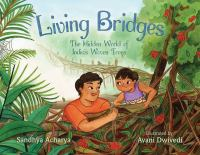
Living Bridges: The Hidden World of India’s Woven Trees by Sandhya Acharya

In the state of Meghalaya in India, there are bridges or Jingkieng Jri created from the living roots of rubber fig trees. The War Khasi-Jaintia weave the roots together to make bridges for the community to be able to cross the mountainous area they live in. The Living Bridges last for hundreds of years and withstand the monsoons in the area.

This book follows a young boy on his way to learn to build a Jingkieng Jri. He notices the insects and birds that make their home in the bridge, but also the damage that is happening to the bridges from littering and people stealing the sap. He decides that he can take action and teach others to clean up the bridges.

The back matter includes information about living bridges, a glossary and pronunciation guide, photographs of a Living Bridge and a bibliography.

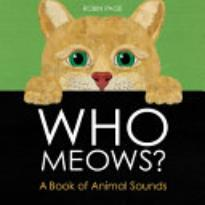
Who Meows? A Book of Animal Sounds by Robin Page

Who meows? A cat meows. Who gobbles? A turkey gobbles. Each spread features a full page illustration of the animal making that makes the noise while the next page includes a simple sentence stating the animal that makes the noise and a question for the next sound and animal. The pictures feature animals with open mouth as if they are making the noise. The animals featured would be familiar to young readers (cat, turkey, owl, bear). The back matter features a fact about each animal’s sound. This could be an interactive read aloud when read as call and response.

Natural Wonders

By Katie Chanez

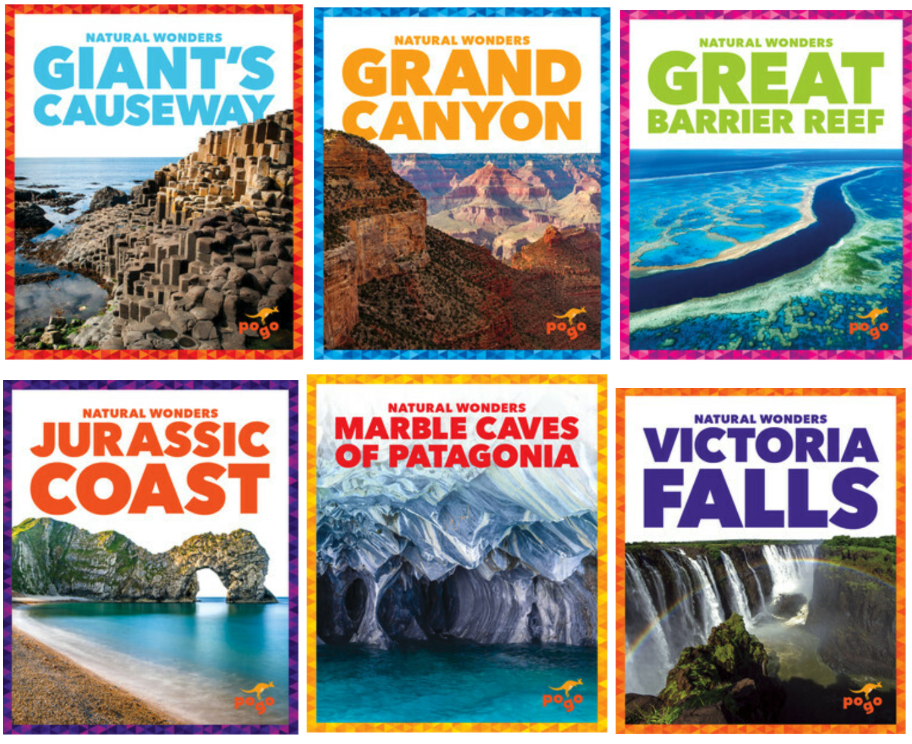
This non-fiction series is one that will expose readers to a variety of natural wonders of the world. While some like the Grand Canyon and the Great Barrier Reef are more familiar, others are not. This series has many benefits. There are suggestions for parents/teachers on how one can read or support reading at the beginning of the book. They explain the science behind the creation of these wonders and also include any legends that local cultures may have about them. Where they are in the world is shown on clear maps that are understandable. There are questions throughout the books as well, encouraging more thought and curiosity to look further into the subjects. At the end of each book there is a glossary and index as well as quick facts and tools. There is also a “To Learn More” area giving online resources at an appropriate reading level to look into these unique areas of our world.

I would recommend these books for elementary library. They have stunning images, interesting maps and charts and encourage interest and further learning.

Extreme Sports Series

By Tracy Vonder Brink

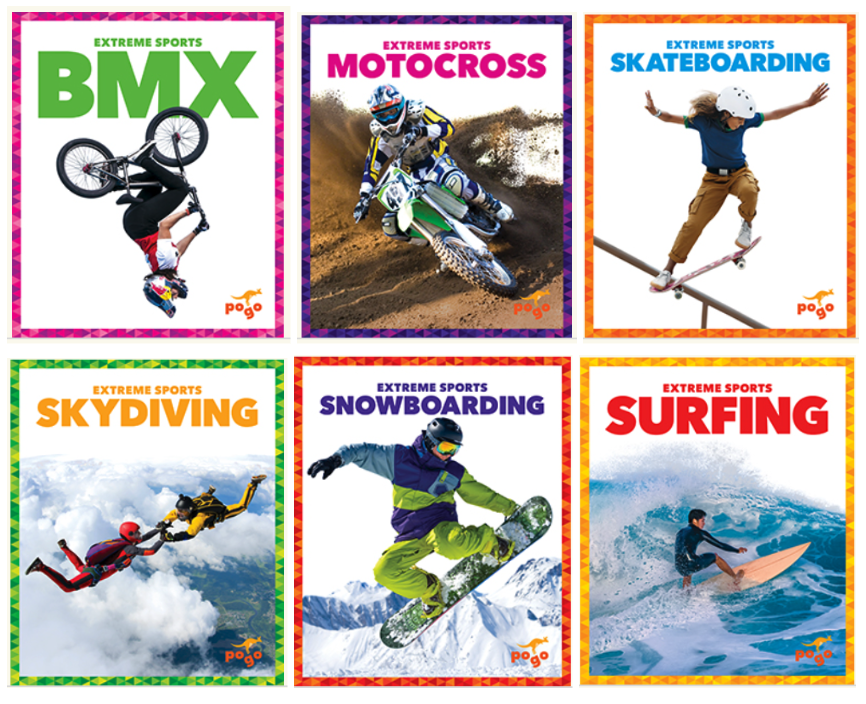
Every library can use more books about sports and this set is full of unique activities that may be harder to find at a reading level for emerging readers. The photographs are appealing and vibrant and thus lower level readers will also improve their reading level with these titles. Each book is organized the same way with beginning chapters explaining different ways athletes do the sport and what equipment they use. Chapters also explain parts of the equipment and how one stays safe doing the activity. What makes these books more interesting is that there are scientific explanations on how one does the activity successfully including the use of: physics, gravity, absorbing of energy, momentum, etc. The final pages of the book also have a glossary and an index but in every book there is a science activity that can be easily done to better explain the science of the sport.

I would particularly recommend these for intermediate/elementary level but they could also become very popular at the lower middle school level as well.