Home in a Lunchbox by Cherry Mo

Jun moves to America from Hong Kong. She only knows a handful of words and they are written on her hand. School feels isolating and very scary. Her lunchbox is filled with familiar comforting things from home and leads the way to new friendships.

The book is mostly wordless and the only text is speech bubbles and a few pages. The illustrations of school are dark and you can feel Jun’s sadness, but when Jun opens her lunchbox, joy and color burst forth. The end of the book includes the English and Cantonese translations of the few words that Jun knows, as well as a description of the things in her lunchbox.

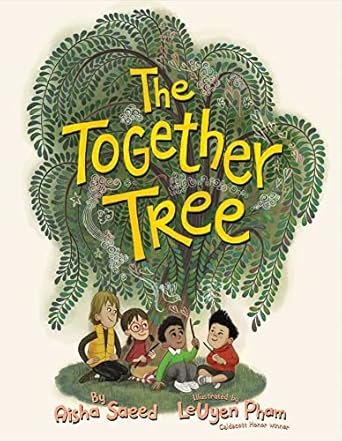
The Together Tree

Rumi starts at a new school and doesn’t feel like he fits in; not in class and not at recess. At recess while the other kids played, Rumi sat beneath a shady old willow tree, twirling a stick. Everything was different at his old home. Some of his classmates started making fun of him and it escalated to bullying. When a student threw a rock and hurt Rumi, his classmates realized their behavior was hurtful and gradually they all joined Rumi under the tree to create beautiful drawings in the dirt. The story ends with the bully being invited to join the group under the tree.

A beautifully illustrated book that tells the story of being a new student from a different cultural background and how teasing escalates to bullying.

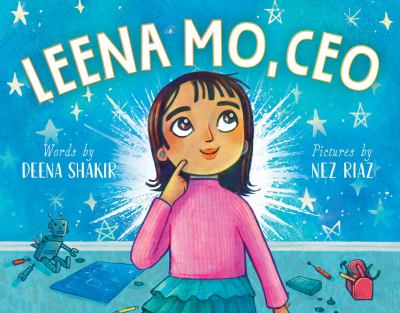
Leena Mo, CEO

Written by Deena Shakir and illustrated by Nez Riaz

Leena had to shovel snow and she really didn’t like that job. So, She dreamed, brainstormed, investigated and eventually built a duck-like robot to do the job for her. Her neighbors noticed how great her new snow removal device, aka Helmy (Arabic for “my dream”) and the orders started pouring in. Leena asks her two friends to join her business – Olivia (a robotics whiz) and Lily (a successful lemonade stand entrepreneur). Leena’s only remaining problem was Helmy parts procurement. How would she pay for them? Her nice neighbor, Miss Irma, offered to invest in Leena’s venture. Her business was ready to go! The girls got right to work with production, They sold all the Helmys they produced and business grew. Leena was a CEO! The story ends with a tv interview, which a man and his granddaughter watch in Leena’s mom’s hometown in Iraq. That little girl saw her future dreams in Leena’s story. Anything is possible!

This is an inspiring STEM related story that will resonate with young girls, who may not even realize that their interest in one area might turn into something even bigger. Characters are culturally diverse and the community seems to be positive and supportive of the young CEO. The illustrations are colorful and complement the storyline. Buy this for your library and share it with your young scientists. What if a child read this and said “I can do this, too!”? How cool would that be?

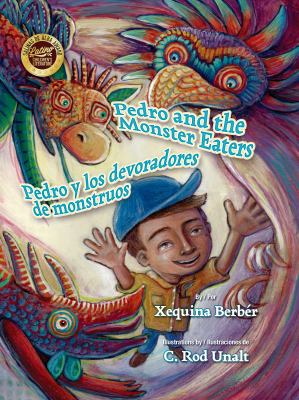
Pedro and the Monster Eaters = Pedro y los devoradores de monstruos

written by Xequina María Berbér and illustrated by C. Rod. Unalt

Pedro is a young boy that comes from a family of artists that creates papier maché art pieces – from pinatas to giant puppets called mojigangas that are used in parades and festivals in Mexico. His family is very busy, because their artwork is so beautiful. So, Pedro learns the aspects of the art from an early age. One night, he becomes very sick and has a high fever. He has some terrible dreams in which the mojigangas chase after him. In his nightmares, colorful creatures called alebrijes rescue him by gobbling up the scary puppets. He awakens and is determined to create these monster-eating creatures in papier maché. Soon, people from all around are buying his colorful art pieces and he become world renowned for his beautiful work.

This story is loosely based on the life of Mexican folk artist Pedro Linares, who created beautifully painted fantastical creatures in papier maché. The book is written in English and Spanish and illustrated with colorful otherworldly creatures that spring from Pedro’s imagination. Text and illustrations work very well together to convey Pedro’s story. An author’s note at the end gives more information about Pedro Linares and is a great starting point for more thorough research about an artist in a medium about which there is typically little information.

Purchase this book for your library for a variety of reasons – the subject matter, dual language presentation and the beautiful illustrations. Students will be curious to explore more about the artist and the medium after such a wonderful introduction.

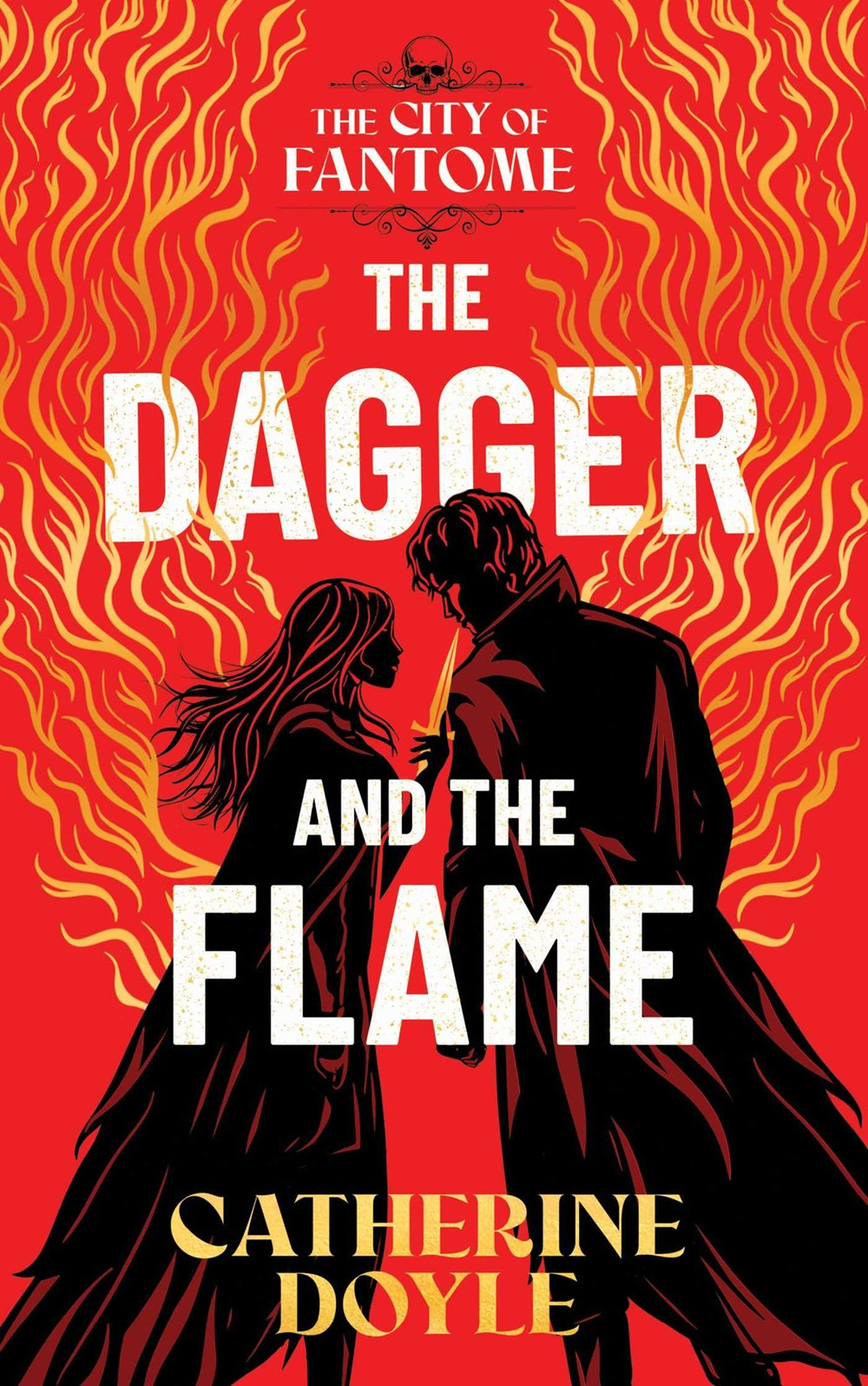
The Dagger and the Flame by: Catherine Doyle

Reviewed by OHS Student, Lakshitha R.

In The Dagger and the Flame, Doyle puts together an enthralling narrative with an air of mystery and hint of romance drawing the reader in.

The City of Fantome is run by the Cloaks and Daggers made up of thieves and assassins. Seraphine Marchant, the daughter of a smuggler, lives a happy life in the plains until the day her mother is murdered by the order. In seeking refuge with the Cloaks, Seraphine uncovers the secrets of her mother’s murder. Ransom, the heir to the mysterious order of the Daggers, is tasked to kill Sera but soon becomes drawn in by this mystery spitfire and her strange abilities; thus leaving him torn between duty and desire. This enthralling, forbidden romance is enhanced by magic and mystery.

The vivid details, spicy romance, and constant suspense will keep readers on the edge of their seats. Readers who like books by Sara J. Maas and other romantasy books would like one, too.

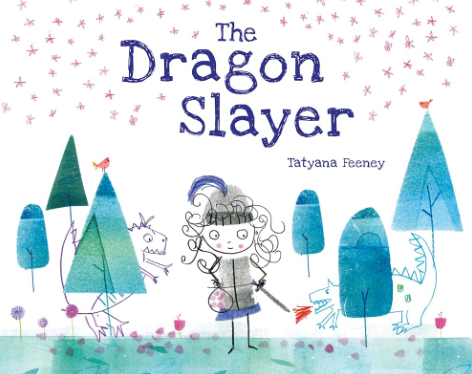
The Dragon Slayer

By Tatyana Feeney

What a fun story about a girl who was content and happy in her life but wanted MORE! Freya wanted a dragon to SLAY! And yet, not far away there was a dragon who was dreaming of a girl TO EAT! They both go out into the world and search for what they want but neither of them can find it. When they find each other will they end up slaying and/or eating? You’ll have to read to find out!. This is a wonderfully illustrated book with a fun ending that many will enjoy. I highly recommend this book for your library!

A Planet is a Poem


This book is the perfect fusion of poetry, planetary facts, and illustrations, with a bonus fold out feature on every page. It will speak to all types of readers, and be a source of inspiration for teachers looking for ways to introduce poetry.  Each poem is a different style; the book includes a sonnet, ode, villanelle, ballad, concrete poem, and an acrostic, to name a few. The first is a sonnet for the solar system, followed by an ode to the Sun. Then,  each planet poem is introduced in order of how it appears in the solar system, a clever way to structure the collection. I particularly enjoyed reading each poem and then opening the foldout to learn more about each planet, including facts I didn’t know.  Did you know that we named craters on Mercury in honor of Earth’s artists, musicians, writers and dancers, like Shakespeare, Picasso and Dr. Seuss? Or, that Venus spins in the opposite direction as Earth? Or that Uranus is a sideways planet, making scientists believe that a rock the size of Earth knocked it sideways billions of years ago, causing it to spin like a barrel? I don’t love that the foldout pages don’t tuck back in very easily; I’ve already bent one page. Readers will need to be reminded to be careful. Overall, a very accessible, inspirational book, whether you want to read all the poems/facts, or choose one poem for a library/classroom lesson. Highly recommended. 


Telephone of the Tree

This upper elementary/middle grade novel is perfect for anyone navigating loss and grief, especially early stages of this circuitous journey. 10 year old Ayla uses various coping strategies, including denial, to deal with the loss of her nonbinary best friend, Kiri. Ayla’s neighborhood plants trees for people when they’re born or when they die. The tree metaphor is woven throughout the story, how roots reach for each other across distances, how trees share resources. Readers, even younger ones, will easily see how we are also like trees.  Early on, a rotary phone is placed in a tree and neighbors take turns calling and talking to loved ones who’ve passed on. (This book is inspired by a phone booth in Japan nicknamed “phone of the wind”, detailed in the author’s note.) Who hasn’t wished they could talk to a loved one, just one more time?  One of the characters, a 5 year old, calls his gecko, which young readers will relate to if they’ve lost a pet.  Ayla’s family and neighbors give her space to move toward a place of acceptance. This is a sparse, heartfelt story about a community watching out for each other. Ayla takes the time that she needs to accept her friend’s passing, while bearing witness to how others around her deal with their grief. The author dedicates this book to “all readers missing the voices of their loved ones.” It’ll speak to readers of all ages. Highly recommended.

A Guide to Grief

by Cole Imperi; illustrated by Bianca Jagoe

A very readable non-fiction book defining grief – both the death-loss  (the loss of a loved one) or a shadow-loss (the loss of something not someone) type while providing useful strategies for moving forward through all types of grief. I don’t think I was ever aware of what shadowloss was, but I absolutely understood it and why it causes grief after reading the book. The book provides calm, gentle assurances throughout that there is no right or wrong way to grieve. Grieving is a process & not an emotion. LOTS of emotions can be part of grief. Outside support organizations are also provided in every chapter, as are words of loving kindness. I found the book’s calming voice reassuring and soothing and the organization of each chapter helpful. Scattered throughout are examples of real people moving through their grief. I appreciated the section aimed at adults who might be trying to help younger folks dealing with grief and the lists of suicide-prevention organizations at the end of the book. I think this will be a very helpful book to put in students’ hands – even those who may not be grieving now. The strategies will be helpful someday, and they might be surprised to learn about shadow-loss as I was and recognize their own, less-obvious types of grief.

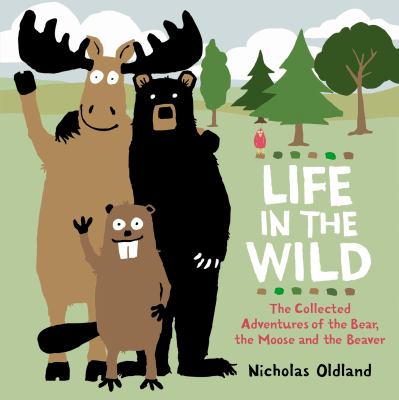
Life in the Wild: The Collected Adventures of the Bear, the Moose and the Beaver

by Nicholas Oldland

This is a collection of six stories about three good friends – Bear, Moose and Beaver. The stories are full of kindness, humor and friendship. Bear hugs everyone and everything, Moose is pretty anxious and Bear is laid back to the point of carelessness (especially when he’s cutting down trees). The collected works are cleanly illustrated and the text is fairly simple, making them perfect for young readers, who will enjoy the silliness of these three endearing pals.