Written by Elizabeth Dennis and illustrated by Clarice Elliott
How do kids around the world go to school? What do they do when they get there? These questions and more are answered in this Ready-to-Read (level 2) book. Three short chapters the daily lives of school children worldwide. Chapter one shares kids walking, riding bikes, gondolas, boats, trains and buses and even a snow machine to school. Chapter two talks about what school looks like, i.e. where it’s held and who is there. Chapter three is about lunch, recess, homework and school day length. In the end, it’s noted that whatever school looks like around the world, it’s still kids learning just like the reader. A map and added activity (create your own school) are nice extras.
Three simple chapters have longer sentences and color illustrations. High interest vocabulary and unfamiliar words are bolded with pronunciation in parentheses. Characters are diverse and the schools span the world, giving a nice global perspective that is not Eurocentric. This interesting book will be a great addition to your library and a nice opening book for the new school year. Highly recommended.
Written by Ellen Potter and illustrated by Sara Cristofori
Cordelia and Isaac receive a message via carrier pigeon from their friend, Fenton (a rat), asking for their help in Central Park Zoo. A mysterious creature is scaring the animals. This time, the sea lions saw the scary creature with glowing white eyes and the with pointy ears and a bushy tail. Cordelia offers to catch it. They meet Viola, the Central Park Zoo groundskeeper , and tell her all about it. She solves part of the mystery by telling them that the sea lions must have seen a coyote, the same one that has been spotted all around Central Park. She also shares that it is lonely, because it doesn’t have a pack. Cordelia and Isaac vow to help. They want to question other animals and decide to enlist Fenton’s help asking the dogs in Central Park if they know anything. After all, Fenton know s how to speak dog language. Princess Cha-Cha leads them to the coyote’s den after Fenton helps her dodge her owner by being chased by other dogs. They locate the coyote, named Ghost, and decide that the best way to help him find his pack is to take him to Viola. How to do that? Dress him up in Princess Cha-Cha’s spaghetti and meatball outfit and join a parade with dogs and baseball players. All goes well until the dogs realize that Ghost is a coyote and things get a dicey. Cordelia asks the dogs (through Fenton) to help Ghost find his pack – first, by protecting him from an approaching dog catcher. The dogs rally round Ghost and chase the dog catcher away and the parade resumes. Cordelia, Isaac, Fenton and Ghost finally make their way to Viola, who promises to help Ghost and plans to take him to a wildlife rehabilitation center where he can get the help he needs.
Cordelia, Isaac and Fenton end the day in the tree house in Central Park for a sleepover. Shakespeare, the squirrel, tucks them in and Cordelia thinks about her next adventures, knowing that wherever they take her, she’ll always come home to Central Park and the Squirrel that raised her.
This sweet story is the third in a series, Squirlish, about an intriguing young girl that lives in Central Park, knows squirrel language and helps her animal friends whenever they ask. This is a great book for younger readers that are moving into chapter books that are a little longer. Black and white illustrations are scattered throughout the story and chapters are short. Kids will love that Cordelia is not only a friend to animals, she can also speak to some of them! How cool is that? Add this to your library. It won’t stay on the shelves very long. Highly recommended.
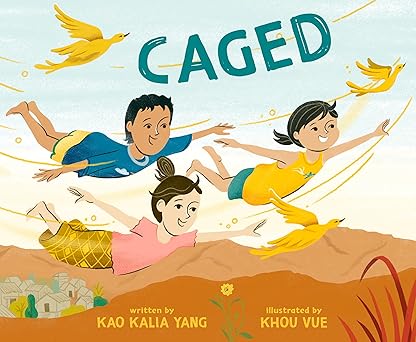
Caged is a very poignant picture book based on the author’s experiences as a child in a Hmong refugee camp. It tells how being watched over by guards, eating meager meals, and waiting for approval to leave were normalized in the lives of children. Yet despite all of this, the children’s imagination, youthful joy, and loving connection to family make the story one of hope. While physically caged, the essence of the individual, the families, and the larger community refused to be bound. Creative and colorful illustrations help juxtapose the feelings of confinement and hope.
In the Author’s Note, Kao Kalia Yang describes how a question from her daughter about the detention of immigrant children on the US-Mexican border inspired her to revisit her experiences as a child in a refugee camp. Beyond it’s picture book audience, this powerfully personal story has abundant curriculum connections for secondary social studies.
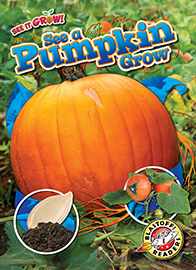
From seed to sprout, seedling to bloom, See a Pumpkin Grow walks the reader through the life cycle of a pumpkin. The simple text and colorful up-close photographs make the content accessible for young readers. Chapter headings and bold glossary terms provide content support.
This is a perfect addition to all elementary school libraries. See a Pumpkin Grow can be used to support life cycle lessons or to introduce the pumpkin patch or farm field trip.
Written by Karma Wilson and illustrated by Jane Chapman
Bear is SAD! All of his friends are off doing other activities, like digging holes and writing poetry and he is alone and lonely. He eats a snack. But, just doesn’t taste the same without friends. He builds a fort and it isn’t fun either. Bear decides to take a walk to pass the long, dreary hours and discovers a field filled with lovely flowers. He find the perfect flower for Mouse and then picks a bouquet of flowers for his friends. He doesn’t feel quite as sad as he walks home to his den with his flowers. Bear hears his friends as he nears his den and they are there to give him gifts from their day. He hands out their flowers and they listen to Raven’s poem. And, Bear is GLAD to be with his friends.
Karma Wilson is the author of several books about Bear and his friends and each rhyming story is more lovely than the one before it. These woodland creatures care for each other and share a wonderful, friendship. This story is a testament to that friendship. The rich, bright colors of the accompanying illustrations are perfect and convey Bear’s melancholy to happiness shift in a natural way. Add this to your library collection!
Written by Tommy dePaola and illustrated by Barbara McClintock
Tomie de Paola’s last story has been published posthumously with illustrations by Barbara McClintock. Tomie shared the life of his canine companion, Brontë, from their first moment meeting at the airport when Tomie picked him up. Their twelve years together are detailed, from sharing many walks to snuggling together in Tomie’s bed. The story is from Tomie’s point of view as he raises an energetic puppy (in a cute pink collar) to adulthood and into his senior years and slow decline, losing his eyesight and eventually passing. Tommy is so sad until one day when he’s out for a walk and realizes that Brontë is with him in his heart and always will be. He rushes home, creates a picture of Brontë to frame and places it next to his bed, where he dreams about their wonderful times together.
I LOVE this book! Tomie’s gentle, loving story is a tribute to Brontë and the bond they shared. Their happiness together is clearly depicted in Barbara McClintock’s accompanying illustrations. Tomie’s grief is genuinely addressed and his eventual realization that Brontë will remain in his heart is comforting for the reader as well. There is a note after the story and Barbara describes her work – wanting to honor Tomie’s rich talent while still putting her own touch on the artwork. The addition of some of Tomie’s own characters at the spaghetti dinner was a thoughtful nod to Tomie.
This book needs to be in every library for many reasons. It will serve as a comfort to those that are grieving loss of a loved one. It will remind us of the rich literary legacy that Tomie left behind. It will be on the shelf with Strega Nona, Big Anthony and all the other wonderful books by this prolific author/illustrator. And, it will become a treasured story for many, many readers to come. Buy this book now! Highly recommended.
Farmyard animals and their home star in this lyrical collection of poems. Twenty-three short poems (four to six stanzas) opposite accompanying full page illustrations flow easily through this picture book. Poem topics range from the barn and farm stand to cows and llamas. Young readers will chuckle when they see the the cow ‘chilling’ in a chair or read about the pony only to discover at the end that it’s a toy. Surprises and some added silliness make this a fun read. The illustrations are reminiscent of children’s drawings. Use of colored pencils, water colors and crayons add to that perception. And it all works well together!
Buy this book to add to your poetry section. Young readers will love it! Highly recommended.
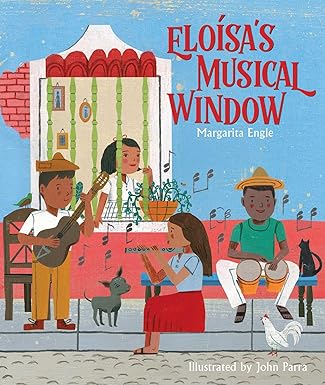
Despite her family’s poverty, a young girl satisfies her love of music by listening to the songs of daily life through her window. Looking out into the street, the whole world seems at times like a parade. The cats, dogs, cows, and horses add their sounds to the bustling past. It all makes Eloísa want to dance, though she’s too shy to do so out in the street. Also anchoring her to the inside of the window is her mother’s illness. When the village children gather their instruments to practice right outside her window, As Eloísa and her family listened, symphony of music invigorated her mother enough that she ventured outside.
This is a story about the power of music and rhythm of life in a small rural community. It also portrays the feelings of isolation and helplessness when a loved one either does not receive or does not respond to medical care. The story is set in the past in a Cuban village and interspersed with Spanish words.
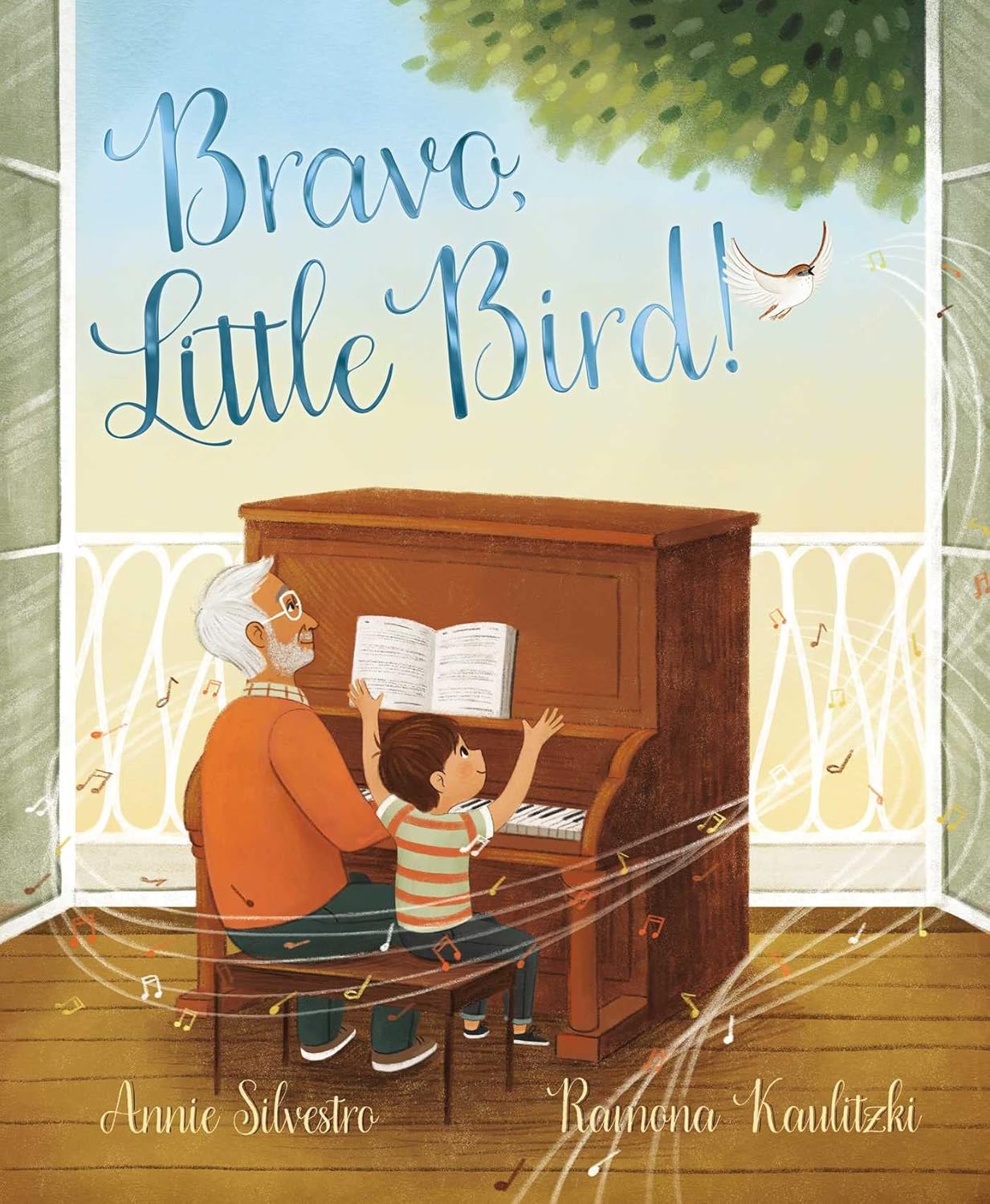
This is a lovely picture about about relationships; the relationship between an old man and old woman, between the old man and a bird, between an old man and his grandson, and between a grieving family and a community. Music the tie that binds all these relationships together.
An old man plays the piano as his wife paints and hums. The piano music drifts down into the valley and attracts a bird. When the bird adds his song, the old man exclaims, “bravo, little bird!” The old man’s grandson and the bird’s babies join the songs. When the old man dies, the bird, the grandson, and the wife no longer feel like music. A cardinal from the valley below comes to see why the music has stopped. With the encouragement of the little bird, the cardinal brings the music from the valley up to the old woman and the boy, reigniting their music.
With its rich, descriptive text and lovely pictures, Bravo, Little Bird! is highly recommended for all collections.
As stated in the author’s note, this book is based upon a real fire tragedy that devastated one small California town in 2018 – this book is set in a fictional town, but based upon the authors feelings having experienced that devastation.
Main character, Caprice (Capri), feels like the peacekeeper of her family. Her brother is recently home from rehabilitation for an alcohol addiction – although he’s the one trying to build back his trust with family and find new friendships – Capri is the one who often feels responsible for his happiness and wellbeing even if that means disregarding her own.
New to town, environmentally conscious, River, is Capri’s most recent love interest – but he’s also now also a friend of her brother’s, meaning they are constantly battling for time with him. Just when things are looking up for Capri and Winter’s relationship – wildfire begins to rip through their small town. Now they, along with the whole community have to make some really tough decisions about what to save, who to go back for, and when to get out.
This is a strong example of what happens when we are faced with extreme moments of life and death – we learn quickly who we can run to for safety.
The book moves quickly and has complex characters that most will be able to relate to.