About Candy Ranney

Candy is an elementary school librarian in Shelton, WA at the school where she was a student (so many years ago!). Her library is unique in that she brings her background and love of biology to her students in many ways. Not only does she have an awesome selection of science books; she also has a beaver, bobcat and mink sitting on her shelves and a variety of jarred specimens for her students to study. When she's not in the library, she is taking care of her baby trees on her tree farm and hanging out with her family and many pets. * 2025 WA Library Association School Librarian of the Year

Guest : a changeling tale by Mary Downing Hahn

Thomas is a beautiful baby and his sister, Mollie, makes a mistake one day and tells him that. People are never supposed to tell the children how wonderful they are, because the Kinde Folk (a group of evil fairies) will carry off the child and replace it with a horribly ugly and ill-behaved one of their offspring.

This is exactly what happens to baby Thomas and the family is left with a biting, screaming changeling that Mollie calls “Guest”. This being throws the family into an upheaval as it wears Mollie’s mother down and drives her father away. Granny Hedgepath advises to keep the child safe and happy, so that the Kinde Folke will possibly (although highly unlikely) return Thomas. Mollie and her mother are near the breaking point, when Mollie decides to travel with Guest to the Darklands and hopes for a trade to bring her brother home.

Her journey is dangerous and may end in death. But, Mollie is determined to reclaim her brother, return Guest and make things right again for her family. Along the way, she meets some that may help and others that will try to kill her and keep her brother. The ending is a twisting and turning series of events that will surprise the reader almost as much as Mollie herself.

This is not a typical ghost story by Mary Downing Hahn. It is based on Irish myths and appears to be set in a village in the middle ages. Therefore, there is magic, both evil and good. An afterward explains the background of the story and might lead to further exploration. The fantasy elements work well and the story moves along. The scary parts are just scary enough and the reader’s imagination will paint some wonderfully dark pictures as the story progresses.

Recommended for libraries looking for more scary stories that have a bit of fairy dust (not the good kind!). Students will become invested in the journey and eventual, somewhat surprising, ending.

Child of the Flower-song People: Luz Jimenez, Daughter of the Nahua

Luz Jimenez was born in the late 1800’s in the village of Milpa Alpa, a short distance from Mexico City. She was part of the indigenous Nuahac people and learned the language, stories and customs of her ancestors. She suffered the same fate as many indigenous people of her era – placement in government run schools where she had to speak Spanish and wear unfamiliar clothing. Her father was killed during the Mexican Revolution in 1911 and her mother moved the family to Mexico City. It was here that Luz realized her dream of becoming a teacher. Her teaching role was not as a typical school teacher, but as a teacher of her ancestral culture and language to the world. She became a model for many of Mexico’s leading artists of the time, including Diego Rivera, who saw her classic Nuahac beauty as something to capture on canvas, in a photograph or as a sculpture. She became friends with these artists and others – scholars and anthropologists, who wanted to learn about her culture and language. She took them back to her village and taught them her ancestors’ stories, language and customs. This knowledge is part of the history of Mexico and Luz is often referred to as the “Soul of Mexico”.

This well-written, informative book tells the story of Luz’s life in an accessible way without being too text-heavy. Accompanying illustrations by Duncan Tonatiuh are reminiscent of indigenous Mexican artwork and add a rich tone to the story. An author’s note, artist’s note, glossary, bibliography and timeline of Luz’s life are important added features. I appreciate the photo of Luz modelling for a group of artists on the artist’s note page. The only pieces missing are some examples of the artists’ work with whom Luz worked. It did lead me to research her life and find those examples. So, perhaps readers will do the same.

Wow in the World. The How and Wow of the Human Body: From Your Tongue to Your Toes and All the Guts in Between

You can find just about any answer you need to your questions in this fast-paced nonfiction book about the human body. It begins with the head and moves its way through the systems, stopping here and there to deliver some facts that will add a “Wow” factor (actually, more of a “Gross” factor) to the information. It is illustrated with cartoon-like characters and body parts. The characters are diverse, with differing skin tones and abilities.

A glossary, bibliography and source notes are available. Something really cool to note is a page of QR codes that lead to relevant episodes of the authors’ podcasts of Wow in the World on NPR.

There is a lot of information to take in through these 188 pages. But, kids will likely be engrossed in the gross facts added to the information presented. A rather vivid description (and illustrations) of various types of poop on the Bristol Stool Scale is one example of the extra stuff that kids will love to read about and share with unsuspecting adults. Now, I know seven types of feces and I might just share that information, too!

This book is part of a series called “Wow in the World”, in which there are currently two books and a third due out in April 2022.

Lost Things by Carey Sookocheff

This is a story of things lost and found, although sometimes by someone else. It begins with a girl walking her dog, who is grasping stick in his mouth. He notices a squirrel nearby and breaks free to chase it. The girl loses her dog and her hair ribbon. The dog loses his stick and the squirrel loses his acorn. The hair ribbon is found by a bird, who adds it to his nest. A child watching the bird drops his teddy bear. And, so the story continues, finally coming to an end when the girl finds her dog and the squirrel finds his acorn.

This is a circular story that comes to an end near the beginning. It is gently written and illustrated, with the lost things bearing a similar color. The story shows us that sometimes lost things can be found and treasured by others who might need them. The story moves through the community and the characters are hinted at in the pages preceding their active participation. There is so much to see and notice in a book with few words and spare illustrations. It’s a gentle, lovely story that will encourage much discussion.

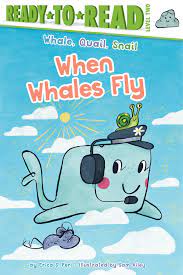
Sabrina Sue Loves the Snow

Sabrina Sue is an adventurous hen, who decides one day to see snow. She is too hot on the farm and wonders what snow is like (soft? crunchy?). Her fellow farm animals think it’s a bad idea and tell her that she is silly. She acknowledges the silly part, packs her bag and is on her way via truck, train and hiking. She and a frog that tags along finally find snow and have a glorious time. But, Sabrina Sue thinks about her friends and returns to the farm, bringing a snow globe and her froggy friend with her. She’s happy to be home, but she knows she’ll visit the snow again one day.

Bright, bold illustrations add to this fun story about this daring hen. Word bubbles add to the cartoon-like feel of the book. Text is simple and the font is large, which is perfect for new readers. The book is billed as a “Level One Ready to Read” book and it fills the niche nicely. This is one of a growing set of Sabrina Sue stories. Buy it for your early readers, because who doesn’t love a good chicken story?

A Walk in the Words

A young artist, who can express himself so eloquently through his drawings is, by his own definition, “the slowest reader in his class”. While other students were turning the pages of their books, he is still on the first sentence. He was intimidated by the words and worried that his classmates will find out that he can’t keep up with them. A page of text seems like wall that he can’t get over.

He decides to take reading one word at a time, breaking down bigger words into smaller pieces and letting the words that he knew lead him through the story. Slowly, he gains confidence and reading is no longer scary. He learns that he doesn’t have to be a fast reader. There were lots of amazing people that were slow readers, like Albert Einstein and Picasso.

He learns that his pictures and words can be a powerful combination. He can draw horses and the words can make them breathe and run. While reading is still a slow process, he understands that they can carry him along on adventures. They are to be enjoyed, not feared.

This story beautifully describes the author’s struggle with dyslexia and his journey through the winding path of learning to read. Illustrations (watercolor, pencil and ink) provide perfect imagery for the author’s story. Aggressive-looking books, twisted word trees and huge walls of text slowly change to accessible stone word paths and an image of the boy tearing down the text wall.

An author’s note details his own struggle with dyslexia, which was a painful experience in a time when those with dyslexia were just called “slow”. This highly recommended book should be shared with students that struggle to read and their classmates, who will gain a better understanding (and empathy) along the way.

Knight of the Cape

Dominguita loves to read, especially the books that remind her of the books her Abuela (grandmother) brought from Cuba and shared with her. But, her grandmother now lives in Florida with her sister, because she has a hard time remembering things. And, the class bully makes reading in peace difficult. So, Dominguita decides to become a knight (like the hero, Don Quijote, from her grandmother’s book). She figures that her knighthood will do two things: 1). show the class bully that girls can be knights and 2). help her feel closer to her brother and grandmother, because her brother agrees to write the story of her life as knight to send to Abuela.

Being a knight is hard work and Dominguita has some mishaps along the way. But, she has the encouragement and help of the adults around her. She also gains two new friends along the way. And, her trusty steed, aka dog, is a loyal sidekick in her adventures.

The characters are diverse and the story is accessible for younger readers, who will cheer for Dominguita (or Dom Capote, the fearless knight). Black and white illustrations help move the story along and an author’s note at the end explains the tale of Don Quijote and its connection to our heroine, Dominguita.

Time for Bed’s Story

We’ve all heard the vocalized feelings about bedtime from kids, from “I’m not tired” to “I need a drink of water”. It’s pretty apparent how they feel about bedtime. But, have you ever thought about it from the bed’s perspective? Well, the bed in this book will fill you in on its opinion of the situation, from the drool on its pillow to the stickers on its face (headboard). While there are some major annoyances to be had as a bed; it seems to be just fine with the situation in the end when the reader notices a tenderness under that frustration (kind of like being a parent, right?).

Illustrations are colorful and the bed’s expressive features tell the story right along with the text. Readers will enjoy the story from this vastly different perspective and will nod knowingly at the pictures of kids jumping on the bed and leaving old socks and snacks under it. This book could lead very easily into a discussion about looking at situations from another side. There are some great opportunities to foster some empathy in kids. Plus, this bed is just hilarious!

Your Mama

A book reminiscent of the old “Your mama so…” sayings, but with some very surprising and positive twists. Told in rhyming text, this picture book looks at a mama that can do and be anything. She dresses beautifully, is a brainiac and fights injustice. She is as strong as a Marine and so funny. Yet, she can sometimes be “cray-cray”. But, that’s ok, because she wouldn’t have it any other way”.

Colors are vibrant and most characters are people of color. The universal theme of love and joy shared by a mother and child are celebrated in exuberant text and illustrations. My only caveat is the use of “your mama” over and over. Will young children understand that it’s a twist on a tired, old joke? I’m not sure. The illustrations are contemporary as is much of the language. Perhaps, young readers will overlook the redundant use of that tired phrase.

Chicks Rock!

Every chick has a talent and Rocker Chick’s is music. She can play the guitar and belt out a tune better than any other chick. One day, she receives an invitation to headline a show and excitedly prepares for her big debut. On the big night, she steps on stage and freezes. Oh, no! Fortunately, her friends are there to support her using their unique skill sets. For example, Pop Chick teachers her dance moves and Artsy Chick does her makeup. My favorite is Zen Chick, who helps with stress. In the end, Rocker Chick overcomes her fear and rocks the crowd and thanks her “team”, who realize that they can achieve anything with the help of their friends.

This is a colorful, rollicking story told in rhyme. It moves along nicely and the end has a sweet message. This book is a nice addition to social-emotional collections.