Ten Fat Sausages by Michelle Robinson

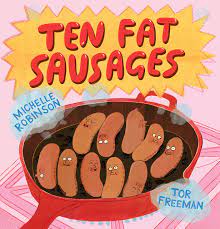
“Ten fat sausages, sizzling in the pan…” begins a fresh take on a familiar nursery rhyme, with every other sausage refusing to go “bang” or “pop” and attempting escape instead. Most are not successful, due to a cat, fan, blender and so forth. But, at the end, two escape – not unscathed.

While the notion of a redo of a nursery rhyme is fun, this particular rendition is rather dark and somewhat unpalatable, so to speak. Illustrations of whirring blenders full of pulverized sausage and sliced or bitten sausages are just…yucky. The accompanying text explains each sausage’s end to the general rhyme of “Ten little monkeys”, but falls short on occasion in its faithfulness to the original rhyming sequence.

There are other “food” picture books out there that might be more fun. Or, buy this one and wait for the reactions when you read it aloud. That might be fun, too.
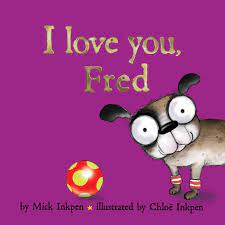
I love you Fred by Mick Inkpen

Fred has learned so much in obedience class, things like “sit”, “stay” and “fetch”. But, there is one word that he can’t figure out…”Fred”. What does this mean? How can he do it if he doesn’t understand it? Perhaps the dog in the mirror or in the water knows? Oh, no! He falls in! Luckily, his person saves him and whispers the word “Fred” again and again. A light bulb goes on inside Fred’s head. It’s his name! And, boy, is he excited!

Told in short, accessible sentences, this story is told from Fred’s point of view. He is a pug-like dog, drawn with some pretty spiffy sweatbands on his legs. Expressive illustrations add to the story, which will resonate with young dog owners. A solid purchase, given the popularity of silly dog picture books. Recommended.

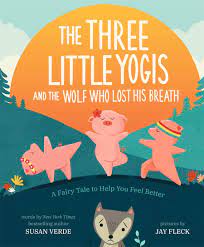
The Three Little Yogis and the Wolf Who Lost His Breath by Susan Verde

Poor Wolf! Sometimes, he gets really angry and the only way he knows how to calm down is to huff and puff. Unfortunately, he often blows things down in the process and other animals become afraid of him, which makes him feel sad when he should feel some relief from his anger.

One day, he loses his huff and puff. So, he looks for help and comes upon a piggy yogi posing outside her straw house. She tried to help him through yoga. But, he becomes frustrated and they move on together to the second yogi’s wood house. That yogi suggests cooling breaths and it works for a moment, until the wolf remembers he had lost his huff and puff. Together, they head over to the third yogi’s brick house (yep, brick) and there the wolf learns the way to calmness.

This book, with its recognizable story line, is a nice introduction to yoga and the benefits of breathing to calm oneself. Text is simple and illustrations are clean and colorful. An author’s note at the end explains the yoga positions and breathing addressed in the story. Use this story to introduce other ways for students to calm their anger and frustration. It is also a great addition to a fractured fairy tale unit – the whole class can practice breathing and yoga! Recommended

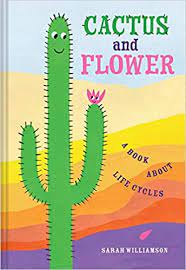
Cactus and Flower : a book about life cycles by Sarah Williamson

Cactus and Flower are best friends. They watch the sky as it changes color throughout the day. They visit with their desert animal friends and they watch the stars. These are “Butterfly Days”. One day, one of Flower’s petals drops and then another and another, until…flower is gone. Cactus is so sad. Even the beautiful butterflies can’t cheer him up. But, sadness eventually changes to sweet memories of his friend, Flower. One day, a little green bud appears on Cactus and it turned into a new Flower. “Butterfly Days” are back.

This is a simple, sweet rendition of the life cycle. While the botany might not be totally accurate, the desert animals are there and the basic story line works. Illustrations are bright and simple. Endpapers add interest with clouds in the front and their constellation counterparts in the back. This would be a nice introduction to plant life cycles.

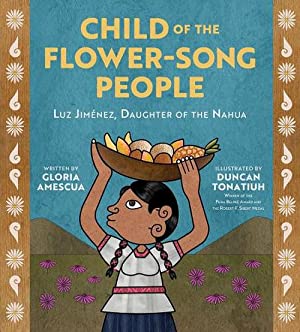
Child of the Flower-song People: Luz Jimenez, Daughter of the Nahua

Luz Jimenez was born in the late 1800’s in the village of Milpa Alpa, a short distance from Mexico City. She was part of the indigenous Nuahac people and learned the language, stories and customs of her ancestors. She suffered the same fate as many indigenous people of her era – placement in government run schools where she had to speak Spanish and wear unfamiliar clothing. Her father was killed during the Mexican Revolution in 1911 and her mother moved the family to Mexico City. It was here that Luz realized her dream of becoming a teacher. Her teaching role was not as a typical school teacher, but as a teacher of her ancestral culture and language to the world. She became a model for many of Mexico’s leading artists of the time, including Diego Rivera, who saw her classic Nuahac beauty as something to capture on canvas, in a photograph or as a sculpture. She became friends with these artists and others – scholars and anthropologists, who wanted to learn about her culture and language. She took them back to her village and taught them her ancestors’ stories, language and customs. This knowledge is part of the history of Mexico and Luz is often referred to as the “Soul of Mexico”.

This well-written, informative book tells the story of Luz’s life in an accessible way without being too text-heavy. Accompanying illustrations by Duncan Tonatiuh are reminiscent of indigenous Mexican artwork and add a rich tone to the story. An author’s note, artist’s note, glossary, bibliography and timeline of Luz’s life are important added features. I appreciate the photo of Luz modelling for a group of artists on the artist’s note page. The only pieces missing are some examples of the artists’ work with whom Luz worked. It did lead me to research her life and find those examples. So, perhaps readers will do the same.

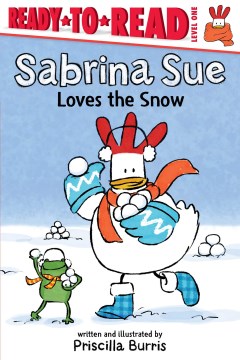
Sabrina Sue Loves the Snow

Sabrina Sue is an adventurous hen, who decides one day to see snow. She is too hot on the farm and wonders what snow is like (soft? crunchy?). Her fellow farm animals think it’s a bad idea and tell her that she is silly. She acknowledges the silly part, packs her bag and is on her way via truck, train and hiking. She and a frog that tags along finally find snow and have a glorious time. But, Sabrina Sue thinks about her friends and returns to the farm, bringing a snow globe and her froggy friend with her. She’s happy to be home, but she knows she’ll visit the snow again one day.

Bright, bold illustrations add to this fun story about this daring hen. Word bubbles add to the cartoon-like feel of the book. Text is simple and the font is large, which is perfect for new readers. The book is billed as a “Level One Ready to Read” book and it fills the niche nicely. This is one of a growing set of Sabrina Sue stories. Buy it for your early readers, because who doesn’t love a good chicken story?

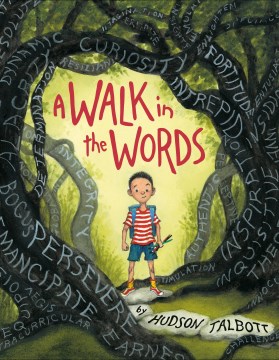
A Walk in the Words

A young artist, who can express himself so eloquently through his drawings is, by his own definition, “the slowest reader in his class”. While other students were turning the pages of their books, he is still on the first sentence. He was intimidated by the words and worried that his classmates will find out that he can’t keep up with them. A page of text seems like wall that he can’t get over.

He decides to take reading one word at a time, breaking down bigger words into smaller pieces and letting the words that he knew lead him through the story. Slowly, he gains confidence and reading is no longer scary. He learns that he doesn’t have to be a fast reader. There were lots of amazing people that were slow readers, like Albert Einstein and Picasso.

He learns that his pictures and words can be a powerful combination. He can draw horses and the words can make them breathe and run. While reading is still a slow process, he understands that they can carry him along on adventures. They are to be enjoyed, not feared.

This story beautifully describes the author’s struggle with dyslexia and his journey through the winding path of learning to read. Illustrations (watercolor, pencil and ink) provide perfect imagery for the author’s story. Aggressive-looking books, twisted word trees and huge walls of text slowly change to accessible stone word paths and an image of the boy tearing down the text wall.

An author’s note details his own struggle with dyslexia, which was a painful experience in a time when those with dyslexia were just called “slow”. This highly recommended book should be shared with students that struggle to read and their classmates, who will gain a better understanding (and empathy) along the way.

Time for Bed’s Story

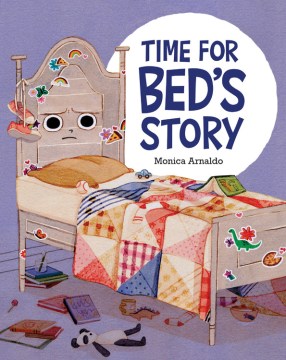
We’ve all heard the vocalized feelings about bedtime from kids, from “I’m not tired” to “I need a drink of water”. It’s pretty apparent how they feel about bedtime. But, have you ever thought about it from the bed’s perspective? Well, the bed in this book will fill you in on its opinion of the situation, from the drool on its pillow to the stickers on its face (headboard). While there are some major annoyances to be had as a bed; it seems to be just fine with the situation in the end when the reader notices a tenderness under that frustration (kind of like being a parent, right?).

Illustrations are colorful and the bed’s expressive features tell the story right along with the text. Readers will enjoy the story from this vastly different perspective and will nod knowingly at the pictures of kids jumping on the bed and leaving old socks and snacks under it. This book could lead very easily into a discussion about looking at situations from another side. There are some great opportunities to foster some empathy in kids. Plus, this bed is just hilarious!

Your Mama

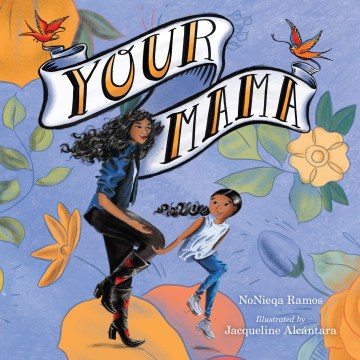
A book reminiscent of the old “Your mama so…” sayings, but with some very surprising and positive twists. Told in rhyming text, this picture book looks at a mama that can do and be anything. She dresses beautifully, is a brainiac and fights injustice. She is as strong as a Marine and so funny. Yet, she can sometimes be “cray-cray”. But, that’s ok, because she wouldn’t have it any other way”.

Colors are vibrant and most characters are people of color. The universal theme of love and joy shared by a mother and child are celebrated in exuberant text and illustrations. My only caveat is the use of “your mama” over and over. Will young children understand that it’s a twist on a tired, old joke? I’m not sure. The illustrations are contemporary as is much of the language. Perhaps, young readers will overlook the redundant use of that tired phrase.

Newton and Curie: The Science Squirrels by Daniel Kirk

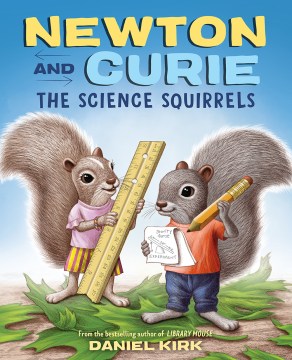
Newton and Curie are a pair of squirrels AND scientists. They spend their days near a school watching children on the playground and in their classroom. They observe the kids on the swings and seesaw and then watch the teacher’s lessons through the classroom window. Using what they observe, they build their own versions and discuss concepts like gravity, force and energy. One day, their bird friends’ nest falls out of the tree and Newton and Curie are to the rescue. They use a lever to enter the classroom and obtain materials necessary to fashion a pulley to return the nest to its place on the tree branch. And, they declare at the end “Science is fun!” . I have to agree!

This story is a great way to introduce some basic physics concepts in a fun, engaging manner. Illustrations are beautifully drawn and there is accompanying information about the real Newton and Curie, as well as a glossary and resource list. Author/illustrator Daniel Kirk, who gave us Library Mouse, creates a sweetly drawn, humorous and accessible introduction to scientific concepts that are exemplified all around us – especially on the playground!