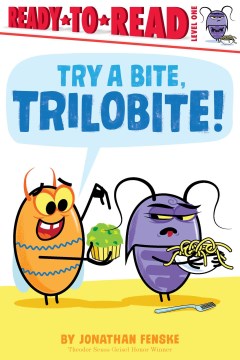
Try a Bite, Trilobite!

by Jonathan Fenske

Bug really wants his friend, Trilobite, to try his snack. But, Trilobite ONLY eats noodles. In the end, Trilobite is willing to take a nibble and eats the whole thing. Fortunately, she has LOTS of noodles to share.

This easy reader is written in the same way as “Elephant & Piggie” and uses speech bubbles to convey the story. Colors are bright and there is a lot of white space on the page. The characters’ emotions are clearly shown in their expressions and the book is simple enough for early readers. This book should fly off the shelves as another option for those kids that love Mo Willems’ books and easy graphic novels. Highly recommended.

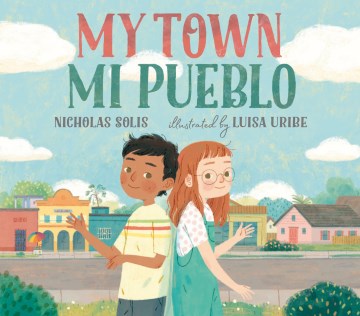
My Town= Mi Pueblo

written by Nicholas Solis; Illustrated by Luisa Uribe

Two cousins live on either side of the Mexico-U.S border and share what they love about their homes as well as their enjoyment of their cousin’s town. Each two page spread shares a unique aspect of their towns in both English and Spanish. They share about their houses, schools, markets, holidays and time together in both towns. This sweet story ends with the cousins and their families crossing the border, a bridge over a river, with guards on both sides and both kids expressing the wish that visits could be easier. They stand overlooking the river and share that both towns feel like home.

This story is great on many levels. The lovely illustrations, which offer details of life on both sides of the border, are perfect for some compare and contrast discussions. The English and Spanish is simple enough for language learners and read alouds. And, students will notice the joy that these two cousins experience no matter what town they are in together.

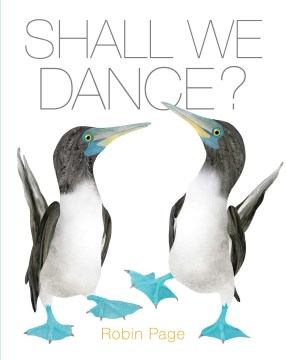
Shall We Dance?

written and illustrated by Robin Page

Animals move in many ways for a variety of reasons. Many use these “dances” as a courtship behavior while some animals spin and pirouette to warn of danger or to remove parasites. Whatever the reason, animals exhibit some amazing moves in this beautifully illustrated book.

Each page or two page spread has a large illustration of an animal (or pair) along with a short description of its “dance” and the possible reasons for such movement. There is a lot of information packed into those short paragraphs and they might pique the interest of would-be scientists, who will want to learn more about the featured creatures. Digital illustrations are colorful and dynamic. Text is not overwhelming and sometimes humorous. For example: the male praying mantis hopes that the female is well fed and won’t eat him after their courtship. This nonfiction book will certainly be popular in your library.

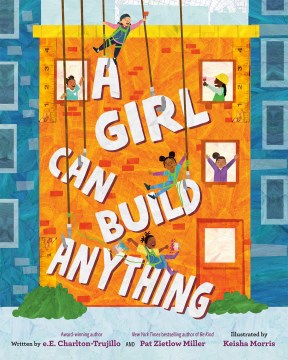
A Girl Can Build Anything

written by e.E. Charlton-Trujillo and Pat Zietlow Miller; illustrated by Keisha Morris

“It starts with a vision.” So begins an encouraging story of dreaming, building, failure, success and growth. Girls are sketching, gathering materials and creating. There are a few adults to help. But, the girls are the stars and the book shows that it can lead to bigger things, because “A girl can build anything. A girl can build everything.”

Short sentences with digital paper collage impart an empowering message to girls everywhere. Characters are diverse and the process of creating and building is realistically portrayed as something that takes work and, on occasion, failure to successfully complete. While it is a wonderful story for girls, this book is really for everyone. The process of creating is the same for all builders and the growth-mindset involved is necessary no matter who you are. Recommended.

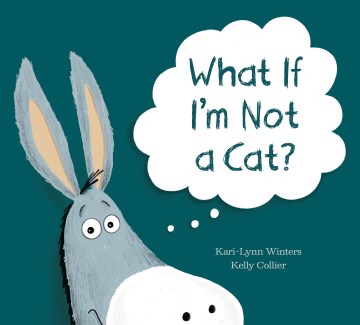
What If I’m Not a Cat?

written by Kari-Lynn Winters and illustrated by Kelly Collier

Donkey is a cat – or so he thinks. He acts like a cat. He cuddles the other kitties in the barn, he pounces and he perches. But, sometimes things don’t feel quite right. He doesn’t like cat food and climbing? That’s hard. One day, the farmer said something that made him question himself. She said “Donkey, you’re acting like a cat.” What? Is this true? He and his kitty friends start to wonder. Sadly, Donkey walks away to sleep under a tree by himself. Suddenly, he heard a kitten meow in distress and ran to the rescue, kicking at a fox and saving the day. Upon his return to the barn with the kitten, the other cats cheerfully welcome him back, whatever he is. He decides that he is happy with who he is – a don-kitty!

This book tells a story of friendship and being who you are. Speech bubbles and cartoon-like illustrations help us grasp the personalities of the characters. The story is humorous, sweet and a great kick off to everything from lessons on animal traits to self-acceptance. Given its many possibilities, this is a great book for your library. Highly recommended.

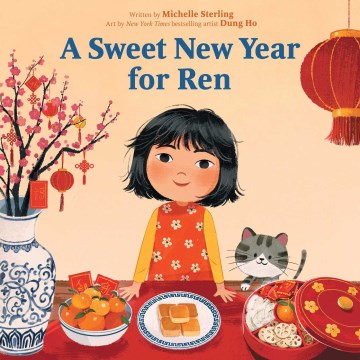
A Sweet New Year for Ren

written by Michelle Sterling; illustrated by Dung Ho

Ren jumps out of bed, ready for a busy day in preparation for Lunar New Year. She wonders if she is old enough this year to help her family make the special foods or decorations for the festivities. She asks to join family members in their tasks – Baba with decorations, Mama and Uncle Jian with the dumplings and Auntie Weili with the noodles. It’s not going to happen this year, because she’s too small. But, things change when her brother, Charlie, enters the home. He patiently shows her how to make the traditional pineapple cakes, rolling, patting baking and sometimes, cleaning up a little mess. The cakes turn out beautifully and are part of a wonderful family Lunar New Year celebration. At the end, there is a recipe for those special pineapple cakes. Yum!

Bright cartoon-like illustrations accompany simple text in this wonderful book about an event that is culturally significant to many people around the world. An author’s note discusses the holiday and her connection to it, while the recipe at the end of the book is an invitation to join the festivities. Highly recommended for those libraries looking to increase their diverse literature selection.

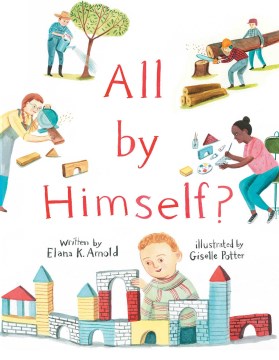
All by Himself?

written by Elana K. Arnold and illustrated by Giselle Potter

A child builds a masterpiece with some beautiful colored painted blocks and he does it all by himself. Or does he? This cumulative tale tells the story of the this boy’s masterpiece starting with the tree farmer, who plants a seedling many years before. An arborist cares for it and a woodcutter falls the mature tree. A woodworker carves blocks which are then painted by an artist. This artist packs them up and a driver delivers them to a toy store. The shopkeeper displays the blocks and they are purchased by a grandma, who brings them home to the child and he builds a masterpiece! Then it goes back to the beginning.

This story builds upon itself and is accompanied by watercolor and ink illustrations. Text is simple and repetitive. Students will jump in and “read along” as the story unfolds. While the story is cumulative, it also circles back to the beginning, which will be fun for the reader to follow.

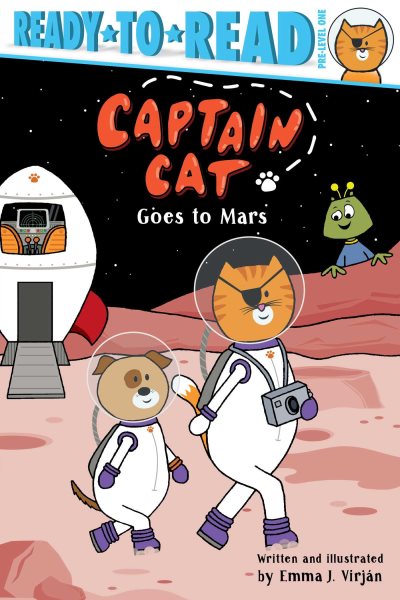
Captain Cat Goes to Mars

by Emma J. Virjan

Captain Cat and his friend, Pilot Matt, fly their spaceship to Mars. They meet some friendly aliens there and explore the surface of the planet. A storm comes up and they wait it out with their new friends and some yummy snacks. Unfortunately, the storm tips over their spaceship, which cracks it. Their alien friends save the day with some glue and tools. The intrepid astronauts take off and their new friends follow behind.

This book, part of the Ready to Read series, is a very accessible story, with simple text that rhymes that are not overwhelming for the beginning reader. Engaging illustrations make it even more fun. Add this to your collection for those newly minted readers in your school.

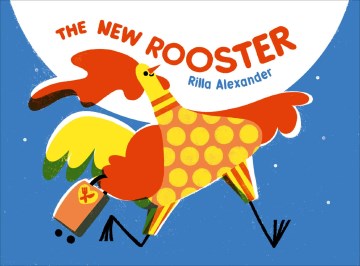
The New Rooster

by Rilla Alexander

Rooster has just arrived in his new home to start his new job – waking the guests of the ZZZ Hotel. He awakens and gives his signature  “OCKCAY AWAY OODLEDAY OODAY.” No one wakes up! He tries using a megaphone and just gets protests in a variety of languages before the other animals go back to sleep. Deciding he isn’t cut for this job, he prepares to leave. He doesn’t want to travel on an empty stomach, so he cooks breakfast. The smell of the wonderful food rouses the sleepy animals, who rush share this delicious fare and thank Rooster. He doesn’t understand their languages, but he has discovered a way to connect – by sharing! The story ends with an illustration containing Rooster’s new business,  “OCKCAY AWAY OODLEDAY OODAY DINER”.

This boldly illustrated book is a fine addition to any library, telling a story of a newcomer who finds his passion in his new home and discovers a way to connect to others. A sweet, fun immigration story that students will enjoy. They might even want to try Rooster’s language – pig Latin!

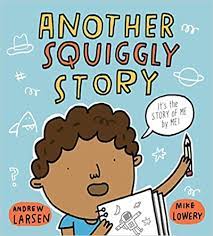
Another Squiggly Story by Andrew Larson

A young student has a problem. His teacher, Mr. Lopez, assigns the task of writing an autobiography. First of all, what is that? His classmates get right to work. His best friend, Marcus, loves hats and Alia wants to write about vampires, because she thinks about them all the time.

He is stuck! But, his sister comes to the rescue, telling him about her autobiography and reassuring him when he makes mistakes (it’s ok, you can edit). In class, the writing continues, with brainstorming , lists and first proofs. The boy continues his writing journey with a title, cover and more editing. The story ends with an addition to his list of “Things I Want to Be” – an author.

This is a fantastic book for kickstarting the writing process for young students. Appropriate vocabulary and simple illustrations make it a quick read and great discussion starter. I appreciate that the young boy works through his frustration and learns as he goes along. We have all been in that same place in our own writing journey. His friend, Marcus, adapts his autobiography into a comic style piece, noting that “drawing is easier than writing for me”. What a great representation of the reality of writing for so many kids. And, we can infer that the teacher is accepting of this change, since Marcus proudly shows his work-in-progress to the young writer. Use this book to introduce some of the elements of the writing process as well as the concept of autobiographies. Highly Recommended