
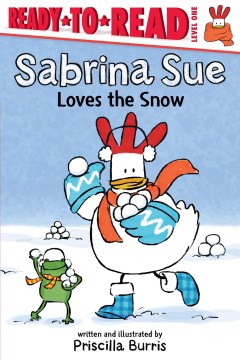
Sabrina Sue Loves the Snow

Sabrina Sue is an adventurous hen, who decides one day to see snow. She is too hot on the farm and wonders what snow is like (soft? crunchy?). Her fellow farm animals think it’s a bad idea and tell her that she is silly. She acknowledges the silly part, packs her bag and is on her way via truck, train and hiking. She and a frog that tags along finally find snow and have a glorious time. But, Sabrina Sue thinks about her friends and returns to the farm, bringing a snow globe and her froggy friend with her. She’s happy to be home, but she knows she’ll visit the snow again one day.

Bright, bold illustrations add to this fun story about this daring hen. Word bubbles add to the cartoon-like feel of the book. Text is simple and the font is large, which is perfect for new readers. The book is billed as a “Level One Ready to Read” book and it fills the niche nicely. This is one of a growing set of Sabrina Sue stories. Buy it for your early readers, because who doesn’t love a good chicken story?
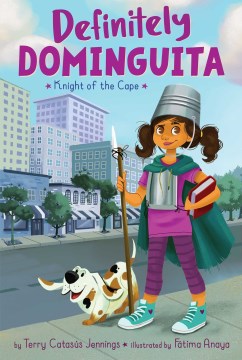
Knight of the Cape

Dominguita loves to read, especially the books that remind her of the books her Abuela (grandmother) brought from Cuba and shared with her. But, her grandmother now lives in Florida with her sister, because she has a hard time remembering things. And, the class bully makes reading in peace difficult. So, Dominguita decides to become a knight (like the hero, Don Quijote, from her grandmother’s book). She figures that her knighthood will do two things: 1). show the class bully that girls can be knights and 2). help her feel closer to her brother and grandmother, because her brother agrees to write the story of her life as knight to send to Abuela.

Being a knight is hard work and Dominguita has some mishaps along the way. But, she has the encouragement and help of the adults around her. She also gains two new friends along the way. And, her trusty steed, aka dog, is a loyal sidekick in her adventures.

The characters are diverse and the story is accessible for younger readers, who will cheer for Dominguita (or Dom Capote, the fearless knight). Black and white illustrations help move the story along and an author’s note at the end explains the tale of Don Quijote and its connection to our heroine, Dominguita.

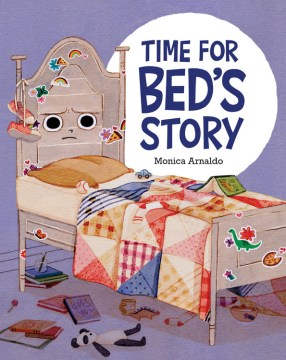
Time for Bed’s Story

We’ve all heard the vocalized feelings about bedtime from kids, from “I’m not tired” to “I need a drink of water”. It’s pretty apparent how they feel about bedtime. But, have you ever thought about it from the bed’s perspective? Well, the bed in this book will fill you in on its opinion of the situation, from the drool on its pillow to the stickers on its face (headboard). While there are some major annoyances to be had as a bed; it seems to be just fine with the situation in the end when the reader notices a tenderness under that frustration (kind of like being a parent, right?).

Illustrations are colorful and the bed’s expressive features tell the story right along with the text. Readers will enjoy the story from this vastly different perspective and will nod knowingly at the pictures of kids jumping on the bed and leaving old socks and snacks under it. This book could lead very easily into a discussion about looking at situations from another side. There are some great opportunities to foster some empathy in kids. Plus, this bed is just hilarious!

We Will Find Your Hat! : A Conundrum by Candy James

This Archie and Reddie beginning reader uses simple language, humor, and a graphic novel format to keep emergent readers engaged and interested.Two fox friends are looking for their favorite hats for Hat Day. Archie can’t find the hat he wants to wear. After a series of humorous events, Archie realizes his favorite hat, the one that looks exactly like his head, has been on his head all the time. The series is sure to be a hit with fans of Mo Willem’s Elephant and Piggie.

Witch for Hire, by Ted Naifeh

This graphic novel features some dark & difficult subjects including bullying, cyberbullying, and verbal and physical abuse. Naifeh handles it well and I think it will be enjoyed by mature middle school or high school readers. The book seems to be the first in a new series, setting the main character up as a problem-solver of the magical variety for people in need. In this first book, she reigns over the losers table in the lunchroom at school and reluctantly gets involved with halting a cyberbully called “shy_shelbi” who is encouraging & blackmailing for chaos in the guise of helping. Underlying storylines feature families with abuse secrets which give the whole book an edgy feel. I appreciated that even though some problems are solved, the characters realize that there are always consequences and unsolved issues – even with some positive outcomes. Life is not easy. The graphics are colorful and facial expressions are very expressive. Light & dark help handle the mood and the seriousness of some scenes.

Witch For Hire

Chirp! Chipmunk Sings For a Friend

Chipmunk lives on a rock and sings her songs everyday. Sometimes her songs are happy, sometimes bittersweet, and sometimes very sad. Rock is a very good listener, but Chipmunk longs for a friend to sing with her. So Chipmunk sets off to find a friend. First she tries a pinecone, but Pinecone ends up getting along with rock. Then she tries a log which then leads her to finding other friends.

The illustrations complement the text, especially the illustrations about the songs. The message that it is okay to express emotions and also a message of perseverance is important.

Orca Rescue! : The True Story of an Orphaned Orca Named Springer by Donna Sandstrom

A engaging true story for young nature lovers. When a young orca is seen all alone near Vashon Island without any pods nearby, it got the attention of both orca enthusiasts and scientists. A baby orca will not survive without a family to protect and teach it. Scientist and volunteers use her distinctive call and markings to identify her family. Since she was alone, it was assumed that her mother was dead, but her grandmother, aunts, and cousins were still alive in Canadian waters. In Orca Rescue! the story of Springer’s capture, transport, and release, and subsequent reunion with her family is described.

The nonfiction narrative of Springer’s story is interspersed with well researched, age appropriate information on Orcas in general and Puget Sound resident pods in particular. Sarah Burwash’s lovely watercolor illustrations portray the complicated steps in the rescue. The endpapers include photographs of Springer in different stages of her life, a matrilineal family tree of the A10 pod, a summary of some of the threats to whales and dolphins, glossary, and a list of the individuals and organizations that were instrumental in Springers safe rescue.

I Don’t Want to Read This Book

I Don’t Want to Read This Book by Max Greenfield starts off with the narrator declaring that they do not want to read this book. Books are full of words, sentences, and paragraphs. On each page, the narrator explains why they do not want to read the book. Even at the end of the book the narrator the narrator says the changes of reading the book again are infinitesimal.

What About Will

By ELLEN HOPKINS

While Trace used to have a close relationship with his older brother, Will, everything changes after Will suffers a serious brain injury in a football game. “The incident” has a permanent effect on Will’s personality. He now skips school, hangs out with the wrong crowd, steals money, and eventually becomes addicted to pain medication. Trace, already juggling his parent’s separation and pitching for his school baseball team, hides what he knows about Will from their father. When Will attempts suicide, Trace learns the hard way that the best way he can help his brother is to be open with his parents about the direction Will’s life is taking him. The author, Ellen Hopkins writes this story of family love in prose, the perfect format for the storyline.

The New Friend, by Charlotte Zolotow

Originally published in 1968, the story of The New Friend remains true to the experiences of childhood today. Newly illustrated by Benjamin Chaud, Zolotow’s story begins with a celebration of all the things both mundane and imaginative that a boy and his friend with long brown hair do together. When the girl with the long brown hair finds a new best friend with whom to share all her experiences, the child is devastated and rushes home in tears. In his dreams that night he finds a new friend to share those mundane and imaginative experiences of childhood. Upon waking he is determined to find a new friend so that when he thinks of his old friend, he will no longer care.