It is often difficult to find engaging books for our emergent readers, but Holi (series Holiday Fun!) will be a favorite with its full page photos and simple text. Readers will discover many of the elements unique to this holiday as they explore the photos and read the brief sentences. There are many important nonfiction elements, including: Table of contents, index, labels and ‘words to know’ list. Repetitive, controlled vocabulary and short sentences will aid in reading success. There are sixteen books in the series. Purchase this set to update your holiday collection and attract your newest readers. Recommended.
It is often difficult to find engaging books for our emergent readers, but Fourth of July (series Holiday Fun!) will be a favorite with its full page photos and simple text. Readers will discover many of the elements unique to this holiday as they explore the photos and read the brief sentences. There are many important nonfiction elements, including: Table of contents, index, labels and ‘words to know’ list. Repetitive, controlled vocabulary and short sentences will aid in reading success. There are sixteen books in the series. Purchase this set to update your holiday collection and attract your newest readers. Recommended.
It is often difficult to find engaging books for our emergent readers, but Day of the Dead (series Holiday Fun!) will be a favorite with its full page photos and simple text. Readers will discover many of the elements unique to this holiday as they explore the photos and read the brief sentences. There are many important nonfiction elements, including: Table of contents, index, labels and ‘words to know’ list. Repetitive, controlled vocabulary and short sentences will aid in reading success. Purchase this book to update your holiday collection and attract your newest readers. Recommended.
Vera, (the cat) is playing contentedly alone with her catnip mouse and Gipp (the dog) is sneakily watching her. She notices and calls him out. He asks her to play and she makes it clear that she was playing alone. He doesn’t take no for an answer and waves around his wand (stick) which he swings around and accidentally breaks Vera’s catnip mouse. While trying to make things better, he comes up with some hilarious alliterations while trying to say ‘catnip mouse’. All of this is not hilarious to Vera, who walks away and Gipp sits dejectedly by a tree. Fortunately, Vera can’t stay angry at her friend for long and they apologize to each other. They get another magic wand (stick) and create even more silly word combos together – friendship fixed.
The boldly drawn characters are comic-like with word bubbles telling the story as a dialogue and their facial expressions helping to show their feelings. Their silly word play is illustrated along the way – envision a cattle blouse or massive louse! Endpapers hint at the storyline, with Vera playing alone with her catnip mouse (Gipp hiding in the background) at the front and both playing together happily at the end.
This is a very sweet and silly story about aspects of friendship. Sometimes, a friend just wants some alone time and it’s ok. Communication and empathy are part of being a good friend. Great for SEL discussions. Recommended.
A, B, C and all the rest are together again in a Halloween story based on the original “Chicka Chicka Boom Boom by Bill Martin, Jr. and John Archambault. The alphabet is climbing a creaky tree and ready for Halloween with costumes, spider webs and pumpkins. They fall to the ground when a ghost shouts “Boo”, who then encourages them to come back up. They climb again and the story ends with “Chicka chicka tricks treat. Everybody – time to eat!”.
Colorful illustrations and catchy phrases will entice young readers to delve further into this amusing story. They will enjoy the extra fun of looking for the Halloween elements throughout the book. Each letter is ‘costumed’ in some way and there are spiderwebs, pumpkins and ghosts along the way. Recommended.
Matisse is weighed down by the drab dreariness of a grey, wet French day. He can’t see the light and, therefore, can’t paint. A friend suggests a trip to Morocco, where the light is beautiful and bright. Unfortunately, he arrives to more drab, dreary weather and feels trapped by it all. He awakens one morning to the bright light and colors he needed. He sketched and painted and the colors were glorious. Interestingly, he realized that so many of the colors around him in Morocco reminded him of home. He packed up his completed paintings and sketches an returned to France, where he continued to create and remember the vivid colors of Morocco even when it was drab and dreary outside.
This story of Matisse is well told in accessible language and beautiful accompanying illustrations that lead the reader to feel the a hint of the weight of darkness and grey and the burst of light and color that Matisse must have felt. In these illustrations, he is as grey and drab as his surroundings and becomes as colorful as his new environment in Morocco. Upon his return to France, he remains colorful amid the the grayness, still painting his beautifully colorful pieces. The illustrations tell the story alongside the written words.
More information is given about the artist at the end. The endpapers at the back of the book define unfamiliar words for the reader and are accompanied by colorful drawings.
This book is a wonderful addition to your biography section, especially if you are in need of books about the Arts. It won’t disappoint!
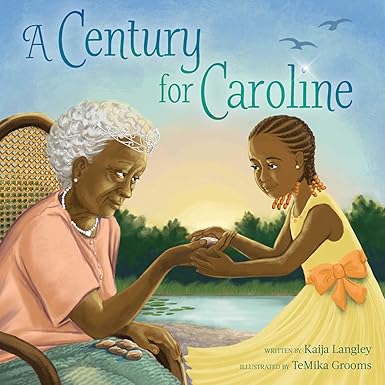
Jasmine wakes before dawn, hugs her parents, and leaves with her papa (her grandpa) to drive to Great-Grandma Caroline’s one hundredth birthday. On the long drive, Jasmine naps, snacks, and reflects on the ages of things she cares about; goldfish lived 30 days, hamster lived 6 months, and a dog that shares her age. In meeting and spending time with a great-grandma she had never met, Jasmine learns how she got so old – patience, determination, and faith. The youngest and the oldest then work together to blow out the birthday candles.
This book features a multi-generational black family. Beautiful illustrations reinforces the themes of interconnectedness, caring, and learning life lessons from family.
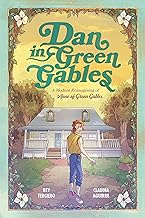
This graphic novel retelling of Anne of Green Gables features a male “Anne” living in rural Tennessee with strangers after being abandoned by his mother. He struggles with the very conservative religious beliefs of his grandparents, particularly the Grandpa. Dan is gay and that goes against the r. I really liked that it was easy to read and I wanted to keep reading. I don’t usually read graphic novels, but this one was compelling and made me want to read more. The art is colorful and Dan keeps the signature red hair of the inspirational “Anne”. I also appreciated that there was a warning about possible triggers in the book for readers at the very beginning regarding bullying, physical assault and homophobia. All of these topics are handled gently in the book, but do represent real experiences that some individuals experience. That being said, I didn’t like the way some characters treated Dan, but I realize this was part of the plot. His grandfather had some positive realizations about Dan and accepted him more for who he was by the end. Dan even chose to stay with his grandparents even though his mother came back to get him. Overall, I’d give it 4-5 stars.
Reviewed by Rosalee B, 7th grader at Komachin Middle School
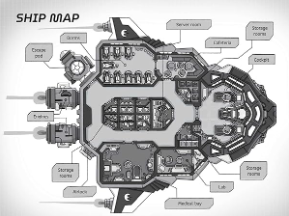
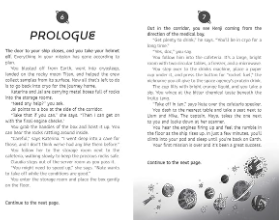
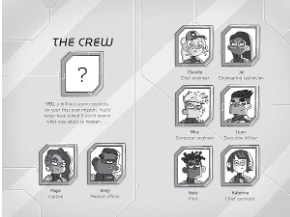
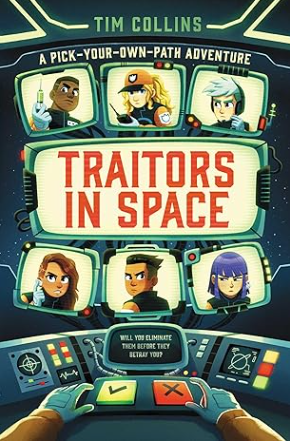
In this Sci-fi mystery adventure, readers get to read many, many endings depending on which decisions they make as they read. I found myself octopus-fingers in pages as I tried out the many choices offered along each path. I did not even get to all of them! The basic premise is that this band of space travelers has picked up rocks and potentially an alien being at the planet they had been exploring. Midway through their cryogenic sleep home, the crew awakens fearing that an alien is hiding within one of them. It’s happened before causing the brave decision to blow up the entire former ship and all aboard to save Earth. The travelers would like to avoid that. The only way to stop Earth from being infected is to figure out who is no longer themself and eradicate the now-alien among them. Each path leads to accusations and showdowns. In some scenarios the culprit is found; in others, all become infected and Earth will be doomed. Black and white illustrations keep the book accessible to struggling readers, but doesn’t overwhelm the text. Along the way, there are brainteasers to solve. Some of these were quite hard, though luckily the answers are given in the back. My only objection with these is that they did not REALLY need to be solved in order to continue down the path. They could be easily skipped since they had no real connection to the plot line of that particular scenario. I think readers who love choose-your-own adventure stories will enjoy this modern story. (The old paperbacks from the 1990s? 1980s? are out of print and look pretty tired now. It’s time for some new multi-path adventures.) I did as many paths as I had energy to do and did lose interest in trying to follow all of them. So, did I read all of the book (192 pages)…no. Did I enjoy what I DID read…yes. I think middle school readers will find the same.
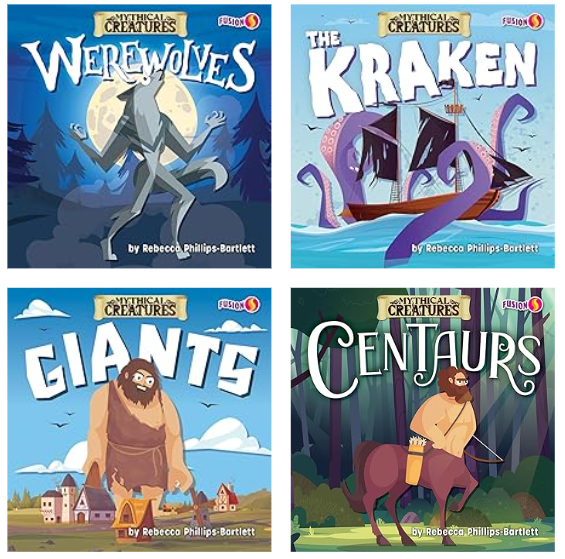
People have always used their imagination to explain the unexplained. The Mythical Creatures series describes some of the best known creatures in an engaging, age appropriate way that is sure to be a hit with young readers. Each book contains ten chapters focusing on different aspects of the creature. This includes the mythical origins, typical characteristics, unique powers or skills, geographic home, and similar mythical and real life creatures. Short sentences are divided on the page into a variety of text boxes. Labeled illustration and diagrams support the content and break up the pages in a manner reminiscent of a screen. Includes Glossary, Index, and Table of Contents.
The Mythical Creature series currently contains eight titles. Titles used for this review are: Centaurs, Giants, Werewolves, and Kraken.