It is often difficult to find engaging books for our emergent readers, but Thanksgiving (series Holiday Fun!) will be a favorite with its full page photos and simple text. Readers will discover many of the elements unique to this holiday as they explore the photos and read the brief sentences. There are many important nonfiction elements, including: Table of contents, index, labels and ‘words to know’ list. Repetitive, controlled vocabulary and short sentences will aid in reading success. Photos show diverse subjects and settings. There are sixteen books in the series. Purchase this set to update your holiday collection and attract your newest readers. Recommended.
It is often difficult to find engaging books for our emergent readers, but Juneteenth (series Holiday Fun!) will be a favorite with its full page photos and simple text. Readers will discover many of the elements unique to this holiday as they explore the photos and read the brief sentences. There are many important nonfiction elements, including: Table of contents, index, labels and ‘words to know’ list. Repetitive, controlled vocabulary and short sentences will aid in reading success. Photos show diverse subjects and settings. There are sixteen books in the series. Purchase this set to update your holiday collection and attract your newest readers. Recommended.
It is often difficult to find engaging books for our emergent readers, but Holi (series Holiday Fun!) will be a favorite with its full page photos and simple text. Readers will discover many of the elements unique to this holiday as they explore the photos and read the brief sentences. There are many important nonfiction elements, including: Table of contents, index, labels and ‘words to know’ list. Repetitive, controlled vocabulary and short sentences will aid in reading success. There are sixteen books in the series. Purchase this set to update your holiday collection and attract your newest readers. Recommended.
It is often difficult to find engaging books for our emergent readers, but Fourth of July (series Holiday Fun!) will be a favorite with its full page photos and simple text. Readers will discover many of the elements unique to this holiday as they explore the photos and read the brief sentences. There are many important nonfiction elements, including: Table of contents, index, labels and ‘words to know’ list. Repetitive, controlled vocabulary and short sentences will aid in reading success. There are sixteen books in the series. Purchase this set to update your holiday collection and attract your newest readers. Recommended.
It is often difficult to find engaging books for our emergent readers, but Day of the Dead (series Holiday Fun!) will be a favorite with its full page photos and simple text. Readers will discover many of the elements unique to this holiday as they explore the photos and read the brief sentences. There are many important nonfiction elements, including: Table of contents, index, labels and ‘words to know’ list. Repetitive, controlled vocabulary and short sentences will aid in reading success. Purchase this book to update your holiday collection and attract your newest readers. Recommended.
Do you need to update your community helpers section of your library? This four book set geared toward your youngest learners is perfect! Each of the four books focuses on a different type of firefighter. Titles include: Smoke Jumpers, Firefighters on the Water, Airport Firefighters and City Firefighters.
Simple text and exciting photos that illustrate each firefighter’s type of job in an emergency situation are very engaging. For example, Smoke Jumpers starts with a forest fire scenario and moves through the course of fighting the fire, showing equipment and the work of the smoke jumpers.
There are several important nonfiction text features in these books. A basic table of contents and index show the book’s organization for young readers. Headings are clearly identifiable and students can easily find the sections they want. Unfamiliar words are in bold type and defined in the glossary. Each two page spread has a short passage and large photo that illustrates the text. Many of the photos are labeled to further note the important details. Additional exploration is possible with suggested books and webpages noted at the end.
These books are a well-organized and appealing introduction to different firefighting jobs and a sound purchase for those libraries looking to update their collection. Teachers will appreciate the many nonfiction text features. Students will love these books, because they are exciting and fresh, with many different types of people doing jobs that kids might want to do in the future Highly recommended.
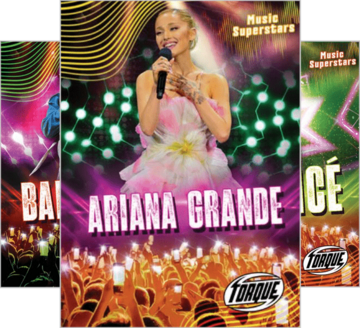
18 book series written by Ariel Factor Birdoff (11) and Suzane Nguyen (7)
This engaging high-low series is full of facts and photos of today’s most popular musical superstars and will entice even the most reluctant reader. Each book follows the childhood and career of a singer or songwriter in short, accessible text blocks and color photos. Titles and subtitles are large enough to draw attention immediately to the topic addressed. Abundant illustrations are explained in the accompanying captions. Highlights of the musicians’ careers, including favorites (foods, shows, pets, etc.) and top hits are located throughout each book in sidebars. A timeline of the stars’ careers begins with their start in the industry and typically includes song releases, awards and big events. And, awards are also shown in a simple table. Bold words within the text help readers determine context within the text and are further defined in the glossary at the end. A Table of Contents and Index are helpful for organization and students will enjoy learning more from the resources listed on the “To Learn More” page.
These slim books will fly off the shelves in your library as they pack a lot of information in a very accessible and highly engaging format. Biographies of contemporary musical artists are immensely popular and students will be very motivated to read them. Students will love the content and teachers will love the clearly presented nonfiction text features. These books are highly recommended and will be great additions in an updated biography section at the elementary and middle school levels.
Vera, (the cat) is playing contentedly alone with her catnip mouse and Gipp (the dog) is sneakily watching her. She notices and calls him out. He asks her to play and she makes it clear that she was playing alone. He doesn’t take no for an answer and waves around his wand (stick) which he swings around and accidentally breaks Vera’s catnip mouse. While trying to make things better, he comes up with some hilarious alliterations while trying to say ‘catnip mouse’. All of this is not hilarious to Vera, who walks away and Gipp sits dejectedly by a tree. Fortunately, Vera can’t stay angry at her friend for long and they apologize to each other. They get another magic wand (stick) and create even more silly word combos together – friendship fixed.
The boldly drawn characters are comic-like with word bubbles telling the story as a dialogue and their facial expressions helping to show their feelings. Their silly word play is illustrated along the way – envision a cattle blouse or massive louse! Endpapers hint at the storyline, with Vera playing alone with her catnip mouse (Gipp hiding in the background) at the front and both playing together happily at the end.
This is a very sweet and silly story about aspects of friendship. Sometimes, a friend just wants some alone time and it’s ok. Communication and empathy are part of being a good friend. Great for SEL discussions. Recommended.
A, B, C and all the rest are together again in a Halloween story based on the original “Chicka Chicka Boom Boom by Bill Martin, Jr. and John Archambault. The alphabet is climbing a creaky tree and ready for Halloween with costumes, spider webs and pumpkins. They fall to the ground when a ghost shouts “Boo”, who then encourages them to come back up. They climb again and the story ends with “Chicka chicka tricks treat. Everybody – time to eat!”.
Colorful illustrations and catchy phrases will entice young readers to delve further into this amusing story. They will enjoy the extra fun of looking for the Halloween elements throughout the book. Each letter is ‘costumed’ in some way and there are spiderwebs, pumpkins and ghosts along the way. Recommended.
A wordless picture book about a mother and son, who live with the reality of homelessness. The story begins with a mother waiting for her son outside his school, one of the many parents standing near the school. They walk to a fast food restaurant for dinner and then to the library, where the boy completes his homework as his mother reads a book. They leave as the librarian closes up and end at a bench to settle in for the night. The boy lays his head on his mother’s lap and sleeps while she watches over him protectively. The morning comes, he changes his shirt and brushes his teeth at a park fountain and they head to school for another day.
This beautifully illustrated book uses the power of pictures to tell a painful story. A loving mother that will maintain some sense of normalcy for her child in the harsh reality of homelessness that strikes a vast number (any number is too many) of people in the United States. An even larger group is the rather cliched “one paycheck away” from the same fate. A note from the author at the beginning of the story relates the intent of this book – to encourage thought and discussion about our responsibility to those that don’t have even the basic necessities. This book will certainly do just that. And, the youngest of readers will be able to reflect as a result.