One Hen and Then…The Story o a Small Loan and a Big Dream

Written by Katie Smith Milway with Mary Beth Leatherdale and illustrated by Tequitia Andrews

Kojo has a plan and big dreams. HIs family doesn’t have much and his mother borrows money to buy a sewing machine. He asks he to loan him the extra coins and buys a chicken. This chicken lays enough eggs for his family and a few more each week, which he sells and pays his mom the loan back. He turns his profit into more chickens, which lay more eggs and add more profit. Kojo uses that for more chickens and glasses a school uniform. He attends school and eventually goes to college. After college, he buys land and wants more hens. His local bank thinks he’s too risky, because his family is poor. So, he goes to the city to talk to the bank president, who gives him the loan. He gets more chickens and hires workers. As he earns more profits, he invests in more hens and more workers, who can now earn enough to send their own kids to school. These workers had big dreams as well and Kojo started giving out small loans so that the workers could act on those dreams and hopes, whether it was sending a child to school or starting their own business. Kojo became the biggest chicken farmer in Ghana and helped many other with their dreams through Sinapi Aba, an small savings and loan program.

Based on a true story about a young Ghanian boy, who achieved so much due to his perseverance and drive. Sinapi Abe still helps so many people achieve their dreams and the a perfect book to share about savings, loans and business. Author’s note at the back of the book introduces readers to Kwabena Darko, “Kojo” from the story. Also at the back of the story is an explanation about microfanancing, study questions and “Disover More” links to more information about the program.

The story is told from Kojo’s point of view and most text is a sentence or two within a two page spread filled with colorful illustrations of Kojo’s journey from starting a business with one hen to becoming the “Poultry King” of Ghana and a source of financing for other dreamers in his country. The illustrations convey Kojo’s determination and movement through the story.

This book is part of the “Citizen Kid” series and is a clear example of entrepreneurship with loans, payments, investments and building slowly. Its addition of micro-financing and discussion of its value at the end of the book is a wonderful introduction to this program. Highly recommended.

Bear Feels Sad

Written by Karma Wilson and illustrated by Jane Chapman

Bear is SAD! All of his friends are off doing other activities, like digging holes and writing poetry and he is alone and lonely. He eats a snack. But, just doesn’t taste the same without friends. He builds a fort and it isn’t fun either. Bear decides to take a walk to pass the long, dreary hours and discovers a field filled with lovely flowers. He find the perfect flower for Mouse and then picks a bouquet of flowers for his friends. He doesn’t feel quite as sad as he walks home to his den with his flowers. Bear hears his friends as he nears his den and they are there to give him gifts from their day. He hands out their flowers and they listen to Raven’s poem. And, Bear is GLAD to be with his friends.

Karma Wilson is the author of several books about Bear and his friends and each rhyming story is more lovely than the one before it. These woodland creatures care for each other and share a wonderful, friendship. This story is a testament to that friendship. The rich, bright colors of the accompanying illustrations are perfect and convey Bear’s melancholy to happiness shift in a natural way. Add this to your library collection!

Bookie y Cookie

by Blanca Gómez

Bookie and Cookie are best friends with very different tastes. Bookie loves books and is surrounded by books at his home. Cookie loves cooking and baking and his home is shown with a kitchen and table central to the illustration. They always hang out at Cookie’s and Bookie suggests they change and go to his place. Cookie doesn’t want to do something different and a disagreement occurs. Both parties end up alone and unhappy in their own spaces. Bookie bakes some cookies and they come together at his home for a snack. Then, they read together at Cookie’s home. They work out their differences and their friendship is preserved.

Text is spare and conveys the main points of the story succinctly. Illustrations are colorful with lots of white space, which provides a clean background for the story. Emotions are clearly noted as the characters’ relationship becomes strained with even a few tears. Their happiness at the resolution of their disagreement is also shown. Characters are diverse. Reviewed copy in Spanish as translated by the author. Recommended.

Where Are You, Brontë?

Written by Tommy dePaola and illustrated by Barbara McClintock

Tomie de Paola’s last story has been published posthumously with illustrations by Barbara McClintock. Tomie shared the life of his canine companion, Brontë, from their first moment meeting at the airport when Tomie picked him up. Their twelve years together are detailed, from sharing many walks to snuggling together in Tomie’s bed. The story is from Tomie’s point of view as he raises an energetic puppy (in a cute pink collar) to adulthood and into his senior years and slow decline, losing his eyesight and eventually passing. Tommy is so sad until one day when he’s out for a walk and realizes that Brontë is with him in his heart and always will be. He rushes home, creates a picture of Brontë to frame and places it next to his bed, where he dreams about their wonderful times together.

I LOVE this book! Tomie’s gentle, loving story is a tribute to Brontë and the bond they shared. Their happiness together is clearly depicted in Barbara McClintock’s accompanying illustrations. Tomie’s grief is genuinely addressed and his eventual realization that Brontë will remain in his heart is comforting for the reader as well. There is a note after the story and Barbara describes her work – wanting to honor Tomie’s rich talent while still putting her own touch on the artwork. The addition of some of Tomie’s own characters at the spaghetti dinner was a thoughtful nod to Tomie.

This book needs to be in every library for many reasons. It will serve as a comfort to those that are grieving loss of a loved one. It will remind us of the rich literary legacy that Tomie left behind. It will be on the shelf with Strega Nona, Big Anthony and all the other wonderful books by this prolific author/illustrator. And, it will become a treasured story for many, many readers to come. Buy this book now! Highly recommended.

Cows and Sheep and Chicks That Cheep

by Douglas Florian

Farmyard animals and their home star in this lyrical collection of poems. Twenty-three short poems (four to six stanzas) opposite accompanying full page illustrations flow easily through this picture book. Poem topics range from the barn and farm stand to cows and llamas. Young readers will chuckle when they see the the cow ‘chilling’ in a chair or read about the pony only to discover at the end that it’s a toy. Surprises and some added silliness make this a fun read. The illustrations are reminiscent of children’s drawings. Use of colored pencils, water colors and crayons add to that perception. And it all works well together!

Buy this book to add to your poetry section. Young readers will love it! Highly recommended.

Red Rover, Red Rover, Send a Vowel Over

Written by Kimberlee Gard and illustrated by Sandie Sonke

In this “Language is Fun!” book, the shy vowels take some convincing from the letter ‘Y’ to play a Red Rover style game. In this game, the consonants are trying to make words, which doesn’t work so well when the vowels don’t join in.They feel different than their consonant friends and they don’t really want to call attention to themselves. ‘Y’ knows how they feel, because (as he explains) he’s a little different as well. Sometimes he acts like a vowel and sometimes he acts like a consonant. Fortunately, ‘Y’ talks the bashful vowels into being part of the game (“Every word needs a vowel!”) and it is so much fun!

Bright, colorful anthropomorphic letters dance across the pages and simple clean lines make an attractive read. This story will work well in the lower grades where teachers want to introduce or reinforce the concept of vowels and consonants.

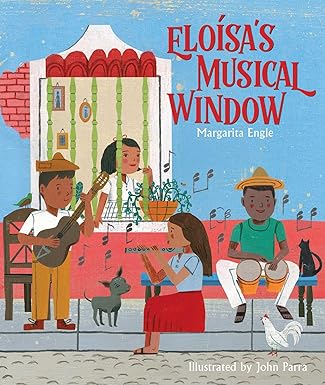
Eloísa’s Musical Window

Despite her family’s poverty, a young girl satisfies her love of music by listening to the songs of daily life through her window. Looking out into the street, the whole world seems at times like a parade. The cats, dogs, cows, and horses add their sounds to the bustling past. It all makes Eloísa want to dance, though she’s too shy to do so out in the street. Also anchoring her to the inside of the window is her mother’s illness. When the village children gather their instruments to practice right outside her window, As Eloísa and her family listened, symphony of music invigorated her mother enough that she ventured outside.

This is a story about the power of music and rhythm of life in a small rural community. It also portrays the feelings of isolation and helplessness when a loved one either does not receive or does not respond to medical care. The story is set in the past in a Cuban village and interspersed with Spanish words.

Careers in STEM: Zoologist

In Careers in STEM: Zoologist, the reader is introduced to what a zoologist is and the explores some of the diverse kinds of animals a zoologist might study. The book continues with information on what types of things that zoologists study and how they go about that study. It also includes how a person becomes a zoologist.

Bellwether Media again does a great job with a series that provides age appropriate content in an engaging and accessible way. With supportive non-fiction text features (table of contents, labels, bold glossary terms, and index) the reader has helpful tools to enhance comprehension.

Additional resources linked through Bellwether Media’s FactSurfer portal provide extended learning opportunities with one text resource and one video resource. A third link is not functional at this time.

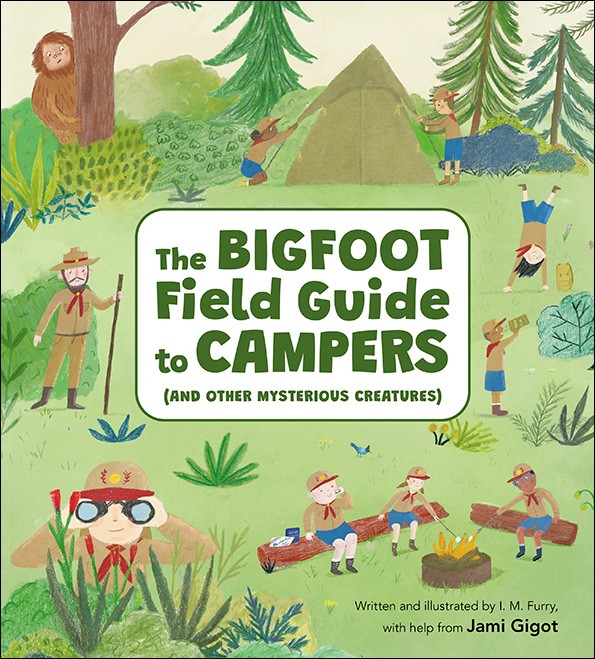
The Bigfoot Field Guide to Campers (and Other Mysterious Creatures)

By Jami Gigot

The Bigfoot Field Guide to Campers (and Other Mysterious Creatures) by Jami Gigot is a charming story told from Bigfoot’s point of view. Styled as a guide for sasquatches, it warns about the mysterious and dangerous creatures known as “campers.” The text offers tips on how to stay safe when campers enter the woods, and these are peppered with a bit of potty humor that will keep elementary-age kids laughing.

The text of the book is contrasted with the illustrations. While Bigfoot is advised to stay far away from humans, the pictures tell a sweeter story of a forming friendship between a camper and a sasquatch. It’s a cute and funny book that encourages looking beyond fear and embracing connection.

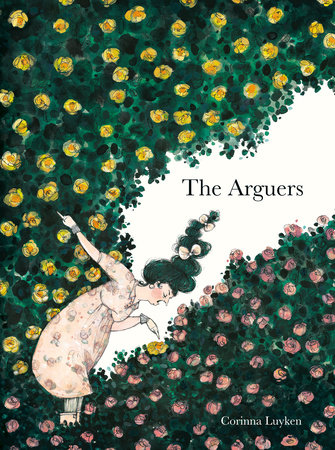
The Arguers

By Corinna Luyken

Corinna Luyken’s The Arguers is a fairy tale that turns a small disagreement into an absurd adventure. What begins as a debate over how best to comb the king’s beard quickly grows into a full-blown argument about everything imaginable. Soon, arguing becomes the kingdom’s favorite activity. Kids will find it especially funny when the characters start bickering with flowers and stones, and adults may quietly recognize themselves in the chaos.

Luyken’s illustrations will captivate kids, and they add whimsy to every page. It is a lovely book, and I can see families using it as a reference point for small disagreements around the home. This would be a great addition to any family collection or library.