Another book in the Ordinary People Change the World Series, I am Malala Yousafzai, starts out with Malala introducing herself as an ordinary girl who likes pink, cupcakes, and pizza. The narrative quickly turns to how girls in her country are not treated the same as boys. It discusses the school started by her father and her quest to seek education. It does depict when she was shot and does show someone holding a gun. The illustrations show Malala as a young girl throughout the entire book. The end includes a timeline and photographs of Malala.
Category Archives: Recommendation
If You Were an Elephant
Young listeners and early readers can learn all about African bush elephants in this gentle book about our largest mammal. Hints of African patterns and soft sun-bleached colors add to the sweet, but factual story of elephant life. The book also included an “Amazing Facts about Elephants” page at the end that will have readers, young and old, wanting to share what they have learned about the lives of African elephants.
Sign Says Stop
This is a silly little rhyming “ready-to-read” book that stars a frog in pants trying to cross the street to get started on the day’s adventures. The wordplay encourages use of new words or call-and-response participation. The expressive face of the frog can lead to fun discussion of the drawings.
Elephants Don’t Like Ants! (and Other Amazing Facts)
Kids who have even a slight interest in elephants will enjoy this informative book. The first couple of chapters explain the differences between elephants in Africa and Asia, with photos and cartoon illustrations. The book also explains the special characteristics of elephants – did you know that their trunks have 40,016 muscles and can smell water up to 12 miles away?
Next, the book emphasizes how special elephants are – how they can remember things for many years, how attached they are to their family groups, etc.
At the end, readers are asked a few questions, to help them assimilate what they’ve read.
There’s a Lion in the Forest
This is a hilarious story of mistaken identity based in the Atlantic Forest of Brazil. A toucan hears a growl and is sure it must be a lion. Capybara reminds toucan there aren’t any lions in South America. As the growls continue, they see a long lion’s tail. Then the coati sees a thick and menacing mane. Finally the creature emerges to convince the animals that there really is a lion in the forest; golden lion tamarin.
The rolicking repetative text and colorful illustrations make this a great choice for story time.
Up and Adam
Adam and his dog, Up are eating breakfast while his parents watch the news concerning the local cleanup after a large storm. The mayor cajoles everyone to keep working together for the community and ends her broadcast with, “Now, it’s time to get to work. Up and at ’em!” Adam heard a call to work for himself and his dog. Helping with lots of small tasks throughout his neighborhood, Adam’s cheerful greeting, willingness to help, and smiling face lighten everyone’s spirit. Finally Adam cooks batch after batch of cookies to share on the boardwalk.
Adam is identified in the endpapers as modeled after the author’s son who has Down syndrome. This story celebrates what Adam can do rather than focusing on how he is different. Through accepting and nurturing Adam for who he is, his cheerful and helpful nature resonated out into the community.
Use this book to promote a more inclusive community and to encourage community service.
Francis Discovers Possible by Ashlee Latimer
A lovely story showing a child coping with bullying for being overweight. Francis loves words and the class’s weekly word day. The teacher always has the class review earlier letters; ” A is for antelope…R is for rainbow.” When two of her classmate giggle F is for fat, like Francis, all Francis’s joy in words is frozen. Francis had associated her size and the word fat with positive things like puppies, cuddling, and family. Jericho and Tabitha made fat feel cold and small. The required apology didn’t help Francis let go of her feeling. It followed her all through school and to the park after school. After sitting for a while with her Baba, their conversation turned to “possible.” In their exploration of possible, Francis again found joy and acceptance of the world around her and her place in that world.
This book shows how small acts of bullying can greatly impact a child and their self perception. Wisely the story doesn’t show a fix, but rather shows that true recovery takes space, time, and caring which allows the child to process and recover.
The Fossil Whisperer by Helaine Becker and Sandra Dumais
This picture book biography of Wendy Sloboda shows how nurturing her curious and adventurous nature as a child helped her develop the skills she needed to become a world renowned fossil hunter. While always fascinated in exploring and documenting the world around her, it was during a field trip when she was 12 that she found her first fossil and was hooked. Wendy is now recognized as one of the preeminent fossil hunters alive today. She is most well known for the discovery of a new species of ceratopsian, the Wendiceratops. Over the course of her career, she discovered more than 3000 fossils.
Wendy Slobada’s energy is captured in the engaging illustrations. Endpapers include more information about Wendy, fossil hunting, Alberta’s bone beds, and the Wendiceratops.
The story of a female fossil hunter with dreadlocks and a tattoo reminds all students build on their strengths and interests – be themselves as they follow their dreams. A great choice for dinosaur lovers and to promote women in STEM.
Zachary Ying and the Dragon Emperor
by Xiran Jay Zhao
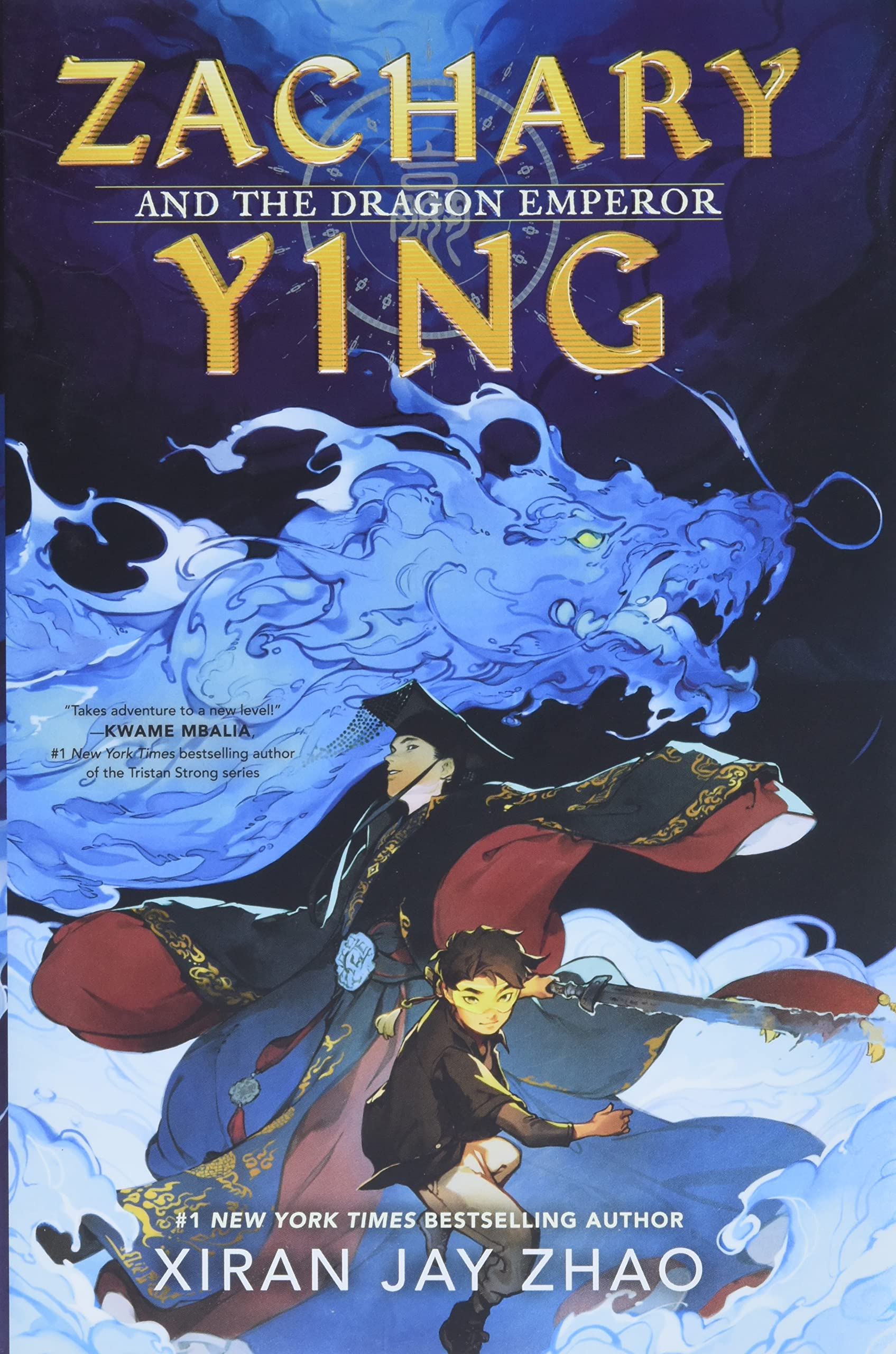
This middle grade story is a beautiful mix of Chinese history, fantasy, mythology, and science fiction technology. It has all the adventure of a Rick Riordan gods & goddesses mythology book, but using the stories of ancient Chinese Emperors and their complex machinations as the myths. These are the stories of China that have been passed down and have been woven into modern Chinese and world culture, including manga & video gaming. The story centers around Zachary Ying, a modern Chinese American kid who loves to play the video game Mythrealm using his special portal goggles. Things go awry when the ancient Chinese emperor Qin Shi Huang, tries to possess Zach, but ends up stuck fused to his portal goggles. They embark on an epic adventure with several others to try to stop the spirits from breaking more completely into our world from the spirit realm. The book is sprinkled with history lessons to help familiarize students with Chinese history they may have never learned – like Zack and me. Water dragons, crazy battles between immortals, and trying to find one’s moral compass make this action-packed adventure worth the read. Those unfamiliar with Chinese names, may mentally destroy & horribly mispronounce some of the names of characters or could find it a stumbling block. It’s worth reading despite that and might be an opportunity to share the audiobook version as a way of learning how to pronounce some of the names. (It helped me!) I think students who love mythology adventures will probably love this addition to the genre. This appears to be a first book in a series as it leaves a major cliffhanger at the end of the book.
Different Kinds of Fruit by Kyle Lukoff
From the author of the Newbery Honor book “Too Bright to See” and the picture book “When Aidan Became a Brother,” Kyle Lukoff presents us with a novel on the queer community through the eyes of sixth grade Annabelle. When a vocal, cool binary student, Bailey, joins her class, Annabelle is instantly infatuated with them, and begins to wonder if this is actually a crush. When she brings Bailey home, Annabelle’s parents instantly act awkward and seem to be discouraging their friendship. Misreading their attitude about Bailey’s gender identity, her parents share with Annabelle that her dad is not only transgender, but a seahorse father. (He was the one who birthed Annabelle when it was discovered that her mother was unable to have children). Once this is out in the open, Annabelle, Bailey, and their families get involved in the Spectrum Families chapter in Tahoma Falls and Seattle, WA. Annabelle continues to try to “figure out which letter in LGBTQ+ applied to me, now that I know that I was something.” National Coming Out Day (NCOD) is quickly approaching and Annabelle feels pressured to figure it out soon.
From the very beginning, I saw this is as an “instructive manual” on how to “they/them” and teach terms such as butch, femme, seahorse, pan, and more. While I respect this possible motive by the author, for me, it drove the book rather than an interesting plot. I believe there are better books out there on questioning your sexual and gender identity, but if you’re looking to add to your collection, this may appeal to lower middle school students.