Crazy Horse and Custer: Born Enemies, by S.D. Nelson

A double biography about two imperfect men who were born within a year of each other, lived on opposite sides of historical issues, and died within a year of each other. Both are flawed because of the prejudices from which they were raised. Both were leaders for their respective cultures who were both celebrated and reviled at different times in their lives. They had much in common though they despised the other.  I found this book interesting and hard to read because of the biases of each of the historical figures. In that way, I think the author did a splendid job of helping the modern reader see both sides of the westward movement – from the Eurocentric, white point of view to the Native American perspective. I appreciated the map of the region placed in the center of the book and referred to it often. Photographs and sketches were well placed to help the reader visualize the historical events. The book also includes a timeline, an index, and an extensive bibliography of many of the historical details included in the accounts of these men’s lives. It’s an important book to have on library shelves to give youn modern historians perspective on the westward expansion in this country.

Crazy Horse and Custer: Born Enemies

Sabrina Sue Loves the Snow

Sabrina Sue is an adventurous hen, who decides one day to see snow. She is too hot on the farm and wonders what snow is like (soft? crunchy?). Her fellow farm animals think it’s a bad idea and tell her that she is silly. She acknowledges the silly part, packs her bag and is on her way via truck, train and hiking. She and a frog that tags along finally find snow and have a glorious time. But, Sabrina Sue thinks about her friends and returns to the farm, bringing a snow globe and her froggy friend with her. She’s happy to be home, but she knows she’ll visit the snow again one day.

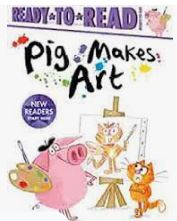
Bright, bold illustrations add to this fun story about this daring hen. Word bubbles add to the cartoon-like feel of the book. Text is simple and the font is large, which is perfect for new readers. The book is billed as a “Level One Ready to Read” book and it fills the niche nicely. This is one of a growing set of Sabrina Sue stories. Buy it for your early readers, because who doesn’t love a good chicken story?

A Walk in the Words

A young artist, who can express himself so eloquently through his drawings is, by his own definition, “the slowest reader in his class”. While other students were turning the pages of their books, he is still on the first sentence. He was intimidated by the words and worried that his classmates will find out that he can’t keep up with them. A page of text seems like wall that he can’t get over.

He decides to take reading one word at a time, breaking down bigger words into smaller pieces and letting the words that he knew lead him through the story. Slowly, he gains confidence and reading is no longer scary. He learns that he doesn’t have to be a fast reader. There were lots of amazing people that were slow readers, like Albert Einstein and Picasso.

He learns that his pictures and words can be a powerful combination. He can draw horses and the words can make them breathe and run. While reading is still a slow process, he understands that they can carry him along on adventures. They are to be enjoyed, not feared.

This story beautifully describes the author’s struggle with dyslexia and his journey through the winding path of learning to read. Illustrations (watercolor, pencil and ink) provide perfect imagery for the author’s story. Aggressive-looking books, twisted word trees and huge walls of text slowly change to accessible stone word paths and an image of the boy tearing down the text wall.

An author’s note details his own struggle with dyslexia, which was a painful experience in a time when those with dyslexia were just called “slow”. This highly recommended book should be shared with students that struggle to read and their classmates, who will gain a better understanding (and empathy) along the way.

Knight of the Cape

Dominguita loves to read, especially the books that remind her of the books her Abuela (grandmother) brought from Cuba and shared with her. But, her grandmother now lives in Florida with her sister, because she has a hard time remembering things. And, the class bully makes reading in peace difficult. So, Dominguita decides to become a knight (like the hero, Don Quijote, from her grandmother’s book). She figures that her knighthood will do two things: 1). show the class bully that girls can be knights and 2). help her feel closer to her brother and grandmother, because her brother agrees to write the story of her life as knight to send to Abuela.

Being a knight is hard work and Dominguita has some mishaps along the way. But, she has the encouragement and help of the adults around her. She also gains two new friends along the way. And, her trusty steed, aka dog, is a loyal sidekick in her adventures.

The characters are diverse and the story is accessible for younger readers, who will cheer for Dominguita (or Dom Capote, the fearless knight). Black and white illustrations help move the story along and an author’s note at the end explains the tale of Don Quijote and its connection to our heroine, Dominguita.

The 1619 Project: Born on the Water

By Nikole Hannah-Jones and Renee’ Watson, Illustrated by nikkolas Smith

Immediately drawn to this book with the “1619 Project” in the title, I was delighted with the beautiful poems which make up the content of the book. Each poem is thoughtful, of content, vocabulary, rhythm and true to the story of the African American plight in the time of slavery. Vacillating between hope and joy and fear and loss, this book delivers many emotions and helps the ready to understand the feelings of the Africans during this dark chapter of United States history. The reader is taken on the journey from the contented villages of Africa, over the dangerous and deadly ocean, to the new world.

The story begins with a simple school assignment. Students are asked to trace their roots. The young girls asks her grandmother about their family story, but feels ashamed. The grandmother tells her the whole story, with poetry throughout the book, until the girl realizes she has so much to feel proud of.

The term “born on the water” refers to the people who were stolen from their homes, endured the hardship of the crossing of the ocean in the horrific ships, and landed on shore with a new life. Not the one they had been born to, but a new one they had been forced into.

Minus the illustrations, these poems heard by middle schoolers, would be a powerful read by a teacher or parent. The illustrations are bold acrylic, and the artists has a style which is easily recognized from other books. Although this style of art is not what I would have chosen for this poetry book, I honor the authenticity of the illustrator and recognize his talent and many successes.

Good Night Ganesha

Written by Nadia Salomon, Illustrated by Poonam Mistry

This beautifully illustrated book is a feast for the eyes! Poonam Mistry has a collection of illustrated books that are all stunning. Her style of rich detail, shape, color, form, and patterning is worthy of the reader’s time. The storyline plot involves a brother and sister going to visit their nana (grandmother) in India, where simple bedtime routines feel like magic. The story is told with some prose and poetry, apparently modeled after Good Night Moon, by Margaret Wise Brown.

Goodnight, humming.

Goodnight, chai.

Goodnight, halo hanging high

The reader will learn some new vocabulary with the Glossary in the back of the book, which can be used to decipher the Hindi words sprinkled throughout the book. This is a great chance to practice glossary skills in an authentic setting.

A recommended book to expand your Eastern Indian library collection, as well as a uniquely illustrated book.

Hardly Haunted by Jessie Sima

Hardly Haunted is a fun narrative from the perspective of the house. The house is a big wooden house with creaky hinges and squeaky floorboards and all this house wants is to be inhabited. It has a sneaking suspicion that it might be haunted and so it tries to be on its best behavior to entice people to come live in it. Jessie Sima does an excellent job of making this house come to life with windows that double as expressive eyes, overgrown plants that are hair, and even boards that appear to be cheeks and a mouth.

A class of second graders gave this book five stars because they like the ending, like the face on the house, the cat, and most of all the words!

Definitely pick up this book for a fun story of a sweet haunted house, who learns to enjoy all their haunted bits and finally, when she accepts being herself, finds the perfect family to move in.

Hardly Haunted: Sima, Jessie, Sima, Jessie: 9781534441705: Amazon.com: Books

Recipe for Disaster

by Aimee Lucido

Following her best friend’s amazing Bat Mitzvah, Hannah begins plans for her own. Hannah’s parents do not support this decision. Her mother, though Jewish, does not practice Judaism, and her father was raised Catholic. Hannah may be drawn to the Bat Mitzvah, not for the spiritual meaning, but for the glamour of the event. While Hannah explores her Jewish identity, relationships with her family members and friends take big hits and secrets are revealed. Told with plenty of humor, this middle school novel is full of drama, self-awareness, and recipes!

Time for Bed’s Story

We’ve all heard the vocalized feelings about bedtime from kids, from “I’m not tired” to “I need a drink of water”. It’s pretty apparent how they feel about bedtime. But, have you ever thought about it from the bed’s perspective? Well, the bed in this book will fill you in on its opinion of the situation, from the drool on its pillow to the stickers on its face (headboard). While there are some major annoyances to be had as a bed; it seems to be just fine with the situation in the end when the reader notices a tenderness under that frustration (kind of like being a parent, right?).

Illustrations are colorful and the bed’s expressive features tell the story right along with the text. Readers will enjoy the story from this vastly different perspective and will nod knowingly at the pictures of kids jumping on the bed and leaving old socks and snacks under it. This book could lead very easily into a discussion about looking at situations from another side. There are some great opportunities to foster some empathy in kids. Plus, this bed is just hilarious!

Your Mama

A book reminiscent of the old “Your mama so…” sayings, but with some very surprising and positive twists. Told in rhyming text, this picture book looks at a mama that can do and be anything. She dresses beautifully, is a brainiac and fights injustice. She is as strong as a Marine and so funny. Yet, she can sometimes be “cray-cray”. But, that’s ok, because she wouldn’t have it any other way”.

Colors are vibrant and most characters are people of color. The universal theme of love and joy shared by a mother and child are celebrated in exuberant text and illustrations. My only caveat is the use of “your mama” over and over. Will young children understand that it’s a twist on a tired, old joke? I’m not sure. The illustrations are contemporary as is much of the language. Perhaps, young readers will overlook the redundant use of that tired phrase.