Justine was born with a birth defect that required major surgery and years of painful therapies to stretch one of her legs. The trauma that remains has shaped her current choices as a nineteen-year-old now going by the name Elisabeth. Self-worth, trust of others, and fear of the future are all themes every young adult contemplates as the enter the world on their own. But Elisabeth still sees herself as horribly broken, not worthy of success and love. Instead of going to college, she escapes to a small Wisconsin community, living the life of a recluse. When a once-in-a lifetime snowstorm hits, the local sheriff does a wellness-check to make sure Elisabeth has the supplies she needs. His presence is the best medicine Elisabeth could receive. Alternating between her childhood and now, readers will witness a young woman who is trying to figure out who she wants to be after her trauma. Has she been deceived by others to make her into the woman she is today, or is she deceiving herself? With cover recommendations from John Green and Markus Zusak, Allison Sweet Grants debut novel will be well-read in high school and public libraries.
Category Archives: Reviewer’s Library Type
Our Joyful Noise

Written by Gabriele Davis. Illustrated by Craig Stanley.
Our Joyful Noise celebrates the sounds of daily life. As a family moves through their week, we hear the sounds that accompany their routines. From the “whisper” of their mom’s satin shirt to the “snappity-snap” of green beans, to the hallelujahs at church, we experience all the sounds that fill their lives. At the back of the book, you learn that titles and lyrics from hymns, spirituals, and gospel and jazz songs, all reflecting the African-American experience, are woven into the text.
This book celebrates the small things that bring joy to everyday moments. The illustrations capture that joy, while the thoughtful use of silence makes the sounds feel even more powerful. It would make a wonderful addition to any school or home library.
Just Try It!

By Phil and Lily Rosenthal, Illustrated by Luke Flowers.
Every parent of a picky eater will instantly relate to the father trying to get his daughter to try the variety of foods at the food truck festival, and every picky eater will connect with the daughter’s dramatic “ewwwwww!” when faced with unfamiliar dishes. The title reflects the family’s rule (a rule that eventually gets turned on the father), and it encourages the daughter to try something new. While the outcome is undeniably optimistic, it still offers a positive example for kids. The vibrant cover art will likely draw many kids in, and many parents will be grateful this book is coming home.
A Song of Swords and Stuffies
Written by Max Brallier & Joshua Pruett, Illustrations by Jay Cooper & Douglas Holgate, Color by Joe Eichelberger
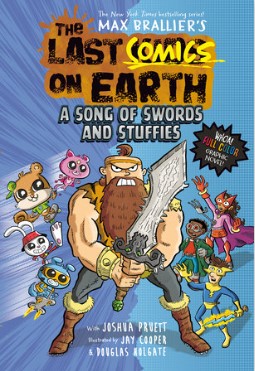
A song of Swords and Stuffies is book 3 of the Last Comics on Earth graphic novel series.The Laser Blade Hero Squad has come into the picture when they arrive in Apocalyptia and save all from a vicious monster. They agree to ally with our heroes while the Savage Aloner is called home on a mission to save his people from being “cutified”. What is this crazy impairment that has affected the entire land? Will our heroes be able to save the world from ending up all being cute?
This series will be enjoyed by those who love the Last Kids on Earth, DogMan, and Captain Underpants. I would recommend this book series if you have students who enjoy silly humorous graphics and can afford another Dogman type series.
Zuni and the Memory Jar
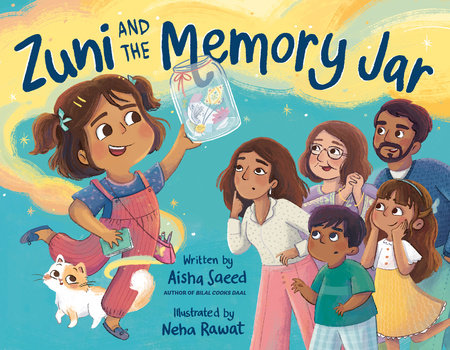
Written By Aisha Saeed. Illustrated by Neha Rawat
Zuni’s family decides to keep a jar full of memories this year. Throughout the story, Zuni watches as her family members shine in different ways, each adding a memento of their special moment to the family’s memory jar. While Zuni hasn’t yet found her moment, her family gently reassures her that her time will come. The ending, when Zuni finally adds her own memory, delivers a sweet and unexpectedly powerful message.
The concept of a family memory jar, and the tradition of sipping tea while reflecting on a year’s worth of special moments, is likely to inspire many families to start their own version. Zuni’s journey is also a lovely example for young readers: she never shows envy toward others’ successes, but instead finds her own way to create memories. It’s a great reminder of the joy in both shared and personal milestones and would be a great story to share with young readers.
When You Love a Book
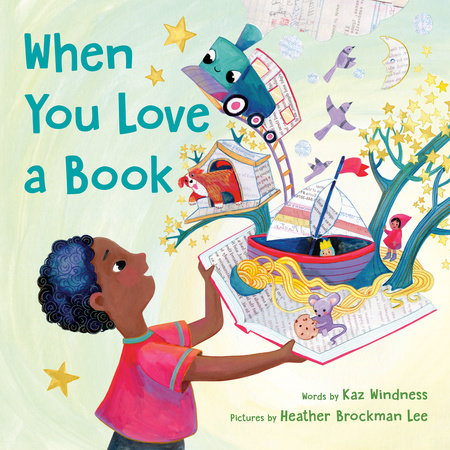
Written by Kaz Windness. Illustrated by Heather Brockman Lee.
When You Love a Book is a sweet, rhyming ode to the joy of reading. It opens by introducing the idea of a book as a friend, then moves into playful references to beloved picture books, like “A book is a cookie you give to a mouse.” The text continues in simple, heartfelt language to express the power of things like seeing yourself in stories, and it ends with today’s book-loving kid passing their love of reading on to the next generation.
The illustrations are whimsical and modern, with book pages transforming into things like cityscapes, trains, and even a library carpet. I especially enjoyed the nods to familiar picture books, and I think kids will have fun spotting the references and naming the stories they recognize. I plan to read this to my kindergarten and first grade students at the beginning of the year to celebrate our shared love of books.
Poo Pile on the Prairie

By Amy Hevron
Amy Hevron follows up her two previous Tiny Habitats books with a fascinating look at the life that flourishes around bison poo on the prairie. The story begins in spring, as dung beetles and flies discover the fresh pile, and continues through the seasons, ending in winter when the last of the nutrients return to the soil to feed the grasses. When a baby bison bounds by the following spring, we are reminded that this natural cycle has repeated for generations, and it will continue as long as bison roam the prairie.
While the book centers on excrement, it steers clear of potty humor and instead highlights the animal species and natural processes connected to this vital part of prairie life. Hevron’s illustrations are adorable, and bring an element of cuteness sure to hook many young readers. The back of the book includes additional facts about bison, along with a lovely illustration featuring all the species introduced in the story. I’m thrilled to add this to my nonfiction collection and can easily see both teachers and students reaching for this title.
Dancing in the Storm
by Amie Darnell Specht and Shannon Hitchcock
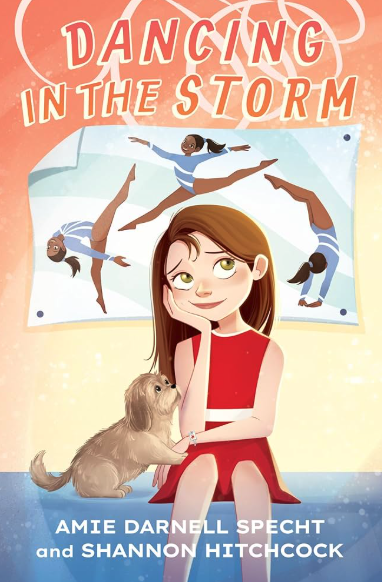
Kate’s life is full of friends, family, Girl Scouts and gymnastics. She is a very active and positive 12 year old when she finds out that she has Fibrodysplasia Ossificans Progressiva (FOP), a rare genetic disorder that causes bone to form in places in the body is shouldn’t. She now finds herself no longer able to do her favorite sport. Her parents are found in tears and removing things in the home that may harm her without talking about it. Her friends are awkward around her and her Girl Scouts leader no longer wants her to come into her home because of liability and the possibility of being sued if she is injured. How will Kate navigate this new chapter in her life? How will her friends and family accept her new limitations and continue to love and care for her? How can she be her normal self when “normal” no longer seems possible?
This chapter book is based on the author’s own experiences with FOP and is a heartfelt, open and uplifting story of finding one’s self through adversity. I would recommend this book for elementary and middle school libraries.
Sloth and Squirrel on Vacation
By Cathy Ballou Mealey and Kelly Collier
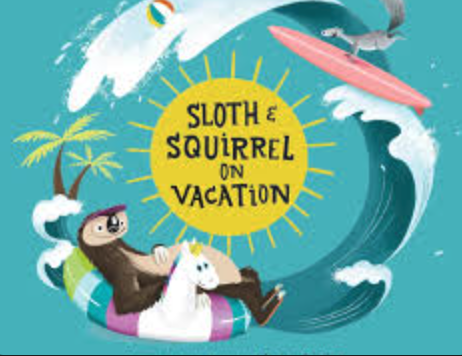
Once again we see these close friends working together in this sequel to “Sloth and Squirrel in a Pickle”. In this book they decide that they have had so much success with their pickle stand that they can take a vacation. While wanting to spend time together doing the same things once again, they find that they are separated. Squirrel does many activities but realizes that they just want to spend time with their friend Sloth. When they return, Sloth is gone. Sloth has gone out searching for their friend Squirrel!
This is another wonderful picture book about friendship, adventure, differences, acceptance and just the happiness of being together. I would strongly recommend purchasing this beautifully illustrated picture book for elementary school libraries.
Lunar New Year
Written by Margaret McNamara and Wendi Gu. Illustrated by Mike Gordon
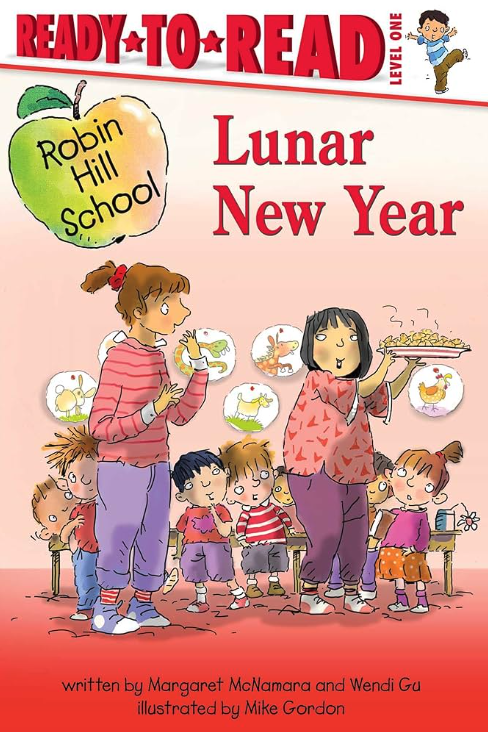
This beginning reader is a wonderful introduction story about how one family celebrates the Lunar New Year. Eigen’s mom comes to school to help him celebrate his favorite holiday with his class. She brings his favorite holiday treats and talks with the teacher and class about the holiday and what it means to Eigen’s family.
This simply written leveled book is great for younger readers who are interested in holidays and culture. I would strongly recommend this purchase.