Originally published in 1968, the story of The New Friend remains true to the experiences of childhood today. Newly illustrated by Benjamin Chaud, Zolotow’s story begins with a celebration of all the things both mundane and imaginative that a boy and his friend with long brown hair do together. When the girl with the long brown hair finds a new best friend with whom to share all her experiences, the child is devastated and rushes home in tears. In his dreams that night he finds a new friend to share those mundane and imaginative experiences of childhood. Upon waking he is determined to find a new friend so that when he thinks of his old friend, he will no longer care.
Nerdycorn by Andrew Root
Fern isn’t like other unicorns. She’s not interested in glitter, rainbows, or parties. She would much rather spend her day laboratory working on math, chemistry, engineering, or programming. She is always willing to help others but even while she went out of her way to do things for others, they teased her and called her names. Finally, she had enough and decided to no longer fix things for all the unicorns who had been unkind. She feels justified in her decision, but eventually decides to step in to save the Sparkle Dance because being smart, a good friend, and helping others is more important than holding a grudge. The other unicorns were so impressed they apologized for their teasing and asked Fern to teach them.
Nerdycorn features a strong female character who enjoys and excels in math and science. Fern demonstrates a willingness to be true to herself even in the face of teasing and as a result is able to accomplish much. Through Fern’s perseverance, the other unicorns come to appreciate the benefits of STEM learning.
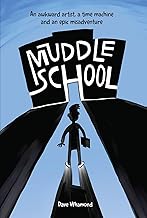
Muddle School
Based on Dave’s own middle school experiences, the main character, Dave, moves to a new middle school and has to start all over trying to establish his “cool-factor”. He is not very successful initially. Eventually, he and a science lab partner build a time machine and he tests it out. The results allow him to learn from his mistakes and get a do-over – sort of. Poignant and real, students will be able to relate to many of Dave’s experiences and will perhaps find ways out of their own struggles. I did find the exaggerated leadership trophy scene a bit over-the-top, but liked the subtle empathy he finds in the parking lot afterwards. Illustrations are all in calm, neutral blue tones, but the drawings are full of energy and humor. I also liked the occasional page that appears to be doodles on notebook paper. Included at the end is a short author biography that draws comparisons between the fictional Dave and the real one. Overall, a solid, must-have in a middle school library.
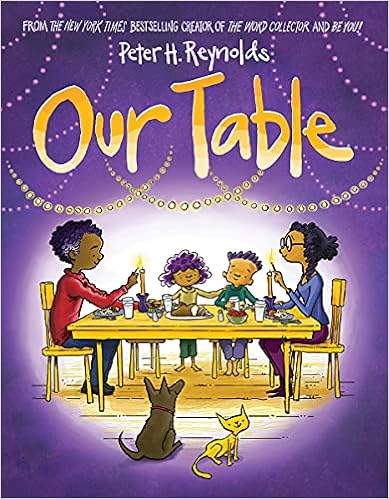
Our Table
Violet remembers when her family used to sit around the table sharing about their day and making memories. Now her family is distracted by other things and has been too busy to sit around the table. One day Violet notices that her table is beginning to shrink until it disappears completely. How can Violet get her family back to spending time together?
This picture book by Peter H. Reynolds is beautifully illustrated. The scenes where her family are together and connected are in full color. The scenes where they are distracted and isolated are illustrated only in purple. This story would resonate with many readers as we become distracted by technology and busy with life and may lose some connection with each other.
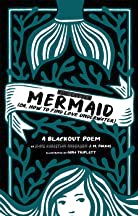
Little Mermaid: (Or, How to Find Love Underwater)
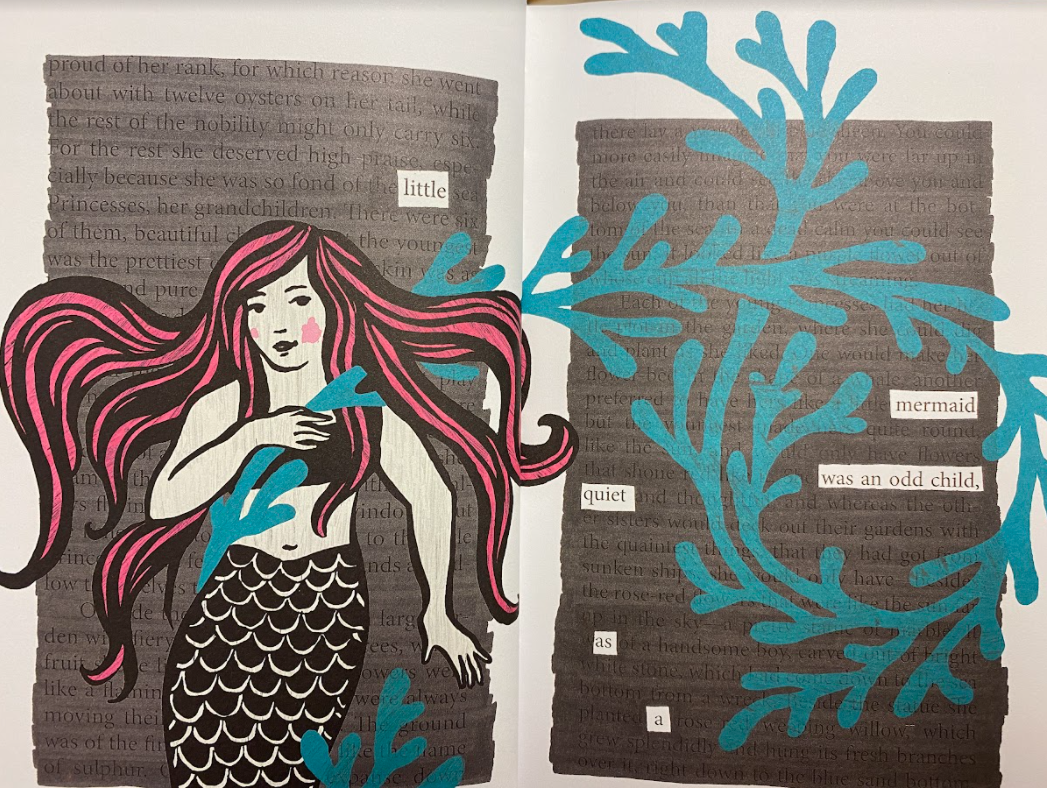
This two-sided book is no Disney version of the Little Mermaid. On one side of the book the reader will find the 1930s translation of the original Hans Christian Anderson story. (Spoiler: a very different sort of “happily ever after” ending in the original!) The flip side of the book is a blackout poem of the original story that modifies the ending to one of female empowerment. The pages are lovely with simple designs in addition to the blacked out parts. The poem reads like poetry magnets on the page. The complete poem is also included outside of the blacked out pages. If a teacher were teaching blackout poetry, this would be a perfect book to demonstrate how it can be done – beyond just crossing out the parts one didn’t want. In the author’s note, she speaks of finding our own story in another – of creating a new version that speaks your truth. I thought this was a lovely little book. It was interesting to read the original version and delightful to see the “hidden” story beneath the surface.
Bend in the Road by: Sara Biren
This is a sweet romance set on a small town farm, between a home-town farm girl and long-lost Rockstar friend. The story is a pretty typical enemies to lovers tale – boy comes “home” to recover from one of many fame scandals; he’s in dire need of money, so selling the farm seems like the best option. Girl makes it her mission to treat the boy with “honey” in order to keep him from selling her home. There are many familial ties between the two, making the situation more complicated. Along the way the characters bicker, disagree, form a true friendship and an eventually romantic love. This story is very sweet – appropriate for ages 12+. Anyone looking for a warm, feel good read will enjoy this.

Ground Zero by Alan Gratz
Set in the past and the present, this realistic/historical fiction book is based on the events surrounding the 9/11 attack on the World Trade Center in New York. Brandon is a young man who has gotten into trouble at school and thus, is visiting his father who works at the World Trade Center. When the attack occurs, Brandon is put into an obvious life or death situation. In an alternate storyline, Reshmina has grown up in war torn Afghanistan all of her life. She is a dreamer of peace but knows the reality that young men have when they must make the decision to be with the Taliban or not. These two storylines intertwine into a wonderful book where the present and history intersect. Readers will read not only the terrifying events as they occurred in New York on September 11, 2001 but also the effects of the United States being at war in Afghanistan to the normal everyday individual living through it.It is remarkable how Alan Gratz writes thought provoking literature for youth that will open the eyes of many. I highly recommend this book.
When Langston Dances
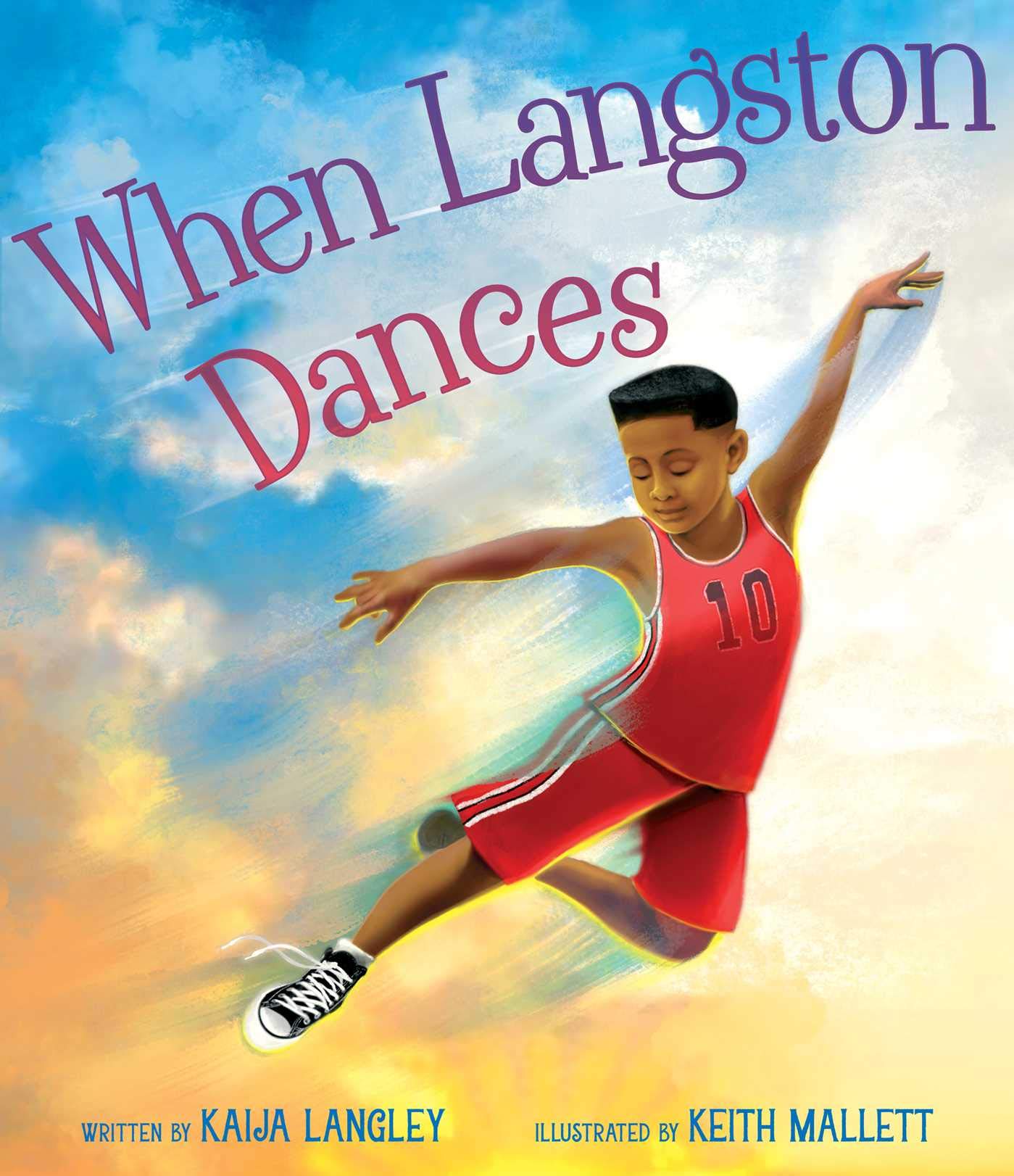
The picture book When Langston Dances by Kaija Langley is a celebration of movement and color with Keith Mallett’s illustrations seeming to come alive with every page turn. Langston is a young black boy who liked basketball, but fell in love with ballet when his mom took him to see the Alvin Ailey Dance Company. As we watch him leap, dip, kick, and spin on his way to his first dance lesson, his joy is contagious. Mallett is a master of making each person a distinct individual with all different skin tones, head shapes, hair, and even age lines. On his way to ballet class Langston notices other classes for tap, hip-hop, and African dance. Each one is populated with diverse students.
This book will make you want to start dancing right off the couch. Highly recommended.
Once Upon a Camel
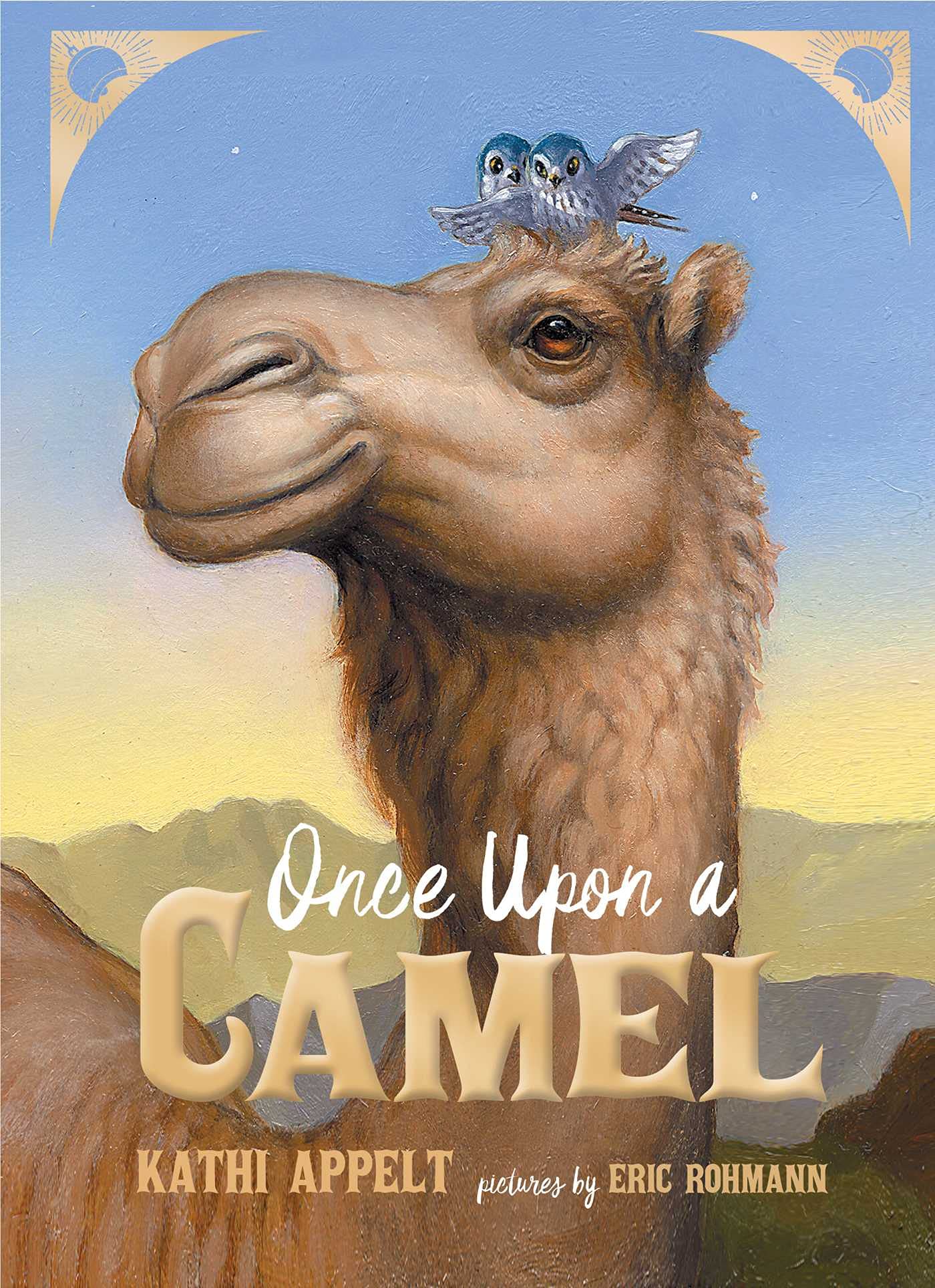
A camel with a penchant for alliteration? A worried mother Kestrel falcon trapped inside a tangled tumbleweed? Two baby Kestrels escaping a gigantic dust storm riding on the head of said camel? You will encounter all of these, plus engaging historic fiction in Kathi Appelt’s Once Upon a Camel. The reader is drawn in by the idea of a camel named Zada living in the desert of Texas. The chicks must ride to safety as they are not old enough to fly. Their parents have been blown away by the storm, so they are understandably anxious. Zada provides distraction by telling them her life story. The novel goes back and forth between Zada’s stories and surviving the haboob.
Through Zada’s stories the reader gains a peek into the Middle East of the 19th century: the world of camel racing, the great wealth and power of the Pasha, the elaborate palaces. As the setting will be new for most children, there will be the excitement of discovery. It will help readers on the important journey of gaining perspectives outside of their own and building empathy. Appelt’s work gives young readers access without bogging them down with too much historical information, because we learn through the eyes of a camel.
Each character is well developed. She always adds a dash of humor. The squabbling baby birds ring true for anyone who has a sibling. Take my word that Zada’s concern about her diminishing physical capabilities as she ages is also right on the mark as I found myself nodding and smiling. Mother Kestrel Perlita’s tendency to get over excited and bossy, especially when it comes to her babies, is humorous and heartwarming. The disdain the camels have for the vain, delicate horses and their certainty of the need and satisfaction of spitting made me laugh.
The way the death of a loved one is depicted is both sad and beautiful. Her conclusion is surprising and unpredictable, but ultimately very satisfying. Keep the tissues handy. This title is highly recommended for upper elementary readers.
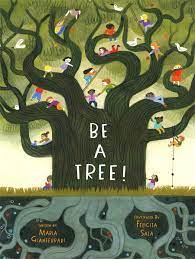
Be a Tree! written by Maria Gianferrari, illustrated by Felicita Sala
Beautifully illustrated, beautifully written is this book comparing our bodies to a tree. Written in poetic lyrical prose, as one long beautiful piece. comparisons include our spines to a trunk of a tree, our heads as the crown of the trees, and underneath the sapwood carrying nutrients to all other parts.
This story would make an inspirational read before a poetry unit, tree unit of study, health/wellbeing, or mindfulness/metal health and self esteem. It would weave nicely into an asana or movement practice. Also, skills such as compare/contrast and descriptive writing lessons.