This books talks about the importance of consent in relationships, and other topics avoid with their children. Written by a father / daughter duo (father is a physician and daughter is a high school writing teacher), the book does a good job in breaking these topics down into easily understandable lessons and is a good read for any age, especially parents who are wanting resources to teach their children.
Topics include: boundaries, consent, sexuality, friendship, bullying, sex, and trauma.
The authors provide recommended resources for further information.
Victoria just recently found out that her dad has cancer and ever since she was little, she and her dad have been obsessed with finding vampires. After her dad gets diagnosed, she goes to New Orleans to try to find one, as New Orleans was the first place in the United State where vampires were found. Victoria’s goal is to find a vampire, have it turn her into a vampire and save her dad’s life,
This story is a light read. The author does a good job of writing of vampire book that doesn’t make you cringe. She has a unique take on immortality and the cost of living forever.
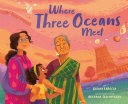
Where the Oceans Meet is an endearing tale of an intergenerational road trip seen through the eyes of a young girl who has traveled with her mother to Southern India to visit her Paati (grandmother). The story symbolically braids together three generations, living oceans apart, who take a trip to visit special friends and places as they eat their way through Southern India heading for the tip of the country where three oceans meet. Highlights abound of a beautiful land full of whimsical patterns in fabrics, foods and gardens. The immigrant experience of a generation returning to their homeland is vividly expressed through illustrations where you feel the love, traditions and intimate relationships regardless of time and distance apart. The book includes a brightly illustrated map bringing to life the route, colorful places and local foods, including boiled peanuts carefully wrapped in folded newspaper cones. Any student who has ventured to visit new places, together with family, will relate to the unexpected and in between moments that accentuate a road trip and fill us all with lasting memories.
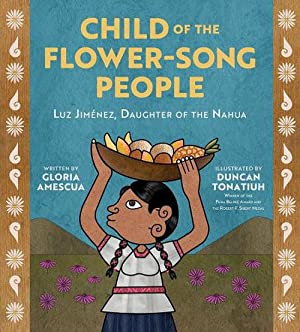
Luz Jimenez was born in the late 1800’s in the village of Milpa Alpa, a short distance from Mexico City. She was part of the indigenous Nuahac people and learned the language, stories and customs of her ancestors. She suffered the same fate as many indigenous people of her era – placement in government run schools where she had to speak Spanish and wear unfamiliar clothing. Her father was killed during the Mexican Revolution in 1911 and her mother moved the family to Mexico City. It was here that Luz realized her dream of becoming a teacher. Her teaching role was not as a typical school teacher, but as a teacher of her ancestral culture and language to the world. She became a model for many of Mexico’s leading artists of the time, including Diego Rivera, who saw her classic Nuahac beauty as something to capture on canvas, in a photograph or as a sculpture. She became friends with these artists and others – scholars and anthropologists, who wanted to learn about her culture and language. She took them back to her village and taught them her ancestors’ stories, language and customs. This knowledge is part of the history of Mexico and Luz is often referred to as the “Soul of Mexico”.
This well-written, informative book tells the story of Luz’s life in an accessible way without being too text-heavy. Accompanying illustrations by Duncan Tonatiuh are reminiscent of indigenous Mexican artwork and add a rich tone to the story. An author’s note, artist’s note, glossary, bibliography and timeline of Luz’s life are important added features. I appreciate the photo of Luz modelling for a group of artists on the artist’s note page. The only pieces missing are some examples of the artists’ work with whom Luz worked. It did lead me to research her life and find those examples. So, perhaps readers will do the same.
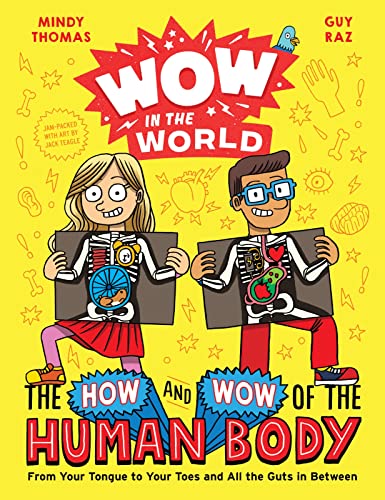
You can find just about any answer you need to your questions in this fast-paced nonfiction book about the human body. It begins with the head and moves its way through the systems, stopping here and there to deliver some facts that will add a “Wow” factor (actually, more of a “Gross” factor) to the information. It is illustrated with cartoon-like characters and body parts. The characters are diverse, with differing skin tones and abilities.
A glossary, bibliography and source notes are available. Something really cool to note is a page of QR codes that lead to relevant episodes of the authors’ podcasts of Wow in the World on NPR.
There is a lot of information to take in through these 188 pages. But, kids will likely be engrossed in the gross facts added to the information presented. A rather vivid description (and illustrations) of various types of poop on the Bristol Stool Scale is one example of the extra stuff that kids will love to read about and share with unsuspecting adults. Now, I know seven types of feces and I might just share that information, too!
This book is part of a series called “Wow in the World”, in which there are currently two books and a third due out in April 2022.
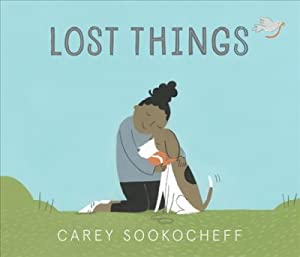
This is a story of things lost and found, although sometimes by someone else. It begins with a girl walking her dog, who is grasping stick in his mouth. He notices a squirrel nearby and breaks free to chase it. The girl loses her dog and her hair ribbon. The dog loses his stick and the squirrel loses his acorn. The hair ribbon is found by a bird, who adds it to his nest. A child watching the bird drops his teddy bear. And, so the story continues, finally coming to an end when the girl finds her dog and the squirrel finds his acorn.
This is a circular story that comes to an end near the beginning. It is gently written and illustrated, with the lost things bearing a similar color. The story shows us that sometimes lost things can be found and treasured by others who might need them. The story moves through the community and the characters are hinted at in the pages preceding their active participation. There is so much to see and notice in a book with few words and spare illustrations. It’s a gentle, lovely story that will encourage much discussion.
A double biography about two imperfect men who were born within a year of each other, lived on opposite sides of historical issues, and died within a year of each other. Both are flawed because of the prejudices from which they were raised. Both were leaders for their respective cultures who were both celebrated and reviled at different times in their lives. They had much in common though they despised the other. I found this book interesting and hard to read because of the biases of each of the historical figures. In that way, I think the author did a splendid job of helping the modern reader see both sides of the westward movement – from the Eurocentric, white point of view to the Native American perspective. I appreciated the map of the region placed in the center of the book and referred to it often. Photographs and sketches were well placed to help the reader visualize the historical events. The book also includes a timeline, an index, and an extensive bibliography of many of the historical details included in the accounts of these men’s lives. It’s an important book to have on library shelves to give youn modern historians perspective on the westward expansion in this country.
We Give Thanks written by Cynthia Rylant and illustrated by Sergio Ruzzier is an exceptional book especially for early readers. The book states why we should give thanks anytime, anywhere and encourages kindness. The creative illustrations add great visuals on how to give thanks. The book rhymes and has a rhythm that flows nicely. The beautiful illustrations make you want to turn the page to see more. Early readers will love this book, as will older, more experienced readers..
The Chicken House written by Doreen Cronin and illustrated by Stephen Gilpin is a sweet and amusing story for beginner readers. Sugar, Sweetie, Poppy and Moosh, an interesting chicken family, hang out in J.J. the dog’s doghouse and play. The chickens’ unique characters are fun to read about and show the value of family, and the cute illustrations make this story even more heartwarming. Early and intermediate readers will enjoy the new vocabulary. All readers will enjoy the one-of-a-kind characters and their corresponding illustrations.
This graphic novel, Barb, The Last Berzerker, by Dan & Jason, is sure to be appreciated by early readers due to its bold colors and silly vocabulary. Barb and Porkchop must save their friends from the evil Witch Head before it’s too late. The readable layout lets the captivating art shine. Both a graphic novel and comedy, this will delight those looking fora casual read while still sneaking in a classic moral. The illustrations are complicated, with fairly intricate line work, yet still simple enough to focus on. Primary readers will gawk at the art and stay tuned until the very last page, and even adults will enjoy reading this to their children. Although this is geared towards early readers, everyone who appreciates a good quest will love this book. Containing a fierce and unique storyline, this graphic novel is a must-read for all early readers.