
Reviewed by Baylie 12th grade – Chronically Dolores is centered around a girl, Dolores Mendoza, who suffers from a chronic bladder illness. The book follows her daily struggles and her slow path to self-acceptance. Dolores befriends Terpsichores-Jones, an autistic homeschooled girl, making a pact to help each other in their challenges. Dolores wishes to rekindle her old friendship with her friend Shae, while Terpsichore hopes to attend public school. Waganen’s use of first person helps connect you with Dolores, feeling the exact emotions she feels when she is embarrassed/self-conscious about her illness. I liked when Dolores reviewed bathrooms, as that is something with a bladder disease would do that is also funny to think about. This book shines in its lack of a concrete ending. It instead focuses more on the challenges and the growth of Dolores and Terpsichore Berkenbosch-Jones. They grow more confident in themselves about their respective disabilities, learning to accept themselves for who they are even if they don’t get the exact results that they aim for in their “pact”. This is something that I would recommend for people to try something new, as when most go for fantasy or horror fiction, this book shows that realistic stories can still be just as entertaining. Would read again!
Tag Archives: social emotional learning
Mistaco
A Tale of Tragedy y Tortillas
By Eliza Kinkz
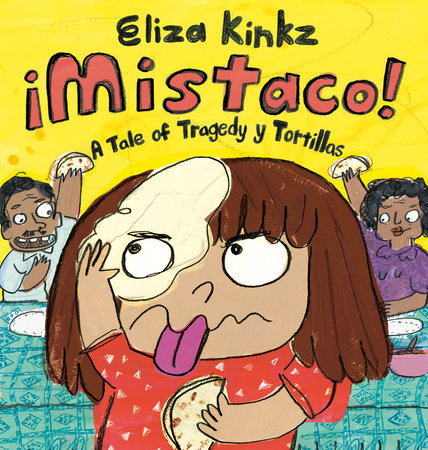
Izzy is having a terrible day. She’s the self-proclaimed “President of Mistakes,” and though we don’t know right away what she’s done, it’s clear she believes it’s a big one. As she visits family and helps make tortillas, her frustration only grows as nothing seems to go right. Eventually, the truth of her mistake spills out, leading to a sweet moment of connection as she and her lito make “mistacos” together. Soon, the whole family joins in, and Izzy begins to feel lighter.
This is a wonderful SEL story. Many kids will relate to Izzy’s frustration and the sense that everything is going wrong. Kids will find her big confession hilarious, and Kinkz’s bright, expressive illustrations add charm and humor to every page. At its heart, this story is a reminder that talking about our feelings is often the first step toward feeling better.
Kinkz also weaves Spanglish naturally throughout the text, creating a voice that will feel authentic and familiar to many readers. At the end, she makes a heartfelt plea for Spanglish to be accepted and celebrated, especially when spoken by children who are navigating two languages and cultures. This book would be a great addition to any home or school library.
Quiet Karima
By Nidhi Chanani
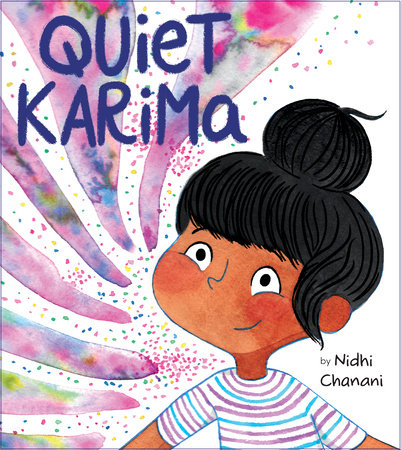
Karima’s world is alive through sounds, not through words. She delights in the everyday music around her: the scurrying of squirrel feet, the beep of bus cards being scanned, the symphony of sounds in the park. She doesn’t speak aloud in the text, and so, to others, she is “Quiet Karima.” There is much more to her than that, though. “Quiet Karima is not all that I am,” she thinks after expressing herself through music.
This story could connect with so many of the quiet kids constantly being prodded to speak more or being called shy in most every interaction. It may also speak to nonverbal kids or help other children understand that complexity can live in quiet too. It celebrates the richness of spirit that can hide in the most seemingly introverted kids.
I’m Sorry You Got Mad

Written by Kyle Lukoff and illustrated by Julie Kwon
Jack has to write an apology letter to Zoe, because he knocked down her block castle. Over several rewrites, Jack works through his feelings, sharing with his teacher along the way as she guides him through the process. He finally arrives at the right words to use and Zoe accepts his apology. The story ends with Jack’s new letter to Zoe, saying how much fun he had playing with her in her new castle along with hopeful plans for tomorrow.
This book is a treasure! It methodically moves along with a young character as he opens up about why he did what he did and shows a growing empathy for the girl he hurt by destroying her block castle. Told through his repeated attempts at writing an apology to his classmate, Jack becomes a better friend and his feelings are acknowledged as well. Illustrations provide additional “oomph” to Jack’s feelings as he writes and his frustration and eventual calm are shown in the use of color and expressions. Characters are diverse. In the end, it was a deeper story and a satisfying conclusion for all concerned. Highly recommended.
Parker’s Big Feelings by Parker Curry and Jessica Curry
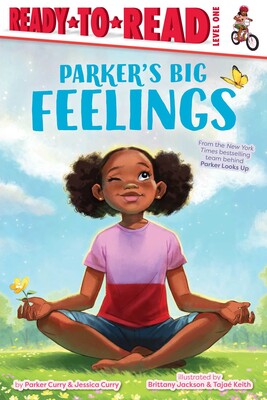
Parker is new at her school, and everything seems to be going wrong. She has a disastrous day, is missing her best friend, and just wants some alone time when she gets home. When her siblings make that impossible, Parker’s mom helps her come up with ways to turn her day around. Kids will connect with this relatable story and also gain ideas for working through big emotions.
From the New York Times bestselling authors of Parker Looks Up, the simple sentences in this Ready-to-Read level one book will be accessible to younger readers and valuable to all kids.
I Will! by Juana Medina
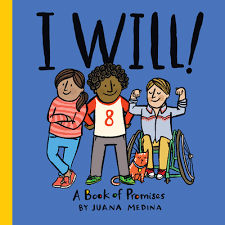
This is a book of fourteen affirmations for young students. Each double page spread has hand-lettered words on one side and an accompanying illustration on the other. Characters are diverse in ethnicity and ability and the illustrations are digitally rendered in bright colors, which is very engaging for the target audience.
Affirmations are split between those that help others and those that are more self reflective. Examples include “I will help those in need and ask for help when I need it”. This book will be very useful for discussion with young children about being the best they can be to themselves and others. And, as the story says “I will join with you to make this a better world for everyone”. Recommended