A Stopwatch from Grampa

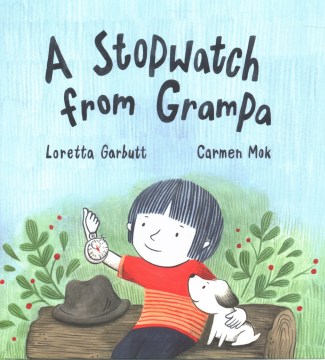
This is a sweet, heartfelt story about a child, who feels very deeply the loss of his grandfather. They were buddies and a stopwatch that he is holding (his grandfather’s) is a symbol of their shared memories. The child is honest, though and says, “I don’t want his stopwatch. I want him.” He tosses the item into a drawer and time seems to drag on, dark and lonely. Seasons pass and he finds his grandpa’s watch again. Now, it brings him happy memories, about which he can begin to smile. He starts to use it again and includes his younger sibling in timing some of the same things he did with grandpa.

The story is lovely and a realistic portrayal of the grief that a child feels about the passing of a loved one. Soft, gentle illustrations add to the melancholic tone of the words, with just the right amount of color. The child’s face is expressive and matches the feelings that he expresses. Highly recommended. This will lead to very meaningful discussions when needed.

The Perfectly Perfect Wish

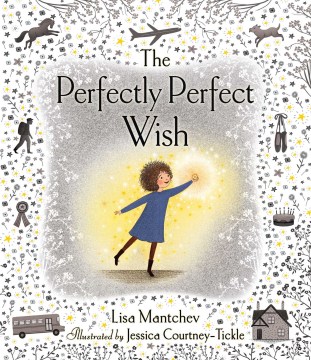
The girl finds a golden coin, with the words NO WISHING FOR MORE WISHES engraved on it. She spends the day at school dreaming about the one wish she has. Asking friends what they would wish for makes her realize that she already has everything she really wants and the extras can be earned through hard work or time. She then makes a truly wonderful wish – a wish that everyone else’s wish would come true. And, in the end, we see that everyone she asks receives their special wishes. Her teacher get the house she wishes for, her wheelchair bound friend gets a dog and her friend, Mark, has his military dad come home.

This warm, sweet story is a testament to generosity and empathy and will make kids really think hard about what their wishes might be. Soft grey colors with vivid shots of color at the right moments in the story move it along and give importance to important parts of the story.

Characters are diverse and the illustrations work into the story beautifully. This is definitely a book to purchase!

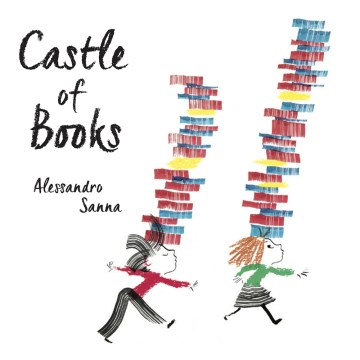
Castle of Books

Castle of Books explores all the answers to the question “Why do we need books?”. Spare text and flowing, colorful illustrations give reasons from the realistic “to observe” to the more esoteric “to grow” and “to lose ourselves”. Everything about this book encourages the reader to think to himself “Why do I need books?” and proceed to the many answers he will have!

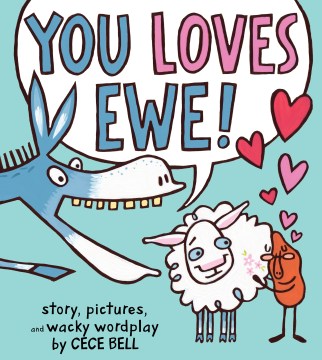
You Loves Ewe!

Dim-witted Donkey has so much difficulty with homonyms! And, there are plenty in this book, which is a follow-up to I Yam a Donkey! by Cece Bell.

Donkey comes up to two characters and greets them as fellow donkeys. Yam corrects him and introduces new friend, Ewe, to Donkey, who replies “That is ME? I yam so cute and fluffy!” And, the comical repartee ensues. Yam tries to be helpful. But, he tends to make things more difficult by showing Donkey signs and examples of Doe/Dough, Moose/Mousse and Hare/Hair. The story ends with Ewe professing her love for Ram over Yam (“Eye Dew”) and a tearful Yam being consoled by his buddy, Donkey. Oh, My!

Bright illustrations organized in blocky comic book style accompany text in word bubbles. Young readers may not understand all the comical missteps on their own. But, this is a great introduction to homonyms and can be useful as a teaching tool as well.

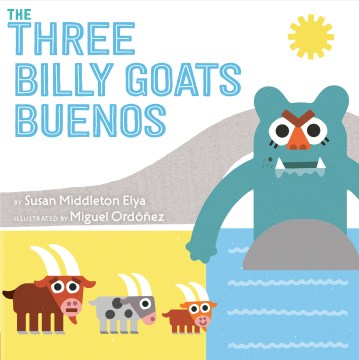
The Three Billy Goats Buenos

This is a sweet, fresh, bilingual version of the classic Three Billy Goats Gruff. In this story, three brother goats put their heads together to come up with a plan to get past the grumpy troll, where just over the bridge is the most delicious grass. One by one, they pass by the troll, extolling the superior flavor of the next goat in line. The last goat, though, wonders why the troll is so grumpy. That is when he notices the troll’s sore toe with a thorn in it. He mobilizes his brother goats and he pulls out the thorn while they prepare a poultice of herbs to soothe the offending toe. The troll is so happy that she allows them free access the the bridge and declares them all amigos.

Susan Middleton Elya (author) and Miguel Ordonez (illustrator) have taken the story to new heights with a mix of Spanish and English and a dose of cuteness in the three billy goats, with their big eyes and adorable horns. The troll is a big, blue and cartoon-like. So, she’s not really scary, even though she wants to eat the goats. The colors are bright and the story flows rather lyrically.

This is a good read-aloud, with the Spanish words in a glossary in the front, containing pronunciation and meaning. The value of teamwork, empathy and friendship will be a great discussion point with the book. Highly recommended.

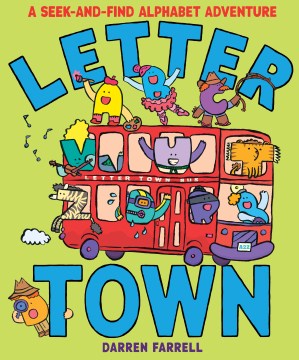
Letter Town

Letter B is a bus driver that takes us on a ride through Letter Town, where two page spreads are dedicated to all things related to a particular letter of the alphabet. The letters themselves are actively engaged – one G is golfing while another is grocery shopping. The illustrations are bright, lively and full of activity. The bus meanders through town, picking up and dropping off letters as it goes. The story ends with Letter B putting the bus away at the end of a long day. And, Deputy D is helping Robber R return all the items he stole.

The end papers are filled with the letters’ words that the reader must find for each one. Young students will enjoy reading and seeking in this wonderfully colorful Letter Town.

My Tiny Pet

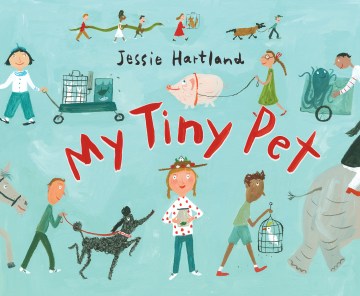
When a young girl’s parents decide to simplify and downsize from their “ginormous” house with its (very) many pets, she worries that her pet-owning days are over. She learns about some wonderful new “pets” in her science class, organisms such as nematodes, paramecia and, her favorite, tardigrade (water bear). She makes a case for this new pet and her parents agree. The little girl is thrilled, because she can take her new pet anywhere – even to a new, smaller home!

This book introduces many discussion-worthy ideas that can lead in many different directions – research, narrative writing, art and science, to name a few. What does pet ownership entail? How many pets are too many? What are the many microscopic organisms around us? Can we collect and observe some of those organisms?

Text is spare and the illustrations are lively and colorful. The final page has a photo of the tardigrade and an author’s note with more information. Wow! This book is a great addition to your collection, simply due to its versatility and usefulness as a teaching tool. Plus, the kids will love the little critters inside. Highly recommended.

One is a lot: (except when it’s not)

The concept of enough, too much and not enough are thoughtfully and simply conveyed in this picture book. One is a lot when talking about the sun, but not enough when talking about feeding ducks with one breadcrumb.

This story begins with a girl and her dog and a boy and his dog. Individually, the children play in the park with their pets and we see how the same number can be a lot, not enough or too much. Two is most often too much, especially when the two dogs’ leashes become tangled. But, one hello is a lot and brings the two friends and their pets together. The final page is a lovely scene with the now grown boy and girl, their daughter and a dog that looks like a mix of their two pets from the book’s beginning.

The illustrations are colorful and appealing. The text is minimal and the characters are diverse. The story will generate a good discussion about numbers and perspective.

Max and Marla are Flying Together

Max, a young boy, and Marla, a barn owl, are best friends. One day, Max decides to build a kite and he draws his face on it, so that he and Marla can “fly together”. Marla is not interested and he soon discovers that she is afraid to fly. They go to bed that night, each dreaming different dreams – Max dreams of Marla flying next to his kite and Marla dreams of Max and she quietly sitting together on the couch.

The next morning, they see leaves everywhere after the night’s storm. They go outside to rake the leaves and find his kite, which Marla finds when a gust of wind lifts it into the air with her on it! With Max’s shouts of encouragement, Marla takes flight and realizes that she is a natural. They triumphantly head to bed that night, both dreaming of Marla flying next to Max’s kite. And, they wake up to do just that!

This very sweet story of friendship, fears and gentle encouragement is accompanied by beautiful pen and ink illustrations that flow beautifully with the story. Buy this book (and the others in the set) and share it with all your students.

A Royal Ride: Catherine the Great’s Great Invention

Catherine the Great accomplished many things during her tenure in 1700’s Russia. She had a girls’ school built, wrote a book, built museums, fought battles and invented the first roller coaster. Yes, that’s true! She was a fan of ice slides, huge wooden structures coated with ice in the cold Russian winters, which had been around since the 1400’s. Unfortunately, the fun on ice slides ended each spring with the thaw. Catherine wanted to keep the fun rolling, so she sketched a design and her royal subjects got to work. She climbed forty feet to the top and rode the rails in a jewel-adorned roller coaster car. Then, she did it again and again!

This nonfiction book is a packed with information, including a timeline, author’s note, acknowledgements and bibliography. The ‘story’ of Catherine and her invention is written in simple language with accompanying illustrations add a colorful and sweet feel to the text. The book is geared toward the younger reader, but is packed with good information that will lead to further research. Very accessible nonfiction piece for those that need it.