One Wild Christmas

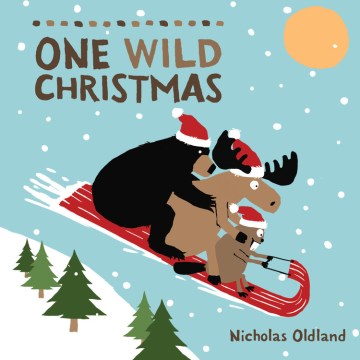
Christmas is the best holiday ever for Bear, Beaver and Moose. They spend their first Christmas Eve together decorating, baking and preparing for the big day. Suddenly, they realize that they have forgotten to get a tree! They hasten into the woods to remedy the situation and find the perfect pine tree. Unfortunately, Bear just now realizes that the plan is to chop the tree down and he just can’t let that happen. So, he tosses his friends around a bit and ties them to the tree. He’s worried that his love of trees might ruin Christmas for his friends, but comes up with a fantastic compromise. He rushes home, grabs their holiday food, gifts and decorations and returns to his friends and the beautiful tree. Together, they set up a wonderful Christmas right there, decorating the live tree and enjoying it together.

Spare digital illustrations complement a simple story of misunderstanding and compromise among friends. Hopefully, readers won’t wonder why the bear didn’t realize earlier that the tree was supposed to be cut down. Instead, they will celebrate a caring and inventive group of friends that have a wonderful Christmas together…with a tree.

The Very Impatient Caterpillar

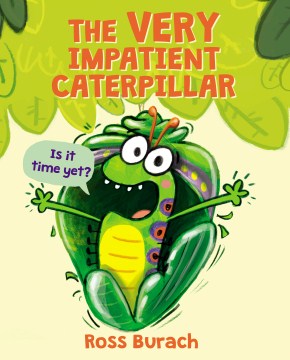
So, this caterpillar is hanging out with his buddies and notices that they are all heading up a tree. When he asks what they are doing, he is absurdly surprised to hear about something called metamorphosis. Apparently, he is the only caterpillar that doesn’t know about this crazy stuff and he hurries to catch up to his friends. He does okay with the chrysalis-making. But, waiting to metamorphose is soooooo boring and takes sooooo long! He’s positive that he is done and emerges to discover that he is only half way there (ewww – not only does he look funny, he can’t fly at all!). So, he tries again and this time manages to stay in his chrysalis the required two weeks’ time. It is somewhat tortuous (as depicted in a hilarious two page spread), but he finally emerges as a fully developed butterfly vowing to be more patient. But, what is this? His friends are migrating? He joins the journey and says “Are we there yet?”.

Computer generated illustrations lend a comic touch to the story as we watch a young caterpillar dealing with the dreadfully slow process of metamorphosis. This engaging book with its quirky character will delight every budding entomologist as well as those that can sympathize with a small caterpillar’s impatience. Highly recommended!

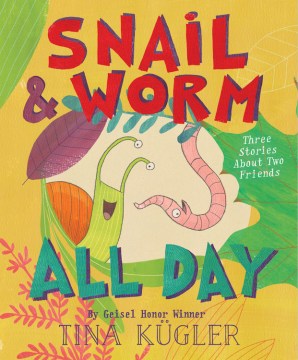
Snail & Worm: All Day

Snail and Worm star in three lovely stories in this sweet picture book for early readers. In Best Day Ever, Snail defines a “good day” very differently. His day didn’t go too well, but others had wonderful experiences and he was happy for them; hence, the best day ever! The Spooky Cave is a story about a dragon…er, turtle, that scares Snail enough to cause him to ‘run’ away even though Worm tries to tell Snail that the animal is really a turtle. And, the third story is A Bedtime Story that highlights the sweet relationship of these two friends. The pen and watercolor illustrations lend themselves to the simple story line quite well. Characters’ emotions are displayed and add to the humor of the book.

Give this book to readers who enjoy friendship stories like Elephant and Piggie or Frog and Toad. Snail & Worm have the same sweet, loyal friendship and will be a welcome addition to your collection.

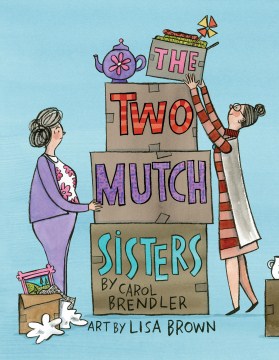
The Two Mutch Sisters

This pair of sisters have been together for a very long time. Even though their taste differs, they collect two of everything and their shared home become a tad too cluttered. Ruby decides to take her half of the collection and move into a different house. While their separate homes are no longer cluttered, Ruby and Violet feel that something is missing…each other. So, Violet takes matters into her own hands and moves their houses to a new double lot where they can be neighbors. And now, they have each other and nothing is missing!

This sweet story with its very different sisters and very interesting group of collectibles (glockenspiels and spittoons among them) is a sweet tribute to sibling love. The illustrations are detailed and fun, showing all sorts of clutter. Students will pick up this book again and again.

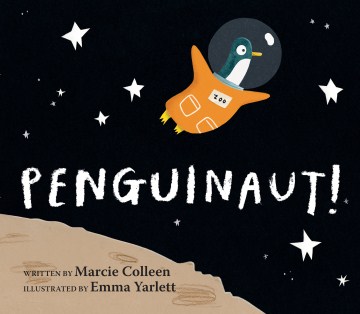
Penguinaut!

Poor Orville! All his friends at the zoo are bigger and have more adventures than him. So, he decides to go on a really, really big adventure. He is going to fly to the moon! He plans and builds and has some disasters, but he keeps working until he makes the perfect rocket. He says goodbye to his friends and flies to the moon, where he jumps, dances and has the best adventure all by himself! He feels a little lonely and finds a note from his friends. He flies back to earth where he has the greatest adventure of all – being with his friends.

This is a sweet story about friendship and perseverance (and a penguin). The illustrations are simple and the text flows well and becomes a part of the illustration (“Orville was small. His friends were BIG.”). While the story is really about friendship; it also introduces the concept of perseverance as Orville tries, fails and tries again until he successfully flies to the moon. The end is wonderful and students will agree that adventures are best with friends.

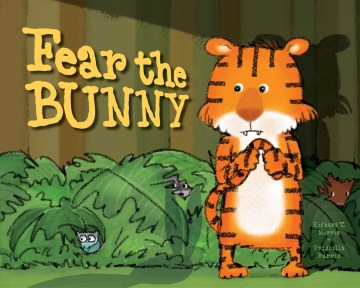
Fear the Bunny

A tiger happens upon a group of woodland animals listening to the hedgehog reading a book about scary bunnies. That doesn’t sit well with the tiger. So, he tries to explain to them that HE is much more fierce than bunnies. What will they do – cute him to death? He scoffs until a band of headlamp wearing bunnies begin to chase him and the story ends with the tiger reading a story about scary bunnies to a group of animals, including other tigers!

Cartoon-like illustrations accompany a cute story that vaguely references the poem “The Tyger” by William Blake, which is printed at the end of the book. Students will enjoy this slightly scary and cute story, although they might not appreciate its connection to the poem.

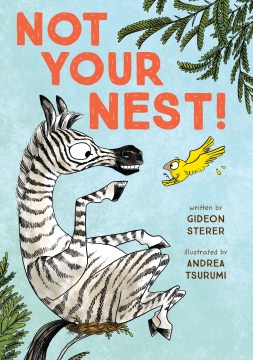
Not Your Nest!

What a fun book! Wait, I should tell you about it first, shouldn’t I? Well, this story is about an industrious, little yellow bird in the African Savanna and his adventures in building a nest. This shouldn’t be a difficult endeavor. But, every time he is returns to his newly completed nest, he is greeted by an animal visitor that plans to claim it as his own. So, he builds another nest and the same thing happens. Nest after nest is claimed by animal after animal (gazelle, gorilla, zebra and so forth), until the poor little bird can take it no longer. He enlists the aid of a wildebeest and in one big “BAM” knocks the animals and nests out of the tree. He sadly looks at his ruined nests and the other animals seem to finally realize the error of their ways. They work diligently to build a huge nest in the tree and gently place the little bird into it. He watches them walk a way dejectedly and shouts “Wait!”, invites them to join him and they gladly do so. The story could end here, but the industrious little bird finishes the story by finishing the project he started a the beginning…building his own nest, which is next to his new animal friends.

This story is brimming with fun and comic wit. While the text is spare, it and the illustrations do a fantastic job of giving us a sense of the animals’ attitudes and feelings. The bird’s growing frustration and fatigue as he tries over and over to just build a nest for himself is perfectly pictured in his expressions and words. The zebra is a little bit pompous and the elephant is a little apologetic. And, we can’t help but be satisfied at the end when the bird finishes what he starts and get the nest he really wanted.

Buy this book and wait for the giggles as you read it out loud to your students. It’s that good!!

Cleo and Cornelius : a tale of two cities and two kitties

Cleo and Cornelius are living the high life in ancient Egypt, where cats are treated like gods and their days are filled with lounging, eating, napping and being worshiped. One day, Cornelius accidentally boards a boat for Rome, which is a very different place than his home. Here, dogs are revered and cats are supposed to keep mice out of houses. But, there is adventure, as he and Cleo discover when she comes to Rome to find him. They race chariots, dip their paws in a Roman bath, perform in a theater and so many other activities. Exhausted, they hop a ship back to Egypt and their luxurious lives of eating, napping and being worshiped, which is fine with Cornelius. Cleo, on the other hand, grows bored and the heads back to her adventurous life in Rome.

This story is loosely based on Aesop’s “Town Mouse and Country Mouse” fable and is full of richly illustrated scenes of the ancient worlds of Egypt and Italy…and Cleo and Cornelius! There are two pages of notes for the reader, explaining life in those two societies. Photos of artifacts are included. This is a fun romp of a story and we learn some things along the way.

Cat Wishes

Cat is very hungry as he wanders around the woods and catches a snake. This snake is magical, though, and offers Cat three wishes if he releases the snake. Cat doesn’t believe in wishes, but lets the snake go. He is still hungry and wishes for a fish, which he catches. Still skeptical, he wishes for a house when he becomes cold and wet in the rain. A lovely, warm house with a cushion for him to lie appears before him. He still doesn’t believe in wishes, but as darkness falls he wishes for a friend and a little girl quietly enters the room. She describes a wiggly snake that granted her three wishes – a picnic basket, a coat and a friend, the Cat.

Gentle illustrations accompany spare text to make this fairy tale come a sweet story to share with young students. This a great addition to your library.

I Feel Teal

This is a sweet book about a child who “feels” a wide range of colors over the course of her day. Illustrations are single colors on each two page spread until the end when the author writes that “you are all the colors” and “they make you you”. The illustrations are colorful at this point. This book would be great to share with students and determine together what emotions are illustrated. The illustrations do a fine job of hinting at the emotions through the faces and body language of those pictured. And, attributing colors to those emotions might be helpful when working with younger children, who could use those colors to help them describe their feelings at any given time.