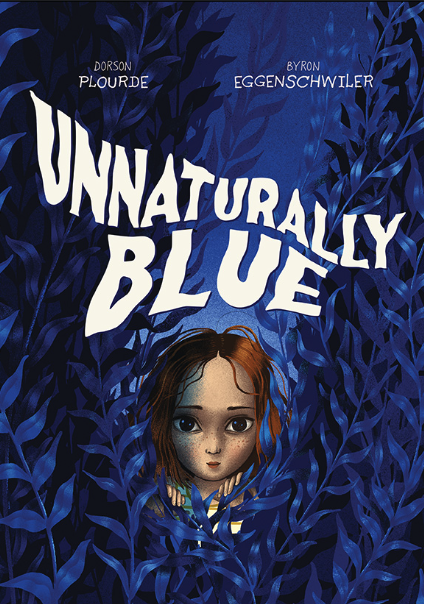
This is a stunningly beautiful picture book that delves into feelings of sadness and depression. The main character feels that she no longer fits with the other kids in the pool and so she swims down to the bottom of the pool, pulls out the drain cover and plunges into another world where she is able to cry blue tears enough to fill an entire pond. The content seems quite maturely written and thus, I would recommend this picture book for older readers. The images are quite stunning and the art is fantastic. “You can’t cry in the pool. It’s already blue.”
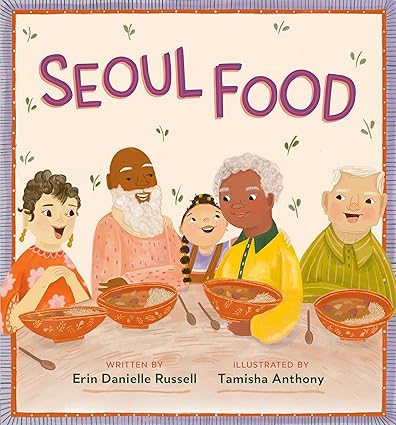
Hana, a young biracial girl is excited that both her grandparents will be visiting. She wants to cook a perfect meal that blends her African American and Korean roots. Hana’s mother and father offer suggestions and encouragement as she wrestles with ideas. The blending of the two food traditions with lots of love results in the creation of Kimchi Gumbo. Hana’s dinner is a huge success and so is the family gathering.
Seoul Food uses a young girls efforts to incorporate her grandparents’ cuisine into a single meal to symbolize both the challenges and the joys of blending two cultures. The cute illustrations clearly portray the characters’ emotions. The recipe for Kimchi Gumbo is included at the end.
You Are Not Sleepy tells the very relatable story of a pig who, though it is nap time, is not at all sleepy. It begins with the room being too bright, then too dark, then too moth-filled, and continues in this fashion throughout the rest of the story. It’s a great choice for any kids who love the If You Give a Mouse a Cookie series as it will feel like a new twist on a familiar structure. Teague’s illustrations are also a delight, and the expressions on the supporting characters are sure to bring joy to young readers.
The Pharaoh vs. the Felines tells of Cambyses II, ruler of Persia, and Pharaoh Amasis II, ruler of Ancient Egypt. While it might seem challenging to make this historical conflict engaging and accessible for early elementary readers, Fox pulls it off by centering the narrative around one irresistible subject: cats.
The book begins with a brief explanation of the fertile crescent and its historical significance. The author goes on to tell the story of the conflict between Camyses and Amasis that led to the eventual invasion of Egypt. Mixed in with the story are numerous cat puns and cute illustrations, so while this would be a great story to share during a unit on early civilizations, it’s also sure to be a hit with cat fans.
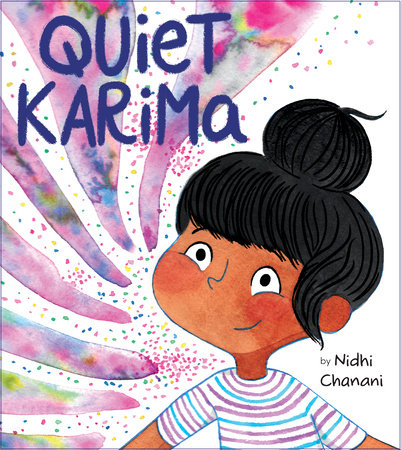
Karima’s world is alive through sounds, not through words. She delights in the everyday music around her: the scurrying of squirrel feet, the beep of bus cards being scanned, the symphony of sounds in the park. She doesn’t speak aloud in the text, and so, to others, she is “Quiet Karima.” There is much more to her than that, though. “Quiet Karima is not all that I am,” she thinks after expressing herself through music.
This story could connect with so many of the quiet kids constantly being prodded to speak more or being called shy in most every interaction. It may also speak to nonverbal kids or help other children understand that complexity can live in quiet too. It celebrates the richness of spirit that can hide in the most seemingly introverted kids.
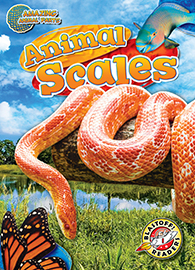
Animal Scales is part of the Amazing Animal Parts Level 1 Blastoff! Readers. Starting with the scales on a butterfly’s wings, this book will help broaden young readers understanding of animal features. The book goes on to highlight scales on snakes, eagle’s feet, and fish.
The book contains a Table of Contents, bolded glossary terms, illustrated glossary, and an index. More information is available digitally through Bellwether’s Factsurfer links. The links include text information on butterflies, snakes, and a video on scales and feathers.
Amazing Animal Parts Level 1 Blastoff! Readers series focuses on the how different animal features help with survival. The series also includes: Animal Ears, Animal Eyes, Animal Feet, Animal Noses, and Animal Tails.
Written by Carrie Tillotson and illustrated by Elisa Chavarri
Everything a young reader would want to know is packed into this picture book! Simple, rhyming text winds through the pages of alpacas in both Peru and North America. Denser informative text blocks run along the bottom of the right page (recto) of each two page spread. The end of the book includes a glossary, author and artist notes, select sources and more about the alpacas (including their origin as domesticated animals in both areas).
This highly informative book takes a different approach than the typical nonfiction book for younger readers. It can be read as a simple story or a reader can delve much more deeply into the facts about this prized camelid. The accompanying illustrations are vibrant and bold and culturally appropriate.
There is much to learn about alpacas and this book takes on the topic in a unique and playful way. Readers won’t even realize how much they are learning until they reach the end of the book! Recommended.
What is a poem? This question is answered, first in Spanish and then in English. Short, playful text tells us the many things a poem can be. In the end, we see that a poem can really be anything. As the author notes, “A poem is a mirror inside your head”.
Black line illustrations on a vast white background playfully draw the reader along through the pages. They add to the whimsy of the words and together open a world of creative thought. Recommended.
Written by Katie Smith Milway with Mary Beth Leatherdale and illustrated by Tequitia Andrews
Kojo has a plan and big dreams. HIs family doesn’t have much and his mother borrows money to buy a sewing machine. He asks he to loan him the extra coins and buys a chicken. This chicken lays enough eggs for his family and a few more each week, which he sells and pays his mom the loan back. He turns his profit into more chickens, which lay more eggs and add more profit. Kojo uses that for more chickens and glasses a school uniform. He attends school and eventually goes to college. After college, he buys land and wants more hens. His local bank thinks he’s too risky, because his family is poor. So, he goes to the city to talk to the bank president, who gives him the loan. He gets more chickens and hires workers. As he earns more profits, he invests in more hens and more workers, who can now earn enough to send their own kids to school. These workers had big dreams as well and Kojo started giving out small loans so that the workers could act on those dreams and hopes, whether it was sending a child to school or starting their own business. Kojo became the biggest chicken farmer in Ghana and helped many other with their dreams through Sinapi Aba, an small savings and loan program.
Based on a true story about a young Ghanian boy, who achieved so much due to his perseverance and drive. Sinapi Abe still helps so many people achieve their dreams and the a perfect book to share about savings, loans and business. Author’s note at the back of the book introduces readers to Kwabena Darko, “Kojo” from the story. Also at the back of the story is an explanation about microfanancing, study questions and “Disover More” links to more information about the program.
The story is told from Kojo’s point of view and most text is a sentence or two within a two page spread filled with colorful illustrations of Kojo’s journey from starting a business with one hen to becoming the “Poultry King” of Ghana and a source of financing for other dreamers in his country. The illustrations convey Kojo’s determination and movement through the story.
This book is part of the “Citizen Kid” series and is a clear example of entrepreneurship with loans, payments, investments and building slowly. Its addition of micro-financing and discussion of its value at the end of the book is a wonderful introduction to this program. Highly recommended.
Bookie and Cookie are best friends with very different tastes. Bookie loves books and is surrounded by books at his home. Cookie loves cooking and baking and his home is shown with a kitchen and table central to the illustration. They always hang out at Cookie’s and Bookie suggests they change and go to his place. Cookie doesn’t want to do something different and a disagreement occurs. Both parties end up alone and unhappy in their own spaces. Bookie bakes some cookies and they come together at his home for a snack. Then, they read together at Cookie’s home. They work out their differences and their friendship is preserved.
Text is spare and conveys the main points of the story succinctly. Illustrations are colorful with lots of white space, which provides a clean background for the story. Emotions are clearly noted as the characters’ relationship becomes strained with even a few tears. Their happiness at the resolution of their disagreement is also shown. Characters are diverse. Reviewed copy in Spanish as translated by the author. Recommended.