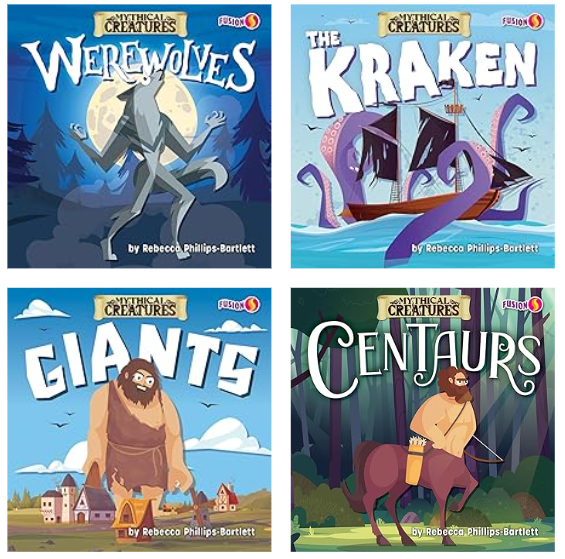
Mythical Creatures series

People have always used their imagination to explain the unexplained. The Mythical Creatures series describes some of the best known creatures in an engaging, age appropriate way that is sure to be a hit with young readers. Each book contains ten chapters focusing on different aspects of the creature. This includes the mythical origins, typical characteristics, unique powers or skills, geographic home, and similar mythical and real life creatures. Short sentences are divided on the page into a variety of text boxes. Labeled illustration and diagrams support the content and break up the pages in a manner reminiscent of a screen. Includes Glossary, Index, and Table of Contents.

The Mythical Creature series currently contains eight titles. Titles used for this review are: Centaurs, Giants, Werewolves, and Kraken.
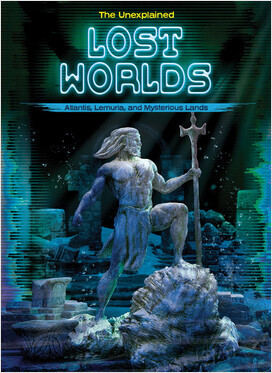
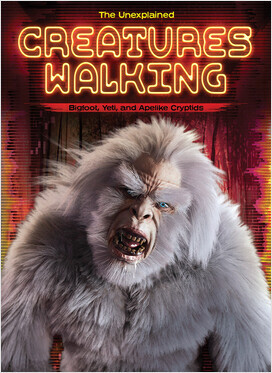
The Unexplained series

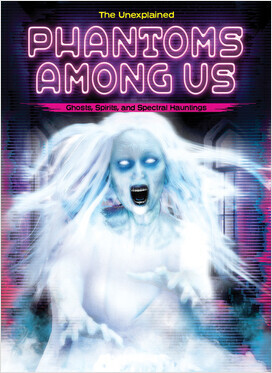
Phantoms Among Us, by Spencer Brinker and Stuart Webb
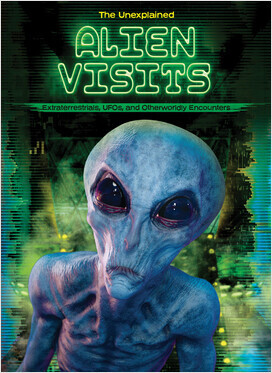
Alien Visits, by Spencer Brinker and Stuart Webb
Creatures Walking, by Spencer Brinker and Stuart Webb
Lost Worlds, by Spencer Brinker and Stuart Webb

This set of books about unexplained phenomena is a perfect addition to a middle school non-fiction collection. Each book covers its topics with text and full-color images, maps, photos, and appealing illustrations on each page. A Table of Contents, Glossary, Read More, Online resources, and an Index are also included in each book. Books are at a 7th grade reading level, but skinny enough to not be intimidating (48 pages each). Interest level is for 5th – 8th grade. I found the text to be engaging. I liked that each book grouped similar phenomena together, for example, Atlantis, Lemuria, and other legendary, lost lands were all in the same book, Lost Worlds. Similarly, Bigfoot, Yeti, and other apelike cryptids are all grouped together in the Creatures Walking volume. I did find the white text on black background a little bit hard to read, but that could just be my older eyes! Each book also had interesting tangents blocked on some of the pages, giving extra or supplementary text. For example, in Phantoms Among Us, one of the extra blocks just explained the word “mediums” to add extra context to the other text on the page about communicating with the dead. A reader could read it or skip it depending on their background knowledge. I think my students will enjoy these additions to our collection on odd and unexplained mysteries of the world.

The Glade

by Naseem Jamnia

This book is about a girl and her friends who find a mysterious glade in their dreams while at a camp where someone went missing in the past. Their friendships are tested as they protect each other from the force in the glade that wants to come back to the real world. I think this book was interesting because it had so many surprises like dreams that led characters to a mystical world.  It was also very fun to read because the conflict tested the friends in a very suspenseful way.  It took a while to get into the book – about 50 pages or so before it really got moving. Once you got into it, the author did a great job  making the book interesting to read and fun to spend time finishing. The plot  was very good with twists and turns. If readers can stick with it, they won’t regret it!

Reviewed by Rosalee B, 7th grader at Komachin Middle School

War Histories series

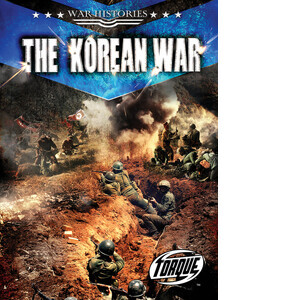
The Korean War, by Kieran Downs
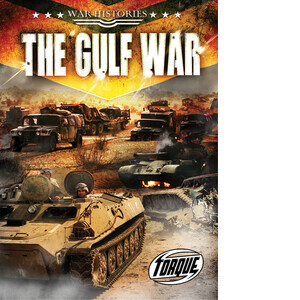
The Gulf War, by Alex Monroe
The War on Terror, by Alex Monroe
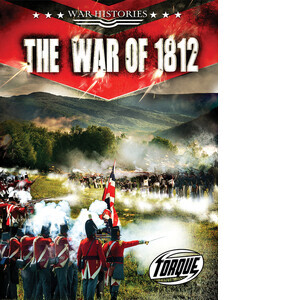
The War of 1812, by Alex Monroe

This set of War histories is perfect for the struggling middle school reader who really loves books about Wars. All of these books are at about a 3rd grade reading level, but have an interest level of 3-7 grade, so perfect for a struggling middle grade reader. Each book is organized in a predictable way, full of images and reasonable blocks of text. Maps are included to place the events in visual locations.For example, in the War of 1812, the map clearly shows the countries involved in the conflict and the location where the battles happened.  The reader sees both sides of the conflict in text, charts, timelines and images. For example, in the War on Terror, there is a visual timeline showing the events leading up to the war through the time when the troops pulled out of Afghanistan. In The Gulf War, text and visuals highlight the leaders of the two countries involved in the conflict. A glossary of terms is included in each book and an index to find some of the key terms associated with the conflict. Each book also includes a link to an online database for more information (www.factsurfer.com ) and additional text resources a reader might look for to continue their interest in the subject -all published by the same company as the original book. For example, the Korean War book recommends a book on the United States Army, one on the Cold War, and one on World War II.

What if you fall for me first?

by G. F. Miller

Sofia Santini and Holden Thomas meet in the eighth grade year of middle school,. Sofia is desperate to catch the attention of her school crush Mark Chen, a popular guy within the school. Holden agrees to help out but only  in return for letting him add the transformation to his YouTube channel. Somewhere along the way both Sofia and Holden catch feelings for each other rather than making Mark Chen have feelings for Sofia. This wonderful romance novel captures the sweet love and romance of middle school teenagers. This book will capture the mind of true romance novel readers, or even those who are looking for love. The well-developed writing between the constant waiting for love and the anticipation of it happening really kept me on my toes and wanting to turn to the next page.What I thoroughly enjoyed throughout the book was the drawn out mystery of the true feelings between the two main characters Sofia and Holden. Honestly? It’s hard to find something that I disliked about the book!  If I’m being honest I wasn’t the biggest fan of how long it took for the two main characters to finally fall for each other! But that’s just a patience problem.

Reviewed by Bailey M., 8th grader at Komachin Middle School

Sueños salvajes (Wild Dreamers) (Spanish Edition)

by Margarita Engle

The story is written in short verse- easy to read and detailed with nature and historical references in the last few years in Cuba. It is  a short romantic story of two young Cubans struggling to fit in at school and finding themselves with nature, wildlife, and the naturalization process of real events in CA.  A romantic story of two adolescents trying to find safety and cultural identity. The poems contain realistic nature facts and past Hispanic historical events stretching back to the 1400s. This book is best for older teens who might have more connections to understanding the historical events.There is a lot of history to take in with this short novel.  It is easy to read because of the verse style. I did not like the open ending because there was no closure.

The book was read & reviewed in Spanish by Mabel T., Komachin Middle School staff

Schoolbot 9000

by Sam Hepburn

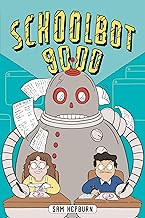
James lives with his recently widowed mother and their new Homebot who is designed to do many tasks in the home. James’ mom is thrilled with the new addition to their home since both humans are sad about the recent loss of James’ dad. James does NOT like the homebot who tries to micromanage James. In addition, James’ school is about to become part of a trial bringing in Schoolbots to train with the human teachers. They quickly start to take over the school and begin to replace them. Like with the Homebot, some people like the Schoolbots and others do not. Unsurprisingly, teachers begin to be transferred away from the school and the robots take over their jobs. While the graphic novel is told in humorous, light images, the subject matter is much heavier under the comic disguise – much like the “friendly” looking robots. There are serious topics under the surface – Artificial intelligence and its place with human beings. How much do we turn over to machines without losing the human interaction we all need? Book two appears to have James homeschooled by Schoolbot and monitored at home with his family Homebot – because we know how well it went to have students taught at home with computers…I went into this book thinking it would be a light, funny story about a homework machine, and closed it feeling a bit disquiet. While the story shows both the positive and negative sides of technology helping in our homes and schools, the human cost rings loud and clear. I’m interested to see where the second book goes.  I think this is a positive addition to a middle school graphic novel collection as we forge forward with A.I. more and more in our lives. How we interact with and integrate technology is going to be a huge issue in the future.

Can You Guess? Series

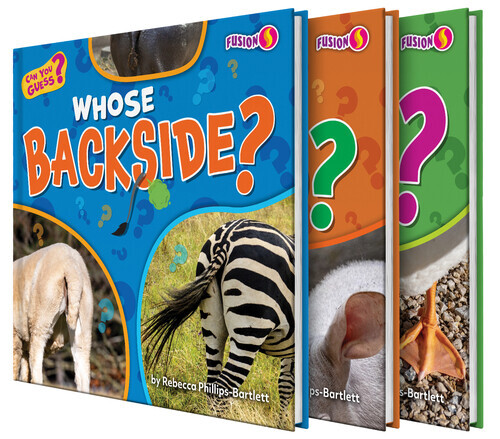
This series geared towards 1st through 3rd grade asks if you can identify an animal by a body part. Can you guess an animal by looking at its feet? Each book in this series looks at a different body part and has the reader guess the animal from three choices. The next page gives the answer along with information about that animal and how that body part is important to them. The information is provided in different text boxes around the page with bold text and a glossary at the back. There is quite a bit of text per page which may be better for 2nd and 3rd grade.

Who Is Cuter? series

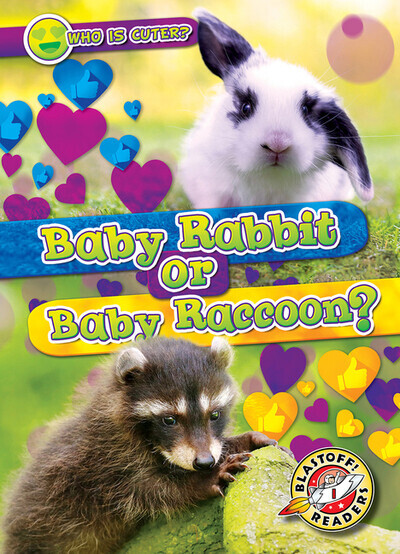
This series geared toward Kindergarten through third grade readers compares two different adorable baby animals. Throughout the books, the similarities in the animals physical characteristics and behaviors are highlighted. The text is simple with two sentences on a page. Bold text highlight words that may be unfamiliar to the reader and a glossary is included in the back of the book. The colorful photographs include labels pointing out the characteristics of the animals. There is a brief photo synopsis at the end asking the reader which baby animal is cuter and includes a website where the reader can vote for their favorite. This series currently has 16 different book.

A Tree for Me

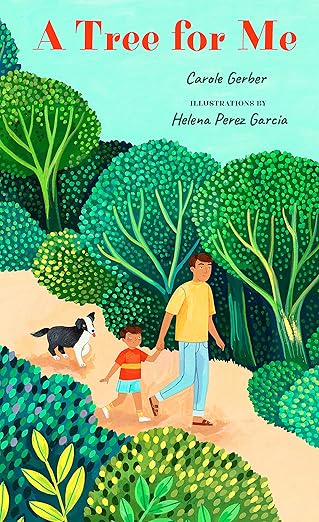
A boy, his dad, and their dog take a nature walk and identify the many interesting trees they pass. The unique and identifying characteristics of each tree is described in a four line stanza The poplar has rough bark, the huckleberry has hairy leaves, the quaking aspen have fluttering leaves. Through the course of the book, they identify 8 different trees. At the end of their walk they end up in a nursery so the boy can choose small tree to plant in their yard. It is unclear what tree he chose.

The illustrations reinforce the joyful and soothing aspects of a nature walk. End paper include three identifying photos for each type of tree. In the Why We Love Trees section, the reader can learn of some of the benefits of trees.