Dragon vs. Unicorn: Friends or Frenemies?

Dragon vs. Unicorn: Friends or Frenemies? written by PJ Hoover draws readers in from the get go. I can envision many kids I would put this in the hands of – great for a reluctant reader, great for dragon and unicorn kids, and great for kids who love choose your own adventure style books. Lisa Wiley did an excellent job on the illustrations to this book and they add so much life to the characters. The panels are easy to follow to kids who may be new to graphic novel style books.

Dragon and Unicorn are best friends, but very different. This book teaches us that we can be friends despite our differences but we’ll probably need tools for empathy, listening, and problem solving along the way. This is where I love the illustrations – the characters emotions! Their eyebrows, nose crinkles, and gestures add so much to the feelings that best friends go through. As the reader follows these two along their adventures, the reader gets to make decisions that will side with one friend or the other and then see how that works out for them. When you get to the end of your story, you’re invited to go back to the first decision making page turn and try the alternate route. I love this! If you were reading it as a social story with a student, the invitation to go back and see how the other choice would have affected the friends is perfect for conversations. I also hope it adds incentive for the solo reader to go back and try again. There are three short stories in this book.

If you have students who love cute unicorns, who love tidy dragons, who love friendship stories where its not always perfect, then this book would be a good fit for your space.

The publisher has this book tagged under cooperation, empathy, honesty, and teamwork – this book has plenty of examples for each of those social skills.

cover of the book dragon vs. unicorn

Celebrating the Chinook

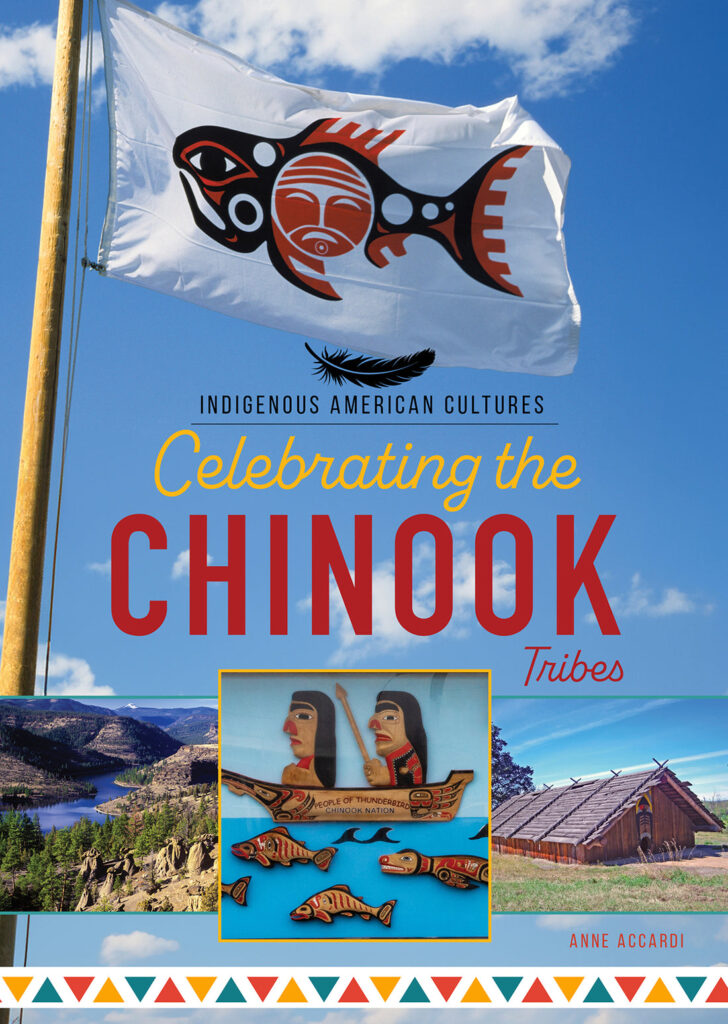
Celebrating the Chinook Tribes by Anne Accardi is part of a Mitchell Lane series highlighting Indigenous American Cultures. This series is geared towards elementary with a reading level of grade 3 and 4 (sited on the Mitchell Lane website), with full color pictures. This book is 32 pages long.

This book includes not only a table of contents, but also headings, bolded words, glossary, index, further reading, and websites to explore on the internet.

I was really impressed with this book and how it presented the people of Chinook tribe (whose lands are close to where I currently teach) and the history in our area. I appreciated that the text also mentioned that people with Chinook ancestry can live all across the nation, not just where their people lived since time immemorial. In this book you’ll find each chapter focuses on a part of the Chinook tribes traditions including present and past tribal lands, celebrations, and language.

Although this book does a good job of bridging the time before colonisers entered their land, to famous people enrolled in the Chinook tribes, I did notice that there was no language stating the tribe had been residing in the Pacific Northwest since time immemorial (a phrase that is used in our indigenous education throughout the PNW). I would have also preferred the term colonizers to settlers that the book highlights on page 8. I think the definition in the glossary would also match the word colonizer better than settler.

The author, Anne Accardi, has a biography in the back and it does not say she is affiliated with any tribe herself. Although I think the book is well done, as a librarian, I would prefer to by books about indigenous tribes by people who are members or affiliated with the tribe. I understand this is not always possible, yet.

This series also includes a cut out in the beginning (before the Table of Contents) that gives a parent or caregiver tips for reading non-fiction with their reader, and for encouraging them to read more nonfiction. This is always helpful as many guardians would like help knowing what to ask, what text features are called in non-fiction and how to encourage their young readers.

I found this book well done, even though I think there are improvements that could be made. If you need to update your books highlighting indigenous cultures, I would definitely take a look at this series. There are six books in the series so far. Each book is available in hardcover, paperback and as an ebook.

If you need to update your books on indigenous tribes, I recommend looking to see if this book would fit into your library collection.

cover of the book Celebrating the Chinook Tribes by Anne Accardi

Crafting With Style! series

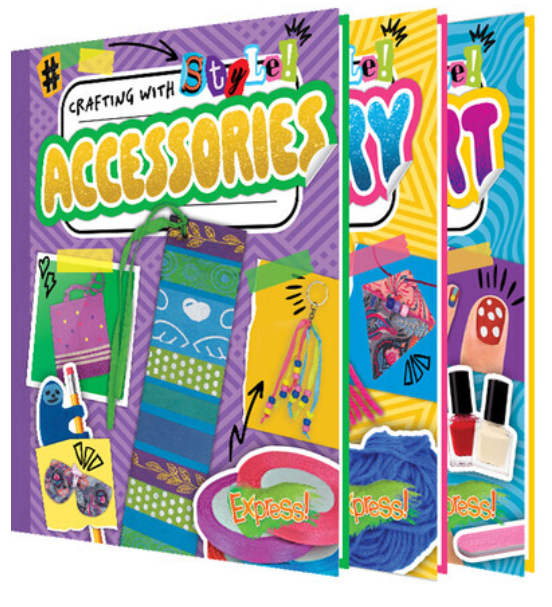
This series encourages readers to express their style through crafting. Whether they are creating their style through accessories, room decor or nails, this series has step by step instructions on crafting and creating their style. Each book focuses on a different style element and includes eight crafts with instructions. The crafts use common items around the house and encourages the reader to reuse things when crafting. Material and tips are included with the step by step instructions as well as factual information pertaining to the craft. A glossary, index, and resources to learn more are included at the back of the book.

Books reviewed in this series: Fashion, Accessories, Nail Art, Room Decor, Jewelry, and Hairstyles.

Whose Poo? Series

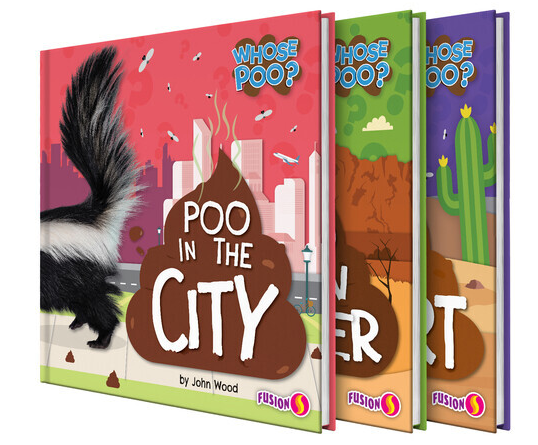
A guessing game about poo? Each book in the series features a different biome and has pictures of scat and has the reader guess the animal the scat belongs to. Turn the page to find out the answer and facts about that animal and what it eats. The photographs give you an up close look at the poo. There are several facts on each page inside different text boxes and captions. Vocabulary that may be unfamiliar to the reader is in bold and is included in the glossary at the back of the book. This is a humorous, fun look at animal scat. The warnings to not touch poop is an appreciated addition. Geared towards 1st – 3rd graders, this is sure to fly off the shelves.

The titles reviewed in this series: Poo Down Under, Poo In the Desert, Poo At the Zoo, and Poo in the City.

Digital Banking and Payment Services

by Martha Hubbard

As a fully functioning, banking adult, I must admit I learned something  from this book! It was fascinating to see some of the banking options that are available now that, admittedly, I do not use. Checks, I get. ATMs, no problem. On-line, digital payments, yes. I’ve even learned to Venmo. I’d never heard of neobanks, and cryptocurrency is the one I have not quite figured out. I found it interesting to read about all the pros and cons of various banking methods. And while cybersecurity often makes me nervous, this book had some good suggestions for ways to keep yourself and your money safer with strong passwords or even payment tokenization. Even two-factor authentication, which I sometimes get irritated with having to use, does make it harder for thieves to steal what is on line. For young readers in my library today, so much of what seems futuristic will feel like it’s just what is natural to do. Understanding how we got to the digital age may put some of their options in perspective. The book was well-organized in 5 clear chapters and included a table of contents, glossary, index and additional resources.

WNBA: Washington Mystics

by Julianna Helt

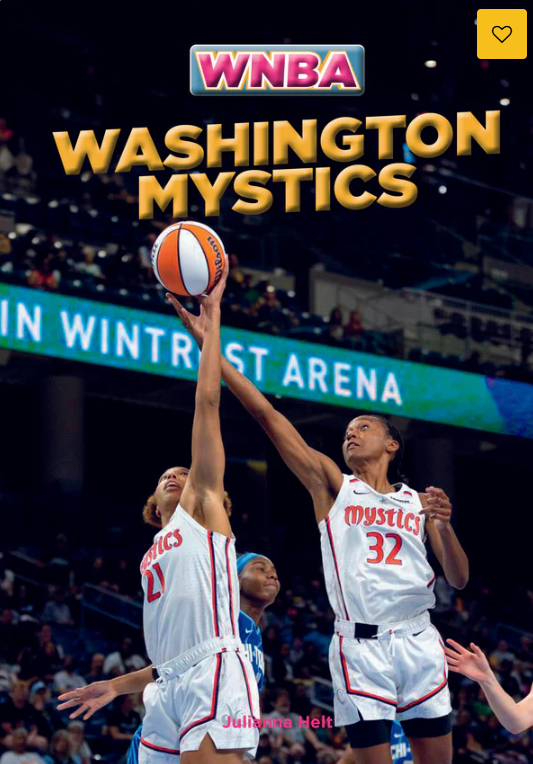
Having enough sports books to satisfy my middle school readers can be a challenge! This book on the Washington Mystics is sure to pull in basketball players and fans. I love that it is on one of the women’s teams in basketball. The book is well organized with clear, readable text with only 1-2 paragraphs per page. The four chapters highlight their championship winning season, the team’s history, their winning coaches and some of the famous players. The book includes a table of contents, a glossary, an index, fun trivia facts, and resources to dig further into the topic. I also liked that the more challenging vocabulary was highlighted & those words corresponded to the words in the glossary. Photos are included throughout the book, with identifying captions. Also included are “Fun Facts” scattered throughout the pages adding extra information to the main text. 

Dealing with Health Issues

by Aimee Popalis

A well-organized non-fiction book about and for students navigating medical conditions of their own or others. Various sections of the book cover topics like the kinds of health issues students might encounter, how to care for oneself or others, and strategies for taking control when medical needs might make one feel out of control. Each section has clear, easy to read text suitable for a middle school student. I appreciated the notes at the beginning of the book with tips for reading non-fiction. The book includes a glossary of terms, an index, and additional resources students can use. Most pictures did not have captions, but rather many had “Did you know” text nearby that enhanced the main text on the page. I found the text approachable and factual with the illustrations being very inclusive of many races and genders.

The Museum of Willa and Wade

written by Judith Henderson and illustrated by Sara Sarhangpour

Willa the ostrich and Wade the penguin discover a shiny golden button on the ground and proceed to gather more treasures (a rock, toy dinosaur, artwork by Wade) for a museum (a box). They are so excited about their collection that they invite the other animals to their museum (Museum of Willa and Wade – MOWW). The Grand Opening of MOWW was a success, especially the snacks. And, would it be possible to borrow a rocket ship for the MOWW? Hmmmm..

This simple story of enthusiastic friends, imagination and a few treasures is wonderful. Add in the bright and bold illustrations and you have a winning combination. Readers will enjoy this book and look forward to Book #3 in the Willa and Wade series. Hopefully, we won’t have to wait too long! Recommended.

Elvis & Romeo Visit the Vet

by David Soman and Jacky Davis

Elvis and Romeo are back in another sweet adventure. This time, Elvis is not excited at all about a visit to the vet. Romeo tries to encourage him by telling him all the good things that happen there, including making sure he’s well and checking his eyes. It isn’t until Romeo mentions the treat at the end that Elvis decides the vet office will be a fine place to visit!

This early reader is perfect in its combination of spare text and sweet, silly illustrations of two doggie friends. The story is short and somewhat predictable, making it a nice choice for young readers.

Elvis & Romeo Go to Dog School

by David Soman and Jacky Davis

Doggie pals Elvis and Romeo head to dog school to learn some new tricks. While Elvis is open to the idea, Romeo experiences some anxiety when the lesson is about catching a ball. Elvis does a great job of working through it with Romeo and gives him concrete steps to follow. Ultimately, Romeo is successful and enjoys dog school with his good friend.

Simple text accompanies digitally rendered illustrations that are sweet and expressive. Young readers will cheer for these newfound canine friends and eagerly await the next adventure. Recommended.