
Cuban-American author Margarita Engle has written a story to explain what water delivery days are like. This story follows a young girl as her family prepares to receive water from the delivery man. The man delivers water about every 5 days. The family fills their blue tank each time to prepare for their water needs such as bathing, cooking, and having enough to drink. It is such a simple story yet so simply teaches that water conservation is of utmost importance. It also points to the fact that many places in this world do not have access to clean running water. In this story, you will find beautiful illustrations that show a joyful family that works together to fulfill the basic human need for water.
Water Day is written in English. The Spanish version of the same story is El Dia del Agua
Category Archives: Recommendation
El día del agua
Cuban-American author Margarita Engle has written a story to explain what water delivery days are like. This story follows a young girl as her family prepares to receive water from the delivery man. The man delivers water about every 5 days. The family fills their blue tank each time to prepare for their water needs such as bathing, cooking, and having enough to drink. It is such a simple story yet so simply teaches that water conservation is of utmost importance. It also points to the fact that many places in this world do not have access to clean running water. In this story, you will find beautiful illustrations that show a joyful family that works together to fulfill the basic human need for water.
Water Day is written in English. The Spanish version of the same story is El Dia del Agua
Eagles in the End Zone
It is time for the football game. The Eagles are playing the Turkeys, however, one of the players on the Turkeys’ team is a Chicken. Chicken gets distracted by his grandmother in the crowd and fumbles the ball. This story simply explains the game of football using animals as characters who are more concerned about everyone having a good experience with the game and the story ends with a happy ending for all. This story is written with simple words and language and would be great for beginning readers. Using football as the theme of this story would be of high interest to some and help keep some beginning readers engaged. The illustrations in the book are very full and help to fill in the details of the story.
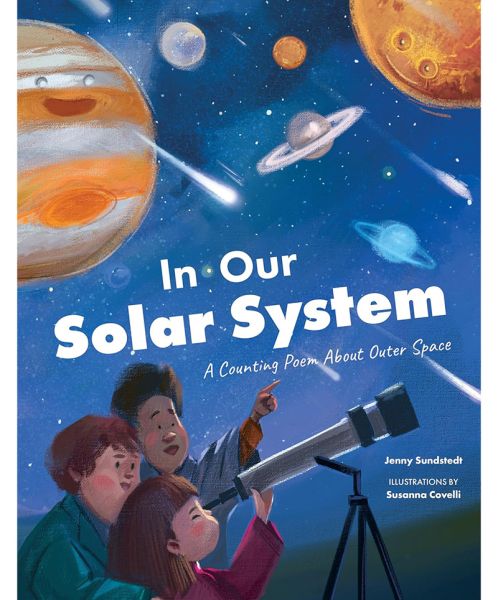
In Our Solar System: A Counting Poem About Outer Space
In Our Solar System captures young people’s fascination with planets and space. The use of the “Over in the Meadow” rhythm for the poems provides the information in a catchy format for younger children and aids in fact retention. Illustrations then portray the number from the poem also providing a counting opportunity for young children. Each poem is then accompanied by a paragraph detailing more complex information about the topic. As the numbers increase in the rhyming poems, the topic is moving further from the sun. Topics include: the Sun, Mercury, Venus, Earth, Mars, Jupiter, Saturn, Uranus, Neptune, and comets.
The combination of short catchy rhyming poems, colorful illustrations, and interesting facts will make this a great book when reading with a diversity of ages.
Please Pay attention
by Jamie Sumner
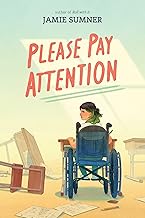
What happens AFTER a school shooting to those who survived? This is the bittersweet story of a girl dealing with survivor’s guilt and traumatic memories from a day that no one ever thinks will happen in their school. 6th grader Bea is now wheelchair bound and too afraid to go back to school. The people around her want to change things so that events like this won’t happen again, but Bea just wants to forget & pretend it didn’t happen. But it did and learning to face her memories are a big part of the story. The past unravels with flashbacks to help the reader understand the horrific event in a middle school appropriate way. Told in verse, the lines are both haunting and accessible. The story is sad and hopeful-ish. This book might have triggers for some students. It’s an important book, sadly, in this day and age.
Meet me at Wonderland
by Devillers, Julia
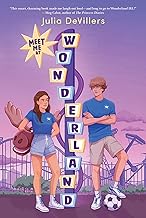
This fun, lighthearted story of a summer romance at a local amusement park will have readers chuckling along at the character wearing the giant, sweaty moose costume and her fellow amusement part co-workers. Coco and her family are trying to save their family owned theme park. Cute boy, Henry, is just trying to survive a summer without soccer and make a little money to pay back his business-obsessed dad. The two find that summer won’t be so bad with new friends. I enjoyed this sweet story of boy meets girl/moose. It had plenty of humor, moose puns galore, & lots of heart. The story is told in alternating points of view. Perfect for both male & female readers. I enjoyed this light read this summer!
After-School Heroes: Shuri Takes Control

Written by Terrance Crawford, Illustrated by Dave Bardin
The After-School Heroes series is aimed at beginning chapter book readers. Larger print, illustrations on most pages, and simplified sentence structure all support early reading skills. Shuri Takes Control follows Shuri, from the Black Panther universe, as she works to stop an evil takeover of Stark Center. While other superheroes make appearances, it’s Shuri who takes the lead in saving her friends.
The story highlights the importance of perseverance, and Shuri herself is a fantastic role model, especially for kids interested in STEM. Her intelligence, creativity, and bravery are highlighted throughout the book.
The vocabulary will be more accessible for kids who are already fans of superheroes, particularly those familiar with the Marvel universe and Black Panther. That said, early readers may still need support with some of the trickier words. Overall, though, this is a strong addition to any early chapter book collection, particularly for superhero-loving kids looking for adventure.
Abuelita’s Song

Written by Gloria Amescua and Illustrated by Mariyah Rahman
A sweet story inspired by the author’s own invented lullaby, Abuelita’s Song is a beautiful celebration of family connection. Spanish words and phrases are woven naturally throughout the text, along with the lullaby itself (presented in both Spanish and English), which adds depth to the story. Since the song appears many times throughout the book, readers should be prepared to sing if reading it aloud.
The illustrations are bright and full of warmth, perfectly capturing the love shared by this family. There is a deep sense of heart and affection on every page, and I can see many kids gravitating toward this book for a sense of comfort and love.
Octavio and His Glasses
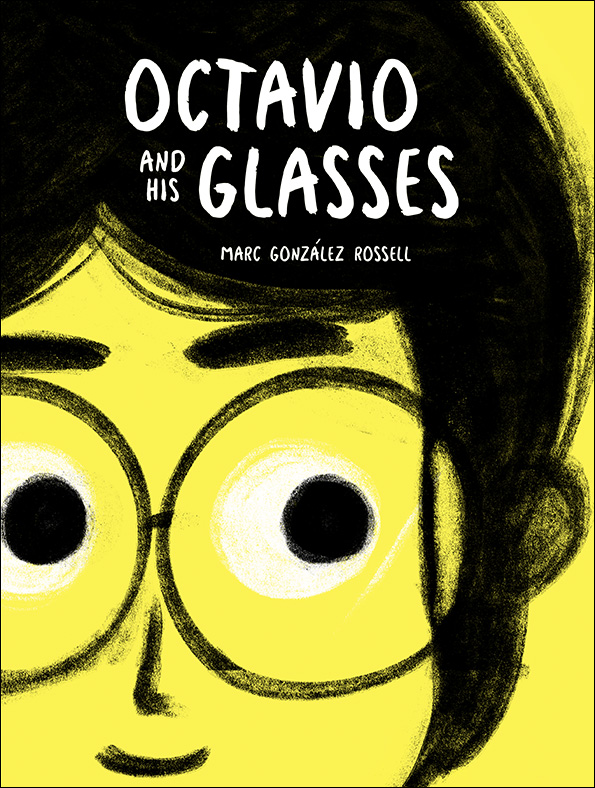
By Marc González Rossell
Octavio and His Glasses is unique for several reasons. The pages are a striking yellow, with only black and white contrasting the bright background. The story doesn’t follow the usual cute or sweet tone; it leans more into the dark and mysterious. The experience of getting new glasses is shown as transformative, though I had to read all the way to the end to fully grasp how.
This book won’t appeal to every kid, but that’s part of its charm. I’ll be keeping it in the table bins in my library because I think it will spark curiosity. Kids of all ages might find themselves drawn in by the unusual visuals and compelled to puzzle out the ending. For a book with so little text, it delivers a surprisingly powerful punch. I can easily imagine readers coming back to it more than once, both to admire the visuals and confirm their understanding of Octavio’s journey.
Our Joyful Noise

Written by Gabriele Davis. Illustrated by Craig Stanley.
Our Joyful Noise celebrates the sounds of daily life. As a family moves through their week, we hear the sounds that accompany their routines. From the “whisper” of their mom’s satin shirt to the “snappity-snap” of green beans, to the hallelujahs at church, we experience all the sounds that fill their lives. At the back of the book, you learn that titles and lyrics from hymns, spirituals, and gospel and jazz songs, all reflecting the African-American experience, are woven into the text.
This book celebrates the small things that bring joy to everyday moments. The illustrations capture that joy, while the thoughtful use of silence makes the sounds feel even more powerful. It would make a wonderful addition to any school or home library.