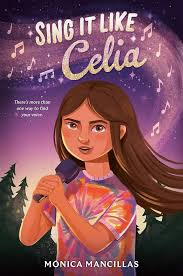
Sing It Like Celia by Monica Mancillas

Reviewed by North Thurston High School Student, Michelle E.

A moving, middle-grade novel about identity, resilience, and the power of music. The main character is twelve-year-old Salvadora “Salva” Sanchez, whose life is turned upside down when her mother vanishes from the family store without a trace. Salva wrestles with abandonment and insecurity when she is reluctantly uprooted to live with her estranged investigative journalist father at an RV campground. The plot reveals broader social issues through Salva’s personal struggles. The subplots add dimension to the narrative, drawing attention to the struggles of immigrant families. Salva’s involvement in a band creates group dynamics, including friendship, jealousy, and identity, along with personal growth, particularly in her confrontation with the original lead singer of the band. The narrator’s yearning moments arise as Salva discovers the truth about her mother’s disappearance, forcing Salva to reckon with harsh realities and find strength within herself. Mancillas treats complex topics with sensitivity and age-appropriate concepts. The mix of Jeronimo Pretto and Celia Cruz’s legacy adds a rich cultural layer celebrating music and the importance of role models. Ideal for fans of… The Remarkable Journey of Coyote Sunrise by Dan Gemeinhart and Merci Suarez Changes Gears by Meg Medina. If you enjoy reading stories about growth and family and music as balm, you might find Sing It Like Celia especially enjoyable. This is an impressive novel that will encourage children to embrace their identities and use music as a source of solace and expression.
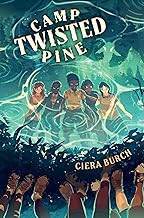
Camp Twisted Pine by Ciera Burch

Review by North Thurston High School student, Michelle E.

This intriguing middle-grade novel brings together mystery, adventure, and self-discovery. Set at a summer camp in New Jersey’s Pine Barrens, the story follows 11-year-old Naomi, a nature lover who likes to learn about the outdoors through books rather than experience. Naomi is drawn into a suspenseful adventure when fellow campers start disappearing in later episodes under mysterious circumstances. The story follows Naomi, a girl whose parents have separated and who is sent to Camp Twisted Pine with her younger twin brothers as their parents try to navigate this new stage in their lives. Impressed by the activity-heavy camp experience, Naomi finds comfort in her friendship with Jackie, whom she meets at camp and who is hard of hearing. The two bond over sign language lessons and skepticism of camp traditions. Things take a sinister turn when campers begin to go missing, including Jackie. Desperate to get to the bottom of things, Naomi uses her scientific knowledge and logical reasoning to combat the strange forces while embarking on a personal journey of courage. This book is ideal for fans of… Small Spaces by Katherine Arden and Whispering Pines by Heidi Lang and Kati Bartkowski, as well as those who enjoy spooky campfire tales. Ultimately, Camp Twisted Pine is a delightful combination of spooky adventure with heartfelt storytelling. Burch’s story inspires readers to venture out of their comfort zone, to appreciate the power of friendship, and to face life’s unknowns with curiosity and bravery. It’s a MUST READ that teaches about life, while also being part of a suspenseful plot—definitely one for the middle-grade literature “A” list!

Light Enough to Float by Lauren Seal

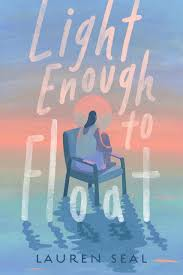
This novel in verse follows protagonist, Evie, as she struggles to acknowledge and overcome her eating disorder. Evie’s dysmorphia prevents her from seeing and thinking about herself accurately; instead she is continually able to justify her food avoidance behaviors and thoughts as normal. Her family’s concern over Evie’s weight and behaviors propels them to take her to her doctor where they learn that she is anorexic and that her internal organs have begun to shut down. Evie is immediately taken to an in-patient facility in order to nurture her mind and body back to health. This is not an easy journey for Evie; she is angry at her family and continues to find ways to remain in control of her calorie intake. Throughout her recovery she connects with therapists and other people suffering with eating disorders; fortunately for her these connections fuel her to continue the work of healing.

The author’s note at the start of the book lets readers know that Evie’s story is based closely upon the author’s own experiences. It’s clear when reading how intimately the author knows the thoughts, emotions, and struggles that Evie is dealing with. The book is very heavy in topic and plot; the verse style helps readers access the content more easily.

Readers who enjoy realistic fiction dealing with difficult topic will enjoy this book. Although there are many dark, challenging moments in Evie’s story we still feel a bit of hope in the end.

Go Forth and Tell: The Life of Augusta Baker, Librarian and Master Storyteller by Breanna J. McDaniel

Before she was a storyteller, Augusta Baker, was a listener. She listened to her grandmother tell stories, emphasizing if there is a will, there’s a way. Augusta wondered if she could become a storyteller too. After attending teacher college, she became a children’s librarian at the New York Public Library in Harlem. Since there were few books with Black people in them, Augusta became an advocate for educators, librarians and writers who created stories about Black people.

This biography of Augusta Baker features a timeline, a list of citations, photographs of Augusta as a librarian and an author’s note on her own connection with librarians. This book definitely demonstrates that if there is a will, there is a way.

I Want to Read ALL the Books by Debbie Ridpath Ohi

When Hana learns that books can answer her questions, she sets out on a mission to read all of the books. She starts with reading all of the nonfiction books on her shelf and then the fiction books. Soon she has read all of the books in the house and her friends’ houses, but her list of questions just keeps on growing. Hana’ wants to buy all of the books. ‘s mom takes her to the library, but Hana becomes overwhelmed that she will never be able to read all of the books. After a talk with the librarian, Hana starts a book club with her friends so they can share their books.

The pictures are colorful and the characters are diverse. The font changes to express how Hana is feeling throughout the story. A wonderful about the importance of curiosity and sharing the books we love.

The Hawk Shadow

written by Jan Bordeau Caboose and illustrated by Karlene Harvey

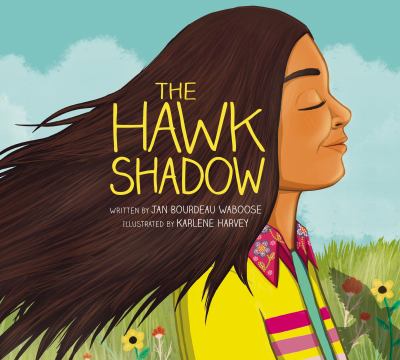
Serenity accompanies her brother, Big Ed, on a fishing trip to the Hawk River. As they walk, the siblings chat and tease each other and Big Ed explains the significance of the river’s name. It is named for the the Hawks, Gekek, Keepers of the River and their Protectors. Big Ed and Serenity arrive at the edge of the river and cast their lines, his from a beautiful new fishing pole and hers from a spruce branch made by their father. Serenity is daydreaming as she fishes when a Red Tailed Hawk (Gekek) suddenly appears, swooping over her and screaming, before flying off over the river. Serenity looks around and her brother is no longer there. Gekek, the Red-Tailed Hawk, returns, screams and flies up the river again. Serenity follows and finds her brother, his foot caught between rocks in the river. She doesn’t know what to do until Gekek swoops down over her pole. Serenity holds the pole out to Big Ed and he grabs hold. Together, they work to return him to safety on the river bank. They lay on the river bank for a few moments before heading back home, thankful for the protection of the Spirit guides.

This lively story is wonderful for many reasons. We are given a glimpse of the culture and lives of the Anishinaabe people, an exciting rescue and the loving relationship of a brother and his younger sister. All of this is set in a picture book with vibrantly colored illustrations that transport the reader to the trails and river banks of the Hawk River. Highly Recommended.

Monster Hands

written by Karen Kane and Jonaz McMillan; illustrated by Dion MBD

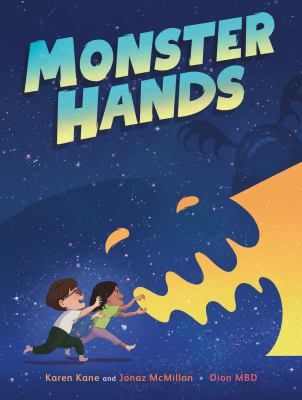
Milo reads some bedtime stories and makes the mistake of reading one about a monster under the bed. Now, he’s POSITIVE there’s a monster under his bed! He knows what to do. He reaches out to Mel, his friend across the street. Placing their flashlights under their hands, they sign to each other. Milo explains his dilemma about the monster under his bead and Mel gives advice and suggestions. Finally, they team up to make hand shadow monsters together to scare away any would-be monster that might be lurking under Milo’s bed. Phew! Such a relief! The story ends with Milo and Mel sharing a signed hug, because monster hands can also give hugs.

This sweet story incorporates ASL in a very natural way as part of the story as Milo and Mel work out how to chase away those monsters. Children will enjoy a story about a situation that might be all too familiar to them – seriously, who hasn’t had a monster under their bed at one time or another? The illustrations are bold and seamlessly incorporate signs along the way. Add this to your collection as it will be a hit. Highly recommended.

Deep Water by Jamie Sumner

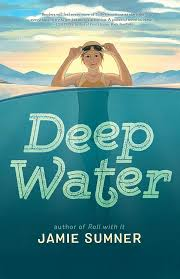
This verse novel is perfect for anyone who finds solace in swimming, or knows a loved one dealing with mental health challenges. Tully Birch feels responsible for her mom leaving without explanation. The novel subtly explores her complicated feelings around her mom’s battle with clinical depression, including Tully’s hope that if she becomes the youngest person at twelve to complete the 12.1 mile “Godfather” swim across Lake Tahoe, her mom will see the news and come home. The chapters are organized around her hours in the water (hour 1 – hour 6)  and though most poems are free verse,  I was delighted to see that some are concrete poems. As readers, we simultaneously grieve her mom’s absence with her, while also cheering for Tully, hoping she doesn’t give up on her goal, despite the storm that moves in. The metaphor of the storm will resonate with readers, both “the one out here/ and the one inside me./” (203). Tully’s positive self talk of “…I am a winner/ and I can do HARD THINGS./”(127) and “…I am HERE and I am ALIVE/ and I’m worth/ showing up for./” (108) is juxtaposed with her complex feelings like “If you are dead/ I can miss you more/ and hate you less./” (169) and “‘You… did not cause your mother’s depression,/ and you are not responsible for fixing it.’” (164).  Tully is a character to grieve with and cheer for with both compassion and empathy. For fans of Dusti Bowling’s novels. 

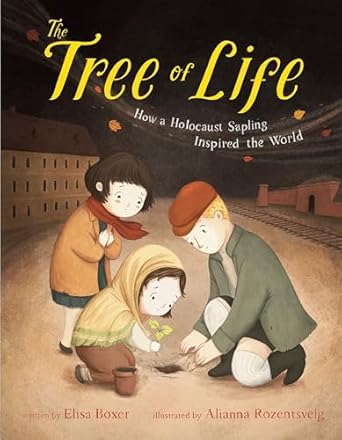
The Tree of Life: How a Holocaust Sapling Inspired the World

In the Terezin ghetto where Jewish people were confined during World War II, survival was not guaranteed. A teacher named Irma Lauscher asked a fellow prisoner to risk his life to smuggle in a sapling to help the children celebrate Tu BiShavat, the New Year of the Trees. This sapling planted in a pot then later in the ground. Water was scarce, so the children shared a few drops of their water every day. It became known as Etz Chaim, The Tree of Life. The tree survived, but many of the residents of Terezin did not. Many died in the ghetto and many others were shipped off to concentration camps. The horrors of the Holocaust is summed up in the books words, “The children were the future of the Jewish people. And the Nazis wanted a future without Jewish people.” The tree survived and after the war, Irma saw that seeds from the tree were planted all over the world in memory of the children in the ghetto. In 2007, the tree died after taking flood damage, but it’s 600 descendants around the world thrive.

The Tree of Life focuses the story on life, hope, and strength in unity during a truly horrific time in history. Pair with This Very Tree: A Story of 9/11, Resilience, and Regrowth by Sean Rubin.

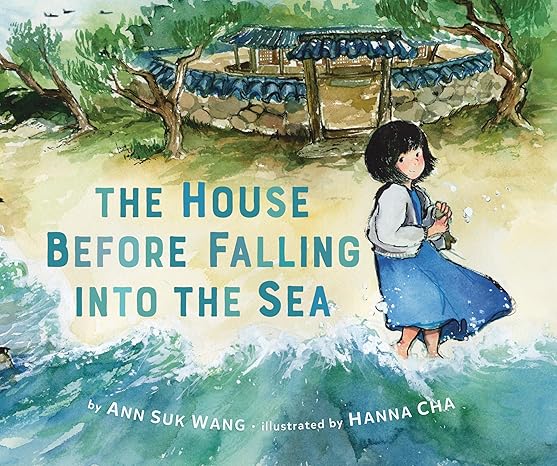
The House Before Falling into the Sea

As the conflict that became the Korean War was erupting, many people were forced to flee from the violence. In The House Before Falling into the Sea, a young girl’s family welcomes one group after another to shelter in their home at the base of the Korean peninsula. The sacrifices she is asked to make and the disruptions to her life at times grate on her. With the help of her parents, she accepts that its okay to be scared and that as a group they can hold each other up.

The image a rock reappears throughout the story; from the travelers looking like stones, suseok (stone art), the stony beach, and finally the stone commemorating the generosity of the Tak family in welcoming those displaced by war. In the words of Umma, “Our visitors are not stones we can toss to the sea.”

A gently told story of time and place not often seen in picture books. Use when teaching about the Korean War, displaced people, or on a unit on kindness and compassion.

Beautiful illustrations show dark and light, the fear and the peace of a home that stood as a refuge for family and friends fleeing south.