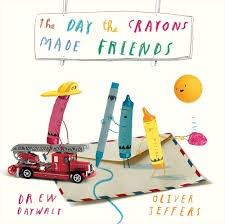
Another book in the Crayon series by Drew Daywalt. Duncan’s crayons have disappeared again. This time the crayons have set out to make friends. White crayon no longer feels invisible since meeting the chess set and filling in as the missing queen. Blue crayon’s problem of being short is solved when they find a doll who’d lost a head and they team up. Each crayon’s story is told as a letter from that crayon.
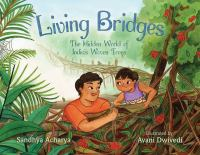
In the state of Meghalaya in India, there are bridges or Jingkieng Jri created from the living roots of rubber fig trees. The War Khasi-Jaintia weave the roots together to make bridges for the community to be able to cross the mountainous area they live in. The Living Bridges last for hundreds of years and withstand the monsoons in the area.
This book follows a young boy on his way to learn to build a Jingkieng Jri. He notices the insects and birds that make their home in the bridge, but also the damage that is happening to the bridges from littering and people stealing the sap. He decides that he can take action and teach others to clean up the bridges.
The back matter includes information about living bridges, a glossary and pronunciation guide, photographs of a Living Bridge and a bibliography.
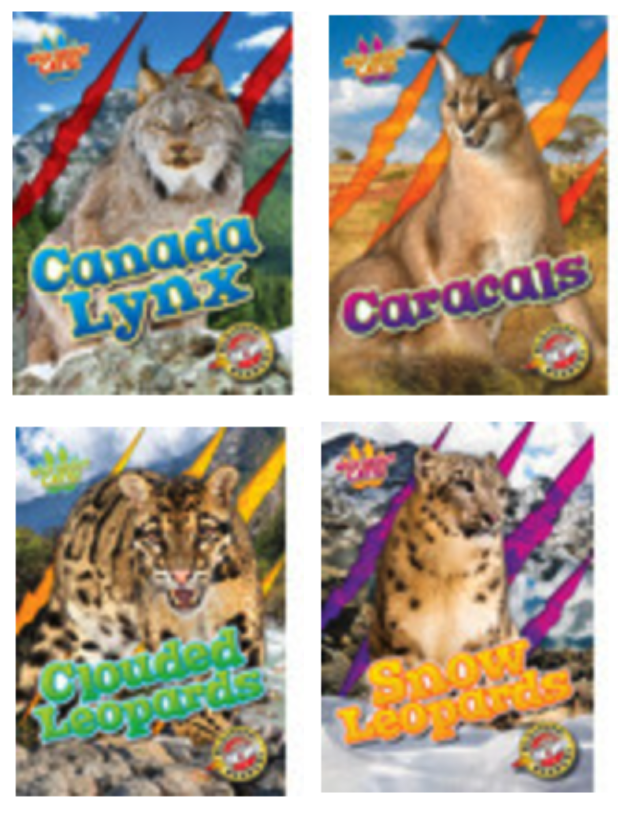
These wonderful non-fiction books about wildcats for intermediate readers will be a hit with cat lovers in your library. These titles are four of ten in the Bellwether Blastoff! Readers Level Three: Wild About Cats! Series. This series is at level three and thus second through fifth graders will enjoy the reading content most although many lower readers will enjoy the beautiful photography on each and every page. They all have a Table of Contents and Chapters that are consistently the same in each of the books and thus, are helpful for readers and teachers as they can create consistent research questions from all books in the series. There are some words are in bold. These are in a Glossary in the back of the book with helpful definitions. The end of the book also has basic facts, other book recommendations to read and learn more, an index, and web information on how to get more information at a simple reading level. Some interesting text features in these books are: maps of where they live, what the name of their babies is, images of their preferred habitats and if they are at risk of extinction.
I would highly recommend these books for any library that provides informational books for primary leveled readers.
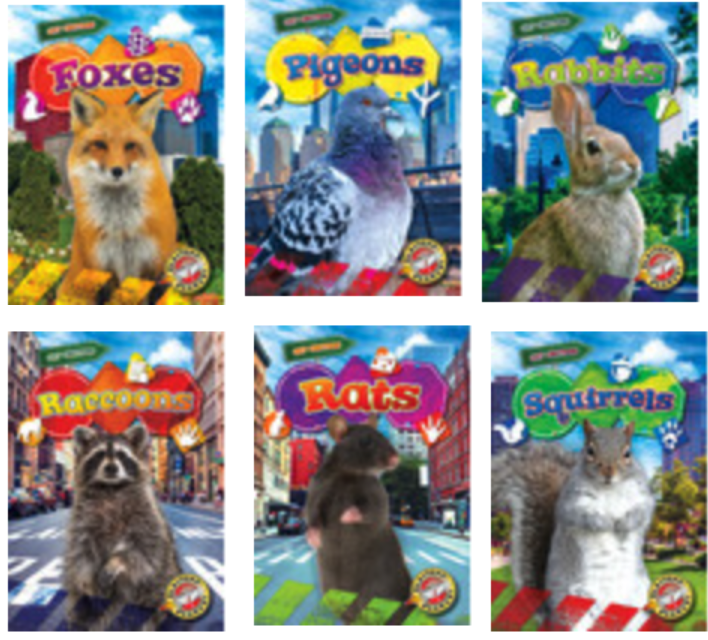
These vibrant covered non-fiction animal books for early readers will be in high demand at the elementary library. These titles are six of ten in the Bellwether Blastoff! Readers Level One: City Critters Series. While these books are grade one level, many will enjoy the beautiful photography and clear writing contained within. They all have a Table of Contents and Chapters that are consistently the same in each of the books and thus, are helpful for emerging readers when reading many in the series. There are minimal words on each page. Some words are in bold. These are in a Glossary in the back of the book with helpful definitions. The end of the book also has basic facts, other book recommendations to read and learn more, an index, and web information on how to get more information at a simple reading level. Many will know these animals as they are common in many communities but these books give clear information on species and genus, where they choose to have their home and types of food they eat.
I would highly recommend these books for any library that provides informational books for primary leveled readers.
Having the opportunity to receive quality non-fiction books for early readers is always appreciated in the elementary library. These titles are six of sixteen in the Bellwether Blastoff! Beginners: Community Workers Series. Since primary (kindergarten-1st Grade) students focus on community members and their professions, these books can be a benefit for the classroom as well. Each of these books start with sight words that students will need in order to clearly understand the content. The Table of Contents/Chapters are clear, concise and consistently the same in each of the books and thus, are helpful for basic research questions to be answered by students. There are a minimal words on each page as well as vibrant images for clearer understanding and higher interest. The end of the book also has basic facts and a glossary for further comprehension. The final page also has an index as well as web information on how to get more information at a lower reading level.
I would highly recommend these books for any library that provides informational books for primary leveled readers.
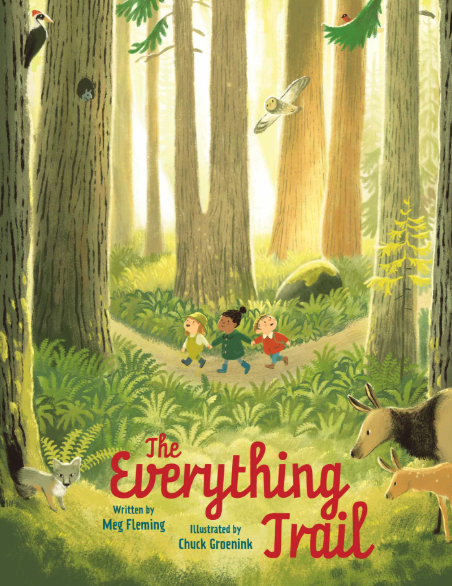
Meg Fleming – Author, Chuck Groenink – Illustrator
What a wonderful addition this book would be for a Pacific Northwest library! While the author is from the San Francisco Bay area, the illustrations will remind any reader of traveling through a forest on the way to an ocean shore. It follows a small group of kids walking on a path from the top of a mountain/hill to the view of the water and then back through tall trees. This book needs to be turned vertically to read and allows for a different view of the trail as it is tall and not wide. Each page has four lines that rhyme and thus will be fun for an adult to read to younger kids.
I highly recommend this book for us libraries in Western Washington. Readers will feel and understand the love of the forest after seeing this book. It will encourage all to go out and enjoy a hike!
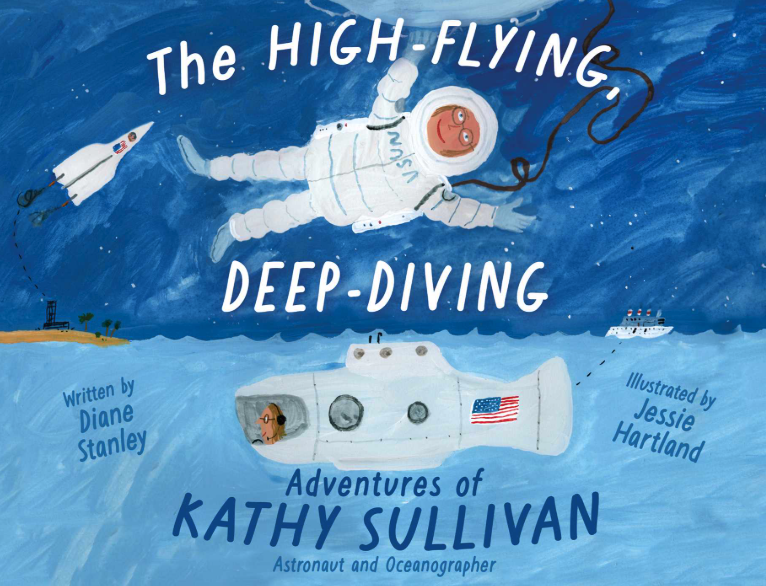
Diane Stanley – Author, Jessie Hartland – Illustrator
Kathy Sullivan, the first American woman to walk in space is the focus of this biographical picture book. It explains her interest in maps and places around the world as a child and her introduction of Sputnik traveling across the sky that inspired her to eventually become an astronaut. Prior to being in space, Ms. Sullivan studied marine biology and became an well known oceanographer as N.A.S.A. was not hiring women to go to space at the time. She the applied and successfully became one of six women who had a chance to become part of a space mission.
This book is a wonderful and inspirational biography about the drive and resilience one can have to achieve their goals. I would highly recommend this book to libraries that need more books about women in STEM. The illustrations are bright and colorful but it is this librarian’s opinion that this book will be more readable for 2nd – 6th graders. At the end of the book there is a list of Ms. Sullivan’s world records, a glossary, and a time line. There are also two lists of resources, one for younger readers as well.
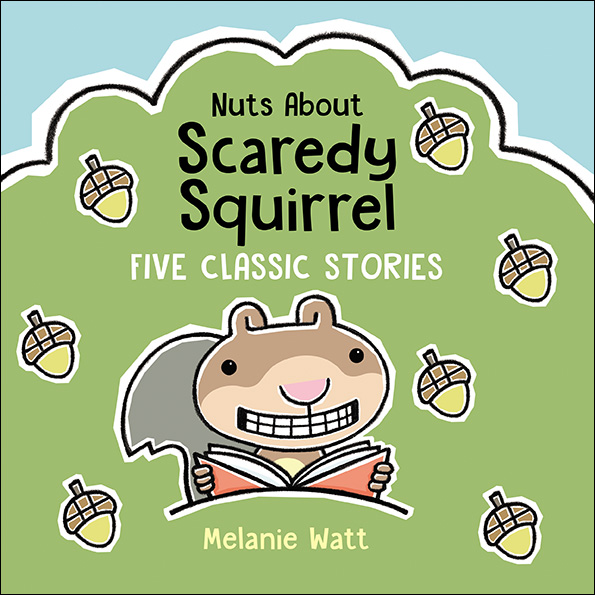
Can this be the start of a campaign to bring Scaredy Squirrel popularity back? I absolutely LOVE Scaredy Squirrel and I know the books never really went anywhere but I have felt the popularity diminish in the last decade. This compilation is full of five classic Scaredy Squirrel stories by Melanie Watt.
Scaredy Squirrel is the perfect new book friend who will cautiously guide you through situations like making a new friend, going to the beach, surviving night, and a birthday party, complete with checklists! This is a beautiful edition from Kids Can Press and I especially loved the details like the note that its a “germ-free book” on the back, the inclusion of how to draw Scaredy Squirrel.
As well as being a Scaredy Squirrel fan I am a big fan of end papers in books. One thing you usually lose in a compilation are the end papers, which are so iconic in Scaredy Squirrel books. Thankfully, they are used in this collection to separate the five stories so you still get a look at the graphics that hint so much at the story coming.
Bring Scaredy Squirrel back to the spotlight and put this book in your collection!
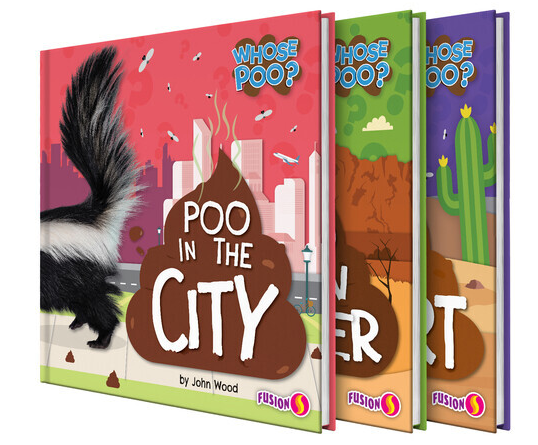
A guessing game about poo? Each book in the series features a different biome and has pictures of scat and has the reader guess the animal the scat belongs to. Turn the page to find out the answer and facts about that animal and what it eats. The photographs give you an up close look at the poo. There are several facts on each page inside different text boxes and captions. Vocabulary that may be unfamiliar to the reader is in bold and is included in the glossary at the back of the book. This is a humorous, fun look at animal scat. The warnings to not touch poop is an appreciated addition. Geared towards 1st – 3rd graders, this is sure to fly off the shelves.
The titles reviewed in this series: Poo Down Under, Poo In the Desert, Poo At the Zoo, and Poo in the City.
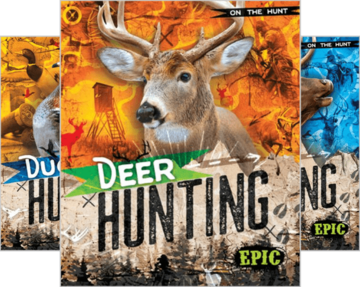
Accessible books about hunting for kids are rare and when a good series comes along, it’s time to buy! Epic’s On the Hunt series introduces six different animals that are typically hunted, discussing gear, safety, laws and preparation. Each book is visually appealing and well-organized and should be high on your library wish list.
Nonfiction text features are abundant in these books, starting with a clear table of contents and ending with a glossary, index and a page of print and web resources for further exploration. Spare text with bold words pairs nicely with the clean, crisp photos. Headings help with organization. Diagrams and maps are clearly labeled and sidebars impart interesting tidbits of knowledge to enrich the more basic text on the pages. Students will love the information and teachers will appreciate the nonfiction text features so clearly presented.
Books include hunting of the following animals: ducks, deer, elk, pheasant, turkey and wild hog. All these animals are hunted somewhere in North America, giving the series a wider appeal. The range of each animal is presented on maps and a favorite spot is highlighted. Hunters are portrayed as young and old, male and female. One hunter (Pheasant Hunting) is in a wheelchair, which is an encouraging and appropriate inclusion.
This highly engaging series is a definite purchase option, especially in areas where hunting is part of the culture. It is also a useful introduction to those that may not have any experience or prior knowledge, because of its very accessible text and highly visual presentation. Highly recommended.