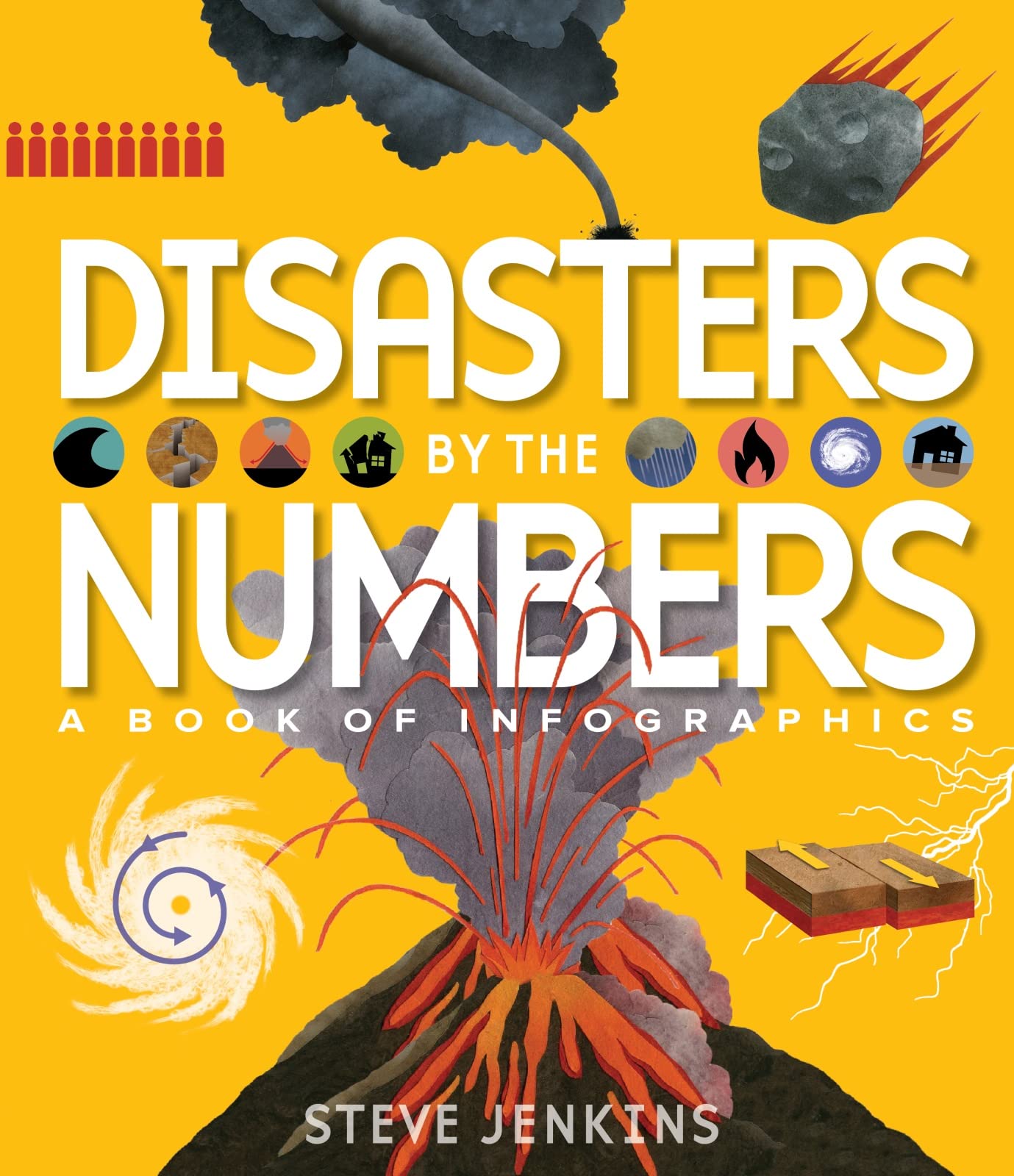
I highly recommend this book. I learned stuff I didn’t know. It takes something we’re all so very familiar with and yet most of us really don’t understand, sending a text to the other side of the planet, and explains it. And when I say it explains how it happens, I mean it starts with the microscopic hairs inside your ears that detect a disturbance in the air that your brain interprets as a ringtone that causes you to look at the incoming text you’re about to reply to. It almost draws parallels between the human parts that talk to each other to send messages from eyes to brain to fingers along your nervous system and the hardware parts on the global communications infrastructure to send the message along wires and fiberoptic cables. The whole thing is so complex and yet all happens in a matter of seconds a bazillion times a day, and we all take it for granted without really thinking about it. This book makes you think about it. Even as it explains things really quite clearly (despite great big vocabulary words), it makes the mind boggle at the same time. The illustrations really do a great job of communicating the process and supporting all those great big vocabulary words (like radiating electromagnetic photons). It’s a marvel!
Category Archives: Highly Recommend
Because Claudette by Tracey Baptiste, illustrated by Tonya Engel
On March 2, 1955 Claudette Colvin was arrested for not giving up her bus seat to a white person. She was 15 and this occurred almost a year before Rosa Parks famed refusal. Through the lawyer, Fred Gray, Claudette met and befriended Rosa Parks and started to attend meetings with the NAACP. These events led up to the Montgomery Bus Boycott. the book does not focus solely on Claudette but mentions others who were instrumental in the changing of the bus law. Told in a cause and effect style, the author shows how small events can lead to bigger events that lead to changes.
Tonya Engel’s paintings complement the text. There is an author’s note at the end that details how the idea for this book came to be and provides suggestions for further reading with books and websites.
When Winter Robeson Came, by Brenda Woods
During the summer of 1965, Eden gets to hang out with her cousin from Mississippi in Los Angeles where she lives. Winter is on a secret mission to find his father who went missing many years ago. With Eden’s help, they investigate his old neighborhood in the Watts area of LA for clues. In the midst of this, the folks in the Watts neighborhood and the police clash for 6 horrible days and much of Los Angeles goes into lockdown. This verse novel is a sweet story of cousins investigating their own family history while intense history is playing out around them. It’s especially interesting for today’s young readers living in new times of racial clashes with modern day police around the country. As the mystery of Winter’s father unravels, readers come to see that all is not what was assumed. As it is often the case, there is so much more to the story.

Right Where I Left You by: Julian Winters
Reviewer: OHS Student, Ffiona
Right Where I Left You is a fantastic book by Julian Winters (Who is a WONDERFUL LGBTQIA+ author.) It shows a great bond between an introverted gay boy, and his outgoing bisexual best friend. It emphasizes the vast difference between expectation versus reality in a friendship. And shows the difficulties of the next finding your path in life, and the people you want to share it with. Right Where I Left You is 5 stars and a 10/10 in my book.
Yours in Books
An absolutely charming delight. Written as a series of letters back and forth between an owl and a book-shop-owning squirrel, we see the form of the letters gradually change from formal business correspondence to casual notes as a succession of book recommendations build more than one friendship and shift our main character from a seriously introverted crotchety curmudgeon to a willingly involved member of his neighborhood community. The illustrations are sweet and inviting and full of personality. Highly recommended.
Pura’s Cuentos
This is an absolute must have for (I think) all libraries! It’s the story behind the name behind the award given out every year by the ALA. And not only that, but it’s also just a celebration of story. For years I’ve sought out winners of the Pura Belpre award to include in my collection, and I knew they were books that celebrate Latin American heritage and culture, but I didn’t know much about the person for whom the award is named. This is a beautifully illustrated book that shares Pura’s story, and confirms it is right and just that such an award should be given in her honor.
Child of the Flower-song People: Luz Jimenez, Daughter of the Nahua

Luz Jimenez was born in the late 1800’s in the village of Milpa Alpa, a short distance from Mexico City. She was part of the indigenous Nuahac people and learned the language, stories and customs of her ancestors. She suffered the same fate as many indigenous people of her era – placement in government run schools where she had to speak Spanish and wear unfamiliar clothing. Her father was killed during the Mexican Revolution in 1911 and her mother moved the family to Mexico City. It was here that Luz realized her dream of becoming a teacher. Her teaching role was not as a typical school teacher, but as a teacher of her ancestral culture and language to the world. She became a model for many of Mexico’s leading artists of the time, including Diego Rivera, who saw her classic Nuahac beauty as something to capture on canvas, in a photograph or as a sculpture. She became friends with these artists and others – scholars and anthropologists, who wanted to learn about her culture and language. She took them back to her village and taught them her ancestors’ stories, language and customs. This knowledge is part of the history of Mexico and Luz is often referred to as the “Soul of Mexico”.
This well-written, informative book tells the story of Luz’s life in an accessible way without being too text-heavy. Accompanying illustrations by Duncan Tonatiuh are reminiscent of indigenous Mexican artwork and add a rich tone to the story. An author’s note, artist’s note, glossary, bibliography and timeline of Luz’s life are important added features. I appreciate the photo of Luz modelling for a group of artists on the artist’s note page. The only pieces missing are some examples of the artists’ work with whom Luz worked. It did lead me to research her life and find those examples. So, perhaps readers will do the same.
Lost Things by Carey Sookocheff

This is a story of things lost and found, although sometimes by someone else. It begins with a girl walking her dog, who is grasping stick in his mouth. He notices a squirrel nearby and breaks free to chase it. The girl loses her dog and her hair ribbon. The dog loses his stick and the squirrel loses his acorn. The hair ribbon is found by a bird, who adds it to his nest. A child watching the bird drops his teddy bear. And, so the story continues, finally coming to an end when the girl finds her dog and the squirrel finds his acorn.
This is a circular story that comes to an end near the beginning. It is gently written and illustrated, with the lost things bearing a similar color. The story shows us that sometimes lost things can be found and treasured by others who might need them. The story moves through the community and the characters are hinted at in the pages preceding their active participation. There is so much to see and notice in a book with few words and spare illustrations. It’s a gentle, lovely story that will encourage much discussion.
A Walk in the Words

A young artist, who can express himself so eloquently through his drawings is, by his own definition, “the slowest reader in his class”. While other students were turning the pages of their books, he is still on the first sentence. He was intimidated by the words and worried that his classmates will find out that he can’t keep up with them. A page of text seems like wall that he can’t get over.
He decides to take reading one word at a time, breaking down bigger words into smaller pieces and letting the words that he knew lead him through the story. Slowly, he gains confidence and reading is no longer scary. He learns that he doesn’t have to be a fast reader. There were lots of amazing people that were slow readers, like Albert Einstein and Picasso.
He learns that his pictures and words can be a powerful combination. He can draw horses and the words can make them breathe and run. While reading is still a slow process, he understands that they can carry him along on adventures. They are to be enjoyed, not feared.
This story beautifully describes the author’s struggle with dyslexia and his journey through the winding path of learning to read. Illustrations (watercolor, pencil and ink) provide perfect imagery for the author’s story. Aggressive-looking books, twisted word trees and huge walls of text slowly change to accessible stone word paths and an image of the boy tearing down the text wall.
An author’s note details his own struggle with dyslexia, which was a painful experience in a time when those with dyslexia were just called “slow”. This highly recommended book should be shared with students that struggle to read and their classmates, who will gain a better understanding (and empathy) along the way.
The 1619 Project: Born on the Water
By Nikole Hannah-Jones and Renee’ Watson, Illustrated by nikkolas Smith
Immediately drawn to this book with the “1619 Project” in the title, I was delighted with the beautiful poems which make up the content of the book. Each poem is thoughtful, of content, vocabulary, rhythm and true to the story of the African American plight in the time of slavery. Vacillating between hope and joy and fear and loss, this book delivers many emotions and helps the ready to understand the feelings of the Africans during this dark chapter of United States history. The reader is taken on the journey from the contented villages of Africa, over the dangerous and deadly ocean, to the new world.
The story begins with a simple school assignment. Students are asked to trace their roots. The young girls asks her grandmother about their family story, but feels ashamed. The grandmother tells her the whole story, with poetry throughout the book, until the girl realizes she has so much to feel proud of.
The term “born on the water” refers to the people who were stolen from their homes, endured the hardship of the crossing of the ocean in the horrific ships, and landed on shore with a new life. Not the one they had been born to, but a new one they had been forced into.
Minus the illustrations, these poems heard by middle schoolers, would be a powerful read by a teacher or parent. The illustrations are bold acrylic, and the artists has a style which is easily recognized from other books. Although this style of art is not what I would have chosen for this poetry book, I honor the authenticity of the illustrator and recognize his talent and many successes.