
Moth & Butterfly

Moth & Butterfly, written by Dev Petty and illustrated by Ana Aranda is a cute friendship story. The two friends begin as caterpillars who have so much in common, they enjoy playing together, eating together, and dancing together. But, as in any lifecycle of a caterpillar, they go through their metamorphosis and when they emerge, they discover they are very different now! Out pops Butterfly and then out pops Moth! They have changed! Their wings look different, their colors are different, their antennae are different. They also notice that they have different behaviors – Moth darts, whereas Butterfly is graceful, Moth loves night and Butterfly loves the sunshine. They have grown up and their differences start to keep them apart. Despite these differences, Moth and Butterfly find they still do have a few activities (like dancing) in common.

I enjoyed this classic friendship tale where two best friends grow up and apart and have to find each other again. But, I think what I enjoyed most is that you also learn about some of the differences between moths and butterflies.

This book has great illustrations filled with movement and vibrant colors.

If you have a class studying butterflies in science this would be a great addition. It would also fit in with many SEL curricula when talking about overcoming differences and friendship.
Facing the Sun

Reviewed by Nicole Sande, counselor at my school:

This book was a bit dry until the end. The author focused on four teenage girls but the book had several characters. The perspectives kept changing which made it really difficult to follow. Once I finally grasped the four characters, I felt the book ended. There wasn’t much character development. The author also wrote a lot of the quotes in a dialect from the Bahamian culture and some slang was used making it difficult to understand what was being said. I had to reread several pages for a better understanding. I even found myself skipping paragraphs and pages that felt irrelevant just to get to the end. This story could be told in 200 instead of 400 pages. The story itself wasn’t bad. I just felt like you were following some normal teenage drama. It felt like four different stories being forced into one and trying to make a story interesting that really wasn’t. Readers will be drawn to the cover and the Bahamas setting but overall it is a coming-of-age book with many of life’s challenges that some students may connect with but is an additional purchase.

Separate No More, The Long Road to Brown v. Board of Education

Written by acclaimed author and Constitutional law scholar Lawrence Goldstone, Separate No More beings with the landmark Supreme Court’s decison of Plessy v. Ferguson and leads up through the Brown v. Board of Education of Topeka decision. Goldstone outlines how Plessy v. Ferguson decision in 1896 upheld the constitutionality of racial segregation under the “separate but equal” doctrine, and how the Brown v. Board of Education of Topeka unanimous Supreme Court ruled that racial segregation of children in public schools was unconstitutional. Goldstone explains how Brown v. Board of Education served as one of the cornerstones of the civil rights movement, and helped establish the precedent that “separate-but-equal” education and other services were not, in fact, equal at all.

Separate No More introduces the reader to icons of racial justice from Brooker T. Washington and W. E. B. Du Bois whose exacting work finally culminated in the Topeka case. In between, Goldstone introduces the reader to major events in the struggle including the Springfield, Illinois massacre of 1908, the founding of the National Association for the Advancement of Colored People (the NAACPA) in 1909, the Red Summer race riots in 1919, and the Student Revolt of 1951.

As with other non-fiction books by Goldstone in my library’s collection, including Unpunished Murder: Massacre at Colfax and the Quest for Justice, and Stolen Justice: The Struggle for African American Voting Rights, Separate No More includes substantial source notes, bibliography, photograph and illustration credits (there are many primary sources in this book), and index.

This book would make an excellent addition to a high school library’s non-fiction collection.

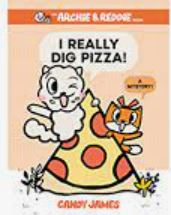
We Will Find Your Hat! : A Conundrum by Candy James

This Archie and Reddie beginning reader uses simple language, humor, and a graphic novel format to keep emergent readers engaged and interested.Two fox friends are looking for their favorite hats for Hat Day. Archie can’t find the hat he wants to wear. After a series of humorous events, Archie realizes his favorite hat, the one that looks exactly like his head, has been on his head all the time. The series is sure to be a hit with fans of Mo Willem’s Elephant and Piggie.

The Thing Lenny Loves Most About Baseball

Lenny loves baseball and he loves reading in his Big Book of Baseball Facts. He wants to play in the big leagues one day. In his very first game a ball is hit to him, but Lenny hides behind his glove. Lenny decides that he loves reading about baseball, but he is not good playing at it. His dad says that he just needs to practice. Lenny’s dad helps Lenny practice catching pop flies. Lenny learns that he does not have to be great all of the time and at everything.

Witch for Hire, by Ted Naifeh

This graphic novel features some dark & difficult subjects including bullying, cyberbullying, and verbal and physical abuse. Naifeh handles it well and I think it will be enjoyed by mature middle school or high school readers. The book seems to be the first in a new series, setting the main character up as a problem-solver of the magical variety for people in need. In this first book, she reigns over the losers table in the lunchroom at school and reluctantly gets involved with halting a cyberbully called “shy_shelbi” who is encouraging & blackmailing for chaos in the guise of helping. Underlying storylines feature families with abuse secrets which give the whole book an edgy feel. I appreciated that even though some problems are solved, the characters realize that there are always consequences and unsolved issues – even with some positive outcomes. Life is not easy. The graphics are colorful and facial expressions are very expressive. Light & dark help handle the mood and the seriousness of some scenes.

Witch For Hire

Chirp! Chipmunk Sings For a Friend

Chipmunk lives on a rock and sings her songs everyday. Sometimes her songs are happy, sometimes bittersweet, and sometimes very sad. Rock is a very good listener, but Chipmunk longs for a friend to sing with her. So Chipmunk sets off to find a friend. First she tries a pinecone, but Pinecone ends up getting along with rock. Then she tries a log which then leads her to finding other friends.

The illustrations complement the text, especially the illustrations about the songs. The message that it is okay to express emotions and also a message of perseverance is important.

I See You See by Richard Jackson

Maisie’s mom asks her to walk the dog – and Jonah, her younger brother in a wheelchair asks to go along too. While Maisie struggles with the dog and pushing the wheelchair, Jonah’s imagination brings the walk alive. From a tree of cats and bell machine, to a popsicle garden and a sky slide, Jonah shares his joy. As the walk progresses, Maisie begins to see the world through a more imaginative lens, changing a chore into something filled with fun and laughter.

I See You See is a celebration of imagination and the bond between siblings.

Kaleidoscope, by Brian Selznick

Like an ever-shifting scene in a kaleidoscope, the stories in this book have fragments in common – characters, themes, settings, objects. Each story starts with a kaleidoscopic image from a full drawing on the next page. Each image is related in some way to each story. Each story could be read separately. Taken together, they’re like a strand of unique beads on a very strange necklace. They go together, but it’s hard to find a common message. I enjoyed reading the stories. They were fantastical and strange and mysterious- each a little gem. I kept feeling like I was missing the bigger point of all of them put together however. The author’s note at the end explains that he had been working on a different project prior to the pandemic and then deconstructed it into these loosely connected stories during the quarantine. This makes sense, but in terms of handing this book to a middle schooler… I’m just not sure it’s going to make much sense. It might be an interesting book for a book group to discuss since the overall book still feels very mysterious & unexplained to me.

Kaleidoscope