We Give Thanks written by Cynthia Rylant and illustrated by Sergio Ruzzier is an exceptional book especially for early readers. The book states why we should give thanks anytime, anywhere and encourages kindness. The creative illustrations add great visuals on how to give thanks. The book rhymes and has a rhythm that flows nicely. The beautiful illustrations make you want to turn the page to see more. Early readers will love this book, as will older, more experienced readers..
Category Archives: Reviewer’s Library Type
The Chicken House By: Doreen Cronin
The Chicken House written by Doreen Cronin and illustrated by Stephen Gilpin is a sweet and amusing story for beginner readers. Sugar, Sweetie, Poppy and Moosh, an interesting chicken family, hang out in J.J. the dog’s doghouse and play. The chickens’ unique characters are fun to read about and show the value of family, and the cute illustrations make this story even more heartwarming. Early and intermediate readers will enjoy the new vocabulary. All readers will enjoy the one-of-a-kind characters and their corresponding illustrations.
Barb: The Last Berzerker. By: Dan & Jason
This graphic novel, Barb, The Last Berzerker, by Dan & Jason, is sure to be appreciated by early readers due to its bold colors and silly vocabulary. Barb and Porkchop must save their friends from the evil Witch Head before it’s too late. The readable layout lets the captivating art shine. Both a graphic novel and comedy, this will delight those looking fora casual read while still sneaking in a classic moral. The illustrations are complicated, with fairly intricate line work, yet still simple enough to focus on. Primary readers will gawk at the art and stay tuned until the very last page, and even adults will enjoy reading this to their children. Although this is geared towards early readers, everyone who appreciates a good quest will love this book. Containing a fierce and unique storyline, this graphic novel is a must-read for all early readers.
Snakes Smell With Their Tongues! And other amazing facts. By: Thea Feldman
Snakes Smell With Their Tongues! and Other Amazing Facts by Thea Feldman is sure to appeal to early intermediate readers. Lee Cosgrove complements the documentary images and facts with eye catching comic book based illustrations, backgrounds and text. Snakes Smell With Their Tongues! and Other Amazing Facts, provides an appealing informative, and interesting narrative that describes numerous facts and characteristics relating to snakes. The simple and easy to read text complemented by the vivid images and the bubbly art style of this book provides an engaging and striking read for younger readers. More intermediate readers will enjoy the interesting facts that this book includes, while younger readers will like all the images, art, and easy to read text. This non-fiction book is one that I would suggest to younger readers with an interest in biology, animals, and snakes and reptiles; it’s a nice and easy book to pick up and enjoy.
Together We Caught Fire
What are the chances that your father would marry the mother of your secret crush and he would move into your house? But this is not what the cover art falsely sells it to be. It is so much better. Eva Gibson gives us Elaine Jamison — or Lane. Lane is complex. Lane has had a rough go. She found her mother in their bathroom dead from a brutal suicide. This brings nightmares on a regular basis. Then her father does remarry. And her new step-brother, Greyson, whom she secretly infatuates over, is dating her good friend Sadie. Lane doesn’t let her secret be known and continues to hang out with the couple which leads her to meet Connor, Sadie’s older brother. Sparks will fly between Connor and Lane, leaving her overwhelmed with emotions — but not just about the boys. Issues of homelessness, religious fundamentalism, and drug abuse will all rear their heads in addition to the grief around Lane’s mother’s death. Lane is raw and more mature than the average teen. The Connor vs. Greyson battle will come to the forefront eventually but it is not the book’s focus. Situations explode and then take time to resolve, like real life. This reader was happily surprised that the book was better than the cover and title and will recommend it to high school students.
Sabrina Sue Loves the Snow
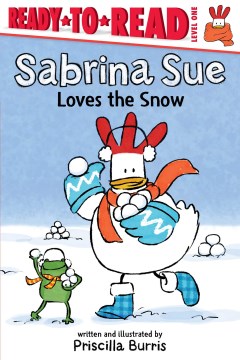
Sabrina Sue is an adventurous hen, who decides one day to see snow. She is too hot on the farm and wonders what snow is like (soft? crunchy?). Her fellow farm animals think it’s a bad idea and tell her that she is silly. She acknowledges the silly part, packs her bag and is on her way via truck, train and hiking. She and a frog that tags along finally find snow and have a glorious time. But, Sabrina Sue thinks about her friends and returns to the farm, bringing a snow globe and her froggy friend with her. She’s happy to be home, but she knows she’ll visit the snow again one day.
Bright, bold illustrations add to this fun story about this daring hen. Word bubbles add to the cartoon-like feel of the book. Text is simple and the font is large, which is perfect for new readers. The book is billed as a “Level One Ready to Read” book and it fills the niche nicely. This is one of a growing set of Sabrina Sue stories. Buy it for your early readers, because who doesn’t love a good chicken story?
A Walk in the Words
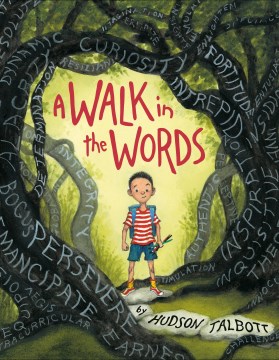
A young artist, who can express himself so eloquently through his drawings is, by his own definition, “the slowest reader in his class”. While other students were turning the pages of their books, he is still on the first sentence. He was intimidated by the words and worried that his classmates will find out that he can’t keep up with them. A page of text seems like wall that he can’t get over.
He decides to take reading one word at a time, breaking down bigger words into smaller pieces and letting the words that he knew lead him through the story. Slowly, he gains confidence and reading is no longer scary. He learns that he doesn’t have to be a fast reader. There were lots of amazing people that were slow readers, like Albert Einstein and Picasso.
He learns that his pictures and words can be a powerful combination. He can draw horses and the words can make them breathe and run. While reading is still a slow process, he understands that they can carry him along on adventures. They are to be enjoyed, not feared.
This story beautifully describes the author’s struggle with dyslexia and his journey through the winding path of learning to read. Illustrations (watercolor, pencil and ink) provide perfect imagery for the author’s story. Aggressive-looking books, twisted word trees and huge walls of text slowly change to accessible stone word paths and an image of the boy tearing down the text wall.
An author’s note details his own struggle with dyslexia, which was a painful experience in a time when those with dyslexia were just called “slow”. This highly recommended book should be shared with students that struggle to read and their classmates, who will gain a better understanding (and empathy) along the way.
Knight of the Cape
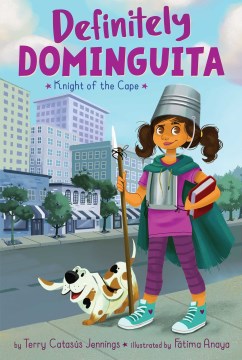
Dominguita loves to read, especially the books that remind her of the books her Abuela (grandmother) brought from Cuba and shared with her. But, her grandmother now lives in Florida with her sister, because she has a hard time remembering things. And, the class bully makes reading in peace difficult. So, Dominguita decides to become a knight (like the hero, Don Quijote, from her grandmother’s book). She figures that her knighthood will do two things: 1). show the class bully that girls can be knights and 2). help her feel closer to her brother and grandmother, because her brother agrees to write the story of her life as knight to send to Abuela.
Being a knight is hard work and Dominguita has some mishaps along the way. But, she has the encouragement and help of the adults around her. She also gains two new friends along the way. And, her trusty steed, aka dog, is a loyal sidekick in her adventures.
The characters are diverse and the story is accessible for younger readers, who will cheer for Dominguita (or Dom Capote, the fearless knight). Black and white illustrations help move the story along and an author’s note at the end explains the tale of Don Quijote and its connection to our heroine, Dominguita.
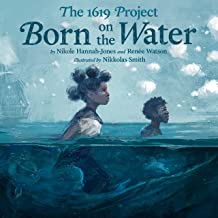
The 1619 Project: Born on the Water
By Nikole Hannah-Jones and Renee’ Watson, Illustrated by nikkolas Smith
Immediately drawn to this book with the “1619 Project” in the title, I was delighted with the beautiful poems which make up the content of the book. Each poem is thoughtful, of content, vocabulary, rhythm and true to the story of the African American plight in the time of slavery. Vacillating between hope and joy and fear and loss, this book delivers many emotions and helps the ready to understand the feelings of the Africans during this dark chapter of United States history. The reader is taken on the journey from the contented villages of Africa, over the dangerous and deadly ocean, to the new world.
The story begins with a simple school assignment. Students are asked to trace their roots. The young girls asks her grandmother about their family story, but feels ashamed. The grandmother tells her the whole story, with poetry throughout the book, until the girl realizes she has so much to feel proud of.
The term “born on the water” refers to the people who were stolen from their homes, endured the hardship of the crossing of the ocean in the horrific ships, and landed on shore with a new life. Not the one they had been born to, but a new one they had been forced into.
Minus the illustrations, these poems heard by middle schoolers, would be a powerful read by a teacher or parent. The illustrations are bold acrylic, and the artists has a style which is easily recognized from other books. Although this style of art is not what I would have chosen for this poetry book, I honor the authenticity of the illustrator and recognize his talent and many successes.
Good Night Ganesha
Written by Nadia Salomon, Illustrated by Poonam Mistry
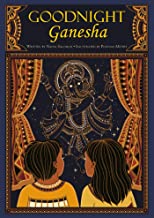
This beautifully illustrated book is a feast for the eyes! Poonam Mistry has a collection of illustrated books that are all stunning. Her style of rich detail, shape, color, form, and patterning is worthy of the reader’s time. The storyline plot involves a brother and sister going to visit their nana (grandmother) in India, where simple bedtime routines feel like magic. The story is told with some prose and poetry, apparently modeled after Good Night Moon, by Margaret Wise Brown.
Goodnight, humming.
Goodnight, chai.
Goodnight, halo hanging high
The reader will learn some new vocabulary with the Glossary in the back of the book, which can be used to decipher the Hindi words sprinkled throughout the book. This is a great chance to practice glossary skills in an authentic setting.
A recommended book to expand your Eastern Indian library collection, as well as a uniquely illustrated book.