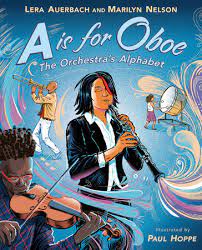
A is for Oboe : The Orchestra’s Alphabet by Lera Auerbach and Marilyn Nelson

“A is for Oboe: The Orchestra’s Alphabet” is a poetic journey through music and instruments. Each letter is on a page or two page spread with at least one musical word. Many are recognizable, such as drum and clarinet. Others are less obvious, like meter and motif. We are introduced to the notion that musical instruments can be a ‘he’ or ‘she’ or even somewhat gender-bending (glockenspiel) because to musicians the instruments are ‘beings’ with character and mood.

Illustrations are vibrant and full of detail, with a great diversity in orchestra members. Text flows and is rich in tone and meaning. This book, while not necessarily a quick read for a student, will be a wonderful read aloud for music teachers as an introduction to the orchestra and all its members/instruments. Recommended
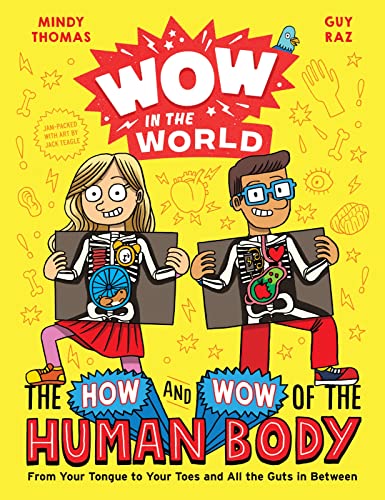
Wow in the World. The How and Wow of the Human Body: From Your Tongue to Your Toes and All the Guts in Between

You can find just about any answer you need to your questions in this fast-paced nonfiction book about the human body. It begins with the head and moves its way through the systems, stopping here and there to deliver some facts that will add a “Wow” factor (actually, more of a “Gross” factor) to the information. It is illustrated with cartoon-like characters and body parts. The characters are diverse, with differing skin tones and abilities.

A glossary, bibliography and source notes are available. Something really cool to note is a page of QR codes that lead to relevant episodes of the authors’ podcasts of Wow in the World on NPR.

There is a lot of information to take in through these 188 pages. But, kids will likely be engrossed in the gross facts added to the information presented. A rather vivid description (and illustrations) of various types of poop on the Bristol Stool Scale is one example of the extra stuff that kids will love to read about and share with unsuspecting adults. Now, I know seven types of feces and I might just share that information, too!

This book is part of a series called “Wow in the World”, in which there are currently two books and a third due out in April 2022.

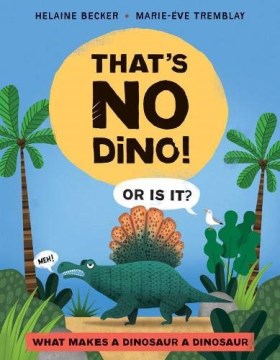
That’s No Dino! Or Is It? What Makes a Dinosaur a Dinosaur by Helaine Becker

What are the characteristics of dinosaur? That’s No Dino! Or Is It? takes the reader through several ancient creatures and compares their bodies to what scientists believe are true dinosaurs. An Anomalocaris may have lived 508 million years ago, but it didn’t have a backbone. Therefore, it wasn’t a dino. A Pleisiosaurus was old enough and had a backbone. But, it lived in the water and, therefore, was not a dino! The last animal to be described is a velociraptor and it has all the characteristics of a dinosaur and there are ten different characteristics! The author concludes with a list of those characteristics, a glossary, an index and a short list of extra resources.

Illustrations are cartoon-like and the writing is accessible for young readers. This book is a nice introduction to dinosaurs and budding paleontologists will take note of what makes a dino a dino after reading this book.

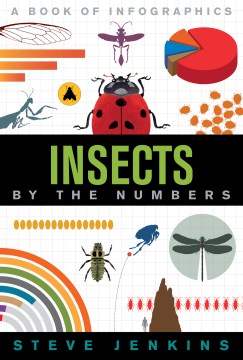
Insects by the Numbers: A book of infographics by Steve Jenkins

Steve Jenkins has done it again. This is a science book that every budding entomologist will love and so will those readers that aren’t super fans. Aspects of the insect world are brilliantly and succinctly described using simple infographics, illustrations and spare text. This book is chock-full of facts presented in an accessible way. Includes glossary, bibliography and table of contents. Buy this book right away. Highly Recommended.

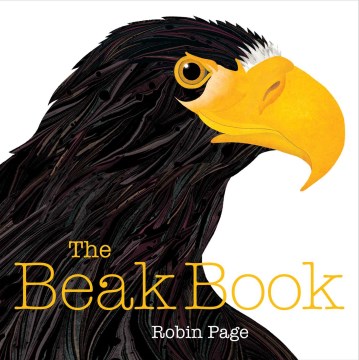
The Beak Book by Robin Page

This book is takes a close look at twenty one different birds’ beaks, their shapes and uses. Some beaks are for filtering and others are for crushing or tossing. Each beak is described and pictured in colorful detail. Budding ornithologists will devour the information in this book and will never look at birds (or beaks) the same way again.

The last few pages include size comparisons with the average adult human, where the birds live and what they eat. There is also a short bibliography and further reading noted on the last page. Highly recommended.

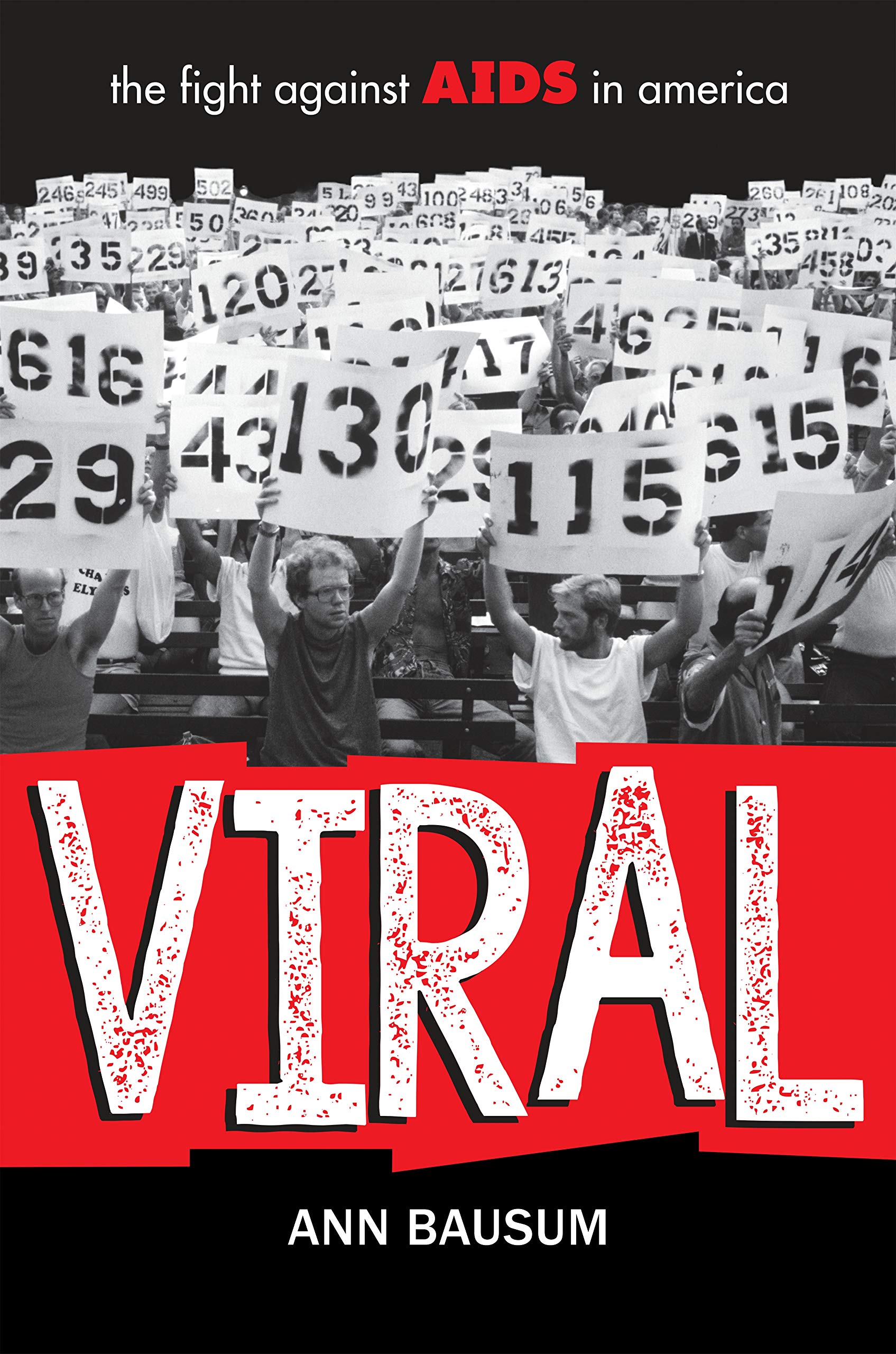
Viral: The Fight Against AIDS in America by Ann Bausum

Review by OHS Library Secretary, Mikel
Viral: The Fight Against AIDS in America by Ann Bausum chronicles the appearance of, spread of, and struggle against HIV/AIDS. This history of the AIDS epidemic is rich in the personal anecdotes of the victims and researchers, never releasing the reader from the humanity of the crisis. This technique presents the science and history in memorial and engaging fashion that will buoy most readers through the dry statistics and tragic circumstances. Bausam’s narrative carries us through the earliest occurrences of the disease, its mysterious nature, the frustrating delays in research and funding because it is initially stigmatized as a gay disease, the activism for facing the crisis, and the stepwise progress of the scientific community in dealing with this complex disease slyly attacking the immune system itself, thus appearing with the diverse symptoms of an array of opportunistic diseases obscuring the common underlying cause: the AIDS virus. The development of medication to arrest HIV is also briefly described. This readable account concentrates on what the author calls, “the bleakest years” (1981-1996) and includes a handy timeline. This book is recommended for teenagers and beyond for its concise, readable history of the AIDS crisis with the emphasis on, and in empathy with the human side of the story.

Amazon.com: VIRAL: The Fight Against AIDS in America (9780425287200): Bausum,  Ann: Books

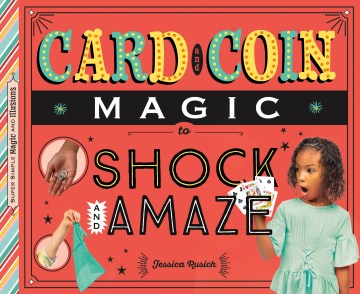
Card and Coin Magic to Shock and Amaze

This book, part of the Super simple Magic and Illusions series, is a solid introduction to sleight of hand with cards and coins. It begins with a general introduction to this type of magic trick, discusses props that are needed and then goes into step by step directions for several tricks. Each trick has illustrations to help young magicians perfect their craft. Young magicians pictured are fairly diverse and the materials are simple to acquire. There are added tips to become more polished in your magic. Examples are practice (no surprise) and using distractions. This book will not be on the shelf for long. It’s got some great, simple tricks that are accessible to most young readers. Recommended.

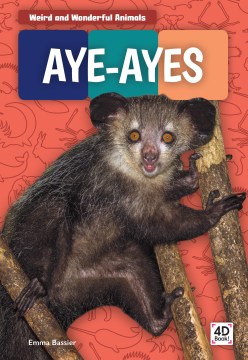
Ayes-Ayes

A book about Aye-Ayes is difficult to find, yet here is one that is full of great pictures and information. Readers learn about the characteristics of this animal, as well as its habitat, food sources and population levels. Labeled photos, bolded words, text boxes and short, informative paragraphs make this nonfiction book an engaging read. Other nonfiction features include table of contents, index, glossary and an online resource list. The “bells and whistles” of this book are the QR codes that lead the reader to linked videos and activities online. That is some great extra content!

This books is part of the Weird and Wonderful Animals series. Adding this to your collection will add some dimension to the typical shelves of big cats, elephants whales and so forth. How many librarians can point a student to the Aye-Aye book? Recommended.

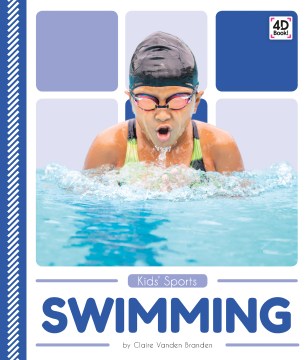
Swimming

This nonfiction book gives a good overview of swimming, including four basic strokes. equipment and safety. labeled photos accompany the simple text, with bolded words that might be unfamiliar. Those words are then defined in the glossary at the end of the book. Typical nonfiction features (table of contents, index, resource list, text boxes, labels) are present. An additional feature, which makes this book stand out over others is the number of QR codes, which link to extra resources. Once accessed, there are activity pages to print, videos and many other extras that take this book a step above the rest. While it is a fine introduction to the sport of swimming for young readers, the extra features will engage students and the adults around them. Highly recommended.

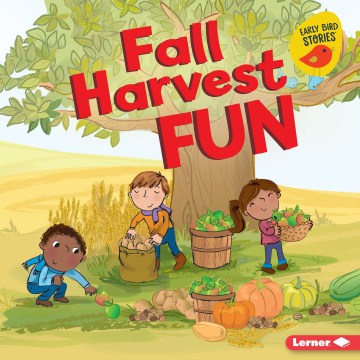
Fall Harvest Fun

After a quick tour through the work of Spring (planting) and Summer (growing, weeding, bug eradication), this book moves into harvesting and all the fun around it. Different types of harvests are described. The book moves into harvest festivals from different cultures and then ends with a glossary, index and critical thinking questions.

Pictures are bright and the characters are diverse. This is a great book to introduce the younger set to this aspect of Autumn. It is part of a six book set that will give a fuller understanding of all aspects of the season. Highly recommended.