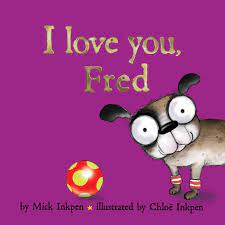
Fred has learned so much in obedience class, things like “sit”, “stay” and “fetch”. But, there is one word that he can’t figure out…”Fred”. What does this mean? How can he do it if he doesn’t understand it? Perhaps the dog in the mirror or in the water knows? Oh, no! He falls in! Luckily, his person saves him and whispers the word “Fred” again and again. A light bulb goes on inside Fred’s head. It’s his name! And, boy, is he excited!
Told in short, accessible sentences, this story is told from Fred’s point of view. He is a pug-like dog, drawn with some pretty spiffy sweatbands on his legs. Expressive illustrations add to the story, which will resonate with young dog owners. A solid purchase, given the popularity of silly dog picture books. Recommended.
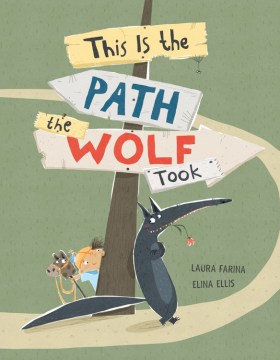
Gabe is reading stories to his little sister and they begin somewhat familiarly. Red Riding Hood, The Three Pigs and other fairy tales flow from his book. But, then the stories always take a turn – to Sir Gabriel saving the day! While this is a totally satisfying way to end a story in Gabe’s mind, his sister has other ideas. She like the scary wolf and the ‘bad stuff’ that happens. But, Gabe doesn’t feel the same way.
Unfortunately, Gabe’s versions are a little boring and he realizes that there has to be some excitement and adventure in order to make the story work. Of course, everyone still lives “happily ever after”.
Fans of fractured fairy tales will enjoy this mix of familiar stories and young readers will delight in naming each as Gabe and his sister waltz through each tale. Cartoon like digital illustrations enhance the fun and Sir Gabriel, even though he is nervous, will still save the day! Additional purchase for those that want to refresh their fractured fairy tales.
This darling beginning reader chapter, picture, graphic novel book was written by Sarah Dillard. She masterfully blends a picture book with beginning reading book, and a graphic novel which will appeal to all readers and ability levels. The pictures are charming and will be appealing to younger readers who need the visual cueing and enjoy the illustrations of “Everybody” books. The organization of a beginning reader chapter book with features such as chapters, should appeal to the reader who wish to identify with the format of older students. But, just as appealing is the graphic novel fusion, where reluctant readers usually choose to reside. This book has it all, almost creating a new genre’ which I suspect will appeal to a wide range of readers.
The story is light hearted adventure featuring our main character, Warren, who is a young chicken hoping to learn to fly so he can go to the moon. Supporting characters include the coach, who helps Warren practice flying utilizing activities such as yoga. Once he learns and acquires a “side kick” who was an egg and then a chick. Warren becomes both a role model to the young chick and also a hero as he realizes that rat and fox have nefarious plans for the chicken barn. Very cute book in a boutique series collection! https://www.simonandschuster.com/books/Extraordinary-Warrens-World/Sarah-Dillard/PIX/9781534463462
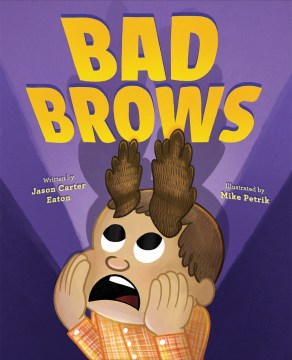
Children’s books can be silly, sad, serious or goofy. But, it is not often that you can call a picture book “absolutely weird”! This story is just that – weird! Bernard wakes up one morning and his eyebrows have taken on a life of their own. He tries to smooth them down, but to no avail. They bunch up, grow to crazy lengths, bush out, tie in knots and all sorts of other strange activity ensues. Bernard has no control over his brows and those around him are offended, angered and stumped by their unruliness (and place a bit of the blame on Bernard). Fortunately, things calm down for Bernard when his real eyebrows return. Apparently, they were on vacation. Hmmm…where did the substitute brow go? The answer is on the last page on his baby sister’s forehead. Oh, no!
Cartoon-like illustrations match the weirdness of the text. Characters are diverse, which is one normal part of this book. Hand this to your readers who like some of the stranger cartoons on television, like Gravity Falls or Steven Universe. They’ll understand this book.
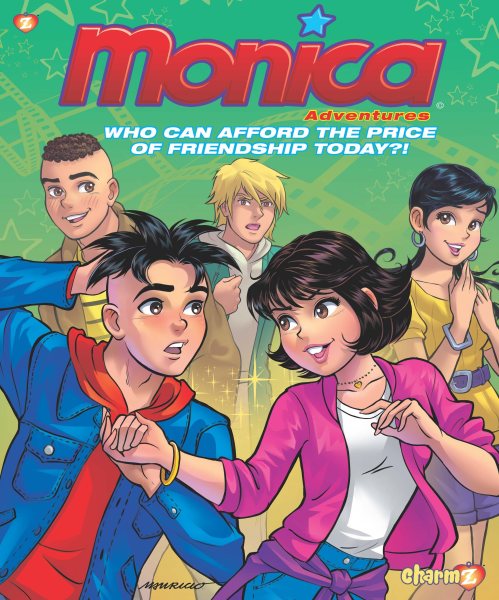
This is the first graphic novel in a series about the adventures of teenage girl Monica and her friend group, “Monica’s Gang.” It’s actually based on a widely-loved comic strip from Brazil that started in the 1960s. While the insanely popular comics were about the adventures of a group of kids, the graphic novel follows the same group as teens as they try to navigate their changing relationships and new challenges while still maintaining their strong friendships with each other.
It’s a fun story very reminiscent of Archie comics, and it was neat learning about the comic’s history at the end and noticing sprinklings of the classic comic referenced in the graphic novel. I found I was able to follow along with the story without having any background in the comics previously. The illustrations were fun and the characters were engaging and animated.
I did find issue with a couple elements in the story that I feel detracted from the book overall. This is intended for kids aged 8-12, but it focused pretty heavily on Monica and her friend J-Five’s growing affection for each other. I wished it was more about their friend group’s random adventures and less about romance. Additionally, Monica’s friend Maggy is really focused on the caloric content of foods. In her character description at the start, the book says she’s “…virtually obsessed with proper nutrition, sports, and exercise…” but instead of showing an interest in nutrition, she just seemed obsessed with how many calories were in what she was eating. There’s also a couple in one scene (page 56) where the girl explains to her date that girls have to care more about calories and fat because “If we were to stop and think like you boys…we wouldn’t have these bodies and we’d have big ol’ bellies!” and then an image is depicted showing a guy with a little bit of a stomach next to a thin girl. She proceeds to tell her date that he should get back to working out more. I know it’s a comic, but these “jokes” fell flat on me and I don’t think they are what we should be encouraging for little kids. I may have felt better if Maggy was shown that eating healthily is about balance (It could have been a good teaching moment.), but instead the other characters just kinda rolled their eyes and got her low-calorie stuff, or they just laughed about it. Pages 12-14 further show strange food comments (“I need to maintain my silhouette, girl!”) and show the girls, all thin with large breasts, in bikinis on the beach.
Overall, it was a cute story and it’s always fun to see beloved comics get reimagined and reintroduced to new audiences. However, it just doesn’t sit well in a 2020 library, and I wish they had updated their perceptions on body image with their updated look and format.
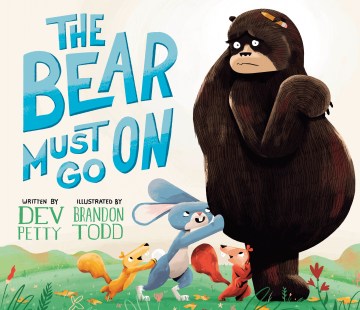
Bear and his friends (Squirrel, Other Squirrel and Rabbit) work together to prepare a really big show for their forest friends. This includes a sparkly curtain, tiny hats for birds and shiny tickets. Bear keeps meticulous notes as the self-appointed “note taker”, because he does not want to perform (he’s nervous). Frenzied preparations ensue and bear takes lots of notes. The big night arrives and all the forest creatures are waiting in the audience. There’s one problem, though. They forgot to write a show! Oh, no!!!
Luckily, Bear comes through and mentions that he has a song that he created. They beg him to perform and he finally agrees. The forest creatures love it! The show is a success! Thanks goodness for Bear.
The story moves along at a quick pace, helped along by the illustrations, some in comic panel-like sequences. Colors are bright and energetic and Bear’s notes are front and center a few times, which help with the busyness of the story. Bear’s nervousness is acknowledged and his bravery in going up to the stage to sing is noted. Maybe, this story will encourage some human friends to work together and put on a show! Recommended.
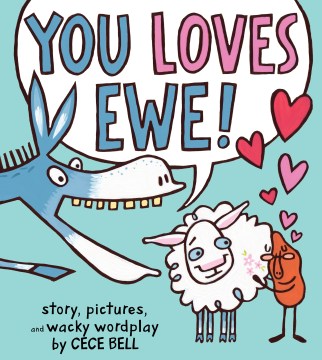
Dim-witted Donkey has so much difficulty with homonyms! And, there are plenty in this book, which is a follow-up to I Yam a Donkey! by Cece Bell.
Donkey comes up to two characters and greets them as fellow donkeys. Yam corrects him and introduces new friend, Ewe, to Donkey, who replies “That is ME? I yam so cute and fluffy!” And, the comical repartee ensues. Yam tries to be helpful. But, he tends to make things more difficult by showing Donkey signs and examples of Doe/Dough, Moose/Mousse and Hare/Hair. The story ends with Ewe professing her love for Ram over Yam (“Eye Dew”) and a tearful Yam being consoled by his buddy, Donkey. Oh, My!
Bright illustrations organized in blocky comic book style accompany text in word bubbles. Young readers may not understand all the comical missteps on their own. But, this is a great introduction to homonyms and can be useful as a teaching tool as well.
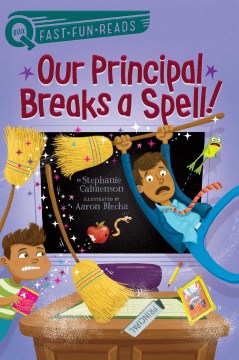
Mr. Bundy , principal of P.S. 88, receives an interesting letter and magic powder sample from a mysterious person named Olivia Martin. He is contemplating inviting her to put on an assembly when Roger, a student, comes in to assist Mr. Bundy. Students rotate through daily through Mr. Bundy’s office as helpers and Roger is a great kid. Mr. Bundy gets called out of his office and leaves responsible Roger alone to fold newsletters.
Well, even great kids can get into some mischief and Roger does just that when he sees the magic powder and has the idea to use it to turn the broom into a self-powered sweeper. The broom goes wild and ends up splitting into several brooms along the way as Roger and a few classmates try vainly to stop the craziness. Mr. Bundy steps out to the hall and sees the mayhem, which is now entering the classrooms, runs to his office and calls Olivia Martin for help. She gives him the spell to make everything right and he does so. But, he has a surprise for the students of P.S. 88. Assembly day comes and so does Olivia Martin, swooping in on a glowing broom and sprinkling magic powder around the room. Flying brooms appear and the teachers and students hop aboard for one of the best assemblies ever!
This short chapter book is a nice beginning book for those students that want to try something different than a picture book. Pages explaining the cast of characters and a word list are helpful for young readers. Black and white illustrations are simple and help move the story along. It’s a fun romp of a read for kids and refreshing to see that even the good kids can get into a little mischief sometimes!
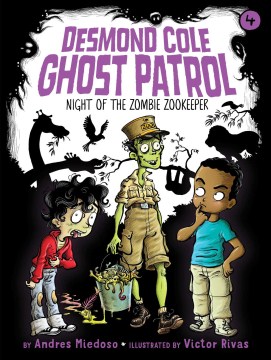
Desmond and his friend, Andres, have great plans for their class field trip to the zoo. Desmond has mapped out the best places to go and when they should be there. Their plans are derailed, though, when they discover a zookeeper that is a zombie. How do they know that he’s a zombie? His greenish skin is a big clue. But, as they follow him (and not their planned route), they see him in the seal tank cleaning the windows without an air tank! Then, he goes into the lion enclosure and feeds the lions by hand. There’s more evidence, but it’s clear already that they have a zombie on their hands. And, why do they care? Desmond and Andres are the Ghost Patrol and they need answers.
They locate a more normal looking zookeeper and tell her about her zombie co-worker. She seems unusually unconcerned about it and sends them away to the picnic area with their class. But, the Ghost Patrol is undeterred. They have a few more crazy encounters with the zombie. He saves Andres from a nasty peacock and his friends, the buffalo and then accidentally tosses slimy animal food all over Andres before saving him from the hungry animals that want to lick all their food off him. Finally, Peggy (the normal zookeeper they spoke with earlier) explains that she knows that “Zoombie” the zookeeper is a zombie. Apparently, zombies make the best zookeepers, because they can clean underwater without air and aren’t grossed out by the nasty food or animal waste they have to clean up. And, the animals love them!
So, Desmond and Andres solve the mystery of the zombie zookeeper and make a new friend in the process. Now, whenever they go to the zoo, they look up Zoombie and he makes sure they have a great time with the animals.
This fun, slightly creepy book will be a hit with the younger crowd. Black and white illustrations add to the mood and the text is accessible. The characters are diverse and likable and the first person narrative (Andre) makes the reader feel as if he is a pal wandering around and chasing zombies with the Ghost Patrol. Recommended.
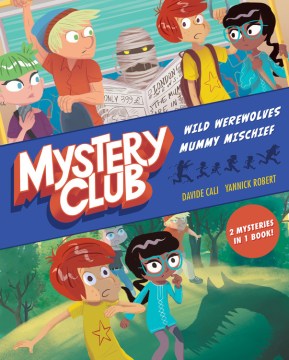
This graphic novel has two stories set in London. Four kids (Tyler, Zoey, Kyle and Ashley) are part of the Mystery Club and are dedicated to solving mysteries involving monsters. In Wild Werewolves, the group solves the sudden appearance of numerous werewolves that roam the city. Mummy Mischief involves a lovelorn mummy roaming the subways. Both stories have an enemy named Harnak that is thwarted by the kids each time.
The stories are light and flow smoothly. The colors are bright and and the illustrations are not overdone. This is a fun, “safe” graphic novel for younger readers and won’t shock anyone. The reading level is set at a 2.8 and interest level at 3-6. But, younger students will certainly understand and enjoy it and your hi-lo readers will appreciate it.