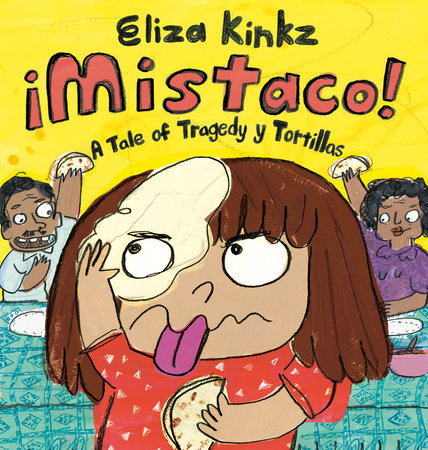
Izzy is having a terrible day. She’s the self-proclaimed “President of Mistakes,” and though we don’t know right away what she’s done, it’s clear she believes it’s a big one. As she visits family and helps make tortillas, her frustration only grows as nothing seems to go right. Eventually, the truth of her mistake spills out, leading to a sweet moment of connection as she and her lito make “mistacos” together. Soon, the whole family joins in, and Izzy begins to feel lighter.
This is a wonderful SEL story. Many kids will relate to Izzy’s frustration and the sense that everything is going wrong. Kids will find her big confession hilarious, and Kinkz’s bright, expressive illustrations add charm and humor to every page. At its heart, this story is a reminder that talking about our feelings is often the first step toward feeling better.
Kinkz also weaves Spanglish naturally throughout the text, creating a voice that will feel authentic and familiar to many readers. At the end, she makes a heartfelt plea for Spanglish to be accepted and celebrated, especially when spoken by children who are navigating two languages and cultures. This book would be a great addition to any home or school library.
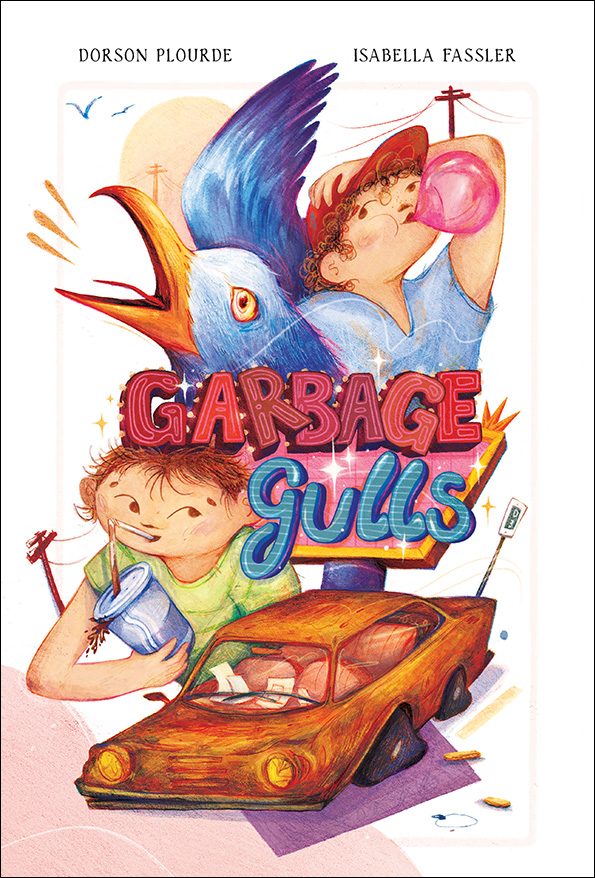
Written by Dorson Plourde and Illustrated by Isabella Fassler
Two brothers hatch a plan on a hot summer day that involves fries, ketchup, and a whole lot of waiting. The younger brother tries to fill the silence with questions, restless in the stillness, while the older brother insists they must stay quiet if they want the garbage gulls to arrive. Eventually, the gulls do come, whisking the boys away from the sweltering concrete of the parking lot.
Plourde’s poetic style makes this a delightful read-aloud, and kids will relate to both the sticky, endless feeling of a hot summer day and the longing to escape it. Fassler’s illustrations perfectly match the mood, encouraging readers to slow down and soak in that atmosphere of waiting. This is a perfect summer read and is ideal for sharing aloud in the classroom, either before the break begins or as kids reflect on it after returning to school.
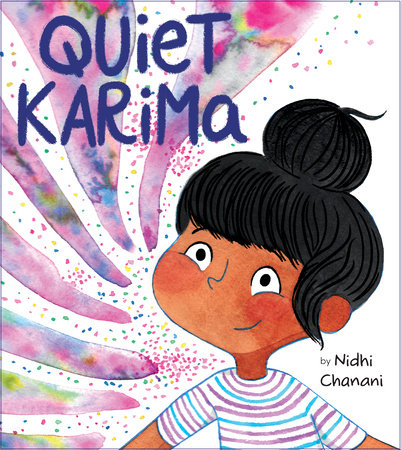
Karima’s world is alive through sounds, not through words. She delights in the everyday music around her: the scurrying of squirrel feet, the beep of bus cards being scanned, the symphony of sounds in the park. She doesn’t speak aloud in the text, and so, to others, she is “Quiet Karima.” There is much more to her than that, though. “Quiet Karima is not all that I am,” she thinks after expressing herself through music.
This story could connect with so many of the quiet kids constantly being prodded to speak more or being called shy in most every interaction. It may also speak to nonverbal kids or help other children understand that complexity can live in quiet too. It celebrates the richness of spirit that can hide in the most seemingly introverted kids.
Written by Elizabeth Dennis and illustrated by Clarice Elliott
How do kids around the world go to school? What do they do when they get there? These questions and more are answered in this Ready-to-Read (level 2) book. Three short chapters the daily lives of school children worldwide. Chapter one shares kids walking, riding bikes, gondolas, boats, trains and buses and even a snow machine to school. Chapter two talks about what school looks like, i.e. where it’s held and who is there. Chapter three is about lunch, recess, homework and school day length. In the end, it’s noted that whatever school looks like around the world, it’s still kids learning just like the reader. A map and added activity (create your own school) are nice extras.
Three simple chapters have longer sentences and color illustrations. High interest vocabulary and unfamiliar words are bolded with pronunciation in parentheses. Characters are diverse and the schools span the world, giving a nice global perspective that is not Eurocentric. This interesting book will be a great addition to your library and a nice opening book for the new school year. Highly recommended.
Written by Ellen Potter and illustrated by Sara Cristofori
Cordelia and Isaac receive a message via carrier pigeon from their friend, Fenton (a rat), asking for their help in Central Park Zoo. A mysterious creature is scaring the animals. This time, the sea lions saw the scary creature with glowing white eyes and the with pointy ears and a bushy tail. Cordelia offers to catch it. They meet Viola, the Central Park Zoo groundskeeper , and tell her all about it. She solves part of the mystery by telling them that the sea lions must have seen a coyote, the same one that has been spotted all around Central Park. She also shares that it is lonely, because it doesn’t have a pack. Cordelia and Isaac vow to help. They want to question other animals and decide to enlist Fenton’s help asking the dogs in Central Park if they know anything. After all, Fenton know s how to speak dog language. Princess Cha-Cha leads them to the coyote’s den after Fenton helps her dodge her owner by being chased by other dogs. They locate the coyote, named Ghost, and decide that the best way to help him find his pack is to take him to Viola. How to do that? Dress him up in Princess Cha-Cha’s spaghetti and meatball outfit and join a parade with dogs and baseball players. All goes well until the dogs realize that Ghost is a coyote and things get a dicey. Cordelia asks the dogs (through Fenton) to help Ghost find his pack – first, by protecting him from an approaching dog catcher. The dogs rally round Ghost and chase the dog catcher away and the parade resumes. Cordelia, Isaac, Fenton and Ghost finally make their way to Viola, who promises to help Ghost and plans to take him to a wildlife rehabilitation center where he can get the help he needs.
Cordelia, Isaac and Fenton end the day in the tree house in Central Park for a sleepover. Shakespeare, the squirrel, tucks them in and Cordelia thinks about her next adventures, knowing that wherever they take her, she’ll always come home to Central Park and the Squirrel that raised her.
This sweet story is the third in a series, Squirlish, about an intriguing young girl that lives in Central Park, knows squirrel language and helps her animal friends whenever they ask. This is a great book for younger readers that are moving into chapter books that are a little longer. Black and white illustrations are scattered throughout the story and chapters are short. Kids will love that Cordelia is not only a friend to animals, she can also speak to some of them! How cool is that? Add this to your library. It won’t stay on the shelves very long. Highly recommended.
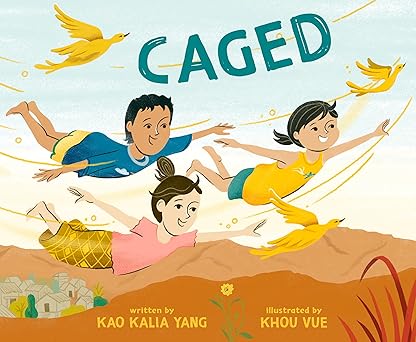
Caged is a very poignant picture book based on the author’s experiences as a child in a Hmong refugee camp. It tells how being watched over by guards, eating meager meals, and waiting for approval to leave were normalized in the lives of children. Yet despite all of this, the children’s imagination, youthful joy, and loving connection to family make the story one of hope. While physically caged, the essence of the individual, the families, and the larger community refused to be bound. Creative and colorful illustrations help juxtapose the feelings of confinement and hope.
In the Author’s Note, Kao Kalia Yang describes how a question from her daughter about the detention of immigrant children on the US-Mexican border inspired her to revisit her experiences as a child in a refugee camp. Beyond it’s picture book audience, this powerfully personal story has abundant curriculum connections for secondary social studies.
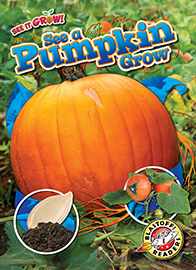
From seed to sprout, seedling to bloom, See a Pumpkin Grow walks the reader through the life cycle of a pumpkin. The simple text and colorful up-close photographs make the content accessible for young readers. Chapter headings and bold glossary terms provide content support.
This is a perfect addition to all elementary school libraries. See a Pumpkin Grow can be used to support life cycle lessons or to introduce the pumpkin patch or farm field trip.
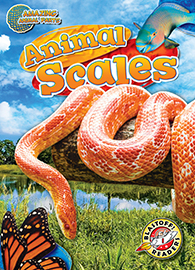
Animal Scales is part of the Amazing Animal Parts Level 1 Blastoff! Readers. Starting with the scales on a butterfly’s wings, this book will help broaden young readers understanding of animal features. The book goes on to highlight scales on snakes, eagle’s feet, and fish.
The book contains a Table of Contents, bolded glossary terms, illustrated glossary, and an index. More information is available digitally through Bellwether’s Factsurfer links. The links include text information on butterflies, snakes, and a video on scales and feathers.
Amazing Animal Parts Level 1 Blastoff! Readers series focuses on the how different animal features help with survival. The series also includes: Animal Ears, Animal Eyes, Animal Feet, Animal Noses, and Animal Tails.
Written by Carrie Tillotson and illustrated by Elisa Chavarri
Everything a young reader would want to know is packed into this picture book! Simple, rhyming text winds through the pages of alpacas in both Peru and North America. Denser informative text blocks run along the bottom of the right page (recto) of each two page spread. The end of the book includes a glossary, author and artist notes, select sources and more about the alpacas (including their origin as domesticated animals in both areas).
This highly informative book takes a different approach than the typical nonfiction book for younger readers. It can be read as a simple story or a reader can delve much more deeply into the facts about this prized camelid. The accompanying illustrations are vibrant and bold and culturally appropriate.
There is much to learn about alpacas and this book takes on the topic in a unique and playful way. Readers won’t even realize how much they are learning until they reach the end of the book! Recommended.
What is a poem? This question is answered, first in Spanish and then in English. Short, playful text tells us the many things a poem can be. In the end, we see that a poem can really be anything. As the author notes, “A poem is a mirror inside your head”.
Black line illustrations on a vast white background playfully draw the reader along through the pages. They add to the whimsy of the words and together open a world of creative thought. Recommended.