Evie believes in all things magic, but she has no power to tame her pesky and wild younger siblings. Everywhere Evie went, the wild bunch followed and she could not escape. After they follow her outside, Evie decides to show them a magic trick. With the help of her wand, a deep snowdrift and some magic words, Evie is plunged into a magical upside down world filled with sea creatures and the stars. Her siblings follow and they set off on an adventure. When Evie and her siblings venture into the upside down world, readers must turn the book around to continue reading.
The story is imaginative and inventive. The watercolor illustrations lend a soft, magical quality to the story.
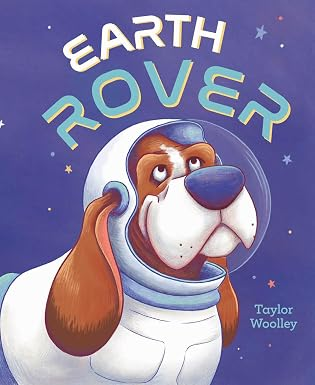
Rover, an adorable dog, really wants to join his astronaut owner in space. This story is written as a letter to NASA from Rover outlining why he would be a great choice as the next Lunar Rover and why he wants to go to space. He is self-driving, does not tip over and get stuck, and is naturally photogenic.
This is a very cute, whimsical story written from the dog’s perspective about space travel. This book could be useful to teach persuasive writing. The back matter includes information on moon exploration, rovers, and traveling to the moon.
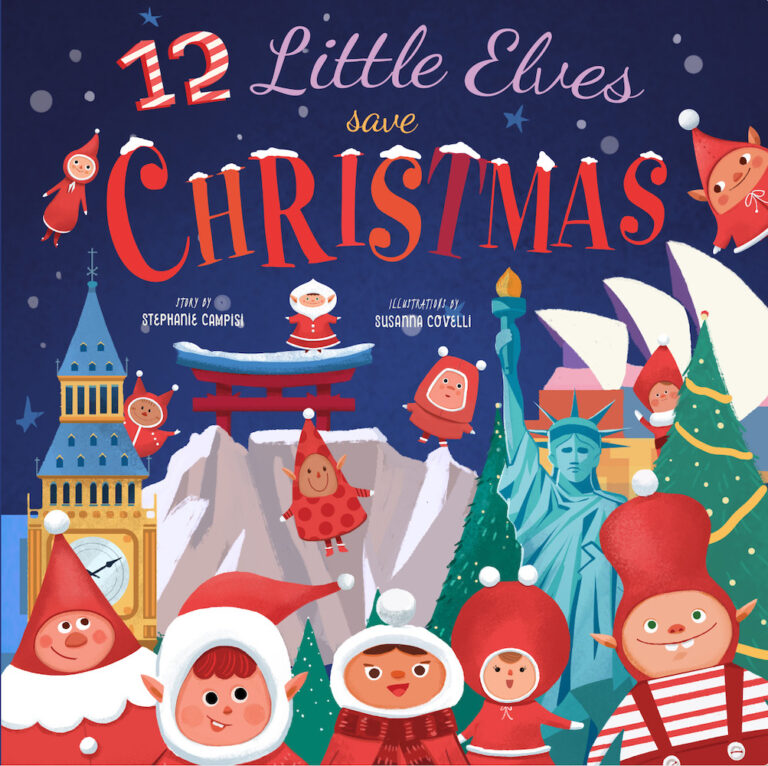
12 Little Elves Save Christmas is a fantastic rhyming holiday book about twelve elves who travel around the world saving Christmas. Each two-page spread has four rhyming lines that introduce a Christmas tradition from a different country that the elves help repair or make happen. It doesn’t teach a great deal about each tradition but instead offers a quick glimpse into one custom from each country. The back of the book includes additional information about every tradition featured, making it a great jumping-off point for learning more. The rhyme scheme is consistent and helps with the pronunciation of some unfamiliar words when reading aloud, and I can see kids picking out their favorite adorable elf and watching to see what they’re doing on each page. This is the perfect title for any classroom or home discussing “Christmas Around the World,” and I’m thrilled to be able to add this title to my library.
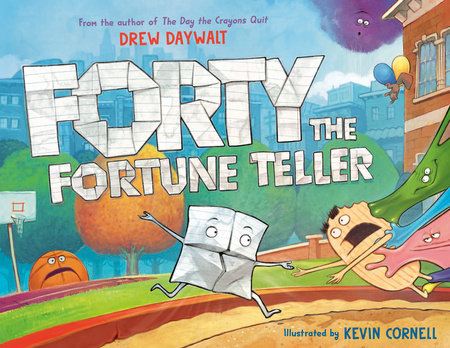
Fans of The Legend of Rock Paper Scissors rejoice! Drew Daywalt is back with another crowd-pleasingly strange epic journey. This one follows a discarded fortune teller and a partially eaten chip as they set off on a heroic quest. This book is an incredibly fun read-aloud (particularly if you enjoy doing voices), and I can attest to the joyful bafflement you’ll see on kids’ faces as some of the ridiculous fortunes come true. The illustrations feel reminiscent of Adam Rex’s in The Legend of Rock Paper Scissors, but Kevin Cornell brings his own style that makes this feel like a related yet unique story. This book will not only have kids cracking up, but it also offers a valuable lesson about courage and resilience. As a bonus, the endpapers include instructions for making your own fortune teller, so there’s a built-in activity to go along with this incredibly entertaining book.
The fourth book in the Tiny Habitats series is every bit as adorable and informative as the previous three. Pool Party begins with rainfall in the rainforest collecting in the leaves of a bromeliad, creating a tiny pool of water. It follows the happenings in that small pool and the many creatures that make use of the habitat. The book traces the pool through the rainy season, into the dry season, and finally to the beginning of the next rainy season. The animals are adorably illustrated, and kids will love the speech bubbles filled with clever puns. They’ll also learn a great deal about the rainforest and the diversity of life there, with additional information about bromeliad pools included in the backmatter. This is a great title for any elementary library.
Written by Caroline L. Perry & illustrated by Sydney Hanson
You may think you see a seemingly cheerful, smiling rodent. But, you would be wrong! The quokka, an Australian marsupial, is much more complex than that. And, the main character of the this delightful picture book does his best to show a (seemingly) grumpy frog that truth through a variety of examples. Dropped his ice cream? He may look happy. But, nope, definitely not. Someone stepped on his tail? Nope, he’s not happy even though he’s smiling. And, people don’t seem to understand that they shouldn’t wake him up for selfies. He’s nocturnal, for goodness sake! Fortunately, he finds a newspaper with an article stating that quokkas are not, in fact, the happiest animals. Now, he’s happy! But, the grumpy from? That frown is just the way he looks and it doesn’t mean he feels that way. Wait, didn’t we just read a story like that?
This wonderfully hilarious picture book introduces a rather misunderstood Australian animal in a way that makes learning fun. Accompanying illustrations are somewhat cartoon like and so good! The text is very accessible, with a sentence or two per page and there is a very informative author’s note at the end that describes the quokka in more detail, including its vulnerable status as a species and what we can do to help it, including leaving it alone and not bothering it for a selfie like in the story! This would be a great book to share when teaching about conservation and boundaries with human-animal interactions. Highly recommended.
Written by Ben Gundersheimer (Mr. G) and illustrated by Marcos Almada Rivero
Baby whale Juana is swimming in the warm waters of Mexico. At just one day old, she is already ready to embark on a migration to the icy waters of Alaska for the summer. Juana, her mom and other relatives in her pod travel north, noting the changing scenery along the way. They spend their summer happily eating krill and loving life. As the season changes, they turn and make the long trip back to Mexican waters, where a new calf, Juan, is born. They will stay there throughout the winter and migrate north again in the spring.
Short, accessible sentences in both English and Spanish tell the story of a 10,000 mile migration that occurs every year for these magnificent animals. The words are almost lyrical in their cadence, which are enhanced by the wonderful illustrations done by Marcos Almada Rivero. While this is a fictional piece, young readers are exposed to the basics of migration, whale size, behavior and habitat. An author’s note at the end explains Mr. G’s inspiration of the story and a few more facts. Highly recommended.
Lila sees ghosts, which is strange and, at times, very dangerous. This was something new for her. She is a typical, albeit dramatic, twelve year old, who has some (typical) middle school friendship issues. That changes when her family has a car accident on their way to her estranged grandfather’s home in Ohio (after hearing that he had passed away). Lila begins to see “people” that her family can’t see. When they arrive at her grandpa’s rather creepy home, Lila meets the neighbor kid, Teddy, who explains her Grandpa Clem’s connection to the ghostly world, including a portal to that world on the fourth floor of Grandpa Clem’s home! Grandpa Clem’s ghost visits Lila and tells her he was murdered. Now, he can’t leave until she finds his killer. Things get stranger and creepier – circus ghosts, nightmares for everyone and Grandpa Clem’s business partner, Howler, who is quit a villain and in cahoots with some evil ghosts bent on revenge. Lila, Teddy and Lila’s brother, Caleb, understand that they are the only ones that can fix the portal, sending the ghosts back to the other world and ending the terrible plot of Howler and the evil sibling ghosts.
This hair-raising story begins rather benignly and draws the reader into the world of Lila, who seems like a very typical middle schooler with a very typical family and life. That all begins to change after the car accident and the tension mounts slowly as the reader is pulled into a new chapter of Lila’s life that is anything but typical. Her relationships with her brother and new friend, Teddy, become much stronger as they come together to fight the evil that has entered their lives. And, Lila grows as a person, becoming reflective and working to change some of her poor habits that did not endear her to her peers. Lila’s bravery shines through and she knows that she is the one that can fight the evil and save everyone, with some help from Teddy and Caleb. After that, it’s over, right?
There are some interesting interactive elements via a QR code at the end of the story. Hand this book to your readers that enjoy Mary Downing Hahn or Dan Poblocki books. It’s just scary enough to be fun. They will want to read it with the lights on, though. Highly recommended.
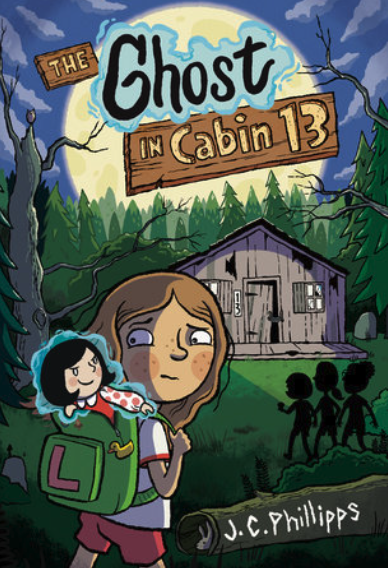
Leah is heading to Camp Cottontail where she will be the youngest member of her cabin. Having never been to camp, she is nervous. Will the others accept her? Is it okay that she brought her favorite doll? Will she humiliate herself? The first day she and her cabinmates find out that one of the biggest rules of camp is to stay away for Cabin 13. Of course all in her cabin want to go check it out in the middle of the night. They break in with an Ouija board and from there things get a little crazy. The air gets cold, they hear a voice and then they all flee. The next day Leah goes back to the cabin in the hopes of making a friend and then the ghost possesses her doll, Beverly.
Will the camp be the same after the doll starts to cause mayhem? Will Leah get her doll back? Will friends be made? Will any of her cabin mates ever want to go to camp again. This fun, lighthearted yet spooky tale will interest upper level elementary students as well as younger middle schoolers. It has a great message of the importance of being yourself and not rushing to grow up. The illustrations are vibrant and the cover will grab readers attention. This is a quick read that won’t freak out readers…..to much.
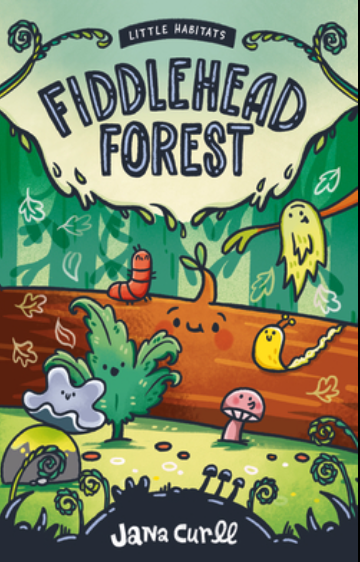
If a tree falls in the forest……the other creatures in the habitat will hear them. This is a humorous graphic novel that explains creatures at the ecosystem created by nurse logs.Fern decides to bring together their friends: Millipede, Moth, Slug, Lichen and Mushroom to figure out how to help a fallen tree get back upright. Each creature has a different idea to help the tree but the reality is, the tree is now a log.
I would highly recommend this graphic for elementary school and plan on purchasing the rest in the series. It fits well with science curriculum and is clearly explains many organisms in this habitat with clear diagrams and easy to read words/explanations. The images are fun, bright and clear thus attracting readers.