
Fans of the original Not Quite Narwhal by Jessie Sima are sure to like this Pre-Level 1, Ready to Read early reader. Kelp meets up with his friend Pixie to help walk Crabbie. When Crabbie gets lost, Kelp and Pixie use their problem solving skills to find him. Characters are also in the Netflix adaptation of Not Quite Narwhal.The text uses short sentences with easy text. The cute and colorful illustrations mimic the animation from the Dreamworks series.
Category Archives: Additional Purchase
Out of Range
by Heidi Lang
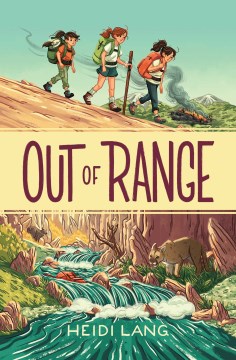
Three sisters are sent to a rigorous camp together as a punishment for their constant fighting and terrible choices. Ollie ( age 9), Emma (age 12) and Abby (age 14) had moved to a new home and making friendships was difficult. Prior to this move, they had had typical sibling relationships, sometimes doing things together or sometimes two breaking off to have their own adventure. Abby starts to pull away as she tries to forge new friendships and in the process embarrasses Emma at school pretty horribly. Emma and Ollie then team up to get revenge and target Abby. As a result, their parents send them to a camp known to help kids figure things out.There are lots of unpleasant hikes and the girls don’t seem to regain their previous close bond. There is an incident and the head of the camp decides to take the girls on a punishment hike. During this hike, the girls stray from the trail and leave the camp director. What ensues is a harrowing few days as the girls work together, surviving every possible outdoor disaster (ear drownings, falling down a cliff, bear encounter and so much more) and realize they really do love each other.
The story is told in alternating views and jumps back and forth from the present (at camp) and the past (all the awful stuff leading up to it). These girls are absolutely horrible to each other and I was feeling secondary embarrassment on their behalf with each social/emotional attack they wielded. The camp part was a little over the top, with every conceivable disaster befalling the girls. I could see a couple things going wrong. But, this was EVERYTHING. You might want to take my view with a grain of salt, though, because my family has grown up in the outdoors and guides in Alaska during the summers. So, that part might be more believable to a reader that doesn’t have such a background. I did like how the girls spent quite some time reflecting (individually and together) on their actions and came to the conclusion themselves that they needed to change. Buy this book if you are looking for a survival story that has all the bells and whistles.
Mall Goth by: Kate Leth
Reviewed by OHS Library Secretary Mikel
This colorful and easy-to-read graphic novel will appeal to a young adult reader who enjoys a book set in the early 2000’s and can empathize with an outcast goth girl.
Liz Holme isn’t a good fit at her new high school and is struggling with multiple social issues. Just as she finds some sanctuary in the mall scene, gets a job, and makes a few new gaming friends, a possibly dangerous situation develops with a creepy teacher.
Liz’s realistic experiences will resonate with contemporary teens, especially those who may be negotiating a parental divorce or are dealing with being LGBTQ issues. I like that Liz is a strong character who demonstrates resiliency in the face of many odds; however, it was a bit clunky for me to read – the transitions were not very smooth in the storyline.

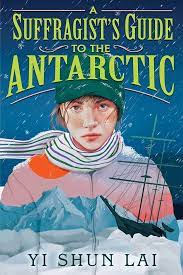
A Suffragist’s Guide to the Antarctic by: Yi Shun Lai
Reviewed by OHS Staff M. Debuse-Losh
This high-adventure novel takes place in the frigid Antarctic in the early 1900’s. It has a gripping storyline but I felt the narrative was somewhat too elementary and I didn’t care for the diary format.
Clara has just come from the front lines of the violent suffragist movement in England, where women were being beaten for their demand that women have the same rights as men. She signs up for an Antarctic expedition just as WWI is starting, and encounters many challenges with the tortuous expedition itself and the all-male crew.
History buffs may enjoy the rendition of the famous Shackleton expedition told from a strong female protagonist’s point of view. Trigger warning: there is an attempted sexual assault in the story.
I enjoyed the extreme adventure depictions, and the descriptions of surviving in the Antarctic. I disliked the diary format spoken in a peculiarly juvenile voice (I imagine even an 18-year-old in 1914 would be a tad more sophisticated).
Ice Skating
This book fulfills the idea of “Let’s Get Outdoors!” for the title ICE SKATING, but only provides a little information on the actual mechanics of ice skating. If a picture (photo) is worth a 1000 words it’s a good thing this title has a glossary. It shows what ice skating looks like but does not tell you how to ice skate. The color photos of young ice skaters build excitement for the sport.
The book contains a Table of Contents: ‘What is Ice Skating?’, ‘On the Ice’, ‘Ice Skating Gear’, and ‘Ice Skating Safety’ , before the glossary, index, and their safe internet search website for more information – Factsurfer.com. This title’s Factsurfer has two good site for more information of the three provided.
Submitted by Mary Pong
Snowshoeing
This book fulfills the idea of “Let’s Get Outdoors!” for the title SNOWSHOEING, but provides minimal information on the actual mechanics of snowshoeing. If a picture (photo) is worth a 1000 words it’s a good thing this title has a glossary. It shows what snowshoeing looks like but does not tell you how to snowshoe. The color photos of young snowshoers build excitement for the sport.
The book contains a Table of Contents: ‘What is Snowshoeing?’, ‘Walking on Snow’, ‘Snowshoeing Gear’, and ‘Snowshoeing Safety’ , before the glossary, index, and their safe internet search website for more information – Factsurfer.com. This title’s Factsurfer has only one good site for more information of the three provided.
Submitted by Mary Pong
Cross-country Skiing
This book fulfills the idea of “Let’s Get Outdoors!” for the title CROSS-COUNTRY SKIING, but only provides a little information on the actual mechanics of cross-country skiing. If a picture (photo) is worth a 1000 words it’s a good thing this title has a glossary. It shows what cross-country skiing looks like and tells you how to ski both classic and skate. The color photos of young skiers build excitement for the sport.
The book contains a Table of Contents: ‘What is Cross-country Skiing?’, ‘Classic or Skate?’, ‘Cross-country Skiing Gear’, and ‘Cross-country Skiing Safety’ , before the glossary, index, and their safe internet search website for more information – Factsurfer.com. This title’s Factsurfer has two good sites for more information of the three provided.
Submitted by Mary Pong
Downhill Skiing
This book fulfills the idea of “Let’s Get Outdoors!” for the title DOWNHILL SKIING, but provides minimal information on the actual mechanics of downhill skiing. If a picture (photo) is worth a 1000 words it’s a good thing this title has a glossary. It shows what skiing looks like but does not tell you how to ski. The color photos of young skiers build excitement for the sport.
The book contains a Table of Contents: ‘What is Downhill Skiing?’, ‘On the Hill’, ‘Downhill Skiing Gear’, and ‘Downhill Skiing Safety’ , before the glossary, index, and their safe internet search website for more information – Factsurfer.com. This title’s Factsurfer has only one good site for more information of the three provided.
Submitted by Mary Pong
Empanadas for Everyone
Carina makes empanadas with her Tia Mimi every Saturday, but this Saturday, Tia Mimi is volunteering at the food center. She asks Carina to gather the ingredients for the empanadas. Carina is worried that she can’t do it alone. As she travels through the neighborhood gathering the ingredients, she notices how samosas and dumplings she sees in the neighborhood are similar to empanadas but different. Carina and the neighborhood come together to help those volunteering at the food center.
There seemed to be several storylines and it was hard to pick out which direction the story was going. Is the book about finding community, finding self-confidence in trying something on your own, maybe a bit of both? The different cultures represented and how we are the same, but different appeared to be one theme in the story.
The illustrations represent Tia Mimi’s diverse community and match Carina’s adventures through the neighborhood.
There is an author note at the end and a recipe for beef or chicken Puerto Rican empanadas.
Bitsy Bat, School Star
When Bitsy Bat is facing her first night at a new school, she is sent off by a loving family full of encouragement. But in a classroom full of assorted other nocturnal creatures, she’s the only one used to hanging upside down, and at the painting table she’s the only one who tries to paint with her toes. Lunch and recess provide more pitfalls leading her to feel she’ll never fit in, which results in a five-star meltdown. Reluctant to return the next day, her family and teacher help her enact a plan to help everyone in class celebrate that which makes them unique, that which makes them shine. Written by an autistic author illustrator, it’s got an author’s note in the back explaining a bit about autism, including some definitions of relative terms. Autism doesn’t overtly come through within the story itself, except in Bitsy’s aversion to too-bright light and too-loud noises.