Zebra and Yak: The Backwards Alphabet Book by Paul Friedrich is a clever and hilarious twist on traditional ABC books that young readers will absolutely love. Instead of going from A to Z, this alphabet adventure starts at Z and works its way backward—making it a fun challenge for children who are already familiar with their letters.
With delightful animal characters (including zebra and yak!) and lively illustrations that bring each page to life, this book turns learning letters into an imaginative journey. The rhythmic text and humorous moments make it perfect for interactive read-alouds, encouraging children to join in and guess what comes next.
The Troubles with Giraffes: All Are Welcome is a meaningful and joyful addition to any elementary library collection, especially for discussions about friendship, empathy, and community.
From the creators of Strictly No Elephants, Lisa Mantchev and Taeeun Yoo have once again crafted a heartfelt and inclusive story with The Troubles with Giraffes: All Are Welcome. This charming picture book follows a group of animal friends dealing with the everyday challenges and the joys of friendship.
Mantchev’s warm, thoughtful text pairs beautifully with Yoo’s expressive illustrations to create a welcoming world where every character—no matter how tall, striped, or quirky—finds a place to belong.
The story’s gentle humor and powerful message about kindness and acceptance make it a perfect read-aloud.
Super Goat Girl by Tracey Baptiste, illustrated by Dapo Adeola, is a fun and empowering story about having the confidence to be yourself. Goat Girl is a creative and determined young superhero who uses her “ordinary” talents —not magical transformations—to help save the day.
Baptiste’s engaging storytelling is full of humor and heart, while Adeola’s bold, expressive illustrations bring Goat Girl’s world to life in a way that instantly captures young readers’ attention. The story delivers an encouraging message about believing in yourself and using your strengths to make a difference.
Super Goat Girl is a great choice for readers who enjoy superheroes, graphic-style storytelling, and characters who show that real power comes from being yourself.
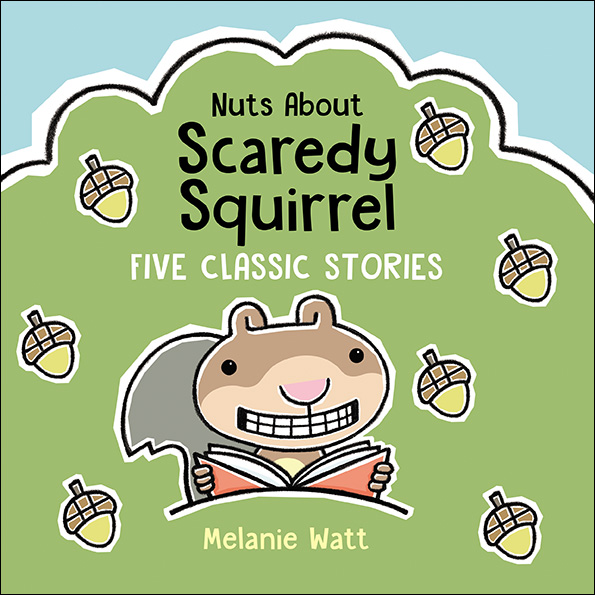
Can this be the start of a campaign to bring Scaredy Squirrel popularity back? I absolutely LOVE Scaredy Squirrel and I know the books never really went anywhere but I have felt the popularity diminish in the last decade. This compilation is full of five classic Scaredy Squirrel stories by Melanie Watt.
Scaredy Squirrel is the perfect new book friend who will cautiously guide you through situations like making a new friend, going to the beach, surviving night, and a birthday party, complete with checklists! This is a beautiful edition from Kids Can Press and I especially loved the details like the note that its a “germ-free book” on the back, the inclusion of how to draw Scaredy Squirrel.
As well as being a Scaredy Squirrel fan I am a big fan of end papers in books. One thing you usually lose in a compilation are the end papers, which are so iconic in Scaredy Squirrel books. Thankfully, they are used in this collection to separate the five stories so you still get a look at the graphics that hint so much at the story coming.
Bring Scaredy Squirrel back to the spotlight and put this book in your collection!
Dragon vs. Unicorn: Friends or Frenemies? written by PJ Hoover draws readers in from the get go. I can envision many kids I would put this in the hands of – great for a reluctant reader, great for dragon and unicorn kids, and great for kids who love choose your own adventure style books. Lisa Wiley did an excellent job on the illustrations to this book and they add so much life to the characters. The panels are easy to follow to kids who may be new to graphic novel style books.
Dragon and Unicorn are best friends, but very different. This book teaches us that we can be friends despite our differences but we’ll probably need tools for empathy, listening, and problem solving along the way. This is where I love the illustrations – the characters emotions! Their eyebrows, nose crinkles, and gestures add so much to the feelings that best friends go through. As the reader follows these two along their adventures, the reader gets to make decisions that will side with one friend or the other and then see how that works out for them. When you get to the end of your story, you’re invited to go back to the first decision making page turn and try the alternate route. I love this! If you were reading it as a social story with a student, the invitation to go back and see how the other choice would have affected the friends is perfect for conversations. I also hope it adds incentive for the solo reader to go back and try again. There are three short stories in this book.
If you have students who love cute unicorns, who love tidy dragons, who love friendship stories where its not always perfect, then this book would be a good fit for your space.
The publisher has this book tagged under cooperation, empathy, honesty, and teamwork – this book has plenty of examples for each of those social skills.
ROAR is for READING by Beth Ferry is a must have for any library! This book teaches advocacy and a love and appreciation for the diversity found in libraries.
The book starts with the first library, a cave with a few rare and precious books in it. Who better to guard these books than a lion who can ROAR and protect them! Over time, lions turned into librarians and their libraries grew in size and number. They found they didn’t have to ROAR so much, they could focus on enjoying the books, and getting others to enjoy them as well.
Until a letter came in the mail. The librarian took her son with her to the Mayor’s office to find out about this letter, and when she returned she began taking books off the shelves. Julius, her son, felt sad and asked why. He was told people were afraid these books were dangerous. He ran to his favorites to make sure they were still there and sat remembering them and who read them to him. Cherishing those moments that make those books our favorites.
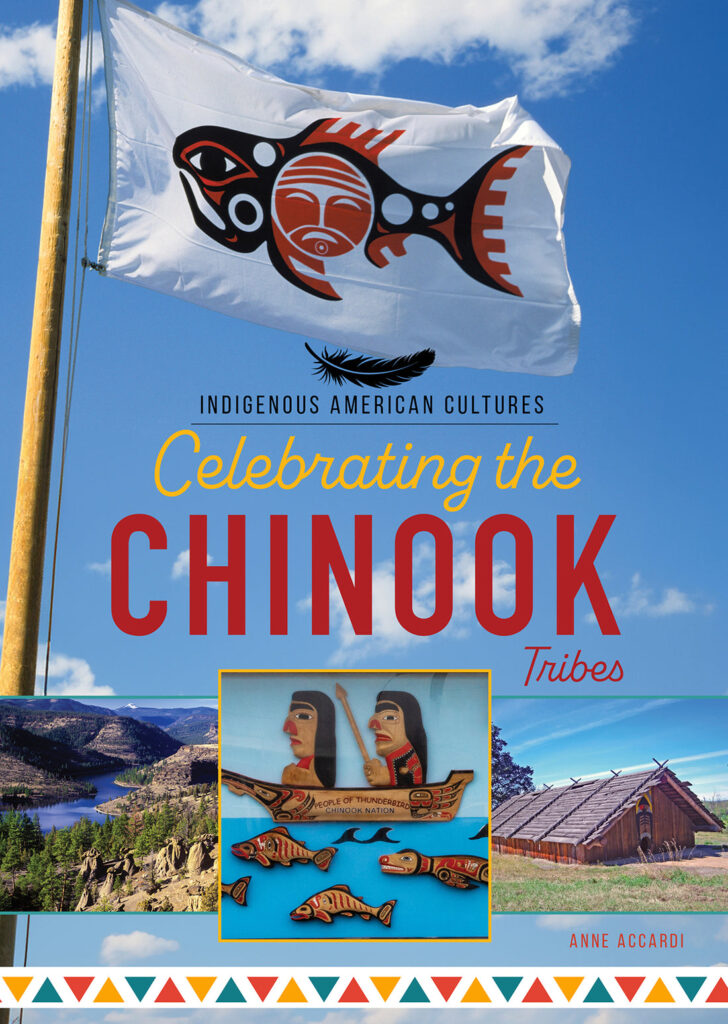
Celebrating the Chinook Tribes by Anne Accardi is part of a Mitchell Lane series highlighting Indigenous American Cultures. This series is geared towards elementary with a reading level of grade 3 and 4 (sited on the Mitchell Lane website), with full color pictures. This book is 32 pages long.
This book includes not only a table of contents, but also headings, bolded words, glossary, index, further reading, and websites to explore on the internet.
I was really impressed with this book and how it presented the people of Chinook tribe (whose lands are close to where I currently teach) and the history in our area. I appreciated that the text also mentioned that people with Chinook ancestry can live all across the nation, not just where their people lived since time immemorial. In this book you’ll find each chapter focuses on a part of the Chinook tribes traditions including present and past tribal lands, celebrations, and language.
Although this book does a good job of bridging the time before colonisers entered their land, to famous people enrolled in the Chinook tribes, I did notice that there was no language stating the tribe had been residing in the Pacific Northwest since time immemorial (a phrase that is used in our indigenous education throughout the PNW). I would have also preferred the term colonizers to settlers that the book highlights on page 8. I think the definition in the glossary would also match the word colonizer better than settler.
The author, Anne Accardi, has a biography in the back and it does not say she is affiliated with any tribe herself. Although I think the book is well done, as a librarian, I would prefer to by books about indigenous tribes by people who are members or affiliated with the tribe. I understand this is not always possible, yet.
This series also includes a cut out in the beginning (before the Table of Contents) that gives a parent or caregiver tips for reading non-fiction with their reader, and for encouraging them to read more nonfiction. This is always helpful as many guardians would like help knowing what to ask, what text features are called in non-fiction and how to encourage their young readers.
I found this book well done, even though I think there are improvements that could be made. If you need to update your books highlighting indigenous cultures, I would definitely take a look at this series. There are six books in the series so far. Each book is available in hardcover, paperback and as an ebook.
If you need to update your books on indigenous tribes, I recommend looking to see if this book would fit into your library collection.
Herve Bourhis’s fifty year pop culture chronicle of all things British would be the perfect gift for an ex-pat living abroad, a Briton on the homefront or those of us who feel weirdly drawn to the English way. Covering the years 1962-2022, Bourhis graphic novel format gives the first full page to that year’s musical influencer for each year and the subsequent three pages become a patchwork quilt of pictures and text in primary colors of blue, red, yellow, black, white, and peachy-pink that relaying an array of British influence. Almost all musicians are names most people would recognize: The Beatles, The Who, The Rolling Stones, Queen, Sex Pistols, The Beegees, The Cure, Pet Shop Boys, Oasis, Amy Winehouse, Radiohead, Adele, Dua Lipa. On page 2 of each year’s focus, musical influences as well as worldly influences on musicians are highlighted as well as 5 more British albums for that year. Page 3 is a patchwork of British factoids for the year that are runners-up to the winner of the biggest British influencer taking center-stage on page 4. For example, in 2021 the winner was Astra Zeneca because of its creation of the anti-covid vaccine “Vaxzevria”. Herve’ Bourhis handi-work with in sketching really make the book pop. They are so spot on and yet so British at the same time, ending so apropro with “God save the King” as the final kiss to this passion project he undertook during the covid pandemic when he couldn’t make his bi-yearly trips to England that he had enjoyed for close to thirty years.
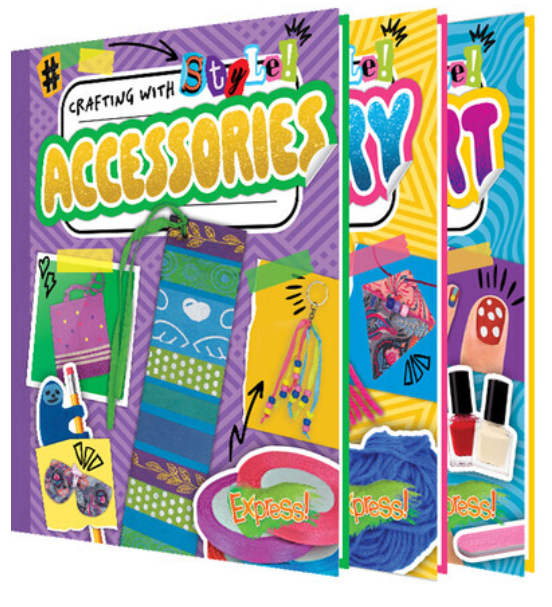
This series encourages readers to express their style through crafting. Whether they are creating their style through accessories, room decor or nails, this series has step by step instructions on crafting and creating their style. Each book focuses on a different style element and includes eight crafts with instructions. The crafts use common items around the house and encourages the reader to reuse things when crafting. Material and tips are included with the step by step instructions as well as factual information pertaining to the craft. A glossary, index, and resources to learn more are included at the back of the book.
Books reviewed in this series: Fashion, Accessories, Nail Art, Room Decor, Jewelry, and Hairstyles.
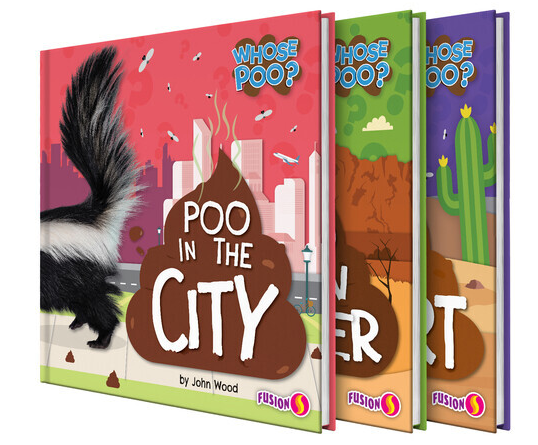
A guessing game about poo? Each book in the series features a different biome and has pictures of scat and has the reader guess the animal the scat belongs to. Turn the page to find out the answer and facts about that animal and what it eats. The photographs give you an up close look at the poo. There are several facts on each page inside different text boxes and captions. Vocabulary that may be unfamiliar to the reader is in bold and is included in the glossary at the back of the book. This is a humorous, fun look at animal scat. The warnings to not touch poop is an appreciated addition. Geared towards 1st – 3rd graders, this is sure to fly off the shelves.
The titles reviewed in this series: Poo Down Under, Poo In the Desert, Poo At the Zoo, and Poo in the City.