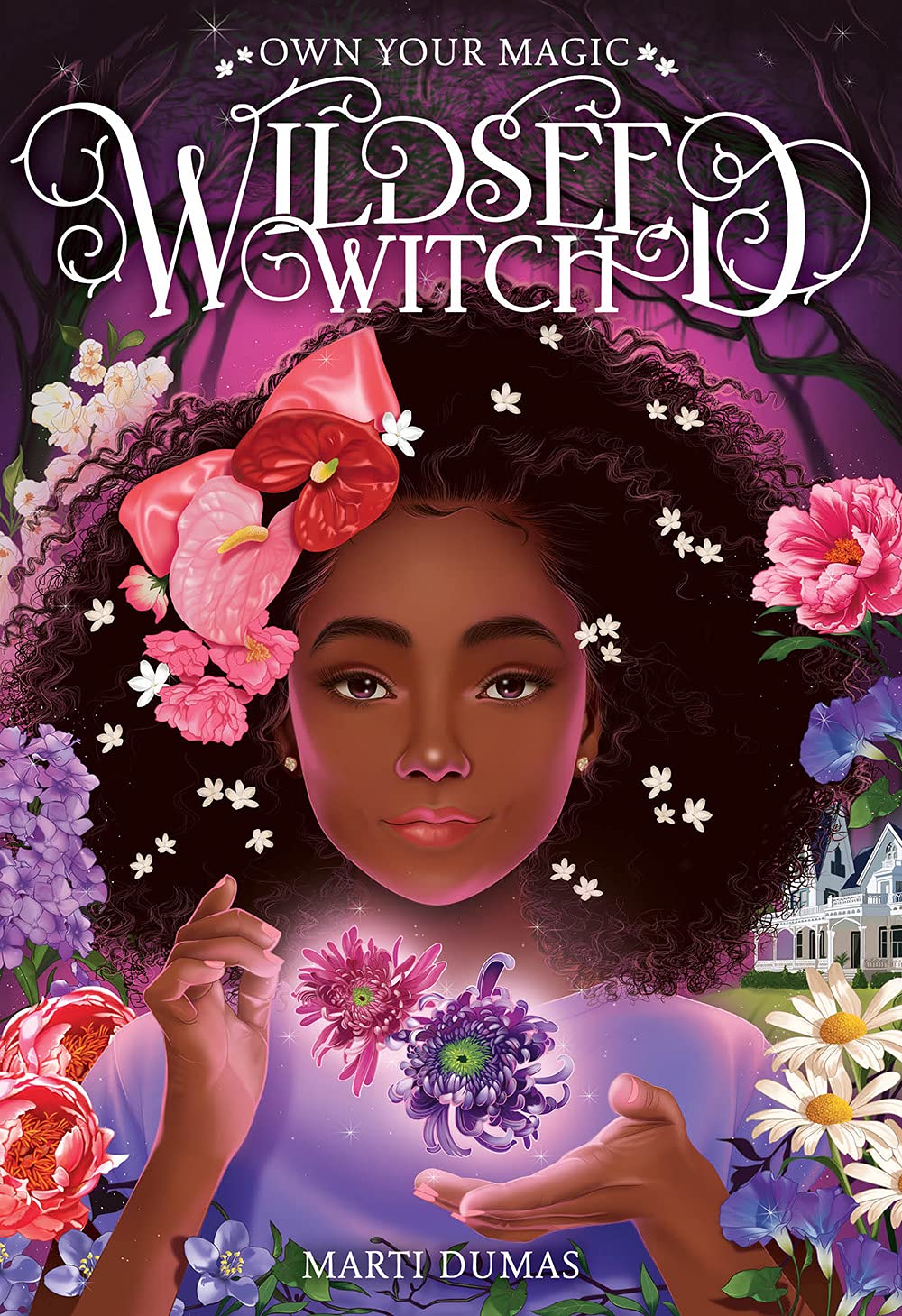
Wildseed Witch, by Marti Dumas

Set in New Orleans, Wildseed Witch is a charming story about Hasani’s journey to a magical charm school, her goals of becoming a well-known and popular YouTuber, and her quest to find herself and fix her family. A little bit of Harry Potter-esque magic set in the deep South, the story blooms with a riot of floral characters all trying to grow up with charm and controlled magic. Hasani learns she needs to find balance and lean on her friends – old and new – as she struggles to fix her parents’ broken marriage. I enjoyed the realistic aspects of the story about friendships and family challenges with the touches of magic woven through the story. While this book says it’s the first in a new series, the ending felt complete. Future books may follow Hasani as she grows older, but this book’s plot felt done. No huge hanging cliffhangers to frustrate a reader wanting completion on the final page. I also liked the bits of unvarnished history of sugar cane plantations that seep into the story as well. Overall, a nice diverse addition to an often white fantasy section of the library.
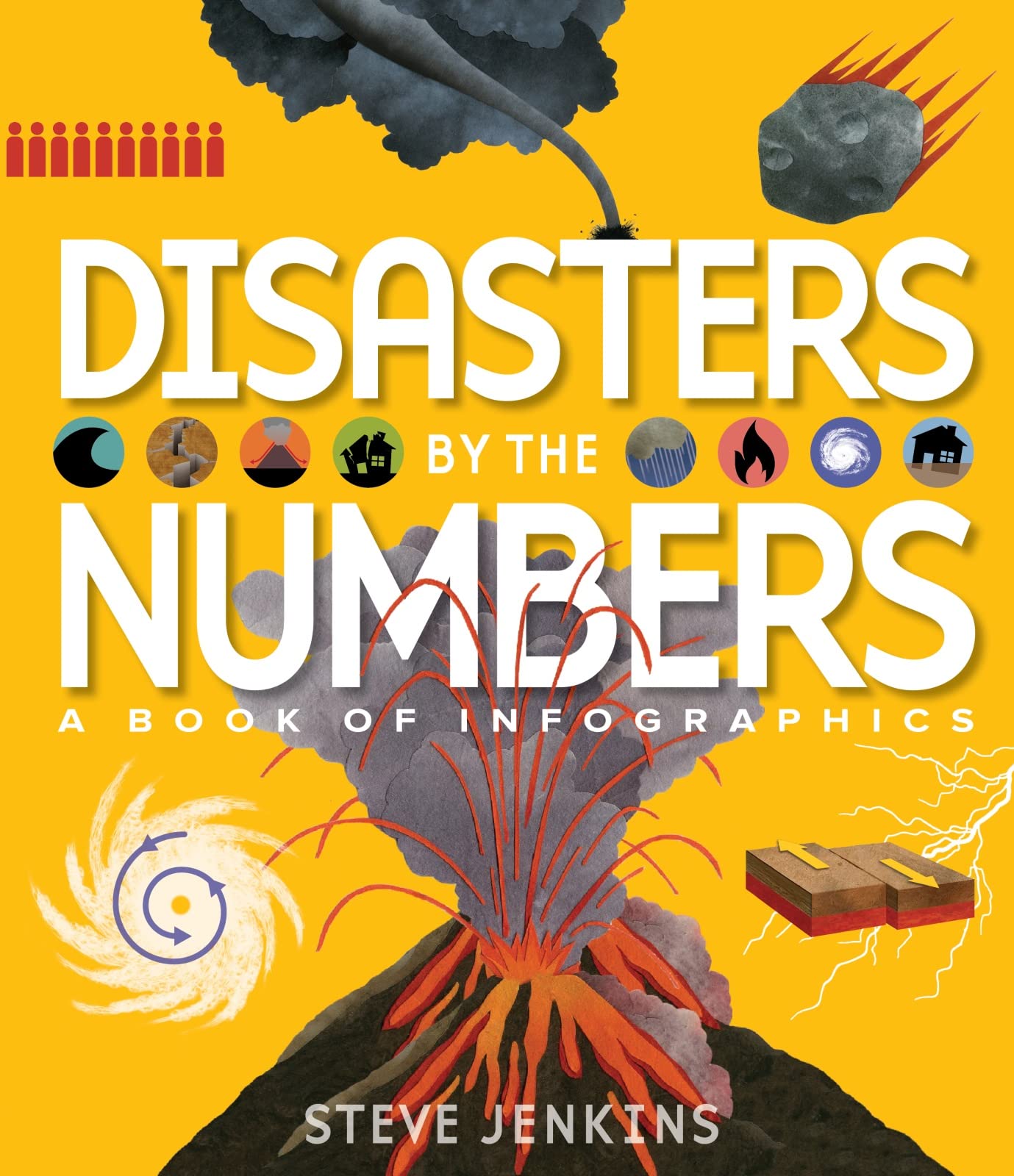
Disasters by the Numbers: a book of infographics, by Steve Jenkins

Earthquakes, tornados, pandemics, and more are highlighted and explained in this bold, colorful book. Using infographics to share facts about each type of disaster, a reader will find many questions explained by easy to understand illustrations, charts and graphs. The book includes a glossary of terms and a bibliography to back up facts shared. I liked that the infographics help make concrete the often-abstract numbers and ideas. For example, we often hear about the Richter Scale when earthquakes are discussed. The clear images and explanations for each number on the scale is the first time I think I’ve ever had a clear understanding of how those numbers relate to damage seen on news footage. An easy book to browse & flip through or to dig in and read every page, this will be a popular non-fiction read, I’m sure.

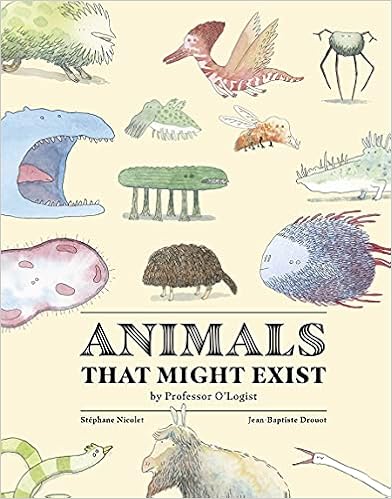
Animals that Might Exist by Professor O’Logist, by Stéphane Nicolet and Jean-Baptiste Drouot

An absurd collection of animal drawings that have only been seen by the now-missing Professor O’Logist. A tongue-in-cheek book of drawings and scientific descriptions of the craziest collections of animals you’ve never seen, but that doesn’t mean they might NOT exist! Professor O’Logist even created his own classification system for organizing the animals, including the soft animals, the disgusting animals, and the not-useful animals, to name a few. Many of the animals remind me of creatures you might encounter in a Roald Dahl book, the drawings are charming and the writing is both serious and silly. This is a book I think students will have fun giggling over as they flip through the bizarre taxonomy and then find inspiration to discover rare animals themselves. For a middle school library, I imagine this probably more of a display book, rather than one that gets checked out much unless it’s by budding artists.

Star Child: A biographical constellation of Octavia Estelle Butler, by Ibi Zoboi

One of the most unique and beautiful biographies I’ve ever read. Ibi Zoboi tells the story of science fiction author Octavia E. Butler’s life in quotes, poems, short blurbs, photographs, her own writing, and drawings. I particularly like the poems that frame each short section of prose and add depth to the account of her life. The mix of writing styles adds to the retelling, giving the reader a mix of Octavia’s own words with those speculative ones of the author as she imagines what Octavia might have been thinking through some of her early experiences. The book tells the life of Octavia Butler from a childhood facing the Great Depression, World War II, the space race, the red scare, and the Civil Rights movement. Through all of it, Octavia loved reading and writing stories, especially science fiction though she rarely saw characters that looked like her in the pages. She set out to get paid to write the fantastical worlds she saw in her head, collecting many rejections along the way before she eventually became an award-winning and respected author.  I really enjoyed this artistic take on a woman who was such a pioneer in the field of science fiction writing.

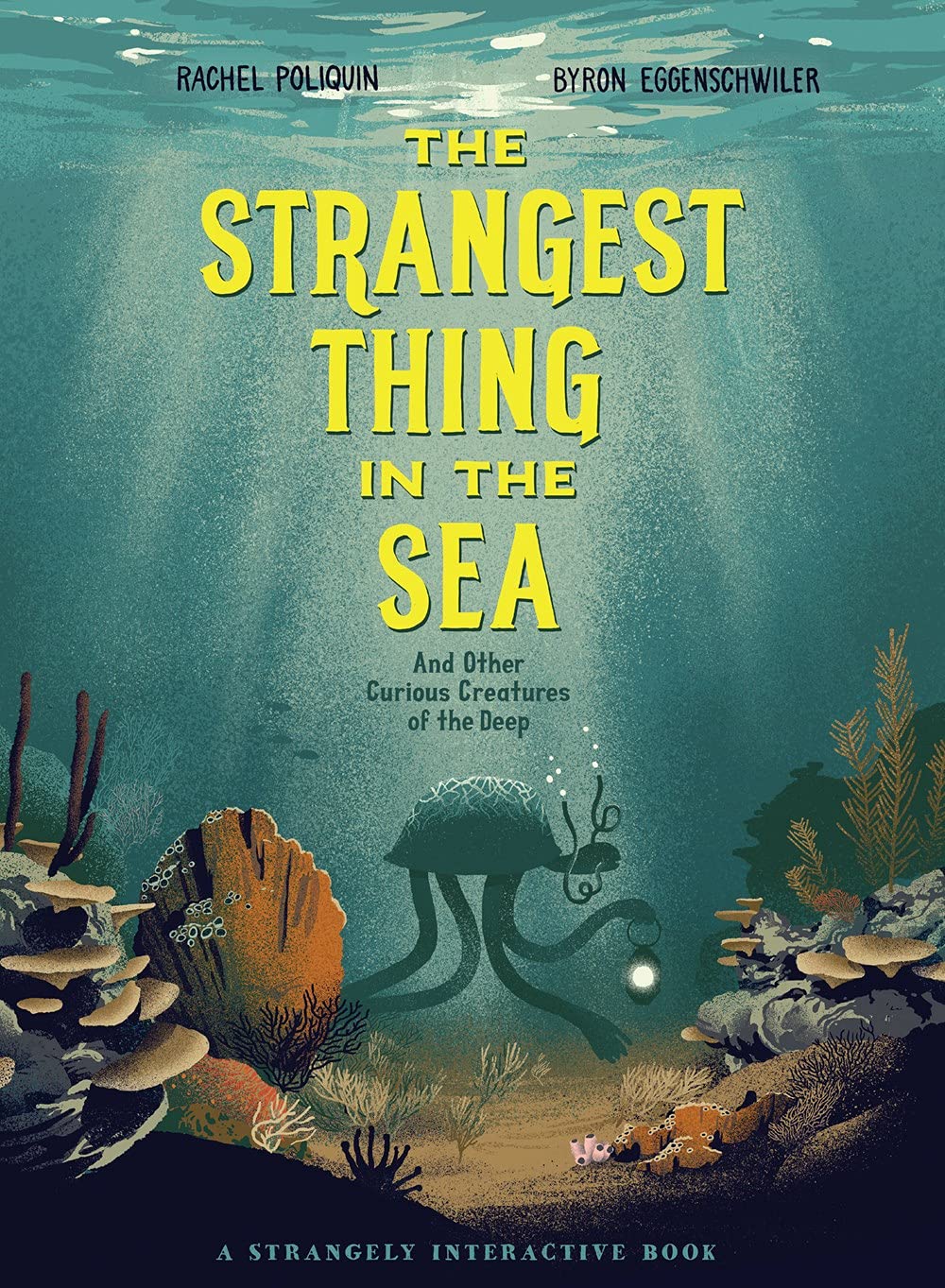
The Strangest Thing in the Sea (and Other Curious Creatures of the Deep)

The illustrations in this book are enchanting. Each set of 4 pages describes a different denizen of the deep, with an overlay page that imagines the creature as something out of a fairy tale. When you lift the flap, you see what the creature actually looks like. 

The author provides some fun facts about each sea creature, as well as the basics (size, prey, habitat, and the sea depth at which they live). 

The suspense builds: each creature in turn says, “… But I’m not the strangest thing in the sea!” 

You might be surprised when you find out what “the strangest thing in the sea” really is! 

The Goody

The Goody, written and illustrated by Lauren Child, is an important book about both good and bad behavior being a little mixed up.  It’s a lovely story of siblings, one who always does what he is told (the goody) and the other who does whatever she likes regardless of ramifications to herself or others. Children in K-2 will appreciate this story as they can relate to not always being able to be good, and most importantly, having that uncomfortable-tummy feeling when one misbehaves. The book is a subtle laugh-out-loud using a narrator to emphasize an overall message that states “being nice when you can be nice can make you feel good”. Child’s use of the double negative, such as “he never forgot to remember this,” and “the least favorite of all his least favorite vegetables,” produces a nice rhetorical effect that young readers are sure to enjoy. The writing is quirky and humorous, creating a need to read and read again. The illustrations are composed of delightful paper cuts complete with patterns that look like fabric and create an interesting texture. The sweet life-lessons pointed out by the narrator and shown in red print are sure to capture the students’ attention and help them realize that when we are nice or when we share with others, it actually makes us feel better.

That’s Betty! The Story of Betty White

That’s Betty! The Story of Betty White by Gregory Borsignore is a quick and fascinating tale about Betty White’s remarkable 80-year career. The story begins with a student confidently wearing his Betty White t-shirt stating he will research her for his biography assignment about a trailblazing woman. One of his dads is supportive, but the other is not so sure, asking if maybe his son should pick somebody more traditional. But all along the reader knows a mysterious character appears on the pages with a big hat, dark glasses, pearls and a scarf who looks an awful lot like Betty White. It’s no surprise that the character is Betty herself and in true Betty fashion she is ready to tell her story with a confident flair. Together the two review all of Betty’s great accomplishments as the young boy discovers she co-hosted a live TV show in 1949 that ran for 51/2 hours a day and 6 days a week! Betty also wrote and produced her own show, The Betty White Show in 1954 when very few women were involved in TV. At this time, she casted talented Black singers and dancers and stood up to prejudice push back from the television studio. Betty simply  said  “live with it” and then gave performers such as Arthur Duncan twice as much air time as before and the audiences loved it! The illustrations are fun and colorful, taking readers on an extra special adventure in show business. The book ends with a timeline of Betty’s life, including a list of all her awards, honors and other extraordinary details about a woman with the courage to lead her life in a nontraditional way.

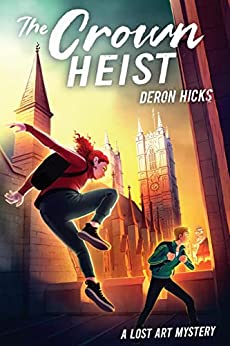
The Crown Heist

A Lost Art Mystery by Deron Hicks

Twelve-year-old Camille has never met her father and is now on her way to London to see him for the first time. Her father is a history professor and is a renowned expert in British legend. When Camille and her friend Art go to meet her father, they find out he is missing and could be in grave danger. This is the start of unraveling a mystery to find a long-missing object and save her father. This book is full of twists and turns that keep the reader guessing up until the very end. Embedded within the book are QR codes to scan when reading that add art history lessons to the narrative. QR codes are a fun way to make the story more interactive. This book is part of the Lost Art Series and a sequel to The Rembrandt Conspiracy. Although it is book three in the series, it can be read as a stand-alone narrative.

Both Sides Now

Both Sides Now, by Peyton Thomas, provides an honest and hopeful
glimpse into the trans teen experience. Finch Kelly, a trans boy living in Olympia, Washington,
chases his dream of attending Georgetown University by competing in the National Debate
Championship. Finch’s goal of winning Nationals is jeopardized by the financial difficulties of his
family and his growing attraction to his best friend and debate partner, Jonah Cabrera. As they
battle through the rounds of debate against their privileged rivals from Annable academy, they
must face an internal battle when the National debate topic is announced: trans bathroom
rights. Without successfully debating against his own rights, Finch’s dreams of Georgetown and
a future in politics is in jeopardy. Integration of social media formatting into the narrative
enhances the relatability of the story, but some references to other mainstream tech feels a bit
forced. The story feels very relatable as the characters navigate realistic obstacles that many
young people discover standing between themselves and their childhood dreams. Throughout,
the outcome of the story remains tantalizingly obscure right to the last chapter. Difficult
conversations about LGBTQ+ rights and racism are addressed in relatable ways that speak to all
age groups. As teenagers learn to navigate this ever-changing world, Both Sides Now is a
coming-of-age story that speaks to modern situations and dilemmas.

On the Hook

Francisco X. Stork’s On the Hook is a reimagining of his very first book from 2007, Behind the Eyes. In this story, Hector’s moral dilemma is front and center. A gifted student living in a rough area of town, Hector is put in the position of showing a machismo he doesn’t have to defend his brother’s honor. This is the struggle of inner turmoil that young men face more often than society probably acknowledges. Can you be smart and tough at the same time? Hector has a great support system around him, but only he can figure out the type of future he wants to have.

Stork’s writing is quick-paced and takes surprising turns. Readers might be frustrated with Hector’s choices when he clearly has an easy way out of his situation but doesn’t take it. But this allows for Hector’s character development, which 7th- 10th graders need clear examples of. On the Hook is a good addition for collections that need more options male readers.