
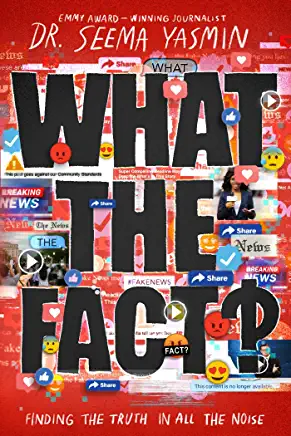
What The Fact? Finding The Truth In All The Noise by Seema Yasmin

A fascinating review of the history of information dissemination, how misinformation/disinformation gets around, and, most importantly, what to do about it. This work looks at disinformation/fake news and all associated/related concepts that dominate the modern political and social landscape. There is a good analysis of definitions and there are reasonable recommendations for how to counter the impacts of disinformation. It is comprehensive and precise, richly grounded in social science research. Non-fiction, There is a good analysis of definitions and there are reasonable recommendations for how to counter the impacts of disinformation. Targeted at a young adult audience, Dr. Yasmin doesn’t tell kids what to think but helps them think about their own views and prejudices that make it harder to see the perspectives of others. Reviewed by a Washington Middle School Student
The Dark Was Done

It’s a beautiful book which speaks to a common childhood fear. When the dark gets tired of everyone pushing it away, being the cause of so much fear, it leaves altogether, leaving a world bathed in unending light. At first everyone is delighted, even if they can’t tell the difference between night and day. But eventually a small boy starts missing the sounds of crickets and the twinkling of stars. His parents explain that these are gifts of the dark, and that when it went away, so did they. The young boy decides to set off in search of the dark to convince it to return. Along the way he comes across a burglar who misses the shadows to hide in, a poet who misses the mystery of the dark, and a gardener who misses the smell of night jasmine, among others. As their band grows, the dark hears their cries and is persuaded to return and is welcomed. The illustrations are dreamy and fanciful.

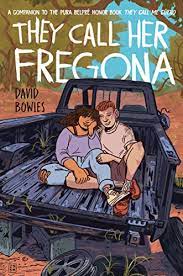
They Call Her Fregona- A Border Kid’s Poems by David Bowles

They Call Her Fregona by David Bowles brings up topics of Latinx and societal discrepancies with prose that keeps you coming back. The main character, Guero’s, girlfriend struggles with conflicts related to gender norms and the deportation of her family. Guero struggles with conflict related to how he will be a good boyfriend and how he will keep his friendships strong. This text is an important story of life in a border town from a voice that is rarely amplified. Hearing this story helps us to understand topics of judgment that readers might not have considered before. The use of verse as the main character’s journal entries makes this book an incredibly well-done piece. There are individual entries that are dedicated to characterization for supporting characters, there is a glossary in the back that helps the reader to access the name-calling, slights, and other Spanish terms that might otherwise go unknown. The prose has some elements of rhyme, but it isn’t overly used and helps to emphasize the importance of the topic the author is highlighting. Middle-grade readers will like the relationships and issues presented in the text. LGBTQ+ book fans will enjoy the seamless weaving in of societal topics related to gender norms and language. The representation of LGBTQ+ supporting characters confronts heteronormative literature.

Reviewed by a Washington Middle Show Teacher.

Forest Hills Bootleg Society

Review by M. Comeaux 12th grade

This graphic novel is sure to catch the eyes of queer kids and people everywhere, and anyone trying to navigate new relationships and how they’ll affect your other ones! In a strict, rigid, religious private high school town, a group of four queer teen girls navigate consuming anime, selling bootleg DVDs to their peers, and their own interpersonal relationships (romantic or not). A contemporary graphic novel, this book will be sure to touch the hearts of LGBTQIA+ teens and those used to very strict and repressive religious/small-town environments. It discusses the idea of how dating within a friend group can affect others, and the changes we can experience in high school, whether they’re good… or bad. I liked the small details the artist and author included in the panels. There’s a lot of context and random information provided via text bubbles and a few pages that break from the main story to provide an idea of why the situation is the way it is. I personally appreciate the breaks; they’re witty, help the reader take a moment to better know the situation, and they’re great fourth-wall-breaks. The flow is very cluttered, and confusing at times. Trigger Warnings: Swearing, homophobic slurs, implied masturbation (momentary), homophobia, infidelity, mentions of drug use, implied abuse (momentary) organized religion, and its ending is very- bitter. It’s a realistic ending, but there aren’t sunshine and rainbows. It’s a good read, for sure, but the reality of this book, and the themes it tries to convey, are sad and will cause heart pangs.

A Backyard Pet

As early readers go, this one’s got a nice story to it, sweet, with a bit of pattern, and a simplicity about find that which we can each appreciate in our own backyards. It puts a different than normal twist on the idea of pets, but one that may be comforting to a child who longs for one, but is denied the typical variety. When Sugar wakes up late and goes looking for a playmate, she finds all her siblings engrossed in playing with their own “pets,” in which Sugar is less interested, even arguing whether they qualify as pets: one has made a pet of the pretty flowers that blow in the breeze, another has adopted the busy worms she loves to watch, and the third is busy chasing her pet butterfly. By the time they come to see if she’s ready to play, she’s too busy playing with her own pet clouds, which are beautiful and busy blowing in the breeze, inviting them all to chase them. The illustrations are fun and cartoon-like, adding a bit of silliness to the simple story.

Even Robots Can Be Thankful!

It’s a very early version of a graphic novel, for the youngest of readers. It includes three short stories about two best friends, Red Robot and Blue Robot: the first about something going bump in the night, and Blue Robot declaring he’s not afraid of anything, though it’s obvious to reader and friend alike that he is; the second about Red Robot sticking up for his friend when a third robot makes fun of his favorite hobby; and the third about Blue Robot’s worries about being sad and lonely when he discovers a train ticket that Red Robot has purchased, only to discover that there are two tickets and the friends get to go on an adventure together. Though the simple plot lines might seem a bit preachy, they’re leavened with just enough humor to keep them from being overly pedantic.

This Field Trip Stinks!

As the only human child in a class full of wild animals, our young narrator is dismayed to learn that the upcoming class field trip won’t be to a nice civilized location like the planetarium or natural history museum, but a trek into the wild to study plants and animals. His dairy entries capturing the adventure continue the theme of misery (poison ivy, bugs, lack of toilet facilities, etc.), but in the end, when the group gets lost, he’s the one who knows the way back to the bus, and he’s able to enjoy the butterflies and scenery and time with his friends. In the end he decides to have a campout of his own, but only in the backyard. The illustrations that accompany the story really add to the telling, full of fun and personality.

Time to Fly

I love the idea behind the book, and I really love the illustrations. They are warm and sweet and really capture the sentiment of the story. I just wish the text flowed better. The story is a rhyming dialogue between a baby bird and his mother as she urges him to leave the nest. The baby bird is reluctant to try and thinks of lots of excuses to stay within the comfort of his nest, but mom keeps urging, and eventually he decides if his brother and sister could do it, he can too. My one criticism is that at times the rhyme seems forced, becoming stilted, losing any sense of rhythm. Still, it is rather beautiful over all.

King Kong’s Cousin

Don’t we all have someone we compare ourselves to, and come away feeling like we don’t measure up? The story is a series of parallel descriptors comparing the famous King Kong to his not famous cousin, Junior. There’s no value statements given, but the reader can just feel Junior’s sense of inadequacy. When his mother assures him that he’s just as special as his cousin, Junior doesn’t believe her. But in the end, when his beloved cat needs rescuing, it’s Junior who came to the rescue, and he’s left feeling warm and happy and maybe just a bit bigger. The illustrations are fabulous! Though they’re all in shades of gray, they are full of warmth and personality and feeling.

Angelina on Stage

Another installment for Angelina Ballerina fans, this one is as cute and frilly and sparkly as is to be expected. This time Angelina is honored to be invited to join in with a performance of real grown-up dancers. Her young cousin, Henry, is invited to participate as well, but he struggles with remembering where he’s supposed to be and what he’s supposed to do, and Angelina has to help him a lot. She’s jealous when he’s given a speaking part, but she helps him anyway, and on opening night he flubs up again, changing is line from, “There goes my friend the magic fairy,” to “There goes my best friend, the magic fairy,” as he points to Angelina, showing that mistakes can be sweet.