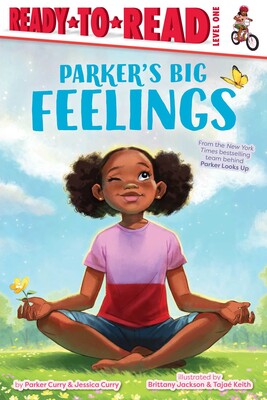
Parker is new at her school, and everything seems to be going wrong. She has a disastrous day, is missing her best friend, and just wants some alone time when she gets home. When her siblings make that impossible, Parker’s mom helps her come up with ways to turn her day around. Kids will connect with this relatable story and also gain ideas for working through big emotions. From the New York Times bestselling authors of Parker Looks Up, the simple sentences in this Ready-to-Read level one book will be accessible to younger readers and valuable to all kids.
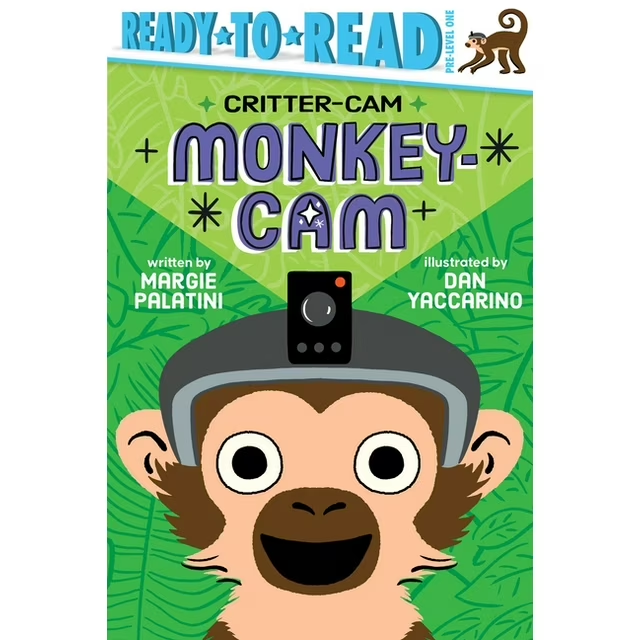
This energetic pre-level one reader follows a monkey as it zips around and encounters other animals. The pages juxtapose the reader’s view of the monkey’s interactions with the monkey’s point of view through the monkey-cam strapped to its head. Most pages contain only one or two words, making it a great book for beginning readers. This author and illustrator also team up for the adorable Kitty-Cam and Shark-Cam, so kids can enjoy the opportunity to compare the videos the animals are creating.
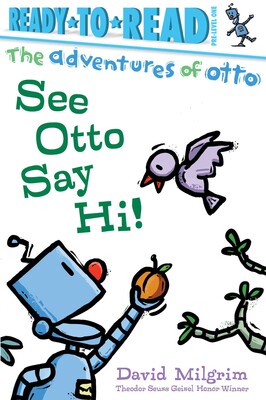
Otto the robot is desperately trying to befriend Tweet the bird. He tries everything from offering a full bag of chips to baking a lovely cake for Tweet. Otto eventually finds more success than he could have imagined. The book is a pre-level one reader with short sentences that use common sight words. Other words are either decodable or come with a picture clue, making it a great choice for beginning readers. This engaging and accessible book is part of “The adventures of Otto” series.
written by Harriet Loy and illustrated by Mike Byrne
Blastoff! Missions: Machines at Work is a series of ten narrative nonfiction books that explore different large machinery led by “Blastoff Jimmy”, a cute cartoon astronaut. Each book has mission goals that enhance the reading adventure. Readers learn facts about the large equipment and unfamiliar words are bolded within the text and defined in the glossary at the back of the book. Bright, engaging illustrations are labeled and each book has an index, table of contents and “To Learn More” section. The machines’ jobs are noted and a diverse mix of workers are happily working with the equipment.
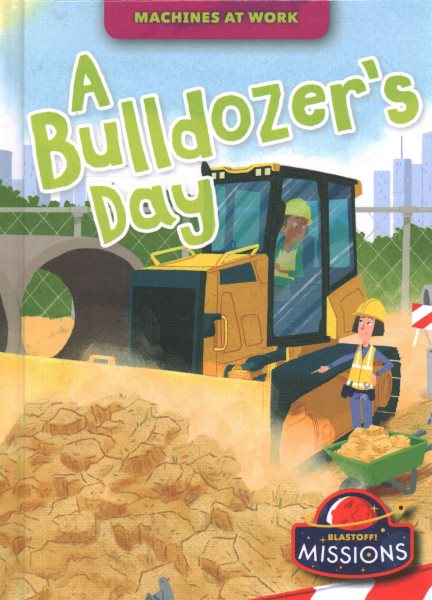
A Bulldozer’s Day takes the reader through a typical day on the construction site. The bulldozer and other large machines are introduced and then the bulldozer gets to work. It uses several accessories to do the various jobs on the site and, eventually, completes the task of preparing the site for a building. This won’t stay on the shelves long. What kid doesn’t love a bulldozer?
written by Lily Schell and illustrated by Mike Byrne
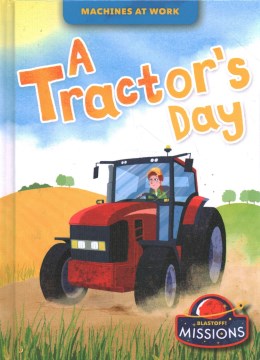
Blastoff! Missions: Machines at Work is a series of ten narrative nonfiction books that explore different large machinery led by “Blastoff Jimmy”, a cute cartoon astronaut. Each book has mission goals that enhance the reading adventure. Readers learn facts about the large equipment and unfamiliar words are bolded within the text and defined in the glossary at the back of the book. Bright, engaging illustrations are labeled and each book has an index, table of contents and “To Learn More” section. The machines’ jobs are noted and a diverse mix of workers are happily working with the equipment.
A Tractor’s Day details the hard work that this piece of machinery throughout the seasons. Driven by a female farmer, the tractor and its extra implements prepares the soil in the fall, plants the seeds in the spring and looks forward to the harvest at the end of the summer. After a quick clean up by the farmer, the tractor is back in the barn and ready for its next job. This will be a hit with your youngest readers!
Written by Harriet Loy and illustrated by Mike Byrne
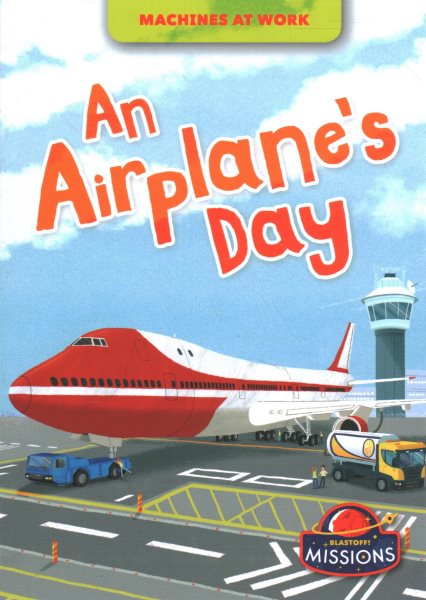
Blastoff! Missions: Machines at Work is a series of ten narrative nonfiction books that explore different large machinery led by “Blastoff Jimmy”, a cute cartoon astronaut. Each book has mission goals that enhance the reading adventure. Readers learn facts about the large equipment and unfamiliar words are bolded within the text and defined in the glossary at the back of the book. Bright, engaging illustrations are labeled and each book has an index, table of contents and “To Learn More” section. The machines’ jobs are noted and a diverse mix of workers are happily working with the equipment.
In An Airplane’s Day, Blastoff Jimmy leads the reader through the day of an airplane and its crew. Starting with leaving the hangar, fueling up and loading cargo and passengers and ending with a completed trip and preparations for the next one, this book does a fantastic job of giving the reader a general idea of the work done with an airplane. Text is accessible for young readers and the labeled illustrations are really helpful. Give this book to young travelers or kids that love airplanes. They will love this book!
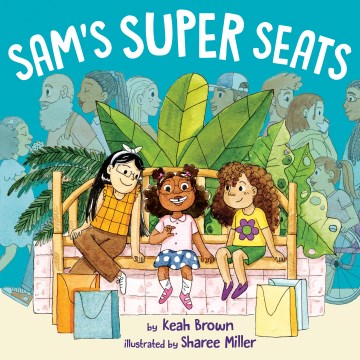
Sam is excited – her mom is taking her school clothes shopping at the mall with her two best friends, Sarah and Sydney. She starts the morning with her dad, singing and brushing her teeth and then saying four things that she likes about herself that day. Her mom joins in the fun and they end up downstairs where we meet Sam’s couch, Misty, names after famed African American ballerina, Misty Copeland. Sam often rests on Misty, because she has cerebral palsy and her legs get tired at times. Her other favorite seat is Laney, the jokester back seat of her mom’s car. She and her friends giggle and chat in the back seat as they head to the mall, where they try on some amazing school outfits, including Sam’s cute adaptive clothing. They take a break on a new bench called Maya and then are on their way back to Sam’s house and a final fashion show. Sam is really excited for school to start now!
Colorfully drawn illustrations enhance a story that embraces and celebrates differently abled children. Characters are diverse. Sam and her parents are Black, Sarah is Asian and Sydney is a red-haired white girl. This is a sweet story that normalizes differences. It’s a winner!
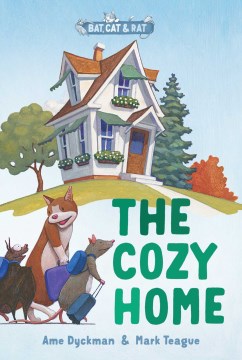
Three friends (Bat, Cat & Rat) are introduced in this book containing three (and a half!) short stories centered around their move into a new home. Personalities are evident from the start. Cat unpacks books and is somewhat serious. Rat unpacks a bunch of joke and prank stuff (he’s the funny one) and Bat is smart and able to turn the tables on jokester Rat in one story. Stories are short (up to sixteen pages) with simple text and few sentences on each page. This accessible book is filled with Mark Teague’s cartoon–like illustrations, colorful and bright. Young readers will feel very accomplished after reading three-and-a-half stories about three friends that live together and care about each other. Highly recommended.
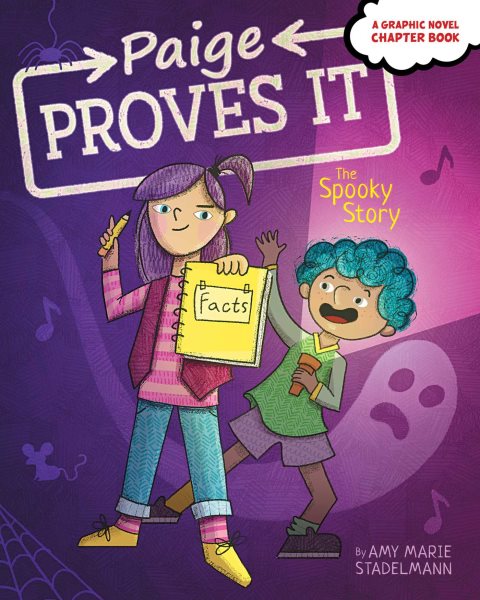
Paige is a fact collector and carries around a handy notebook in which to write her facts and solve mysteries. Along the way, she engages the reader by sharing her notebook pages and insights. One might notice that she seems to be using parts of the scientific process in her methods. In “The Spooky Story”, she and her friends, Penn and Karla, investigate the mysterious ghostly occurrences at Karla’s home. Karla shares a house with her grandmother, who teaches music to a collection of interesting characters that were introduced in the first book of the series. In this case, there are ghostly footsteps on the stairs, an upstairs door that slams shut and eery shadows that show up. Paige and friends are able to use their keen senses to determine that the occurrences can be explained with observable facts, although Penn is still a little caught up in the notion of ghosts. Paige remarks, “Even when you have fully investigated, made clear observations, and proven the facts, some people still come to their own conclusions”. Hmm…that rings true even with adults, doesn’t it?
There are color illustrations throughout and glimpses of Paige’s notebook pages help explain her reasoning as the story moves along. The cover of the book calls this story “a graphic novel chapter book”, which should hook your graphic novel readers AND your easier chapter book readers. Highly recommended.
Fans of the original Not Quite Narwhal by Jessie Sima are sure to like this Pre-Level 1, Ready to Read early reader. Kelp meets up with his friend Pixie to help walk Crabbie. When Crabbie gets lost, Kelp and Pixie use their problem solving skills to find him. Characters are also in the Netflix adaptation of Not Quite Narwhal.The text uses short sentences with easy text. The cute and colorful illustrations mimic the animation from the Dreamworks series.