Generation Wonder: The New Age of Heroes by Bary Lyga

Attention all superhero fans! Award winner, writer of a New York Times Bestseller edits this story of heroes and superheroes in an anthology format with popular and diverse YA writers. If you want to fly, figuratively, this is the book to read. When is the last time you deliberately made mistakes or performed poorly to avoid the suspicion that would inevitably follow a perfect performance.  It’s here in the book for you!  Compelling graphics begin each new chapter.  If you are looking for an exciting “can’t put it down” book, this one’s for you.

Reviewed by: OHS Substitute, James D.
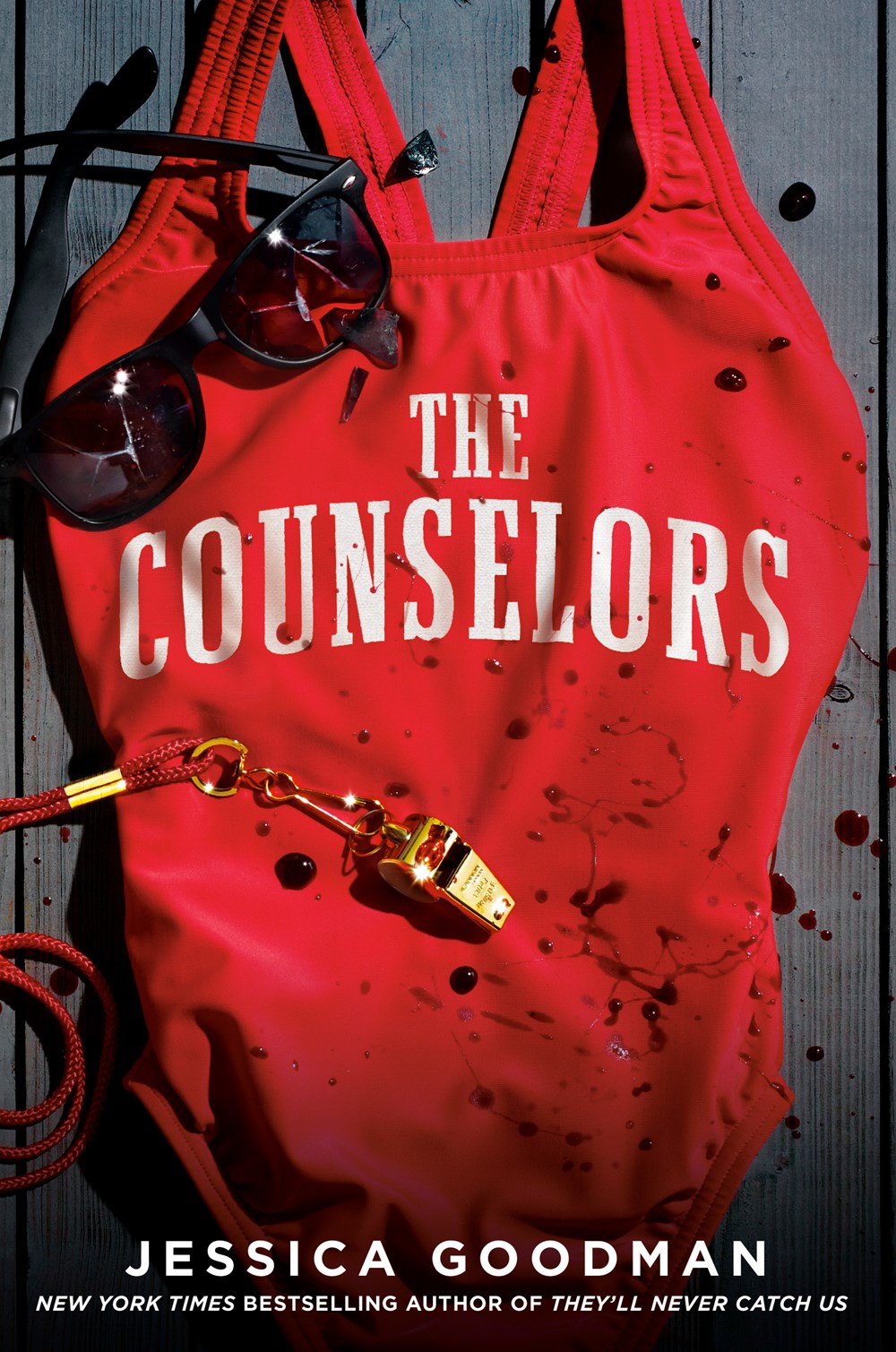
The Counselors by Jessica Goodman

The author, Jessica Goodman, is a New York Times best selling writer – and like her other titles, this book does not disappoint. 

Have you ever been sent to summer camp for 8 weeks?  Our main character, Goldie, in this book has, but for the first time she returns to camp as a counselor.  You will learn the secrets that haunt Camp Alpine Lake, previously a very safe place. She has had a very hard year and her reputation has followed her to camp.  The real mystery and thrill ride begins when Goldie’s ex, who broker her heart, turns up dead in the lake. Put yourself in her shoes and try to get used to being hated by some, loved by others. An exciting read.

Reviewed by OHS Substitute, James D.

Henry’s Pizzas

I’m sorry to say I didn’t like this one as much as I hoped to. The illustrations are fun and bright and silly, and fans of the other Henry Duck books will pick this one up and the young readers may be more willing to take it as it is, but I was hoping for something a bit more. On the very first page, when Henry’s friend Clara phones to ask him to help him with a chore that evening, but forgets to wish Henry happy birthday, any reader with much story experience is likely to already be predicting that the day will end with a surprise party at Clara’s house (spoiler alert, it does). Henry’s day proceeds as a series of pizza deliveries, as all his friends and family seems to have sent the same gift, until his table literally collapses under the weight of 14 pizzas (funny perhaps, but less than believable). Bummed that he didn’t get to enjoy any of his gifts, he trudges to his friend’s house where he is indeed surprised with a pizza party. The whole middle part of the story just seemed like filler, disconnected to the beginning and the end, except that he did get pizza after all.

Gold!

David Shannon’s fabulous artwork illustrates this modern tale alluding to the folktale of King Midas. In Shannon’s version, young Maximilian Midas’s first word is gold, and his obsession leads him into unscrupulous ways in his efforts to acquire the shiny substance, from cheating on all his tests in school to accumulate gold stars to sabotaging the efforts of the lemonade stand competition. He spends all his earnings on gold until he has a mountain of it, topped with a castle with a gold fountain. When he takes to the idea of sprinkling gold dust on his breakfast cereal, he finds himself transformed into a gold statue, alone in his castle, forced to watched the joyful life going along outside his window without him. When he’s moved enough to shed the last tear he has within himself, it melts his statue self as well as his mountain, allowing him to return to his family and neighborhood a changed boy, ready to share his millions to make the world a better place because he’s learned that gold can’t make you feel as good as being nice. The rich humor of Shannon’s artwork and the silly rhyming text he uses to tell his story allows the message to be delivered without seeming overly pedantic.

Marcel’s Mouse Museum

It’s a good tool for introducing young artists to some of the most famous artists of the last 100 years. Using the device of touring a mouse museum (each of whom appear to have been the companions/apprentices of the famous human artists of the last century), it exposes young readers to some big art concepts, vocabulary, and biographies, without being intimidating or high-brow. Each two-page spread is dedicated to a different artist or movement, with the left side offering a bit of an explanation of their work, and the right side offering ideas for young artists to attempt their own exploration of that artistic style. In the back there a couple pages dedicated to offering more formal information about the human artists the mice emulate, as well as a glossary of vocabulary.

P Is for Purr!

Following a classic alphabet book format, the rhyming text introduces 26 words and how they refer to cats, each accompanied by a related fun fact in standard prose. The illustrations will be what really draws the cat-lovers in: they absolutely adorable, sometimes silly, sometimes endearing, always the kind of cute that make you say, “Awwww…!” The simple text manages to pack in a lot of information, in small enough doses not to intimidate beginning readers.

Hippos Go Berserk!

It’s a redrawn, forty-fifth anniversary edition of Sandra Boynton’s first book, originally published in 1977. I don’t have the original drawings to compare, but this one certainly captures the classic Boynton style, with simple, colorful illustrations, full of personality. It’s a rhyming, counting book, first counting forward and then back, as one hippo calls two, and then further (ever growing) groups arrive for a party, then depart the next day. It invites the reader into math, wondering just how many hippos did party together, and the final line of the book provides the answer.

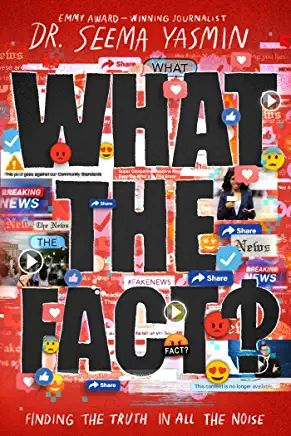
What The Fact? Finding The Truth In All The Noise by Seema Yasmin

A fascinating review of the history of information dissemination, how misinformation/disinformation gets around, and, most importantly, what to do about it. This work looks at disinformation/fake news and all associated/related concepts that dominate the modern political and social landscape. There is a good analysis of definitions and there are reasonable recommendations for how to counter the impacts of disinformation. It is comprehensive and precise, richly grounded in social science research. Non-fiction, There is a good analysis of definitions and there are reasonable recommendations for how to counter the impacts of disinformation. Targeted at a young adult audience, Dr. Yasmin doesn’t tell kids what to think but helps them think about their own views and prejudices that make it harder to see the perspectives of others. Reviewed by a Washington Middle School Student

The Dark Was Done

It’s a beautiful book which speaks to a common childhood fear. When the dark gets tired of everyone pushing it away, being the cause of so much fear, it leaves altogether, leaving a world bathed in unending light. At first everyone is delighted, even if they can’t tell the difference between night and day. But eventually a small boy starts missing the sounds of crickets and the twinkling of stars. His parents explain that these are gifts of the dark, and that when it went away, so did they. The young boy decides to set off in search of the dark to convince it to return. Along the way he comes across a burglar who misses the shadows to hide in, a poet who misses the mystery of the dark, and a gardener who misses the smell of night jasmine, among others. As their band grows, the dark hears their cries and is persuaded to return and is welcomed. The illustrations are dreamy and fanciful.

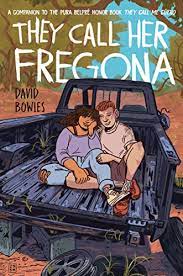
They Call Her Fregona- A Border Kid’s Poems by David Bowles

They Call Her Fregona by David Bowles brings up topics of Latinx and societal discrepancies with prose that keeps you coming back. The main character, Guero’s, girlfriend struggles with conflicts related to gender norms and the deportation of her family. Guero struggles with conflict related to how he will be a good boyfriend and how he will keep his friendships strong. This text is an important story of life in a border town from a voice that is rarely amplified. Hearing this story helps us to understand topics of judgment that readers might not have considered before. The use of verse as the main character’s journal entries makes this book an incredibly well-done piece. There are individual entries that are dedicated to characterization for supporting characters, there is a glossary in the back that helps the reader to access the name-calling, slights, and other Spanish terms that might otherwise go unknown. The prose has some elements of rhyme, but it isn’t overly used and helps to emphasize the importance of the topic the author is highlighting. Middle-grade readers will like the relationships and issues presented in the text. LGBTQ+ book fans will enjoy the seamless weaving in of societal topics related to gender norms and language. The representation of LGBTQ+ supporting characters confronts heteronormative literature.

Reviewed by a Washington Middle Show Teacher.