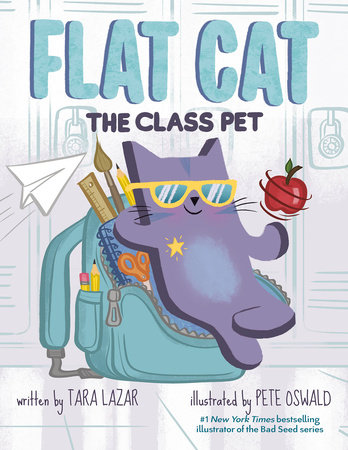
Lazar’s follow-up to the Sasquatch Award-winning Flat Cat sees Flat Cat attending school with a neighbor. Kids will love seeing the familiar structure from the beginning of the first book but will be treated to an entirely different type of story as Flat Cat is used for things like a paper airplane and a homework assignment at the school. Flat Cat poofs up again by the end of the story, and kids will love seeing him rolling around the classroom. Fans of the original will enjoy seeing Flat Cat in this new setting, and everyone will love the moment when Flat Cat transforms into his poofy version.
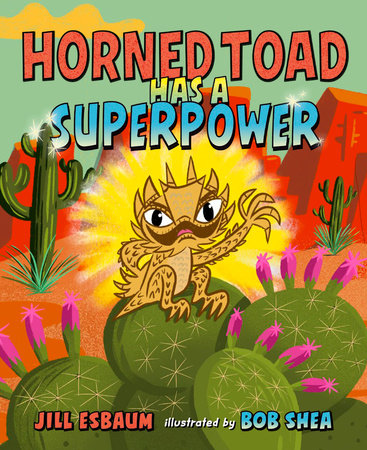
Jill Esbaum and Bob Shea are back with a new nonfiction title in their Secret Animal Superpowers series. This time, we’re learning about Horned Toad’s superpower, and it’s another one that’s sure to get the “Eeeeeew!” reaction from kids that made Parrotfish Has a Superpower such a fun read-aloud. In this book, we follow a conversation between the titular horned toad and a burrowing owlet. Through their conversation, we learn a great deal of nonfiction information about both creatures. The illustrations are bright and engaging while also effectively teaching readers about horned toad behavior. There’s enough information for students to use this text for beginner research projects, but it’s engaging enough to keep kids coming back just for the fun of reading it. I highly recommend this book and the entire series.
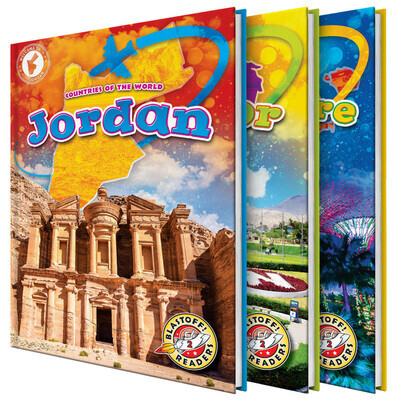
The Countries of the World series is a perfect addition to any elementary classroom or school library. These Level 2 Blastoff Readers are ideal for first through third graders interested in geography, working on research projects, getting excited about upcoming vacations, or learning more about their families’ countries of origin.
The nonfiction text features in these books are exceptional. The table of contents clearly outlines the sections, with each book including “All About ___,” “Land and Animals,” “Life in ___,”and “___ Facts.” The opening spread features a map alongside information about the country’s continent and capital. From there, high-quality photographs and fact boxes highlight natural landforms, weather, and animals through simple, accessible text. A section on daily life introduces readers to the country’s food, popular sports, and holidays, and many children will especially enjoy learning how to say “hello” in the local language.
Additional nonfiction text features, including graphs, are included in the “Facts” section, and the books conclude with a glossary, resources for further learning, and an index. I highly recommend this series for primary students.
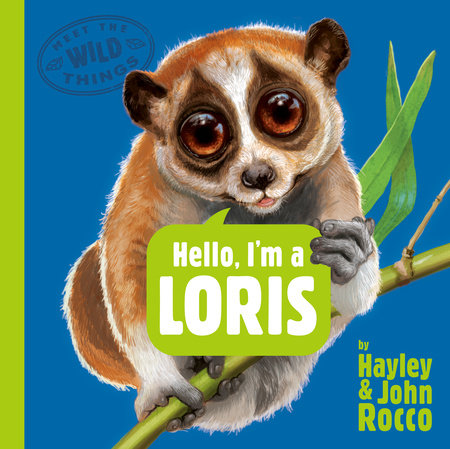
Hello, I’m a Loris is a delightful nonfiction picture book. The text is simple enough to be accessible to the youngest elementary school students but provides enough information to support research projects or just give readers a better understanding of this unique animal. The book also addresses the serious issues of habitat loss and the illegal pet trade in an age-appropriate way for young readers.
My favorite part of this book is the illustrations. The expressions on the loris’s face, though not objectively ridiculous in any way, had me laughing out loud several times. I am so excited to add this to my library because I know these pictures will make students fall in love with this creature and want to learn more about it. I highly recommend this book for both school and home libraries.
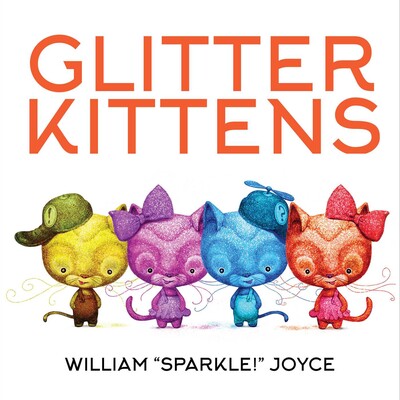
Glitter Kittens by William Joyce is sure to be a much sought after book in the library. It has cute kittens, bizarre side characters (e.g. Mr. Spudly the elegant potato and Crash the dented airplane), and glittery textured elements kids will love. The story tells of the Glitter Kittens, who are incredibly proud of their sparkle and shine. When their friends need help, though, the Glitter Kittens show that what’s on the inside is what really matters.
While this book isn’t quite as charming as a read-aloud as Joyce’s Rocket Puppies, it will likely be more popular at checkout. The illustrations are playful and silly, there are adorable Glitter Kitten songs sprinkled throughout, and the bright, colorful pages make it especially appealing for developing readers. It’s the kind of book kids will return to again and again, whether for the story, the illustrations, or just to touch the glittery pages.
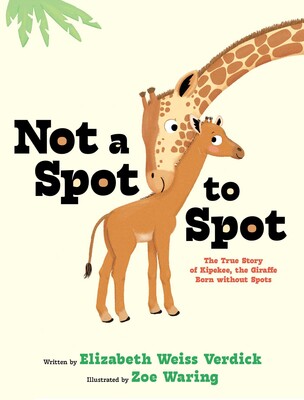
Not a Spot to Spot tells the story of Kipekee, a rare giraffe born without spots. The simple text makes the book accessible to young readers, and the colorful illustrations and adorable depictions of Kipekee, complete with rosy cheeks and charming expressions, will make them return to the book to look through the pictures. The rhyme scheme felt somewhat inconsistent, which occasionally made it difficult to read aloud smoothly, but the message of celebrating the qualities that make each of us unique comes through clearly. Many children will enjoy exploring the book on their own, to appreciate the cute animals featured throughout the zoo.
As a warning, there are no photographs of the real Kipekee included in the book, and searching for them will likely reveal that Kipekee died at just two years old, which may prove difficult for some children.
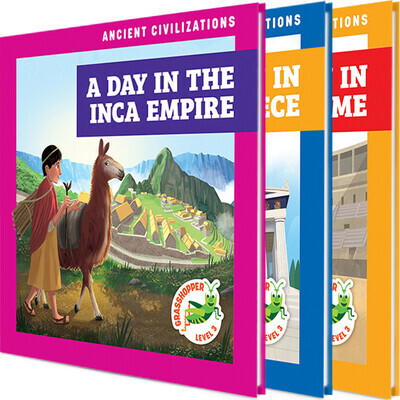
The Ancient Civilizations series features titles like A Day in the Inca Empire and A Day in Ancient Greece and is an excellent resource for helping kids understand what life was like in these ancient civilizations. Each book begins with practical tips for teachers and caregivers to support young readers’ understanding and enjoyment of the text. Though the series is ideal for reading with adult support, the text length and word choice also make it very accessible for independent reading.
The authors depict key features of life in these civilizations, but they also thoughtfully include details about the lives of children as well as events and customs kids will find particularly intriguing. These elements help keep young readers engaged throughout. The nonfiction text features at the back of each book are another highlight and make this series an especially valuable addition to a classroom or school library. The simple timeline of key events and colorful map are perfectly suited to younger elementary students’ needs, while the glossary, index, and resources for further learning support research and provide opportunities to teach nonfiction text features.
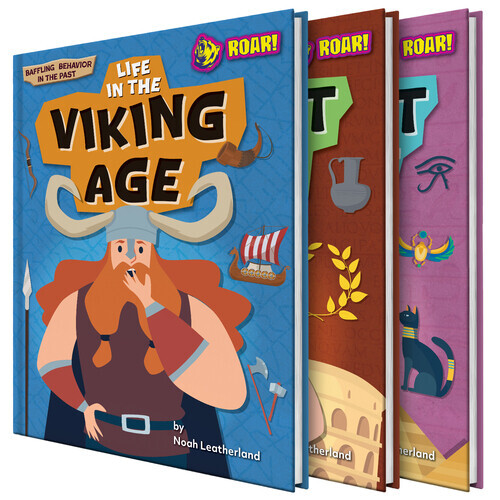
The Baffling Behavior in the Past series includes the titles Life in Ancient Rome, Life in Ancient Greece, Life in Ancient Egypt, and Life in the Viking Age. This is an incredibly engaging nonfiction collection for young readers. Each book is organized into double-page spreads that focus on specific topics, and this makes the content accessible and inviting. The table of contents allows students to easily locate information, while the layout also supports readers who prefer to flip to a random page and immediately find something interesting.
One of the strengths of the series is its balance of detailed information and kid-friendly appeal. Topics such as beauty routines, pets, gods, and battles are naturally engaging for elementary-aged readers but also provide detailed information about the time period. The authors clearly selected these topics both to provide important background knowledge and to hook kids with fun memorable details.
The visual presentation of this series is another strength. Each spread typically includes four short text sections, which helps prevent young readers from feeling overwhelmed by large blocks of text. Potential new vocabulary words are highlighted in bold and explained in a glossary. The books also feature a strong selection of visuals, with each spread containing at least two high-quality images, and many containing additional smaller images or added graphics. Additional resources at the back of each book, including an index, suggested further reading, and a QR code for extended learning, make this series especially useful for both independent exploration and research. Overall, the Baffling Behavior in the Past series is an excellent choice for mid- to upper-elementary students, combining approachable text, engaging topics, and strong visual support to bring ancient history to life.
Written by Terrance Crawford, Illustrated by Dave Bardin
The After-School Heroes series is aimed at beginning chapter book readers. Larger print, illustrations on most pages, and simplified sentence structure all support early reading skills. Shuri Takes Control follows Shuri, from the Black Panther universe, as she works to stop an evil takeover of Stark Center. While other superheroes make appearances, it’s Shuri who takes the lead in saving her friends.
The story highlights the importance of perseverance, and Shuri herself is a fantastic role model, especially for kids interested in STEM. Her intelligence, creativity, and bravery are highlighted throughout the book.
The vocabulary will be more accessible for kids who are already fans of superheroes, particularly those familiar with the Marvel universe and Black Panther. That said, early readers may still need support with some of the trickier words. Overall, though, this is a strong addition to any early chapter book collection, particularly for superhero-loving kids looking for adventure.
Written by Gloria Amescua and Illustrated by Mariyah Rahman
A sweet story inspired by the author’s own invented lullaby, Abuelita’s Song is a beautiful celebration of family connection. Spanish words and phrases are woven naturally throughout the text, along with the lullaby itself (presented in both Spanish and English), which adds depth to the story. Since the song appears many times throughout the book, readers should be prepared to sing if reading it aloud.
The illustrations are bright and full of warmth, perfectly capturing the love shared by this family. There is a deep sense of heart and affection on every page, and I can see many kids gravitating toward this book for a sense of comfort and love.