About Candy Ranney

Candy is an elementary school librarian in Shelton, WA at the school where she was a student (so many years ago!). Her library is unique in that she brings her background and love of biology to her students in many ways. Not only does she have an awesome selection of science books; she also has a beaver, bobcat and mink sitting on her shelves and a variety of jarred specimens for her students to study. When she's not in the library, she is taking care of her baby trees on her tree farm and hanging out with her family and many pets. * 2025 WA Library Association School Librarian of the Year

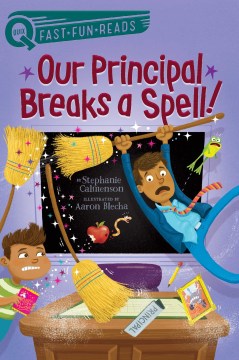
Our Principal Breaks a Spell

Mr. Bundy , principal of P.S. 88, receives an interesting letter and magic powder sample from a mysterious person named Olivia Martin. He is contemplating inviting her to put on an assembly when Roger, a student, comes in to assist Mr. Bundy. Students rotate through daily through Mr. Bundy’s office as helpers and Roger is a great kid. Mr. Bundy gets called out of his office and leaves responsible Roger alone to fold newsletters.

Well, even great kids can get into some mischief and Roger does just that when he sees the magic powder and has the idea to use it to turn the broom into a self-powered sweeper. The broom goes wild and ends up splitting into several brooms along the way as Roger and a few classmates try vainly to stop the craziness. Mr. Bundy steps out to the hall and sees the mayhem, which is now entering the classrooms, runs to his office and calls Olivia Martin for help. She gives him the spell to make everything right and he does so. But, he has a surprise for the students of P.S. 88. Assembly day comes and so does Olivia Martin, swooping in on a glowing broom and sprinkling magic powder around the room. Flying brooms appear and the teachers and students hop aboard for one of the best assemblies ever!

This short chapter book is a nice beginning book for those students that want to try something different than a picture book. Pages explaining the cast of characters and a word list are helpful for young readers. Black and white illustrations are simple and help move the story along. It’s a fun romp of a read for kids and refreshing to see that even the good kids can get into a little mischief sometimes!
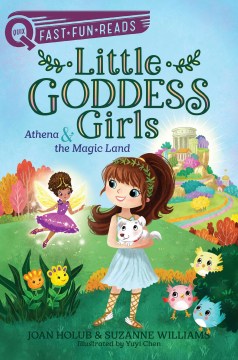
Athena & the Magic Land

Modern day, normal Athena is on her way home from school and playing a video game along the way. She is engrossed in the game, which includes a cute digital dog named Oliver when she has a run-in with mean girl, Medusa. These people sound familiar. Not surprisingly, Athena gets swept up in a magical storm that sends her close to Mt. Olympus wearing clothes that look suspiciously Greek . A tiny goddess, Hestia, advises her to walk along the ‘Hello Brick Road’ (also familiar…) to meet Zeus, who can help her return home. Along the way, she meets up with a Medusa who looks a lot like the nasty one from home, but has snakes for hair and wants her magical sandals so badly she’ll turn Oliver to stone. Athena also helps a new friend, Persephone, who tags along hoping to ask for some magic help from Zeus, too.

We don’t find out in this book whether they make it to Mt. Olympus yet. That sets us up for future books and adventures. Black and white illustrations move the story along and unfamiliar words and characters are explained on the “Cast of characters” page and “Word List” page. There are also questions at the back for reflection. This is a simple read that will be perfect for those readers that want to move away from picture books, but aren’t quite ready for chapter books. The story line is a bit saccharine, but does introduce some mythological characters and might pique interest in further exploration.

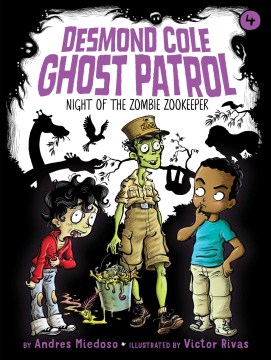
Night of the Zombie Zookeeper

Desmond and his friend, Andres, have great plans for their class field trip to the zoo. Desmond has mapped out the best places to go and when they should be there. Their plans are derailed, though, when they discover a zookeeper that is a zombie. How do they know that he’s a zombie? His greenish skin is a big clue. But, as they follow him (and not their planned route), they see him in the seal tank cleaning the windows without an air tank! Then, he goes into the lion enclosure and feeds the lions by hand. There’s more evidence, but it’s clear already that they have a zombie on their hands. And, why do they care? Desmond and Andres are the Ghost Patrol and they need answers.

They locate a more normal looking zookeeper and tell her about her zombie co-worker. She seems unusually unconcerned about it and sends them away to the picnic area with their class. But, the Ghost Patrol is undeterred. They have a few more crazy encounters with the zombie. He saves Andres from a nasty peacock and his friends, the buffalo and then accidentally tosses slimy animal food all over Andres before saving him from the hungry animals that want to lick all their food off him. Finally, Peggy (the normal zookeeper they spoke with earlier) explains that she knows that “Zoombie” the zookeeper is a zombie. Apparently, zombies make the best zookeepers, because they can clean underwater without air and aren’t grossed out by the nasty food or animal waste they have to clean up. And, the animals love them!

So, Desmond and Andres solve the mystery of the zombie zookeeper and make a new friend in the process. Now, whenever they go to the zoo, they look up Zoombie and he makes sure they have a great time with the animals.

This fun, slightly creepy book will be a hit with the younger crowd. Black and white illustrations add to the mood and the text is accessible. The characters are diverse and likable and the first person narrative (Andre) makes the reader feel as if he is a pal wandering around and chasing zombies with the Ghost Patrol. Recommended.

Click

Fifth grade Olivia has many friends and can float easily between groups. One day, Mr. Florez (her teacher) announces the date for the annual fifth grade Variety Show. The students excitedly discuss ideas for their acts and form pairs and groups. That is where the problems begin for Olivia – none of her friends ask her to join their acts! Olivia realizes at that moment that while she has lots of different friends and friend groups, she does not have a best friend. It just hasn’t ‘clicked’ for her.

This dilemma throws her into a panic and she begins to feel isolated and alone. She turns to her family. Her mom wants to fix things for her, which is never a good idea (in a kid’s mind). Help really comes in the form of her rather hip aunt, who has Olivia over for an aunt/niece sleepover and shows Olivia videos of old television variety shows. Aunt Molly also shares her school talent show experience, when she did a solo act and felt great about it. Olivia studies the old shows, thinks about her aunt’s youthful experience and determines the best route for herself.

She returns to school and, as Mr. Florez notes student acts, announces to the class and her teacher that she wants to host the fifth grade Variety Show. Her classmates embrace this idea and her family supports her as she takes on this challenge. When asked how she even thought of the idea of hosting, Olivia replied that it jut “clicked”. In the following days, she and her friends reconnect and she happily moves between friend groups, sometimes introducing them to each other with fun results. The story ends on the night of the Variety Show as Olivia takes the stage and the curtain opens.

This is a wonderful book with a story that many kids of this age can relate to on many levels. Friendships are difficult to navigate and understand and the feeling of isolation can happen on any given moment for the tween crowd. Olivia’s emotions are clearly visible as she grapples with this problem – dreaming about it, thinking about it and talking about it with her family. The beauty of the solution is that is comes from herself. Her aunt gives her some information and Olivia works through it all and is confident in her plan and place.

Illustrations are pen and ink with muted colors and the characters are diverse. Fans of Smile and Best Friends will love this first book in the series.

Carmen Sandiego. The Fishy Treasure Caper: a graphic novel

Wow! This book takes me back in time, from a 90’s PBS cartoon to now, a Netflix series and graphic novel! In The Fishy Treasure Caper, Ecuador is the country in the spotlight. Carmen and her crew (Ivy, Zack and Player) are attempting to locate a possible treasure trove of gold coins from a sunken ship before the evil folks at VILE locate them and use the proceeds for their dastardly deeds. Carmen finds the sunken ship and is holding a gold doubloon when VILE’s El Topo arrives and an underwater battle for the gold ensues. Unfortunately, the coin is swallowed by a tuna during the melee and caught by a fishing boat.

This leads Carmen, her crew as well as VILE’s El Topo and Le Chevre to the fish market to retrieve the doubloon. Along the way, the team meets Dr. Pilar Marquez, an archaeologist, who gives them some background on the doubloon and reveals that it is not worth much monetarily. But, it’s cultural value is immense. Carmen dons her signature red coat and hat and she, along with her crew, battle the bad guys for the doubloon. She then does the right thing and gives it to Dr. Marquez and heads off to her next adventure…in Amersterdam!

Information about Ecuador is sprinkled throughout the story and a final two-page spread gives a great deal of relevant facts. Readers learn some background details about Carmen and VILE and her cool James Bond-style spy tools interspersed with the story line.

The illustrations are crisp and the story flows well through the panels. Dialogue is easy to follow an parts of the story are detailed in boxes attached to various panels.

A new generation of kids can enjoy the (educational) adventures of Carmen in this format and its associated Netflix series. I, for one, can’t wait to see where Carmen goes next! Highly recommended.

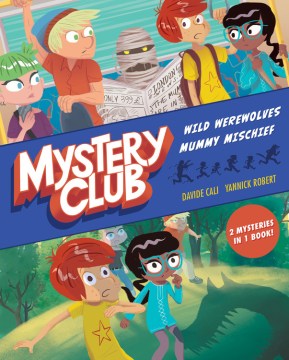
Mystery Club

This graphic novel has two stories set in London. Four kids (Tyler, Zoey, Kyle and Ashley) are part of the Mystery Club and are dedicated to solving mysteries involving monsters. In Wild Werewolves, the group solves the sudden appearance of numerous werewolves that roam the city. Mummy Mischief involves a lovelorn mummy roaming the subways. Both stories have an enemy named Harnak that is thwarted by the kids each time.

The stories are light and flow smoothly. The colors are bright and and the illustrations are not overdone. This is a fun, “safe” graphic novel for younger readers and won’t shock anyone. The reading level is set at a 2.8 and interest level at 3-6. But, younger students will certainly understand and enjoy it and your hi-lo readers will appreciate it.

Judy Moody Gets Famous!

Third grader Judy Moody has many moods and the one we read about here is jealousy. She is jealous of her classmate, Jessica Finch, who gets her picture on the front page of the newspaper for winning the spelling bee. Judy wants that same fame so badly that she will do anything to achieve it. As fans of Judy Moody know, this might backfire and Judy may well become rather infamous instead! Her brother, Stink, appears in this book as well. So, fans of his series may enjoy reading about Stink’s adventures with his sister as well.

Illustrations by Peter H. Reynolds are crisp and realistic, adding to the story as pictures the size of thumbnails to two page spreads. They move the story along nicely and give it a clean, fresh look. The cover art is bright and will attract young readers that might not have found the previous editions as appealing. Recommended.

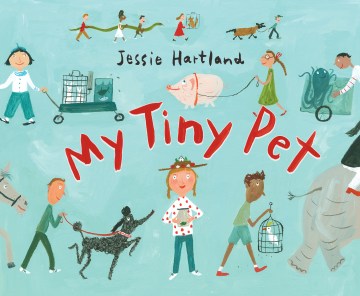
My Tiny Pet

When a young girl’s parents decide to simplify and downsize from their “ginormous” house with its (very) many pets, she worries that her pet-owning days are over. She learns about some wonderful new “pets” in her science class, organisms such as nematodes, paramecia and, her favorite, tardigrade (water bear). She makes a case for this new pet and her parents agree. The little girl is thrilled, because she can take her new pet anywhere – even to a new, smaller home!

This book introduces many discussion-worthy ideas that can lead in many different directions – research, narrative writing, art and science, to name a few. What does pet ownership entail? How many pets are too many? What are the many microscopic organisms around us? Can we collect and observe some of those organisms?

Text is spare and the illustrations are lively and colorful. The final page has a photo of the tardigrade and an author’s note with more information. Wow! This book is a great addition to your collection, simply due to its versatility and usefulness as a teaching tool. Plus, the kids will love the little critters inside. Highly recommended.

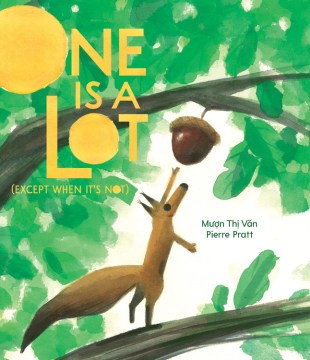
One is a lot: (except when it’s not)

The concept of enough, too much and not enough are thoughtfully and simply conveyed in this picture book. One is a lot when talking about the sun, but not enough when talking about feeding ducks with one breadcrumb.

This story begins with a girl and her dog and a boy and his dog. Individually, the children play in the park with their pets and we see how the same number can be a lot, not enough or too much. Two is most often too much, especially when the two dogs’ leashes become tangled. But, one hello is a lot and brings the two friends and their pets together. The final page is a lovely scene with the now grown boy and girl, their daughter and a dog that looks like a mix of their two pets from the book’s beginning.

The illustrations are colorful and appealing. The text is minimal and the characters are diverse. The story will generate a good discussion about numbers and perspective.

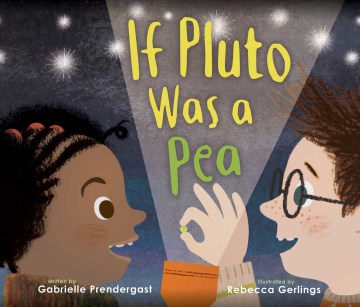
If Pluto Was a Pea

“If Pluto was a pea,” begins every two page spread of this delightfully illustrated science book for the younger crowd. Two children camping in their backyard compare the solar system to everyday items, using a pea and Pluto as a starting point. For example, earth would be a golf ball (with measurements in both centimeters and inches) and the Jupiter would be a beach ball. The book ends with how small they are, but how big their thoughts are and how great the things they could do might be.

Digital illustrations of a black girl and white boy are energetic and engaging. Text is simple and repetitive. The information is presented in a format that young readers can understand, which is very helpful for a topic that is much bigger than most children can grasp. Comparisons at this level are a fantastic way to help students understand and relate to scientific content that they cannot touch or examine easily. It will be quite simple to gather the items noted in the text for reinforcement. Recommended.