About Candy Ranney

Candy is an elementary school librarian in Shelton, WA at the school where she was a student (so many years ago!). Her library is unique in that she brings her background and love of biology to her students in many ways. Not only does she have an awesome selection of science books; she also has a beaver, bobcat and mink sitting on her shelves and a variety of jarred specimens for her students to study. When she's not in the library, she is taking care of her baby trees on her tree farm and hanging out with her family and many pets. * 2025 WA Library Association School Librarian of the Year

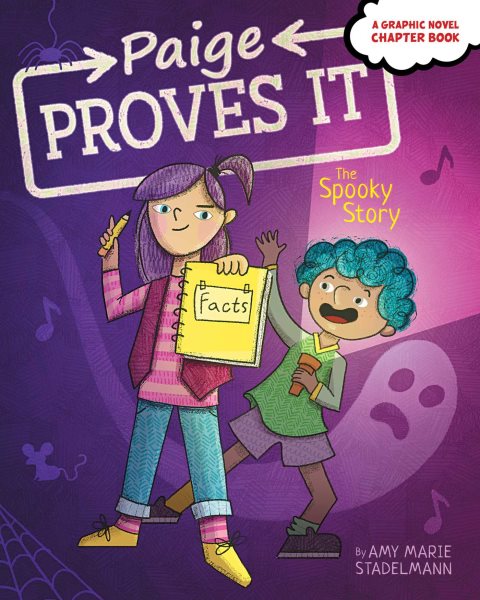
The Spooky Story

by Amy Marie Stadelmann

Paige is a fact collector and carries around a handy notebook in which to write her facts and solve mysteries. Along the way, she engages the reader by sharing her notebook pages and insights. One might notice that she seems to be using parts of the scientific process in her methods. In “The Spooky Story”, she and her friends, Penn and Karla, investigate the mysterious ghostly occurrences at Karla’s home. Karla shares a house with her grandmother, who teaches music to a collection of interesting characters that were introduced in the first book of the series. In this case, there are ghostly footsteps on the stairs, an upstairs door that slams shut and eery shadows that show up. Paige and friends are able to use their keen senses to determine that the occurrences can be explained with observable facts, although Penn is still a little caught up in the notion of ghosts. Paige remarks, “Even when you have fully investigated, made clear observations, and proven the facts, some people still come to their own conclusions”. Hmm…that rings true even with adults, doesn’t it?

There are color illustrations throughout and glimpses of Paige’s notebook pages help explain her reasoning as the story moves along. The cover of the book calls this story “a graphic novel chapter book”, which should hook your graphic novel readers AND your easier chapter book readers. Highly recommended.
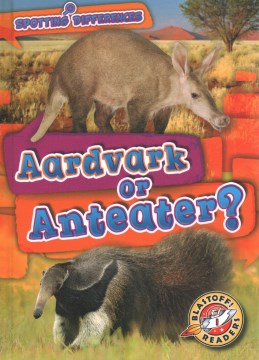
Aardvark or Anteater?

by Mari Schuh

Blastoff! Readers Level 1: Spotting Differences is a twenty book set that delves into the differences between animals. Each book focuses on a pair of animals and details their physical and behavioral traits. Text is accessible to your newest readers and accompanying illustrations are high quality and engaging. Nonfiction text features include table of contents, index, glossary and labeled diagrams. Unfamiliar words are bold type and the animal pair’s differences are repeated at the end as a wrap up. Suggested websites and resources are noted for further investigation.

Aardvark or Anteater? is a highly engaging look at two animals that initially seem very similar. Yet, we learn that despite those similarities, they are very different animals. They are both mammals with long tongues that eat ants. But, their fur, snouts, ears and habitats are very different. New readers will enjoy discovering new information in a simply written book packed with facts and wonderful photos. This won’t be on your shelves for long!

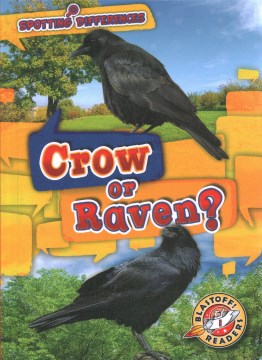
Crow or Raven?

by Mari Schuh

Blastoff! Reader Level 1: Spotting Differences is a twenty books set that delves in the differences between animals. Each book focuses on a pair of animals and details their physical and behavioral traits. Text is accessible to your newest readers and accompanying illustrations are high quality and engaging. Nonfiction text features include table of contents, index, glossary and labeled diagrams. Unfamiliar word are bold type and the animal pair’s differences are repeated at the end as a wrap up. Suggested websites and resources are noted for further investigation.

Crow or Raven? There’s a lot to learn about these two types of birds! This book gives some really solid differences between two birds that seem very alike. For instance, crows have fan shaped tails and ravens have wedge shaped tails. Additionally, their beaks, size and throat feathers differ. Accompanying these memorable facts are photos that show those characteristics very clearly. Young readers will enjoy learning about these differences and will be quick to share! Word choice is appropriate to the audience and the nonfiction text features are helpful. Recommended.

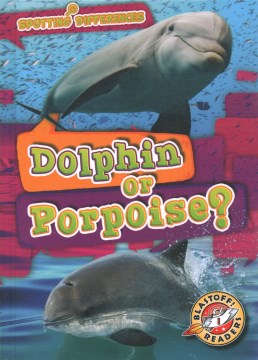
Dolphin or Porpoise?

by Mari Schuh

Blastoff! Readers Level 1: Spotting Differences is a twenty book set that delves into the differences between animals. Each book focuses on a pair of animals and details their physical and behavioral traits. Text is accessible to your newest readers and accompanying illustrations are high quality and engaging. Nonfiction text features include: table of contents, index, glossary and labeled diagrams. Unfamiliar words are bold type and the animal pair’s differences are repeated at the end as a wrap up. Suggested websites and resources are noted for further investigation.

Dolphin or Porpoise? starts out by sharing that both are mammals and swim in oceans or rivers. Then, the book describes several different features, including fin shape and size, tooth size and their general body types. Behavior differences are also touched upon. Young readers will be able to share some solid facts about each animal and make some great comparisons. This book would be great for beginning animal reports. It has just enough information to be interesting and not so much that it’s overwhelming. Perfect for the target audience!

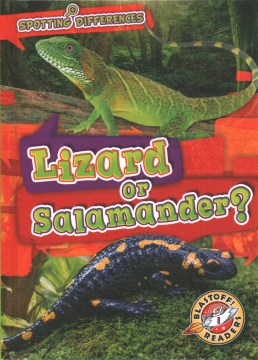
Lizard or Salamander?

by Mari Schuh

Blastoff! Readers Level 1: Spotting Differences series is a twenty book set that delves into the differences between animals. Each book focuses on a pair of animals and details physical and behavioral traits. Text is accessible to your newest readers and accompanying illustrations are high quality and engaging. Nonfiction text features include: table of contents, glossary, index and labeled diagrams. Unfamiliar words are in bold type and their differences are repeated at the end as a wrap up. Suggested websites and resources are noted for further investigation.

Lizard or Salamander? looks at the differences between those organisms. Different physical features are noted like dry skin vs. wet skin and claws vs. no claws. Then, behaviors are compared. The reader also learns that lizards come out at daytime and salamanders are active at night. and each live in different places. Photos are clear and crisp and text is not dense. Give this to your new readers as the books have high interest content. These won’t stay on the shelves!

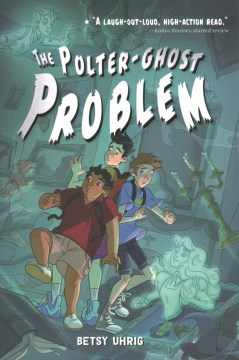
The Polter-Ghost Problem

by Betsy Uhrig

What do you do when you have a long, boring summer ahead of you and a journal-writing assignment to go along with it? Three friends (Pen, Aldo and Jasper) discover an abandoned orphanage with some ghostly children. These young ghosts are trapped in their old home by a poltergeist that throws some major tantrums, furniture and lots of other stuff. The boys want to help these trapped entities while still dodging Aldo’s older brother and the possibility of being grounded for the rest of the summer. They investigate the old orphanage through documents at the library and the cranky librarian turns out to be more help than they can believe. With her next to them and Aldo’s brother tailing them, they plan to figure out what the poltergeist wants and free their ghostly friends.

Told in a conversational tone, with lots of middle school humor, this story moves along at a nice pace. It is humorous and slightly scary at times, ending with a nice twist that wraps it up with some laughs and a a big brother that really is kinda nice to have around. Give this to your readers that enjoy slapstick adventure.

Frog Can Hop

written by Laura Gehl and illustrated by Fred Blunt

Frog can do many things – hop, shop, bop and chop. Pig can….flop. But, Frog suddenly flops and Pig takes over and hops, shops, mops, bops and pops. He pops a little too much popcorn and Frog jumps in to hop mop, and flop with him. They can do it all together!

Simple, repetitive sentences and engaging illustrations make this short reader a perfect book for a young student. There is an added word box in the front and questions in the back to increase depth of understanding. Put this in your library for kids that love “Elephant and Piggie”. They’ll thank you!

Night Market Rescue

written by Charlotte Cheng and illustrated by Amber Red

GoGo, a stray dog, is resting near the bustling night market when his nose leads him to some delicious snacks. As he wanders through the crowds, he notices a little girl that looks sad and alone. He leads her through the market, sharing its vibrant scents and sights. Eventually, she breaks away from him to run into her parents’ arms, who tearfully hug her. GoGo thinks his friend is now gone. But, no! They call him over and he now has a family and a home!

This vibrantly illustrated book is a wonderful glimpse at the lively hustle and bustle of a night market. Text is spare and the illustrations serve to fill out the story beautifully. And, who doesn’t love a story where the girl and the dog become best friends forever?

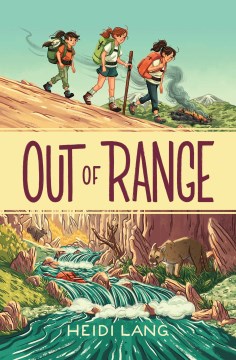
Out of Range

by Heidi Lang

Three sisters are sent to a rigorous camp together as a punishment for their constant fighting and terrible choices. Ollie ( age 9), Emma (age 12) and Abby (age 14) had moved to a new home and making friendships was difficult. Prior to this move, they had had typical sibling relationships, sometimes doing things together or sometimes two breaking off to have their own adventure. Abby starts to pull away as she tries to forge new friendships and in the process embarrasses Emma at school pretty horribly. Emma and Ollie then team up to get revenge and target Abby. As a result, their parents send them to a camp known to help kids figure things out.There are lots of unpleasant hikes and the girls don’t seem to regain their previous close bond. There is an incident and the head of the camp decides to take the girls on a punishment hike. During this hike, the girls stray from the trail and leave the camp director. What ensues is a harrowing few days as the girls work together, surviving every possible outdoor disaster (ear drownings, falling down a cliff, bear encounter and so much more) and realize they really do love each other.

The story is told in alternating views and jumps back and forth from the present (at camp) and the past (all the awful stuff leading up to it). These girls are absolutely horrible to each other and I was feeling secondary embarrassment on their behalf with each social/emotional attack they wielded. The camp part was a little over the top, with every conceivable disaster befalling the girls. I could see a couple things going wrong. But, this was EVERYTHING. You might want to take my view with a grain of salt, though, because my family has grown up in the outdoors and guides in Alaska during the summers. So, that part might be more believable to a reader that doesn’t have such a background. I did like how the girls spent quite some time reflecting (individually and together) on their actions and came to the conclusion themselves that they needed to change. Buy this book if you are looking for a survival story that has all the bells and whistles.

First Day, Worst Day

written by Andy Nonamus and illustrated by Amy Jindra

An anonymous narrator (we know this because we can’t see a face, which is covered by a sticker in all the illustrations and there appears to be no name) recounts the adventurous horror of the first day in a new school. Readers will cringe and laugh at all the crazy stuff that happens in this weird place, from being “attacked” by a pack of dogs that want to lick the maple syrup off their shirt to locating a classroom through a locker! Along the way, friendships are made and what started out as the First Day, Worst Day ended as the First Day, Best Day.

Written in very accessible language with fun black and white illustrations, this book will appeal to those reluctant readers that enjoy books that are humorous in a goofy way. Characters are diverse and their behaviors and interactions are age appropriate. This is the beginning of a series that will be popular. Recommended.