Whose Poo? Series

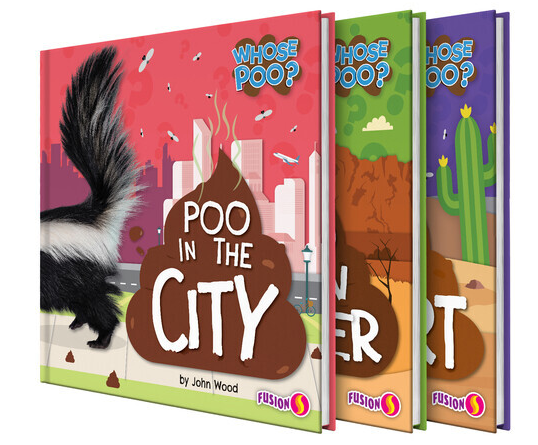
A guessing game about poo? Each book in the series features a different biome and has pictures of scat and has the reader guess the animal the scat belongs to. Turn the page to find out the answer and facts about that animal and what it eats. The photographs give you an up close look at the poo. There are several facts on each page inside different text boxes and captions. Vocabulary that may be unfamiliar to the reader is in bold and is included in the glossary at the back of the book. This is a humorous, fun look at animal scat. The warnings to not touch poop is an appreciated addition. Geared towards 1st – 3rd graders, this is sure to fly off the shelves.

The titles reviewed in this series: Poo Down Under, Poo In the Desert, Poo At the Zoo, and Poo in the City.

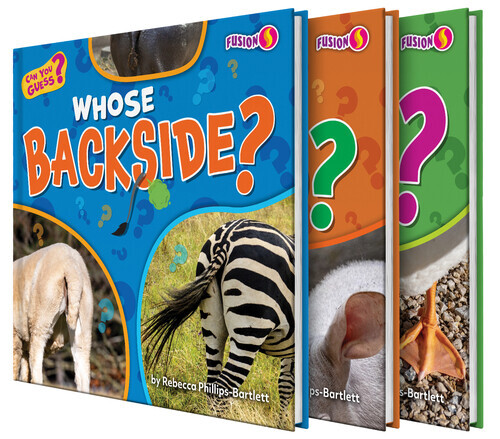
Can You Guess? Series

This series geared towards 1st through 3rd grade asks if you can identify an animal by a body part. Can you guess an animal by looking at its feet? Each book in this series looks at a different body part and has the reader guess the animal from three choices. The next page gives the answer along with information about that animal and how that body part is important to them. The information is provided in different text boxes around the page with bold text and a glossary at the back. There is quite a bit of text per page which may be better for 2nd and 3rd grade.

Who Is Cuter? series

This series geared toward Kindergarten through third grade readers compares two different adorable baby animals. Throughout the books, the similarities in the animals physical characteristics and behaviors are highlighted. The text is simple with two sentences on a page. Bold text highlight words that may be unfamiliar to the reader and a glossary is included in the back of the book. The colorful photographs include labels pointing out the characteristics of the animals. There is a brief photo synopsis at the end asking the reader which baby animal is cuter and includes a website where the reader can vote for their favorite. This series currently has 16 different book.

Jasper Rabbit’s Creepy Tales! Troubling Tonsils by Aaron Reynolds

Jasper Rabbit tells the tale of Charlie Marmot. Charlie has a sore throat and when his dad takes him to the doctor, the doctor says he needs to have his tonsils removed. Charlie decides he wants to keep the tonsils in a jar and take them to class for show and tell. Only before his surgery a strange sound keeps him up at night. And on the day of surgery, his tonsils are gone.

Jasper Rabbit’s retelling reads like a show from the Twilight Zone which may be missed by younger readers. The creepy tale will be a hit for those who like spooky tales. This is a short chapter book with any pictures being gray and black. The only thing that has color is the tonsils.

Beverley, Bat Your Service by Kelly Collier

Beverley Bat lives in an old abandoned house. He loves to entertain, but no one comes to visit until one day a car pulls up with people in it. Excited to entertain, Beverley reads about how to host people guests. Beverley sprays a welcoming scent of eau de rotten eggs and cooking Bolognese de millipede for dinner. The humans didn’t appreciate all of his efforts.

A fun, not so spooky story. The use of thought and speech bubbles and onomatopoeia draws readers into the text. The illustrations are colorful and the characters are expressive.

Zombees by Justin Colón

A swarm of zombees invade a town on Halloween night. They are a ghastly green and drag a glowing sack. Did they come to eat our brains? The town gets out their smokers to ward off an attack. The text is rhyming and leads us on a frolicking tale with a twist at the end.

The illustrations are color and bright with the “ghastly green” drawing readers in. Each page contains two lines of rhyming text.

Perfect choice for a not so spooky Halloween read. Fans of Creepy Carrots will delight in this tale.

Squid in Pants by Kaz Windness

Squid is sad because he does not have any clothes. His friends find some clothes hanging over the side of a boat and silliness ensues until the owner of the clothes wants them back. Told in rhythmic rhyming text, this Level One Ready to Read book features short sentences and dialogue. The illustrations are quirky and colorful.

Unstoppable John: How John Lewis Got His Library Card and Helped Change History by Pat Zietlow Miller

John Lewis wanted a books. Lots of them. John’s family couldn’t afford books and his school didn’t have very many books. What John needed was a library card, but in 1956 John, age 16, was denied a library card at Pike County Public Library in Troy, Alabama. There were many laws that were unfair to Blacks and John decided to fight against them. He organized sit-ins at lunch counters and stand-ins at movie theaters.

This biography of civil rights leader John Lewis follows the storyline of his desire to read and get a library card. It shows how he fought back against the unjust laws of the time and the impact he has had on our nation. At the end, there is a timeline of John Lewis’s life and a bibliography to learn more.

Outside Mom, Inside Mom by Jane Park

A young child is about to start at a new school. Instead of wearing his favorite red shoes, he chooses sneakers to fit in. Others comment on how quiet his mom is, but he knows that at home she is different. The story shows how the mom and the boy show different sides of themselves when they are in public and when they are at home. Finally the boy is brave and wants to be his authentic self which encourages the mom to be as well. The illustrations were more muted in color when talking about outside mom and vibrant when we learned about inside mom. I like the message of the story, but it seemed a little disjointed in parts and left me with questions.

Alex’s Field Guides: But Where Do Sea Turtles Live? by Elina Ellis

The Curious Explorers Club wants to know where sea turtles live. Alex has the answer in her journal, but the Explorers want to discover the answer on their own. Throughout the story the explorers discuss why a sea turtle would or would not live in a certain location. Alex’s journal pages give facts about sea turtles.

The pictures are colorful, engaging and fill the page. The pictures and dialog feel geared towards younger readers, but the fact pages are text heavy with a lot of information on a two page spread. Resources at the end list websites for information about sea turtles and protecting sea turtles. This is the third book in the series Alex’s Field Guides.