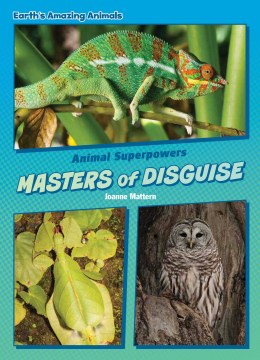
Masters of Disguise

Six animals and their use of color, shape or markings to disguise themselves are described in this colorful slim volume from the Animal Superpowers series. The animals are from a variety of habitats, from ocean to desert and their natural abilities in camouflage are noted as occurring for a variety of important reasons. We learn that some animals are predators and use this ability to sneak up on their prey and others use it as a protection against their own predators.

Full color photos complement the text and bold words are defined in a glossary at the end of the book. Some cartoon-like illustrations break up the text and “Now you know!” boxes with additional cool facts are interspersed throughout.

This is a good introductory book to a variety of species and their use of camouflage. It might be lead to further investigation into this aspect of the animal kingdom.
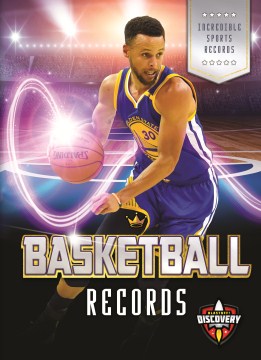
Basketball Records

Young basketball enthusiasts will devour this slim volume of records detailed in glossy photos and succinct prose. Both NBA and WNBA records are included, along with the former record-holders. While there are no long lists of the sport’s record-holders, readers will appreciate the information about the current top placer. Those that want more will use this book as a jumping off point for further research.

Typical nonfiction features, such as captions, table of contents, glossary, bold words and index are included. Fans wanting more information are advised to go to the publisher’s ‘Factsurfer’ website.

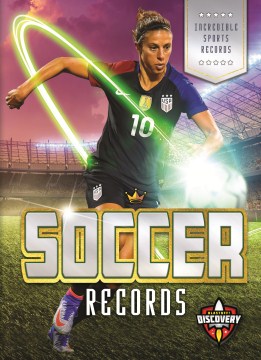
Soccer Records

Soccer is gaining in popularity at a fast pace and this book will satisfy your young sports enthusiasts’ craving for information. Both male and female athletes and teams are highlighted, with glossy photos an short descriptions of their record-breaking feats.

Typical nonfiction features are included: index, glossary, table of contents, bold words and captions. Suggested websites for further exploration are included. This book is attractively laid out and will not be on your shelves very often!

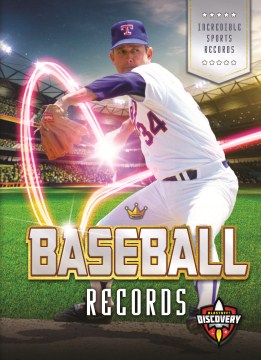
Baseball Records

Baseball has been around for a very long time. As a result, there are many records that have been achieved and broken over the years. This book, part of the Incredible Sports Records series, goes into many team and individual records. Readers will learn about the longest game on record (26 innings!) to pitcher Cy Young’s long-time win record set in 1911. Not only are current, record-holders described; their predecessor is listed as well.

Young sports enthusiasts can rejoice in a book chock full of information about baseball greats over the long history of the sport. Glossy pictures and short write-ups detailing important records in the baseball are a pleasing addition to a somewhat crowded field of sports trivia books. Recommended.

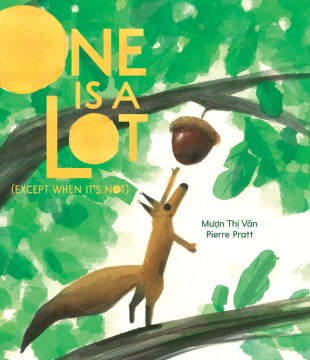
One is a lot: (except when it’s not)

The concept of enough, too much and not enough are thoughtfully and simply conveyed in this picture book. One is a lot when talking about the sun, but not enough when talking about feeding ducks with one breadcrumb.

This story begins with a girl and her dog and a boy and his dog. Individually, the children play in the park with their pets and we see how the same number can be a lot, not enough or too much. Two is most often too much, especially when the two dogs’ leashes become tangled. But, one hello is a lot and brings the two friends and their pets together. The final page is a lovely scene with the now grown boy and girl, their daughter and a dog that looks like a mix of their two pets from the book’s beginning.

The illustrations are colorful and appealing. The text is minimal and the characters are diverse. The story will generate a good discussion about numbers and perspective.

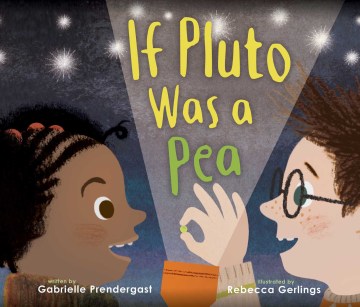
If Pluto Was a Pea

“If Pluto was a pea,” begins every two page spread of this delightfully illustrated science book for the younger crowd. Two children camping in their backyard compare the solar system to everyday items, using a pea and Pluto as a starting point. For example, earth would be a golf ball (with measurements in both centimeters and inches) and the Jupiter would be a beach ball. The book ends with how small they are, but how big their thoughts are and how great the things they could do might be.

Digital illustrations of a black girl and white boy are energetic and engaging. Text is simple and repetitive. The information is presented in a format that young readers can understand, which is very helpful for a topic that is much bigger than most children can grasp. Comparisons at this level are a fantastic way to help students understand and relate to scientific content that they cannot touch or examine easily. It will be quite simple to gather the items noted in the text for reinforcement. Recommended.

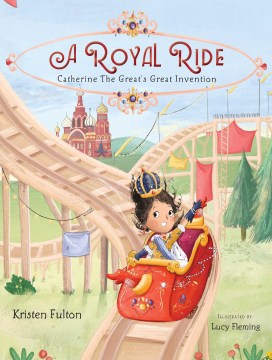
A Royal Ride: Catherine the Great’s Great Invention

Catherine the Great accomplished many things during her tenure in 1700’s Russia. She had a girls’ school built, wrote a book, built museums, fought battles and invented the first roller coaster. Yes, that’s true! She was a fan of ice slides, huge wooden structures coated with ice in the cold Russian winters, which had been around since the 1400’s. Unfortunately, the fun on ice slides ended each spring with the thaw. Catherine wanted to keep the fun rolling, so she sketched a design and her royal subjects got to work. She climbed forty feet to the top and rode the rails in a jewel-adorned roller coaster car. Then, she did it again and again!

This nonfiction book is a packed with information, including a timeline, author’s note, acknowledgements and bibliography. The ‘story’ of Catherine and her invention is written in simple language with accompanying illustrations add a colorful and sweet feel to the text. The book is geared toward the younger reader, but is packed with good information that will lead to further research. Very accessible nonfiction piece for those that need it.

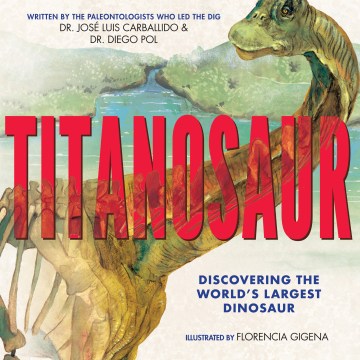
Titanosaur: Discovering the World’s Largest Dinosaur

Nothing gets a budding paleontologist more excited than a book about a newly discovered dinosaur. But, this book will turn many young readers into future paleontologists when they see the photos of the dig and the resulting life-size model.

Dr. Jose Carballido and Dr. Diego Pol followed the lead given by a local gaucho, who discovered the bone on his ranch in Patagonia while looking for sheep. When they arrived, they found a dinosaur femur (upper leg bone) that was nearly eight feet long, the largest on record! This amazing fossil was the first of over 180 bones that the paleontologists and their team uncovered and took back to the museum. Here, they cleaned them and made fiberglass replicas of every bone in order to build a model of this new species of Titanosaur.

The book is laid out in two corresponding parts. The main part details the discovery of the fossils and the painstaking work it took to remove them safely, clean them, study them and make the life-size replica. The corresponding part, which is in sidebars or the bottom of the pages, explains unfamiliar words and gives information about titanosaurs and the work of a paleontologist in this case.

Illustrations are well-done and the photographs interspersed throughout help the reader be part of the excavation. The two page spread showing the 122 foot long titanosaur, Patagotitan mayorum, is breathtaking and the final pages with a note and photos from Dr. Carballido and Dr. Pol is very engaging.

This book will be a great addition to a library collection, especially those looking to update their information. Put this book out and you won’t see it on the shelf. It’s that good!

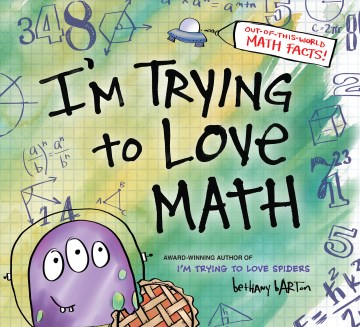
I’m Trying to Love Math

For those that dislike math (or those that like math and want to prove how cool it is!), one need look no further than I’m Trying to Love Math. The unseen narrator has some very valid reasons for disliking math and the cute purple alien is able to refute them all with the reality that math is useful, necessary and all around us! And, just when the narrator gets overwhelmed with the sheer volume of numbers (yep, math), the alien suggests that he give the book a shake to drop some of ’em out of the book.

Cartoon-like illustrations and some really cool math facts make this book thought-provoking and engaging. Young readers will enjoy the funny dialogue between the alien and the unseen narrator. And, they will keep reading to discover whether the narrator changes his mind. Along the way, they might find that math can be really interesting.

So, the next time you make cookies, play the guitar or travel to outer space, you’ll have to remember that it all takes math! Kinda cool, right?

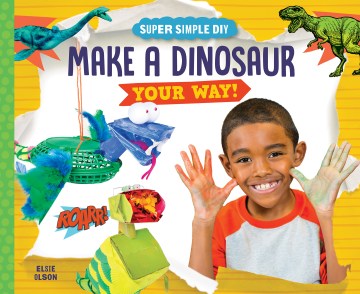
Make a Dinosaur Your Way!

Kids are encouraged to build a dinosaur and given some suggestions for materials and tools. They are not given exact instructions. Rather, they are given some guidance and lots of freedom to use their imagination. And, while there are some photos for inspiration, they don’t make the reader feel as if the dinosaur models pictured are the only way to create. This open-ended instructional text is a nice addition to the maker movement in your library.