Nuts About Scaredy Squirrel

Can this be the start of a campaign to bring Scaredy Squirrel popularity back? I absolutely LOVE Scaredy Squirrel and I know the books never really went anywhere but I have felt the popularity diminish in the last decade. This compilation is full of five classic Scaredy Squirrel stories by Melanie Watt.

Scaredy Squirrel is the perfect new book friend who will cautiously guide you through situations like making a new friend, going to the beach, surviving night, and a birthday party, complete with checklists! This is a beautiful edition from Kids Can Press and I especially loved the details like the note that its a “germ-free book” on the back, the inclusion of how to draw Scaredy Squirrel.

As well as being a Scaredy Squirrel fan I am a big fan of end papers in books. One thing you usually lose in a compilation are the end papers, which are so iconic in Scaredy Squirrel books. Thankfully, they are used in this collection to separate the five stories so you still get a look at the graphics that hint so much at the story coming.

Bring Scaredy Squirrel back to the spotlight and put this book in your collection!
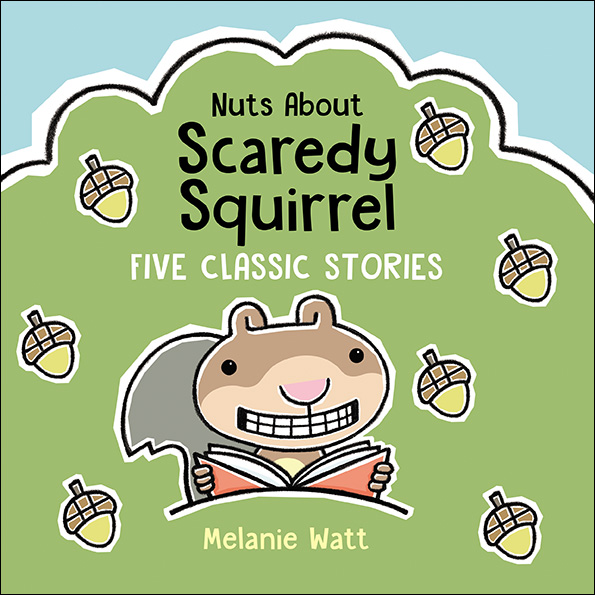
cover image of Nuts About Scaredy Squirrel by Melanie Watt

Be Brave, Little Penguin

Pip-Pip is a nervous little penguin and very anxious about the idea of swimming in that absolutely HUGE ocean! Who knows what might be out there that might want to eat him? So, Pip-Pip plays alone, hearing the words ‘scaredy Pip-Pip’ from the other little penguins. Daddy penguin thinks this is silly, but mommy penguin takes a gentler approach. His family’s encouragement works and Pip-Pip overcomes his fear and discovers a world of wonder under the sea.

The lovely illustrations coordinate well with the lyrical prose. This story might just help a small human reader overcome a fear. Besides, who doesn’t love penguin chicks? Recommended

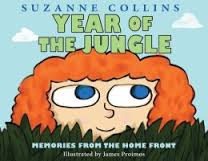
Year of the Jungle: Memories From the Home Front

Collins bases this story on her own experiences as a child.

Set during the summer of 68/69, Suzy’s father is sent to Viet Nam.  She is told he will be gone for one year. But these statements, while simple to an adult, are very difficult for a young child to comprehend.  What does her Dad’s going away mean exactly?  What and where is Viet Nam?  Why does he have to go there? How long is a year?

As the story unfolds we follow Suzy to the start of first grade and throughout the year. We follow along too, with postcards that Dad sends to Suzy. Holidays come and go as Suzy wonders how much longer Dad will be gone.  Confusion sets in and worry mounts as the postcards become few and fewer, to the point that months pass without word from Dad.  Will her father come back at all?

Collins examines the feelings that young children go through when a parent deploys. The happy ending helps alleviate tension that does build when reading this book. The cartoon like images also help soften the edge on an otherwise difficult situation and topic.

This would be a good book to facilitate discussion for military children during large, extended deployments; although, I would tend to choose select portions of it to foster discussion.  I wouldn’t want to needlessly build any extra fears in young ones’ thoughts.  That being said, reading after deployment, and a safe return, would be a good use of this story as well.

Written for grades K – 3, I feel this book would work well for grades 2 – 4.