Grandma’s Garden by Hillary & Chelsea Clinton, illus. Carme Lemniscates

Three generations of gardeners work side-by-side to care for the grandmother’s garden. First the small child gives her view of her grandmother and grandmother’s garden, then the view of the child’s mother, followed by a key bit of wisdom having to do with gardens, such as, “Gardens help teach responsibility.”

When the reader turns the page, the child is a little bit older, as is the mother, and grandmother, but they again give their impressions of the garden. The child’s impression always comes first followed by her mother’s. This continues until the child is now a mother herself with her own two children helping in the garden with their grandmother. “Gardens connect us across generations.”

The little girl’s words are always in blue ink, her mother’s words are always in green ink, and the words of wisdom are always in an orangey ink.

Children who help with gardening will identify with the passages, whether they garden at home, in a school garden, or with a grandparent.

Carme Lemniscates’ illustrations make each garden in the book come to life just like Grandmother Dorothy would want them to grow.

Also available in a well translated Spanish version: Los Jardines de la Abuela.
Under the Lilacs by E.B. Goodale

Under the Lilacs is a beautifully illustrated picture book that follows a young girl’s emotion filled afternoon. E.B. Goodale has illustrated other picture books, but this is her debut as an author and illustrator. When the main character finds herself pushed away by a working mom, who is teaching music lessons at home, and a busy sister, who needs her own time alone, she first leaves a note threatening “that I’m leaving and she will never see me again.” When the note receives no response, she seeks comfort and an opportunity for independence out in her yard under the lilacs. Although she flees to the yard in frustration seeking solace, her imagination soon takes over as she builds a home for herself out of cardboard. Lost in the fun, she makes space for her dog, mom, and sister within her hideaway. The mixed media, full layout illustrations really are the star of this book. The theme or lesson of the book might be difficult to decipher for younger readers, making this book better suited for read alouds. This book would be enjoyed by readers who have ever felt out of place and like running away from their own home.

Your House, My House

My first impression of Your House, My House, written and illustrated by Marianne Dubucis, is that it is just too big. The book measures over 11 x 14 inches and is quite cumbersome. However, as I began reading the book, it is clear that the size was chosen to allow for Dubuc’s extremely detailed illustrations. Reminiscent of Richard Scarry books, each page contains many opportunities for children to look into the same cross section view of a four floor apartment building inhabited by seven different animal families. It is clear that Dubuc put a lot of effort into showing different families going through different experiences within the apartment complex. The plot follows the Rabbit Family as they prepare for Little Rabbit’s birthday. It is hard to connect the text to the pictures and to not just wonder about the other characters and families filling the pages. The illustrations are slightly confusing and overdone, there are also confusing cameos by the Three Little Pigs, Little Red Riding Hood, and other fairytale characters.  Children who love animals and making up stories will find hours of entertainment imagining and telling the stories of the characters and families throughout the apartment.

Snowy Owl by Grace Hansen

Nine dramatic color photos of snow owls in their arctic environment will fill the young reader with awe for these majestic birds. The large font text fills the page opposite the photo with three or four sentences describing the birds physical characteristics, environment, and life.

The photo on page seventeen will take the reader awhile to see the white prey about to be caught by the white and black speckled snow owl in its snowy white environment.

Page twenty-two includes three “More Facts” about snow owls. One being they are awake during the day the opposite of other owls, and two, information on Harry Potter’s owl Hedwig.

Following the glossary and index comes the abdokids.com website using the code ASK8909 to find most of the same text and photos in this book, as well as more information, a craft, a wordsearch, and a coloring page.

My Name is Wakawakaloch! by Chana Stiefel, ill. by Mary Sullivan

Who does not have at least one friend with a name that is impossible for you to pronounce? I do. Poor little Wakawakaloch has that problem, so wants to change her name. She wants to change her name to one that she’ll be able to find pre-printed on a T-shirt. Wakawakaloch’s father tells her it is a family name. Wakawakaloch is taken to the village elder for advice. At first the advice does not make sense, but it does in the end. Wakawakaloch come up with an idea to help all other Neanderthals (her people) who have the same name problem. She starts a business making personalized T-shirts.

Mary Sullivan’s pictures are a cute mix of caveman modern, similar to THE FLINSTONES of the 1960s. For one thing, there are T-shirts, crayons, laptop computers in rock cases, and toast with cereal for breakfast eaten with spoons. On the other hand, they wear necklaces with tooth or claw pendants, bones in their hair for clips, cave drawings on the walls, and big wooden clubs for smashing things.

The book’s inner cover has drawings of seventeen children wearing personalized T-shirts. Their names are all difficult to pronounce, but that is okay because their name is written phonically underneath.

Why Do We Cry? by Fran Pintadera

Illustrated by Ana Sender

“Mom, why do we cry?” ask Mario. With poetic language and imagery, Mario’s Mom describes the many feelings behind tears. With each example, the book validates the feelings and accepts the release of tears as a natural extension of those strong feelings. When the feelings are too hard to explain, the author employs simile, metaphor, and Ana Sender’s illustrations to portray the deepness of those feelings and the potential healing power of tears.

Why do we cry? The book ends with Mom’s tears of happiness. “More than anything, sweetheart, we cry because we feel like crying.” Includes both social emotional and scientific information on tears as well as extension activities for self reflection and discussion.

Translated from the Spanish original.

Whoo-Ku Haiku: A Great Horned Owl Story by Maria Gianferrari, ill. by Jonathan Voss

A wonderful narrative non-fiction told through multiple haiku stanzas. The great-horned owl pair starts by repurposing a squirrels nest. The book follows the the pair as they prepare their nest, lay and protect their eggs, nurture their owlets until the fledglings fly off to a home of their own. The world is fraught with danger. Only 2 of the 3 eggs survive to hatch and one fledgling barely escapes a fox.

The rhythm of the haiku stanzas help map the steady progression of the owls’ life cycle. Each struggle or danger is surmounted, though not always without loss.

Slipping to the ground
Eeping, flapping, fluttering
Nest far, far away

Red fox is watching
Red fox is sneaking-slinking
Red fox is crouching

Gianferrari’s haiku is approachable for young children; rich with language, but conveying concept and feelings in a way young readers can grasp. Voss’s breathtaking illustrations instill both the movement and the stillness of an owl’s night.

Whoo-Ku Haiku is a good choice for lessons on the haiku as a poetic form, word choice, and the study of owls.

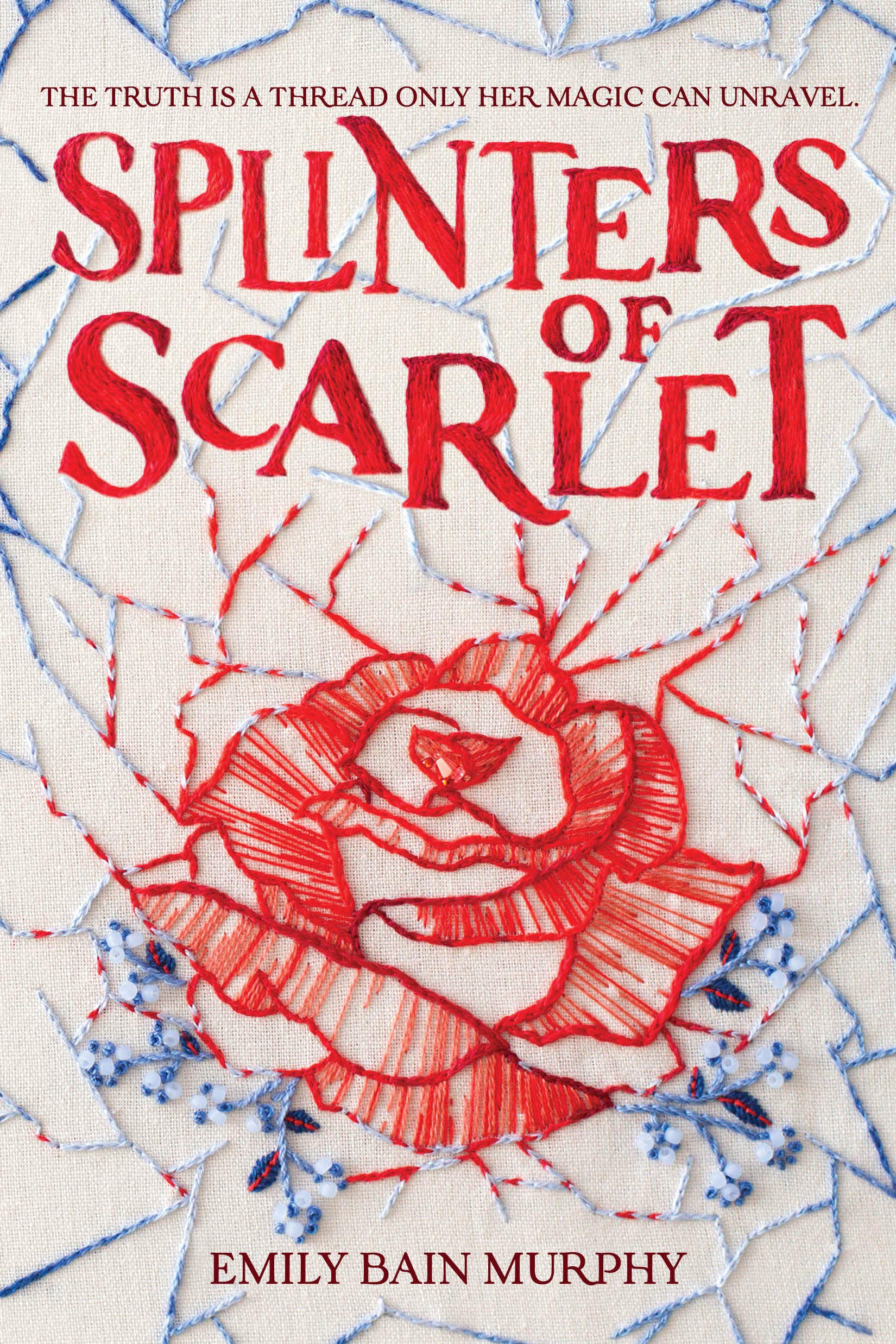
Splinters of Scarlet by Emily Bain Murphy

OHS Library Grade: B+

Book Details from NoveList Plus –

Genre: Fantasy mysteries; Historical fantasy; Multiple perspectives

Storyline: World-building

Writing Style: Compelling; Lush

Tone: Atmospheric; Thought-provoking

Min/Max Grade level: 7 – 12

Set in 19th Century Denmark, main character Marit is raised within an orphanage. Here she weaves magic throughout her creations as a seamstress; but this magic can be very dangerous. Merit learns to hide her abilities and use it to help her close friend, and talented dancer, Eve. When Eve is adopted by the wealthy and well-known ballerina, Helene Vestergaard, Marit leaves the orphanage to follow Eve in a life of servitude. Marit soon learns that magic runs rampant through other servants at the Vestergaard household, allowing her to look more deeply into the mysteries surrounding her fathers death and other circumstances of her childhood. 

Splinters of Scarlet by Emily Bain Murphy, is great for fans of classic fairy tales. Because I experienced this novel through its audiobook version, the multiple perspectives threw me off at times; I think the story would have been easier to follow had I read the text. Fans of fantasy will have fun with the elements of magic throughout the setting and world building.

Amazon.com: Splinters of Scarlet (9780358142737): Murphy, Emily Bain: Books

American Dog: Star by Jennifer Li Shotz

Twelve year old, Julian, ends up in trouble at school again.  Despite his efforts, his dyslexia comes across to his teachers and principal as apathy for school work.  In a deal made with the principal, Julian finds himself volunteering at a local animal shelter instead of detention one day and falls in love with Star, a dog who is deaf.  Much of the story follows the unfolding of a special relationship between a boy and a dog, but also, another unlikely friendship with a peer he connected with while working at the shelter.  Bryan also has dyslexia and happens to be the principal’s son!  While a bit long and dragging through the middle, this is a truly delightful story of friendship and adventure as the boys sneak off with Star – searching for buried treasure in hopes of saving the shelter that is suddenly about to lose their funding. This is my kind of story, with a happy ending where everyone wins! 

No Place for Monsters by Kory Merritt

No Place for Monsters is a spooky, supernatural-themed novel for emerging juvenile readers.  Children are vanishing along with all of their belongings and the loved ones in their lives have no recollections of them.  The main characters set out to uncover clues that lead them to the eventual rescue of said missing children.  Supporting characters have mostly negative attitudes and rude behavior toward the “hero” children throughout the book.  The story has some repetitiveness as well as a bit of confusion at the beginning. However, brilliant illustrations help make this story a quick-read.  Recommended reading grades 3-5.