
EL Crossover by Kwame Alexander

This is the Spanish edition of Kwame Alexander’s award winning novel in verse, Crossover. This is the story of two 12 year old brothers, Josh and Jordan Bell, who live and breathe basketball. They are whizzes at the crossover dribble (a player dribbling the ball switches the ball rapidly from one hand to the other, to make a change in direction in an effort to deceive the defender). Things start to fall apart when Jordan meets the new girl at school.

Crossover won the Newbery Medal, the Coretta Scott King Award, the Lee Bennett Hopkins Poetry Award, and the Passaic Poetry Prize. 

Having a Spanish edition of this popular title will be a real asset to our school libraries, and is relevant to upper elementary, middle school and high school students.
Beastly Brains: Exploring How Animals Think, Talk, and Feel

In Beastly Brains: Exploring How Animals Talk, Think, And Feel environmental educator and photographer Nancy Castaldo explores the minds of animals and explores how animals communicate, use tools, live in social societies, and show empathy. Using interviews and historical information, Castaldo looks at the  researchers from Charles Darwin to Jane Goodall, and many others, to look at the minds of animals. The reader will discover all kinds of fascinating information, including that dolphins are the animals with largest brains relative to body size next to humans. But dolphins have more folds in their cortex than any other animal, including man. Scientists believe that the folds provide more room for neurons.  

There are many more interesting facts and stories of animals, accompanied by wonderful photographs. The book includes sidebars, a glossary, source notes, an index, lists of recommended videos, books, and a Nobel Prize lecture, in addition to an extensive bibliography.

For those enjoying science non-fiction, Castaldo has two other books of interest, Sniffer Dogs: How Dogs (And Their Noses) Save the World,   and The Story of Seeds: From Mendel’s Garden to Your Plate, And How There’s More of Less to Eat Around the World.


Beyond Me by Annie Donwerth-Chikamatsu

Maya lives with her Japanese father and American mother in Japan. Her grandmother and Great Grandfather live nearby. Maya is in school on March 11, 2011 when an earthquake hits off the Japanese coast, followed by a tsunami and damage to a nuclear plant. Her family is safe and intact, but Maya is scared as the aftershocks keep coming for days and weeks. She makes paper cranes and writes messages to “The People in the Northeast” to help her cope.

Written in verse, the author uses fonts and color to show the aftershocks and Maya’s feelings. Dates at the top and timestamps for the aftershocks make you feel the anxiousness that Maya was feeling. Maya and the other characters in the story of different ways of coping and the story shows us that we all have different ways of getting through a disaster.

The Crankypants Tea Party by Barbara Bottner

Clarissa is ready for a tea party, but all of her stuffed animal guests are not in the mood. They are upset about being left outside, having a rip, being forgotten, and having ice cream spilled on their head. Each animal is upset with Clarissa for a different reason and do not want to have at tea party. Clarissa has reasons for all of these things and the stuffed animals finally realize that she was trying to be kind to them.

While the premise of this story could be fun, it just doesn’t quite hit home. It is written like a script which does not lend itself to a read aloud, but the content may not be interesting to independent readers. The illustrations are colorful, but also feel chaotic.

The Good Song by Alexandria Giardino

This book was inspired by the medley “Somewhere Over the Rainbow / What a Wonderful World” created by Israel “IZ” Kamakawiwo’ole. When a baby boy is born, his grandpa tells him to listen because the world is a lullaby. All through the story the boy is trying to listen for the song until one day he finally hears it and plays his ‘ukulele and sings about dreams and rainbows. Penelope Dullaghan’s vibrant illustrations reflect the feelings on each page. There is a note about IZ and the inspiration for this story as well as the words to the song at the end of the book.

I Am Goose by Dorothia Rohner

The animals are playing Duck, Duck, Goose and Goose really wants to play. Every time an animal is called goose, Goose gets upset because he is a Goose. Goose points out the reasons why the other animals are not a goose, including Dodo, who should not even be there because Dodo is extinct. In the illustrations there are three squirrels in the tree commenting on the scene below. The book is funny and would be an enjoyable read aloud. Goose does get a little obnoxious as the story goes on, but the ending was one I didn’t see coming.

All Because You Matter by Tami Charles

Written as a message from the parents to their child, this books starts before the baby is even born, letting the child know that they have always mattered. The words are lyrical and gentle and the message important. The author’s note says she wrote this book to help parents start conversations about the racial climate today. The illustrator used collage and petal shapes to create striking images.

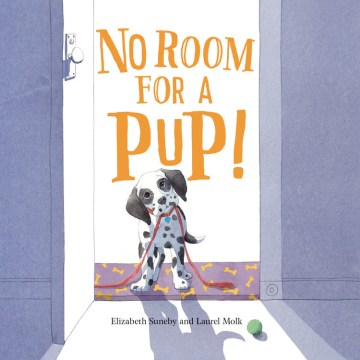
No Room for a Pup! by Elizabeth Suneby

Mia really wants a puppy! But, her mom doesn’t feel like there is room in their small apartment in a big city. Mia’s grandma lives down the hall with her parrot, Roger and Mia goes there every morning for breakfast. In the elevator one morning, they read a sign about puppies that need homes. Mia hatches a plan and grandma mobilizes her friends. The next morning, grandma and Roger show up at the door and grandma says they have to stay (her apartment is being painted). Then, Mia brings home the class rabbit for the night and neighbors drop off their pets. The next morning, grandma’s book club friends and their pets drop by Mia’s apartment. It is absolute chaos! Mia’s mom is overwhelmed. When they all leave, Mia’s mom remarks that the apartment doesn’t feel so small anymore. That’s when Mia brings out Spot, the puppy she chose from the neighbor’s litter. And, mom agrees that there is room for one small puppy. The final page shows that puppy all grown up into a very large, much-loved Great Dane!

This story is a modern twist on a Yiddish folktale about gratitude for what one has. Illustrations are watercolor and picture a diverse set of characters, both human and animal. This is a fun story for any pet-loving child.

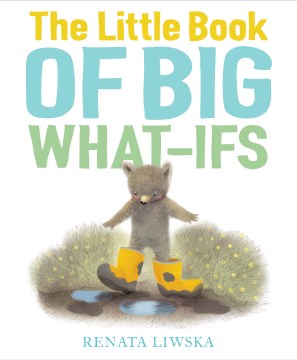
The Little Book of Big What-Ifs by Renata Liwska

What if? That is the question on each page of this sweet book. A series of scenarios, some silly and small, others really big and thought provoking, provide wonderful jumping points for discussion. Illustrated in pencil with softly rendered animals in various settings.

Read aloud to students “What if you swallowed a seed?” and you will get all sorts of answers. Read “What if we find one thing in common?” and begin to build awareness that we really aren’t that different. This lovely little book has the potential to invoke thoughtful, meaningful discussion and possible change. All of that in 32 pages.

Under the Lilacs, by E. B. Goodale

You can be lonely, even when other people nearby if they don’t have time for you. With mom busy teaching and sister wanting privacy, a young girl decides to just leave to see if anyone will even miss her. While she waits in a nearby lilac bush, she decides to build her own house using cardboard and sticks. First her cat then her sister join her in her new house and finally mom arrives with her student. Room is made for each of them.

Having room in your life is more than just about space – it’s also about time and attention. This story illustrates that you can make space for yourself and those that are important to you and in doing so, take positive action to nurture your interconnection with others.