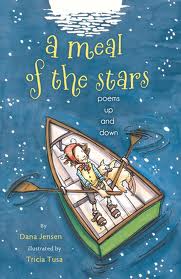
A Meal of the Stars: Poems Up and Down


Cute illustrations compliment poems that have to be read in the right direction. Like the subtitle implies, these poems vary between needing to be read from the top-down or from the bottom-up.  At first there appears to be a pattern, but then the reader turns the page and realizes the pattern does not exist.  There is no use of capitalization or punctuation to take clues from, which makes for a fun and interesting challenge.

This would be great to use with beginning readers to challenge their comprehension skills.

ATV Racing

ATV (All-Terrain Vehicle) racing is a sport that attracts new riders and fans every year.  Machines are built tough to withstand the stresses of various courses.  Popular MX (motocross) races are short – lasting from 15 minutes to a certain number of laps.  XC (cross country) races can last more than two hours.  Riders must have training and wear special gear.  Because of the variety of courses, riders must be in top physical condition to guide their vehicles successfully.  Professional and amateur events are held all over the U.S.  Fast Facts are found on almost every page.  Highlighted text is defines on the page as well as in the glossary.  An index, suggested books for further reading at a similar reading level, and an internet site are also in the back.  This is a good, but short, introduction to ATV racing.

Marvin and Milo: Adventures in Science

This small (6″X8″) book contains 45 experiments that are easy to do at home.  A cartoon cat and dog, Marvin and Milo, demonstrate the steps in each experiment.  Accompanying test explains the science behind each investigation.  The text on the cartoon page is extremely small.  The font on the explanation page is not large, either.  There are no table of contents or index to indicate which experiments are included.  Some terms are European and may be difficult for children to understand.  (plasticine = clay or play dough, polystyrene = plastic, drawing pin = thumb tack, blu-tack = reusable putty, lolly sticks = popsicle sticks)  There are many fun projects to try at home and this book may be a favorite in a personal collection.  This is not in a form that begs to be part of a school library, but with a few changes, it could be a popular addition.

The Meanest Birthday Girl

Dana is a mean, ornery bully who terrorizes classmates at school, in particular Anthony.  She calls him names, pinches, and steals his desserts.  For her birthday, Anthony gives her an awesome, unexpected gift – a white elephant.  This wonderful surprise needs never-ending love and attention so Dana tries to be a conscientious pet owner.  Her own behavior begins to change as she starts to think about one other than herself.  The watercolor and ink illustrations add details to the story and share another side of Dana’s personality.  She wears pink dresses with unicorns, bunny slippers, likes toy ponies, and always has a Band-Aid on a knee – attributes of many happy little girls.  When her friend Gertrude begins to treat her horribly, Dana thinks about how she’s treated Anthony.  At lunch she apologizes to him.  Anthony holds no grudges, accepts her apology, and then asks if she is going to Gertrude’s birthday party.  After thinking a moment, Dana knows she has the perfect gift.  This book is a Theodore Seuss Geisel Award Winner.

Gone Fishing: a Novel in Verse

Nine year old Sam is looking forward to a fishing day with dad in this story told in verse.  He is irritated when annoying, little sister Lucy wants to come along.  To Sam’s dismay, she hums and wiggles and catches eight fish before he gets a nibble!  His attitude changes when he catches the biggest fish of the day and Lucy cheers him on.  Through the use of a large variety of poetic forms, Sam’s view of the day’s fishing adventure changes.  Each poem, told by different family members, contains a title and the poetic form.  Teachers will appreciate this source of multiple poems, from techniques such as alliteration, onomatopoeia, and similes, to forms such as cinquains concrete poems, haiku, limericks, odes, and triolets.  Each poem is a different example of a form or technique as this complete story is told.  Matthew Cordell’s whimsical, black and white illustrations are a great match for the humor and personalities shown in this poetic story.  A “Poet’s Tackle Box” in the back defines each type of the 40 poems.  This would be a great addition to any poetry collection.

District of Columbia v. Heller: The Right to Bear Arms

This well-organized and written reference begins with the United States v. Miller, a case that was used by lower courts for years to regulate the right to bear arms, although since the government argued the case unopposed it raised as many questions as it answered. Streissguth then goes on to set the stage for the District of Columbia v. Heller case, including the NRA’s lack of support for the case because they had one of their own test cases pending. He also provides the historical background from colonial times. The reference provides readers with all of the necessary background to understand the gun control debate and the cases surrounding it without making judgments.  The final chapter, “The Impact of the Decision,” gives information on the some of the results of the landmark decision and potential effects in the future. The book includes a chronology of events, a glossary and additional resources. A good reference on how cases are selected to be test cases, how they are built and move through the system. The author states in the last chapter that the Second Amendment is likely to come under review by the Supreme Court again; since there is such a high likelihood that there will be more decisions on this subject, I rated this an Additional Purchase.

Elizabeth Cady Stanton: “Woman Knows the Cost of Life

This solid biography begins with s short description of the defining moment in Cady Stanton’s life – the Seneca Falls Convention. Chapter Two goes back to her childhood and then on to her marriage, giving the reader a clear picture of how and why Cady Stanton developed such a passion for the women’s suffrage movement. While we see Cady Stanton and her close friend Susan B. Anthony as the founders of the suffrage movement, this book shows that their opinions were often opposed by many of their contemporaries, even within the movement, as too radical. The book ends with a chapter on Cady Stanton’s legacy, followed by a chronology of events, a glossary and additional resources. This would be an excellent reference for information on Elizabeth Cady Stanton in particular and the women’s rights movement in general.

Sallie Mae How to Pay for College: A Practical Guide for Families

As other the books written by the Tanabes about how to get into college or earn scholarships, How to Pay for College offers excellent, practical advice on how to manage the cost of a college education. Each chapter begins with an list of what will be covered, making it easy to refer to specific information as needed.  Chapters cover topics such as the various types of financial aid available, how to apply for financial aid, how to save for college, and more. There are sample forms and bright ideas, key concepts and money saving tips in sidebars. One of the most useful items in the book is “Straight Talk from Financial Aid Administrators.” Throughout the book there are entries from these administrators on specific topics. Some of them seem self-serving, “Running a college is not cheap,” or “Believe it or not, colleges only raise tuition as a last resort.” But most are practical, ” Rule No. 1: Apply on time,” and “Keep us in tune with changes.”  Good resource for high school students preparing to go to college.

Sigmund Freud

Gillam begins with a brief overview of free association, Freudian slips, dream analysis, repressed sexual urges and other ideas developed by Freud and then launches into his childhood. Freud was the favorite son and received the best of everything in his family. Never lacking confidence, after he began studying medicine and psychology he believed that his theories and proposed treatments would rival the discoveries of Copernicus and Darwin. However, he was often ridiculed by his contemporaries, some because they felt threatened by his radical ideas and others because of anti-Semitism. The two World Wars had both positive and negative effects on Freud research and practice; he began the treatment of what was then termed “war neuroses” and is now known as PTSD. His personal life, including his interest in cocaine, is almost as interesting as his career. Although some of his theories have been rejected, some have been modified and are still practiced today. The book includes a timeline, glossary, a list of essential facts, and additional references. The use of excerpts from primary source documents, photos and sidebars give the book visual appeal. I highly recommend the Essential Lives series.

Don’t Spill the Milk

Beautiful, bright folk-art illustrations capture the reader right off the bat, setting the scene for this simple tale set in West Africa.  The story tells of a young girl who is trying to bring a bowl of milk to her father who is watching over his sheep in the grasslands.  The journey from her home to the grasslands takes her through over dunes, across a river, up a mountain, past camels, a parade, and a herd of giraffes.  All along the way she is concentrating hard not to spill any milk, and then just as she arrives, a mango falls and lands in the bowl, splashing the milk all over.  Disappointed that she has failed in her task, her father comforts her, by explaining that the bowl held not only milk, but all her love, and that didn’t spill.  They share the mango, leaving some for her to carry back to her mother, with all her father’s love.  Together, the text and illustrations evoke a far-away land, so different in so many ways for American school children, yet the efforts of a child to do something to show her love for her father are universal.