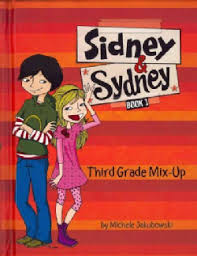
Sidney & Sydney: Book 1 Third Grade Mix-Up

sidney and sydneyThe start of a new school year and the start of third grade.  What could induce more uncertainty and nervousness?  How about stepping into the classroom on the first day and seeing that your teacher spelled your name wrong.  Should you speak up? Perhaps it’s better to just sit down and not make a fuss about it.  After all the teacher, Mr. Luther,  is known to be grumpy.

Ah, the trials of third grade!  Sydney (spelled with a “y”) meets her gender counterpart (Sidney with an “i”) on that first day.  They soon find out they have a lot more in common than just a same first name.  This is a story of friendship that elementary students will like to read about.  The dialog is very realistic and the characters are well written and believable.  The story line is engaging without being trite or overly predictable.  Jakubowski seems to accurately understands her audience.

The story is heavily illustrated, in full color, by Luisa Montalto. Most of the illustrations are full page, centering on the characters with little to no background distractions. The opening pages give an illustrated bio of the characters and the end pages give further info and insight into the characters.  I can envision many of my students trying to copy Montalto’s clean style and creating a Sydney or Sidney of their own.

Visit Capstone to have students read bios on Sydney and Sidney and there respective friends.  Also there are two downloads: “How funny are you?” and “Are you a good friend?”  Both of these quizzes are the type with no definitive right or wrong answers.  They are the type that sum up your answers with “If you have mostly “A” answers you are….
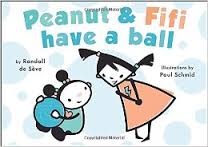


Peanut and Fifi have A Ball

peanut and fifiSee what happens when two siblings only have one ball.  The older girl, Fifi, tries desperately to get Peanut to share her new ball. But it is a new ball and Peanut isn’t ready to share it just yet.  Fifi goes to great lengths to get her little sister to share but eventually gives up when she finds something even more entertaining.

Delightfully illustrated, by Paul Schmid, with muted tones of pastel red, blue and purple with a lot of white space.  The pictures will engage children. The story will provide a nice springboard to the value and rewards of sharing. The open ending also provides a great story starter for students and highlights the double meaning of the title.

Chipmunks

A beautifully photographed non-fiction book intended for a very young audience, Chipmunks introduces children to their first easy-to-read science text and gently tells about the North American rodent.  Habitat, age span, food, and raising of young are all included with accompanying photos.  Young children will delight in the photos of these cute little animals, and a caution has been given to never try to pet or feed one.

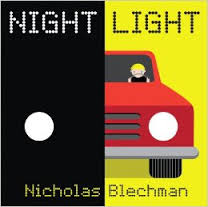
Night Light

Night Light


Bold colors and crisp graphics make this book a stand out. It opens with the line, “one light shining bright?” written on the left page.  Over on the right page the reader sees what appears to be one ball of light.  As the reader turns the page, the one bright light reveals as a train headlight.

train

“7 lights flashing red and white?” reveals to be lights on a fire truck. fire truck

This interactive book is fun and visually appealing. Each page illustrates ascending numbers starting at one going through ten. At the end, where even the end pages are used for the story, the reader finds himself back at one.


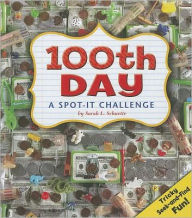
100th Day: A spot it challenge

spot itMany of us are very familiar with the spot-it challenge books. This one by Sarah Schuette will tie in nicely with 100th day celebrations that are held in schools. Each two page spread has 100 objects that are the center of focus: 100 miles, 100 feet, 100 dots, 100 beans. Also scattered on every page are other objects to find as well.  The pictures are visually very busy, but each page theme makes the pictures enjoyable.  Visually difficult for me was the 100 dots page with black and white dominoes on a black and white tile floor.  Extreme spot-it challenges are offered at the back of the book as is a “spot even more” challenge.

Children love these types of books and this one will be no exception.

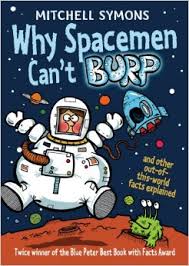
Why Spacemen Can’t Burp: and other out of this world facts explained

spacemenFun facts fill this book.  The facts are entertaining and doled out in bite size pieces.  Symons answers questions like:
How can I tell if someone is lying to me?
When does a shower become rain?
Why do washing machines have windows?
And , of course, the title question is answered too.
Readers can pick this book up and read beginning on any page as it isn’t a sequential story which many children will find appealing. The snippets of information allow for various reading levels to be entertained.  As an adult I found this book very enjoyable and have shared tidbits with my family and with my students.


How Martha Saved Her Parents from Green Beans

This is a very unique, clever, and funny story satirizing what could happen if you don’t eat your green beans.  Martha hates beans and even though her mother serves them for dinner every Tuesday night, she won’t eat them.  Until one day….a wild bunch of mean green beans ride into town and cause problems…especially for those who have said “eat your green beans.”  While Martha is sitting at the table staring at her plate she hears a ruckus and finds that her parents have been bean-napped by the mean gang.  At first she is delighted because now she’s her own boss.  But she’s also lonely and misses her parents.  She follows their trail and finds her parents tied up with bean vines.  She demands that they free her parents but the bean gang just laughs at her, ’cause really, what could she do?  She threatens to eat them but again they laugh because they know she won’t eat green beans.  But Martha pinches her nose and starts to munch away and soon her parents are freed.  Martha becomes a hero and her mother doesn’t serve green beans again.  The illustrations are a hoot and the mustaches, boots and hats really give the beans some character.  Makes a great read aloud and should be a purchase for elementary libraries.

Miracle on 133rd Street

Jose and his family have moved from Puerto Rico to the U.S. (it sounds a lot like New York City).  It’s right before Christmas and it just isn’t the same as it was back home.  Now they live in a too tiny of an apartment with grouchy neighbors in a neighborhood teeming with immigrants.  Jose’s father must go to the pizza place in order to use their oven to cook a roast.  After it is done, the mouth-watering aroma attracts all those grouchy neighbors’ attention as they carry it back home.  They all tell Jose’s father that they are alone for Christmas and they get invited to share with Jose’s family.  Everyone brings something.  Because they aren’t alone for the holidays, spirits rise, and everyone has a good time–a miracle!  The illustrations are bright and vivid and full of the energy found in NYC.

Mission Titanic, Book One

Mission Titanic, Book One, is the first installment of the fourth series within 39 Clues.  You will have had to read the others before this one will make any sense.  The original 39 Clues was quite imaginative in which a prominent citizen of a leading family (leading in financials, political, scientific, athletic, you name it) dies and in her will she issues a challenge.  Each beneficiary, and there are many, may choose between one million dollars cash or a clue which may lead to her entire fortune.  After 11 books, all written by different authors, each book has various family members scouring the world to find clues to the fortune.  I only read book one and thought it was great.  However, Mission Titanic introduces a new family character who has rounded up others to overthrow the new family leaders.  He has given them a clue to prevent an impending disaster.  If they can’t, they lose everything.  First of all, this book goes back to all the younger generation members of the Cahill family and revisits their part of the plot and how they will unite together to solve this mystery.  It pretty much jumps all over the place and doesn’t give the reader a sense of plot or strong characters.  You’ll need to read the other books in the previous three series before this one, and I think it would have been better just left alone.

In the RIVER DARKNESS

In the RIVER DARKNESS, by German writer Marlene Röder, is a young adult drama that does not live up to the intrigue that gripes the reader in the opening paragraphs. The cover and the opening chapter lead the reader to expect that the book will be a mystery or thriller. But the reader is let down by the predictable plot and so-so ending. It almost seems as if In the River of Darkness was written to lead into future sequels. This quick read (222 pages, easy to read) can be read in just a couple of hours.

The plot centers around three teens: a new girl to town, Mia, and two brothers, Alexander and Jay, who live next door. The story is told from these three teens’ points of view. There is a bit of romance, a bit of mystery, but overall, there is no thrill in this story.