The global refugee crisis: fleeing conflict and violence

The Global Refugee Crisis: Fleeing Conflict and Violence is a timely account of the worldwide refugee crisis that is so much in the news, not only in the United States but throughout Europe. According to a 2015 United Nations report, more than 1 million people fled violence and persecution, and the numbers have continued to increase since then. Of these millions of refugees, more than half are children. Thousands of refugees have died along the way, and thousands are being held in detention centers or housed in refugee camps around the world. The effects of wars, such as the Syrian civil war and the conflicts in Nigeria, Afghanistan, Yemen, Somalia, and the Central African Republic are an obvious catalyst for the exodus of people into Europe and North America. Other often overlooked circumstances are discussed, as such as climate change, drought and famine, political persecution, and overcrowding.

This book examines how nations are addressing the crises, how refugees contribute to and strain communities, and what kinds of solutions could help resolve this crisis. Additionally, there is historical perspective, going back the waves of refugees during World Wars I and II. Included are interviews with refugees and relief organizations, color photos, inserts, source notes, a glossary, index, and resource lists of books, films, and websites.
No More Excuses: Dismantling Rape Culture

After the Harvey Weinstein sexual abuse scandal became public in late 2017, the #MeToo movement went viral. Girls and women spoke up about the assaults so many have faced (the CDC reports that 1 in 5 women are raped during their lifetimes), and the sexual harassment that many more face daily. And it is not only females. Surveys report that as many as 1 in 33 boys and men have experienced sexual assault. Shockingly, only 3% of rapists ever serve time in jail. With the spotlight currently on sexual assault, it is timely that No More Excuses: Dismantling Rape Culture has been published (January, 2019). This text on rape culture explores gender norms, the intersection of race and gender, and how the transgender population is disproportionately affected by rape. The author, Amber Keyser also discusses restorative justice and how it can be used by all those affected in cases of sexual assault or harassment.

The book highlights some high profile cases, such as the “Stanford Swimmer” Brook Turner, and USA Gymnastics doctor Larry Nassar. There are quotes from teens, politicians, activists, and feminists. The highly readable format includes photos with captions, inserts, extensive source notes, a glossary, further reading lists of both fiction and nonfiction, films, and hashtags. There is a section on current legislation such as Title IX and age-of-consent laws.

A Scarf for Keiko

In 1942 Los Angeles, Sam’s class is knitting as a way to help the war effort. Sam really struggles with knitting just as he struggles with how Keiko, his Japanese American classmate and neighbor is treated. Once the United States declared war on Japan, Americans of Japanese descent faced attacks, discrimination, and racism. The tensions escalated when President Roosevelt issued the decree creating the Japanese Internment Camps. The small actions of friends and neighbors to show their support of a group of people unfairly labeled. As Sam untangles his emotions he finds that his yarn is no longer as tangled either. The scarf Sam knits and sends to Keiko represents a concrete symbol of his change in thinking.

This complex and difficult time is portrayed in a way young students can understand. Connections can easily be made with current events and racial profiling.

Robots

Books on technology become outdated so quickly, but I immediately thought highly of this book because there was not a single photo of the old “Hollywood” robot from the 1960s television show LOST IN SPACE. This book comes with a QR code for each chapter or the website popbooksonline.com/robots for more information. The four chapters are: What are Robots?, How Robots Work, Ways to Use Robots, and The Future of Robots.

“Robots are machines that perform tasks for people. Some robots are simple…Other robots are very complex.” (4) Robots are run by computers programmed by people.

The graphic on page 17 shows “TYPES OF ROBOTS” simple and complex. The simple robots include a robot vacuum, robot toy dog, and a robot lawn mower. The complex ones include a factory robot, military robot, space robot, and a robot that goes to school. None of these robots look like humans, which might be one of the best selling features of this book!

Large font type, three or four sentences per page turn, and up-to-date photos of robots being used to do work make this book a great introduction for young reader on the subject of robots.

Out of the Ice: How Climate Change is Revealing the Past

This book focuses on archeological finds that are being exposed due to warmer temperatures and melting snow.  It starts with a brief introduction to the science of climate change. Then there are eleven different stories describing people and animals uncovered- from ancient Caribou dung in Alaska to a mountain climber in Italy.  Each story contains an inset with more information – both scientific and archeological. Information includes the difference between glaciers, ice patches and permafrost, as well as explanations of carbon dating and DNA testing.  There are photographs of the locations of discovery and some of the things uncovered, including mummified bodies. Additionally, there are artist’s illustrations of possible past scenarios. Glossary and timeline at the end of the book, and also a few resources to find out more. Easy to understand explanations of a complicated topic, including why this is important to us today.

Flying Deep: Climb Inside Deep-Sea Submersible Alvin

“Imagine you’re the pilot.”  This book takes the reader through a day inside the deep-sea submersible Alvin.  Go along with scientists from the surface of the ocean, to the depths, and back again.  Evocative language and intriguing illustrations immerse the reader in the experience. Alvin’s journey introduces the reader to information on geology, as well as the flora and fauna of the deep sea. At the end of the book there are notes from both the author and the illustrator, facts on Alvin, a glossary, list of organisms, and resources to learn more.  Budding scientists and curious kids will enjoy exploring the mysteries of the deep ocean floor.

Gondra’s Treasure

Gondra is a young dragon who has a mother from the West, and a father from the East.  Throughout the story, she compares her features to her parents and wonders who she will take after the most as she grows. Gondra is assured by her parents that they no longer need to horde treasure as she is their treasure. Includes interesting and informative author’s note at the end with background information on Eastern and Western dragon mythology. Positive message and delightful illustrations.

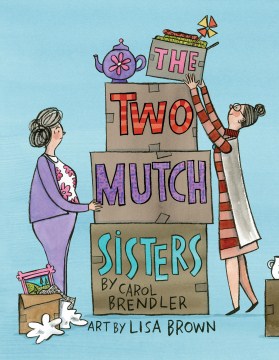
The Two Mutch Sisters

This pair of sisters have been together for a very long time. Even though their taste differs, they collect two of everything and their shared home become a tad too cluttered. Ruby decides to take her half of the collection and move into a different house. While their separate homes are no longer cluttered, Ruby and Violet feel that something is missing…each other. So, Violet takes matters into her own hands and moves their houses to a new double lot where they can be neighbors. And now, they have each other and nothing is missing!

This sweet story with its very different sisters and very interesting group of collectibles (glockenspiels and spittoons among them) is a sweet tribute to sibling love. The illustrations are detailed and fun, showing all sorts of clutter. Students will pick up this book again and again.

The Boy, the Boat, and the Beast

This story is like a 1000 piece jigsaw puzzle. How will you ever be able to get all of the pieces together, especially when the mean character is trying to do the exact same thing.

The ‘boy’ wakes up on an island beach not knowing or remembering anything. Amnesia? He has an inner bully of a subconscious always ready to let him know how dumb and cowardly he is in his choices of action. Let’s put some more pieces of the puzzle together. Let’s try a different color scheme. Let’s go from the gray of the beach to the green of the forest. The bully thinks this is a bad choice. There are monsters in the forest. The boy escapes the monster by climbing a tree. There he saves a baby owl in a torrential rain storm, only to find a tree house. The colors of the puzzle pieces now change from the brown of the tree house to a strong beam of light. The boy decides to find the source of the light. The colors change yet again as the boy leaves the forest and comes to a lighthouse. “He stepped back, starring out of the window at the trees of the Green Wall [forest] lined up outside the lighthouse. What kind of place made refrigerators appear out of thin air? Showed his brother in a puddle? Made a pathway from an owl of leaves? And lured him with a light that had no bulb?” (115) Will these puzzle pieces ever come together to make a whole picture?

The boy tries to make a boat, but it floats away without him. Then three boys come to the island in two real boats. The boy wants to leave the island with them, but they cannot see him. Is he a ghost? More pieces to the puzzle. Is he dead? Finally, someone is here to help him get off of this island. The puzzle is coming together at last. The boy must choose between the easy way of slipping into the afterlife or the hard way of fighting his way back into consciousness to the life and family he is sure is waiting for his return. The bully does not think the boy could or should face the blues of the sea to get to the other distant island where his family waits for him. The boy conquers his fears and “made his own courage.”(240) The boy – Ethan- wakes up in the hospital room to the joy of his father, younger brother, and mother. The boy- Ethan- has faced his demons and survived.

Special Effects

Intermediate elementary readers will enjoy finding out some of the secret “tricks used by filmmakers.” (8) Some are done while the movie is being filmed, while others are added after the filming. “Most film studios had special effects teams by the 1920s.” (15) Some of the effects mentioned are: animatronics, claymation, substitution shots, stop-motion animation, CGI, and use of models.

There are usually six to eight sentences in a combination of two paragraphs per page turn along side photos from twenty big Hollywood movies. Movies like Star Wars, Titanic, 2001: A Space Odyssey, Mary Poppins, and Jurassic Park III. Lovers of action movies will enjoy this book.

The book closes with the publisher’s web site- Factsurfer.com. Its link to the AMC site is outstanding!